🏭 Looking for a Custom Apparel Manufacturer?
We are a leading OEM/ODM clothing factory with 20+ years of export experience. Custom styles, flexible MOQs, and retail-ready quality.
Zip up hoodies are defined not only by their front zipper, but by how they fit across the shoulders, chest, torso, sleeves, and body length. The right fit affects much more than appearance. It influences mobility, layering, zipper stability, daily comfort, and the overall silhouette.
So, how should a zip up hoodie fit?
The answer depends on the intended style, but a well-designed zip hoodie should feel comfortable without becoming shapeless or restrictive. Shoulder position, chest allowance, torso width, sleeve length, and body length all need to work together.
This guide explains how to judge zip up hoodie sizing through garment structure rather than relying only on a standard S, M, or L label. For apparel brands, the same principles are important when developing custom hoodies, private-label collections, and bulk production specifications.
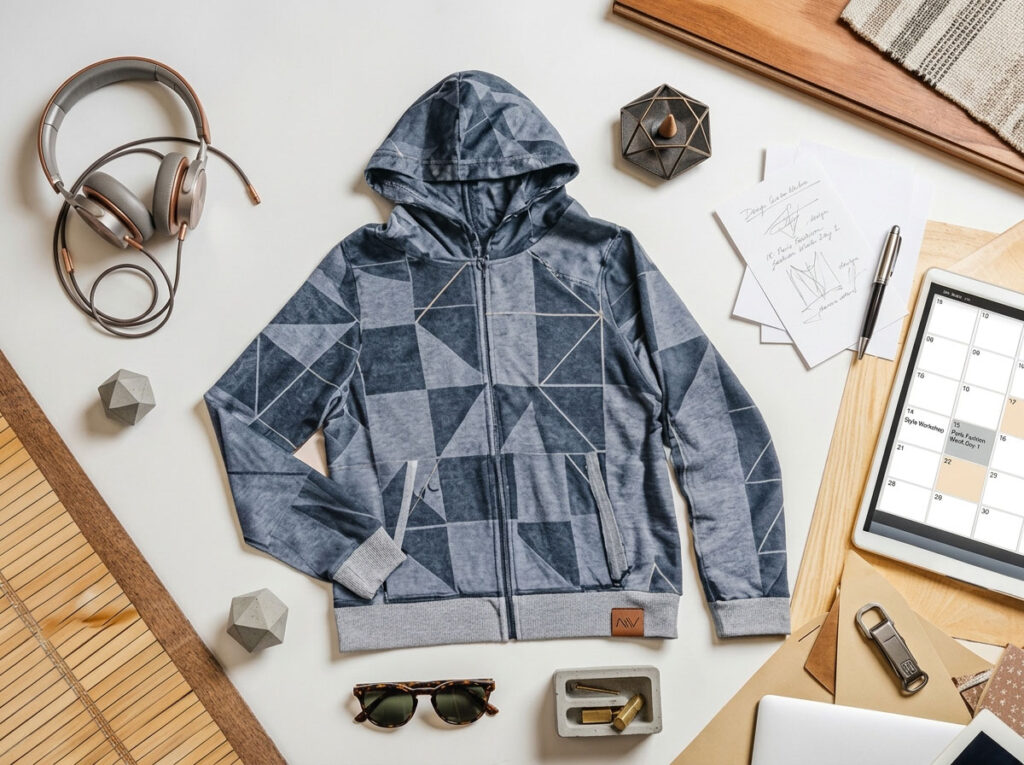
Fit matters because a zip up hoodie is both a comfort garment and a structured front-opening layer. If its proportions are wrong, the hoodie may become uncomfortable, difficult to layer, unstable when zipped, or visually unbalanced.
A good fit allows natural movement while keeping a clear and intentional silhouette.
Fit is the foundation of a hoodie silhouette because the overall shape is noticed before details such as color, fabric, or zipper hardware.
Shoulder width, chest width, body width, sleeve volume, and garment length determine whether the hoodie looks stable or awkward. A well-fitting hoodie feels intentional. A poorly fitted one can look restrictive, excessively oversized, or uneven.
The correct question is not simply whether a hoodie is slim or loose. Instead, ask whether the proportions create a wearable shape that supports comfort, movement, layering, and the intended design aesthetic.
A properly fitted zip hoodie is easier to wear during commuting, walking, travel, layering, and long periods of casual activity.
When the hoodie is too tight, the zipper may pull, the shoulders may restrict arm movement, and layering becomes uncomfortable. When it is too loose, excess fabric can create bulk and make the garment feel less stable.
A good fit makes the hoodie easier to zip, easier to wear open, and easier to combine with T-shirts, sweatshirts, jackets, and other layers.
The ideal zip hoodie balances comfort with visual proportion.
The garment should provide enough room for movement and layering while maintaining a controlled shape. The zipper creates a strong vertical center line, so poor proportions can become especially obvious.
If the torso is too wide, the front may look heavy. If the body is too short or too long, the silhouette can appear unbalanced. The best fit feels relaxed on the body while maintaining a clean and intentional outline.
The shoulders are the structural anchor of a zip up hoodie. If the shoulder placement is incorrect, the rest of the garment usually feels less balanced.
A well-positioned shoulder line supports mobility, front stability, sleeve movement, and the overall appearance of the hoodie.
Shoulder seam placement is one of the easiest ways to evaluate a hoodie fit.
For a standard or relaxed zip hoodie, the seam will usually sit close to the natural edge of the shoulder or slightly beyond it, depending on the intended silhouette.
A seam positioned too far inward can create a tight and restrictive feeling. A seam that drops too far down the arm may make the garment look collapsed unless an oversized silhouette is intentionally designed.
A well-positioned shoulder seam helps the hood, sleeves, body, and zipper structure work together.
A zip hoodie should follow the natural structure of the upper body without pulling upward or dropping excessively over the arms.
The shoulder line supports several connected areas of the garment, including the hood, sleeve, upper chest, and front zipper. When shoulder alignment is correct, the front tends to hang more evenly and the hoodie layers more naturally.
The ideal result is a garment that feels connected to the body without feeling restrictive.
Shoulders that are too tight typically show signs such as pulling across the upper chest, restricted arm movement, or visible tension when the zipper is closed.
Shoulders that are too loose may create excessive fabric, dropped seams, bunching, or a front that feels visually uncontrolled.
The goal is not to eliminate all shoulder room. The goal is to create enough ease for movement while keeping the garment anchored to the body.
Chest and torso proportions determine much of the hoodie’s comfort and stability.
These areas should provide enough space for movement and layering while maintaining a controlled silhouette around the zipper and front opening.
A zip hoodie needs enough chest allowance to close comfortably without creating excessive tension.
The garment should not pull across the chest during ordinary activities such as walking, sitting, reaching, or lifting the arms.
When the chest is too tight, the zipper line may buckle or pull. With sufficient ease, the front remains more stable and the garment feels more comfortable throughout the day.
For production, chest allowance should be established according to the intended fit, fabric stretch, target customer, and layering requirements.
Torso width determines how the hoodie hangs from the shoulders to the hem.
A balanced torso should feel relaxed enough for everyday wear while preserving a clear front and side silhouette. This allows the garment to work when fully zipped, partially open, or layered over another top.
If the torso is too narrow, the hoodie may feel tense and restrictive. If it is too wide, the body can appear inflated or unstable.
The best result is controlled ease rather than simply maximum width.
A reliable zip hoodie avoids both extremes.
A very tight silhouette can reduce mobility, increase zipper tension, and make layering difficult. A very baggy silhouette may initially feel comfortable but can become bulky and harder to coordinate with the rest of an outfit.
A well-balanced hoodie usually sits between these extremes unless the design specifically calls for a fitted or oversized silhouette.
Choosing the correct size is important because size affects shoulder placement, zipper behavior, layering capacity, sleeve length, body length, and overall comfort.
One of the most common sizing mistakes is choosing a garment based only on the letter printed on the label.
Instead, compare actual measurements and determine what silhouette the garment is designed to create.
Size charts are important because S, M, L, and XL do not have identical measurements across all brands.
A better approach is to compare measurements such as:
Comparing these measurements with a hoodie that already fits well is usually more reliable than selecting a size by label alone.
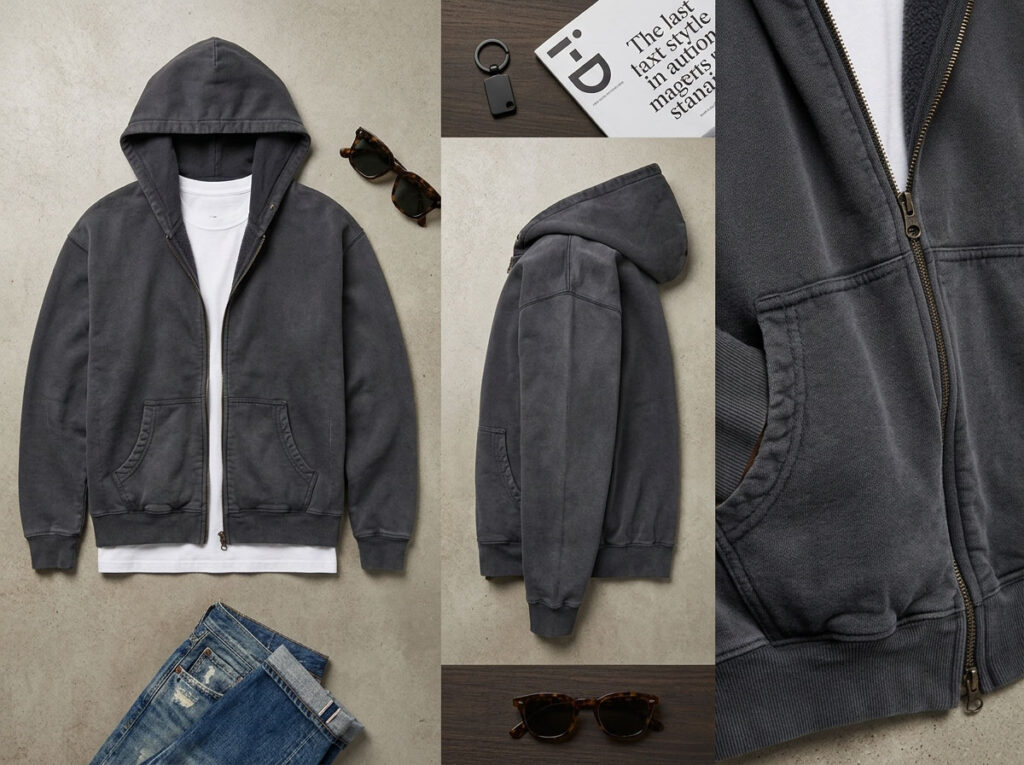
A designed relaxed or oversized fit is not the same as purchasing a standard hoodie one or two sizes larger.
An intentionally oversized hoodie is developed with coordinated body width, shoulder drop, sleeve volume, armhole shape, and garment length.
Simply sizing up may create extra room, but it can also produce unusually long sleeves, unstable shoulders, an excessive body length, or an unbalanced silhouette.
The key question is whether all the proportions still work together.
A hoodie that is too small may pull across the chest, restrict arm movement, and create tension along the zipper when fully closed.
A hoodie that is too large may drop excessively at the shoulders, extend too far below the waist or hips, or create more sleeve volume than intended.
The most reliable indicator is how the garment performs during actual wear. Walk, sit, reach, zip, unzip, and layer the hoodie. If the garment feels strained, awkward, or excessively bulky during normal use, the size or intended fit may be incorrect.
Zip hoodies generally fall into three major fit categories: standard, relaxed, and oversized.
Understanding the difference helps separate intentional design from accidental oversizing or undersizing.
Standard fit zip hoodies are designed for straightforward everyday use.
They usually follow the body more closely than relaxed or oversized styles while still allowing enough room for movement and light layering.
This fit works well for consumers who want a clean, versatile silhouette that can be worn under jackets or over T-shirts without creating excessive bulk.
Because the body shape is more controlled, the zipper line often sits neatly and the hoodie can transition easily between casual and more structured outfits.
Relaxed fit hoodies provide additional room through the chest, torso, and sleeves without reaching the extreme proportions of an oversized style.
This makes them highly practical for everyday casual wear because they support movement and layering while retaining a stable silhouette.
For many consumers, relaxed fit offers a useful middle ground between comfort and structure. It can feel roomy without appearing careless or shapeless.
Oversized zip hoodies use additional body volume, wider proportions, and often dropped shoulders to create a distinctive casual or streetwear aesthetic.
Because the garment has a visible front zipper, proportion is particularly important. Excess width without balanced body length, sleeve volume, and shoulder placement can make the hoodie appear heavy.
A successful oversized design should build the extra volume into the entire pattern rather than relying on simple size increases.
Sleeves affect both comfort and visual proportion. Even when the torso fits correctly, poorly designed sleeves can make a hoodie difficult to wear.
The ideal sleeve should provide enough length and room for movement without excessive bunching or restriction.
A well-balanced sleeve generally reaches the wrist comfortably without covering too much of the hand.
Sleeves that are too short can make the hoodie feel undersized. Sleeves that are too long can create excessive bunching and may make the garment appear heavier.
The correct length should remain practical when the arms rest naturally and during ordinary movement.
Arm mobility is essential for reaching, carrying, commuting, and everyday movement.
The sleeves should move with the arms without pulling sharply through the shoulder or chest. This depends on the relationship between sleeve shape, armhole construction, shoulder placement, and torso allowance.
A well-designed zip hoodie should remain comfortable during actual activity, not just while standing still.
The ideal sleeve avoids both extremes.
Restrictive sleeves can create tension and reduce mobility, while excessively long sleeves can bunch around the wrist, cover the hands, or weaken the overall proportions.
The best sleeve design provides enough room for movement and ends naturally around the wrist and cuff area.
Different body shapes interact with hoodie silhouettes differently. The objective is not to make every wearer use the same fit.
Instead, the goal is to choose proportions that create visual balance and practical comfort.
For average builds, standard or relaxed silhouettes often provide a balanced combination of structure and comfort.
These fits provide enough room for movement while keeping the shoulder-to-hem shape controlled. The zipper line can also sit more naturally when the body is neither overly narrow nor excessively wide.
A good result should look stable from the shoulders through the hem and remain comfortable during movement.
Broader body frames may benefit from additional room through the chest and torso because it can reduce zipper pulling and improve movement comfort.
A relaxed fit can provide this extra room without automatically becoming boxy.
The key is controlled ease. Extra space should support comfort and movement without creating unnecessary volume around the stomach, shoulders, or sleeves.
Slimmer proportions often work well with structured standard fits or restrained relaxed silhouettes.
A highly oversized hoodie can create a larger visual volume than intended, while a more controlled fit can help preserve a clean shoulder line and balanced zipper position.
The right choice also depends on styling. An oversized silhouette can still work well on a slimmer frame when the rest of the outfit is intentionally designed around the added volume.
Most hoodie fit problems result from several measurements working poorly together rather than from one isolated measurement.
Because the front zipper creates a strong visual line, proportion problems can become obvious very quickly.
Oversized silhouettes become difficult when additional space is added without coordinating shoulder drop, body length, sleeve volume, and torso width.
The hoodie may feel comfortable but still look unstable if the shoulders fall too low, the body extends too far, or the sleeve volume becomes excessive.
Oversized can be highly effective, but the additional volume must be distributed intentionally.
A tight fit can weaken one of the main advantages of a hoodie: easy, unrestricted wear.
When the chest, shoulders, or sleeves are too narrow, the zipper may pull, arm movement may feel restricted, and layering becomes difficult.
If the hoodie feels uncomfortable during simple daily actions, the fit is likely too narrow for its intended use.
Body length needs to work with the width, sleeve length, shoulder position, and intended styling.
A hoodie that is too long can look heavy or stretched, while one that is too short relative to its width may appear visually incomplete unless the cropped proportion is intentional.
Because the zipper creates a strong vertical element, body length imbalance can be particularly noticeable.
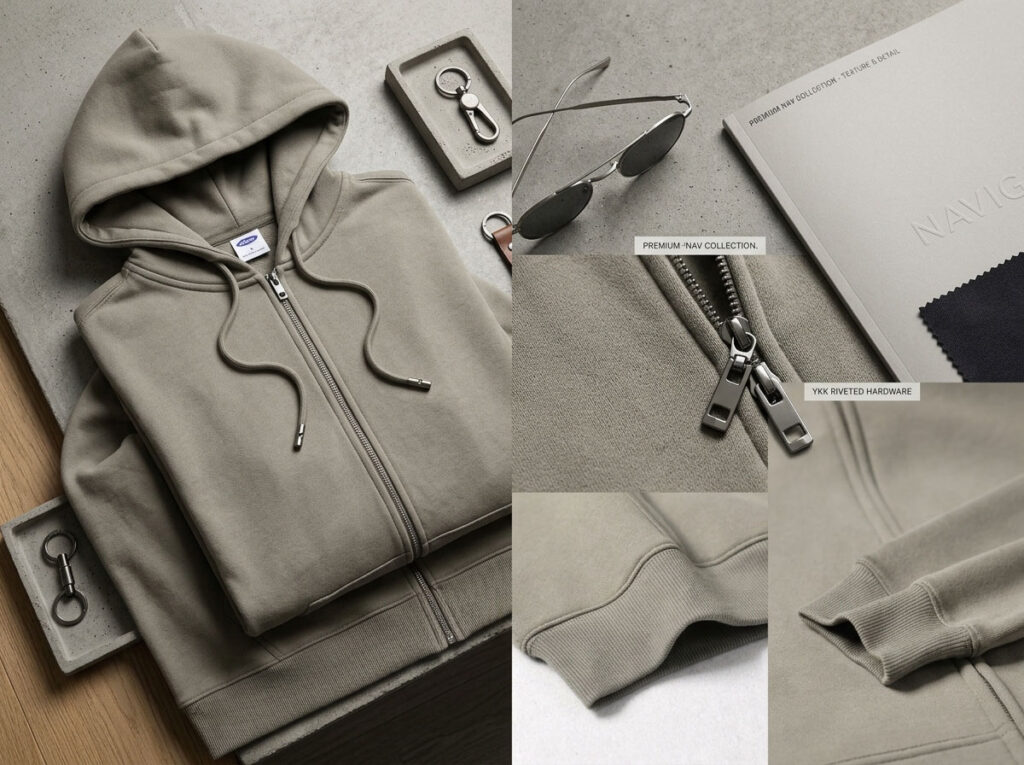
A zip hoodie can be evaluated more accurately by checking each major area in sequence rather than relying on first impressions.
The most practical order is shoulders, chest and torso, sleeves, then overall mobility and proportion.
For apparel brands developing custom zip hoodies, these principles should be translated into measurable specifications during the product-development process. Pattern dimensions, fabric stretch, GSM, shoulder construction, sleeve shape, grading, and wash testing all influence the final result.
At Liantao, fit development is an important part of custom hoodie manufacturing. Whether a collection requires a standard zip hoodie, relaxed everyday silhouette, or oversized streetwear design, the goal is to align measurements, fabric, construction, comfort, and visual proportion from the first sample through bulk production.
A successful zip up hoodie is not simply the correct size on a label. It is a garment in which every major proportion works together to create a comfortable, functional, and intentional fit.

If you have any questions or require a quote, please leave
us a message. Our experts will get back to you within 24 hours to help you choose the ideal fashion products tailored to your needs.
Hi, I’m Lucy Cai, the founder of liantaoapparel.com. I’ve been managing a women’s clothing factory in China for over 16 years. With extensive experience in garment production and OEM services, I’m passionate about sharing insights into women’s fashion, apparel manufacturing, and global sourcing.
If you have any questions or need a quote, please contact us.
Please add us WhatsApp:+86 189 4809 3145
Provide us with detailed information about your requirements, supply design drawings or tech packs,
reference images, and share your ideas.
We will customize the best solution based on your needs and drawings, and provide a specific quote within 24 hours.
Once we receive your confirmation and deposit,we will commence mass production and take care of the subsequent shipping arrangements.