The stylish, high-quality clothing you buy from major brands might look premium, but did you know that most of these brands don’t actually produce their own items? Instead, the real “hidden heroes” are powerful factories located around the world. If you’ve ever wondered who really makes the clothes for top brands or how strong their manufacturing partners are, you’re about to find out.
Most global brands outsource production to countries like China, Vietnam, Bangladesh, and India, where the supply chain is mature and manufacturing is efficient and cost-effective. Leading factories in these regions are known for high quality, reliable delivery, and large-scale capabilities. For example, MAS Holdings specializes in high-performance apparel for international sports brands, while large companies like Foxconn are also involved in producing tech-integrated smart clothing.
Understanding the manufacturers behind big brands doesn’t just satisfy curiosity—it helps you truly grasp how the global fashion industry operates. Now, let’s uncover the “invisible giants” powering the world’s top fashion labels.
The global fashion industry is massive and complex, yet the real power lies in the hands of only a few major companies. So, who are the giants shaping trends, influencing consumer behavior, and steering the direction of the entire industry?
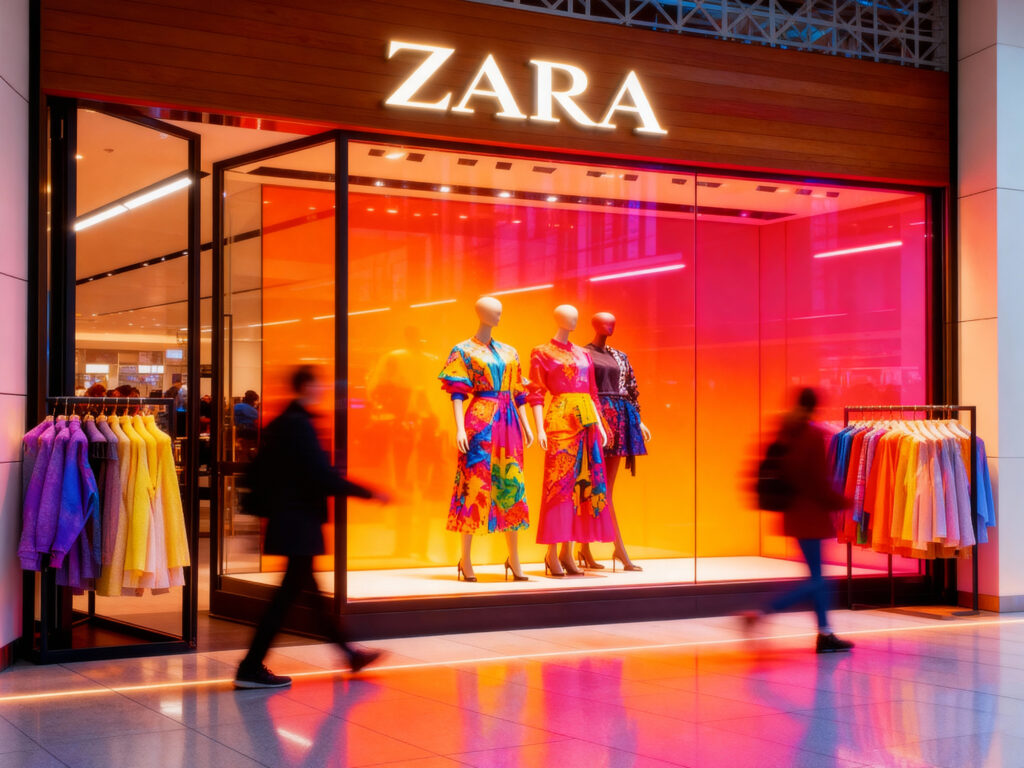
Today, Inditex (the parent company of Zara), LVMH, and H&M Group stand as the three most influential leaders in the global apparel landscape. Inditex is known for its hyper-efficient fast-fashion supply chain; LVMH commands the luxury segment with its portfolio of high-end brands; and H&M Group holds strong influence in the mid-tier fast-fashion market through large-scale production and worldwide expansion.
These companies don’t just decide what styles hit the shelves—they also impact global supply chains, fabric innovation, and the evolution of sustainability in fashion. Understanding who leads the industry is key to understanding how the world of fashion truly works.
Achieving dominance in the highly competitive fashion world takes far more than brand recognition. These giants hold their leading positions thanks to powerful business strategies and unmatched supply chain capabilities.
|
Company |
Key Brands |
Market Focus / Positioning |
|
Inditex |
Zara, Massimo Dutti |
High-efficiency fast fashion with rapid product turnover |
|
LVMH |
Louis Vuitton, Dior |
Luxury fashion, led by a powerful portfolio of high-end brands |
|
H&M Group |
H&M, COS |
Mass-market fast fashion, focused on affordability and global retail presence |
Clothing production is a vast, global industry—but which countries are leading the pack?
Currently, China remains the world’s largest apparel manufacturer. With a mature textile supply chain, a vast labor force, and advanced manufacturing technology, China leads in production volume, variety, and export scale. Close behind are Bangladesh and Vietnam, which have become key players in the global fashion supply chain thanks to low costs and steadily improving manufacturing capabilities.
Whether it’s fast fashion or high-end bespoke clothing, China, Bangladesh, and Vietnam form the core of global apparel production, powering the industry’s production pace and meeting worldwide market demand.
China’s position at the top of global apparel manufacturing is not just about sheer output—it stems from a combination of key advantages:
|
Country |
Annual Apparel Output |
Key Advantages |
|
China |
Over 50 billion pieces |
Largest scale, high efficiency – capable of producing everything from fast fashion to high-end garments |
|
Bangladesh |
Around 30 billion pieces |
Low labor costs, ideal for large-scale production |
|
Vietnam |
Around 25 billion pieces |
Skilled workforce, high-quality production, balancing cost and quality |
In the fashion world, some brands have reached billion-dollar valuations, earning the title of “billion-dollar brands.” These brands are not only generating massive revenue but also shaping global consumer culture and influencing fashion trends. So, which brands stand out the most?
Louis Vuitton is often regarded as a quintessential “billion-dollar brand.” Its parent company, LVMH, is the highest-valued luxury conglomerate in the world, encompassing numerous top-tier luxury labels. Louis Vuitton has maintained its luxury status through a combination of unique brand positioning, exquisite craftsmanship, limited-edition releases, and a strategic presence in high-end markets worldwide.
Louis Vuitton is not only a leader in luxury goods but also a quintessential example of a global billion-dollar brand. So, what drives its extraordinary value?
|
Brand |
Annual Revenue |
Key Products |
|
Louis Vuitton |
Over $20 billion |
High-end handbags and apparel, symbolizing luxury and status |
|
Gucci |
Over $10 billion |
Fashion accessories and clothing, blending trendiness with classic style |
|
Chanel |
Over $15 billion |
Haute couture and perfumes, combining elegance with innovative design |
The clothes we wear often travel across the globe before reaching us. But where do most of them actually come from?
The majority of apparel on the global market is produced in manufacturing hubs such as China, Bangladesh, Vietnam, and India. These countries have become key suppliers for both fast fashion and other brands thanks to their low production costs and skilled labor force. From design sketches to finished products on store shelves, these manufacturing centers support the massive demand of the global apparel industry and subtly shape what we wear every day.
Why does the global apparel industry rely so heavily on China, Bangladesh, Vietnam, and India? The answer lies in their strong production capabilities:
|
Country |
Global Apparel Export Share |
Key Industries |
|
China |
31% |
Fast fashion and luxury goods, covering both mass-market and high-end brands |
|
Bangladesh |
16% |
Knitwear and ready-to-wear, known for large-scale production |
|
Vietnam |
12% |
Footwear and sportswear, balancing quality and cost |
Among hundreds of iconic clothing brands worldwide, which one consistently ranks at the top financially?
The answer is Nike. With its powerful brand influence, global marketing network, and continuous product innovation, Nike generates over $50 billion in annual revenue, making it the wealthiest apparel brand in the world. Beyond revenue, Nike reinforces its market leadership through sneakers, athletic apparel, and a diverse range of sports equipment, shaping the way consumers dress and live around the globe.
Nike is not only the wealthiest apparel brand in the world but also a benchmark in sports and fashion. So, how does it stay ahead?
|
Brand |
Annual Revenue |
Global Reach |
|
Nike |
Over $50 billion |
Present in 190+ countries, a global benchmark in sports and fashion |
|
Adidas |
Over $25 billion |
Present in 160+ countries, combining sports and lifestyle appeal |
|
Zara (Inditex) |
Over $30 billion |
Present in 90+ countries, a leader in fast fashion |
The global apparel industry is clear-cut: major brands rely heavily on manufacturing hubs in China, Bangladesh, and Vietnam, combining high quality, low costs, and large-scale production capabilities. At the same time, industry giants like Nike, Louis Vuitton (LVMH), and Inditex dominate the market through their extensive global reach, continuous innovation, and highly efficient supply chains. Understanding these behind-the-scenes forces not only gives us a deeper insight into how the fashion industry operates but also shows how brands shape global consumer trends and cultural fashion movements.
Hi, I’m Lucy Cai, the founder of liantaoapparel.com. I’ve been managing a women’s clothing factory in China for over 16 years. With extensive experience in garment production and OEM services, I’m passionate about sharing insights into women’s fashion, apparel manufacturing, and global sourcing.
If you have any questions or need a quote, please contact us.
Please add us WhatsApp:+86 189 4809 3145
Provide us with detailed information about your requirements, supply design drawings or tech packs,
reference images, and share your ideas.
We will customize the best solution based on your needs and drawings, and provide a specific quote within 24 hours.
Once we receive your confirmation and deposit,we will commence mass production and take care of the subsequent shipping arrangements.