🏭 Looking for a Custom Apparel Manufacturer?
We are a leading OEM/ODM clothing factory with 20+ years of export experience. Custom styles, flexible MOQs, and retail-ready quality.
In my 20 years of managing garment production lines, I’ve watched the boundaries of men’s fashion completely blur, making Smart Casual the most requested—and most failed—dress code in the modern world. Most style guides tell you to just ‘throw on a blazer over a t-shirt,’ but as a manufacturer, I know that looking sharp without a suit is a precise science of fabric interaction. It’s about how a high-density, long-staple cotton polo retains its collar structure, and how an unlined, lightweight wool-blend jacket drapes over your shoulders without looking rigid. As we navigate the hybrid work cultures of 2026, navigating this middle ground requires an insider’s eye. Today, I’m pulling back the curtain on garment construction to give you the ultimate smart casual blueprint—showing you exactly which fabrics to buy, how your clothes should fit, and how to command authority in any room without ever looking like you tried too hard.
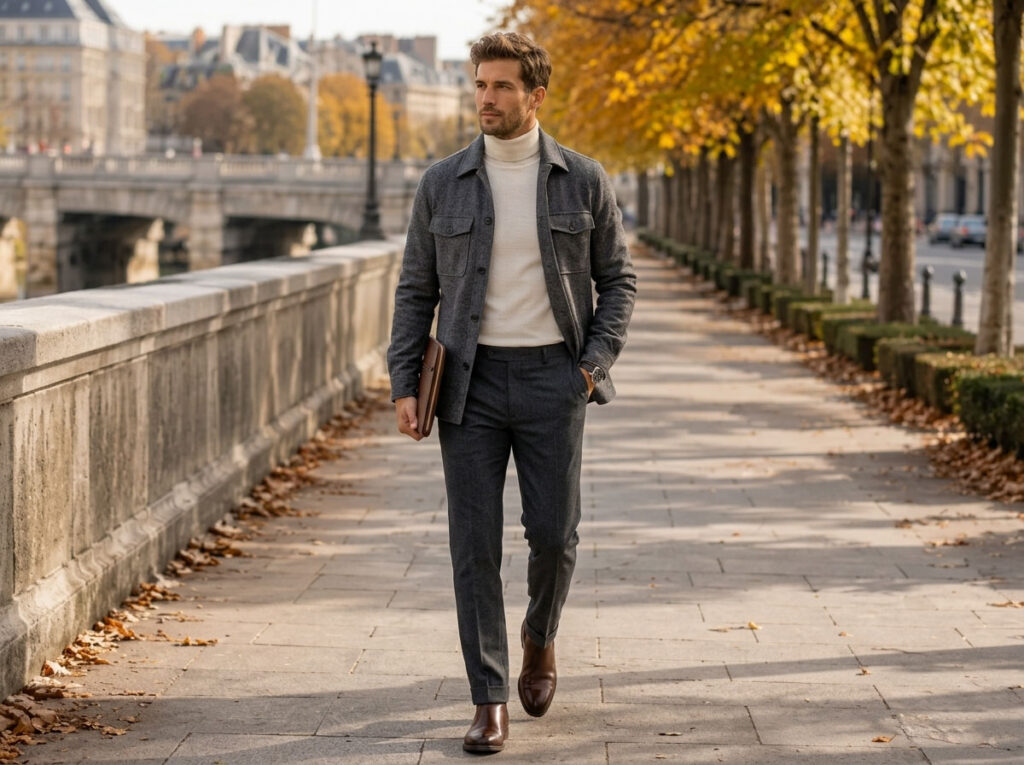
Business casual is a dress style that combines professionalism with comfort. It sits between formal business wear and everyday casual clothing. A typical business casual outfit may include a fitted shirt or polo, chinos or tailored trousers, and a blazer for a polished look.
The key is to look neat and well-groomed without being overly formal. Avoid ripped jeans, athletic wear, hoodies, and overly casual sneakers. If your outfit works for both the office and after-work events, it is likely business casual.
I usually start with one more formal piece, such as a blazer, structured jacket, dress shirt, or clean leather shoes, and then pair it with more relaxed items like chinos, dark jeans, or a simple knit. This creates a balanced look between formal and casual.
I also avoid obvious logos and distressed designs, and I focus more on fit rather than brands. A well-fitted basic piece often looks more polished and stylish than an expensive item that doesn’t fit properly.
| Level | Visual Impression | Recommended Items | What to Avoid |
| Too Casual | Weekend errands / off-duty look | Sneakers, graphic T-shirts, basic casual staples | Ripped jeans, flip-flops, overly loose or sloppy clothing |
| Business Casual (Ideal Zone) | Clean, sharp, comfortable, and refined | Chinos, dark jeans, polo shirts, Oxford shirts, blazers | Wrinkled shirts, bulky running shoes, overly sporty items |
| Too Formal | Standard office or formal business look | Suits, ties, polished dress shoes | Full suits in non-formal settings, which can feel overdressed |
The core idea is simple: the closer you stay to the “business casual zone” in the middle, the easier it is to transition between work, meetings, and social settings while maintaining both professionalism and comfort.
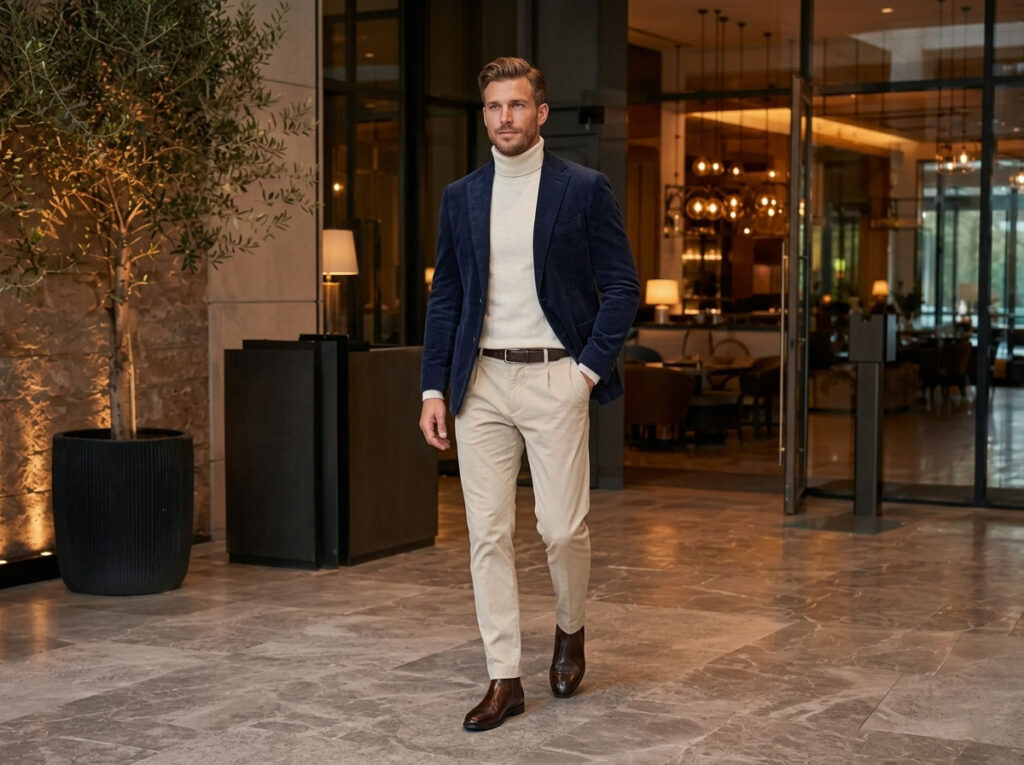
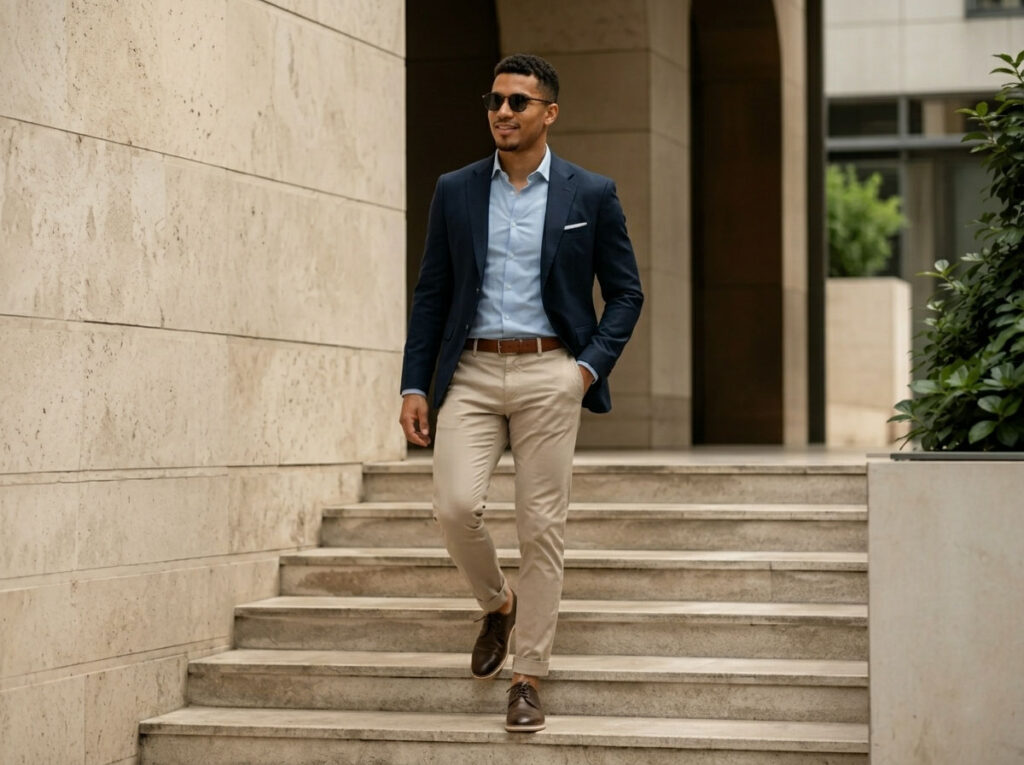
There is no single “correct” business casual outfit, because different occasions require different levels of formality. A more practical approach is to build a reusable foundation: a clean dress shirt or polo shirt, well-fitted chinos or dark jeans, and well-maintained leather shoes or minimal sneakers.
From there, you can adjust the level of formality depending on the situation. For meetings or client-facing days, add a blazer. For regular office days, keep it simple with a shirt or polo and tailored trousers. For relaxed social settings, you can opt for a knitwear piece with jeans. Regardless of the setting, the core principles remain the same: clean, well-fitted, and presentable.
I always keep a few go-to men’s business casual outfits in mind. I wear these when traveling for work, attending trade shows, meeting new buyers, or anytime I need to look both relaxed and professional. The goal is not complexity, but repeatable, reliable outfits that always work.
| Occasion | Outfit Formula | Shoes | Key Notes |
| Dinner Date | Knitted polo + chinos + lightweight blazer | Leather sneakers / loafers | Keep colors calm and low-saturation |
| Client Meeting | Oxford shirt + dark jeans + blazer | Derby shoes / clean sneakers | Avoid loud patterns or distracting details |
| Smart Casual Office | Fine knit sweater + chinos | Loafers | No hoodies, maintain structure |
| Weekend Activity | Plain T-shirt + overshirt + chinos | Minimal sneakers | T-shirt must be well-fitted, not loose |
I treat men’s business casual dressing like building with blocks: start with a well-fitted pair of trousers—such as chinos, wool-blend pants, or dark jeans without rips—then add a structured top like an Oxford shirt, knitted polo, or a simple crewneck sweater. Finally, layer with a blazer or a structured jacket to elevate the overall look.
I also place strong emphasis on fabric choice. Mid-weight cotton, twill, and stable knits are more durable and less likely to lose shape, while overly thin or shiny fabrics often look cheap. For me, whether an outfit looks “proper” depends not only on style, but also on fabric quality, stitching, and overall durability.
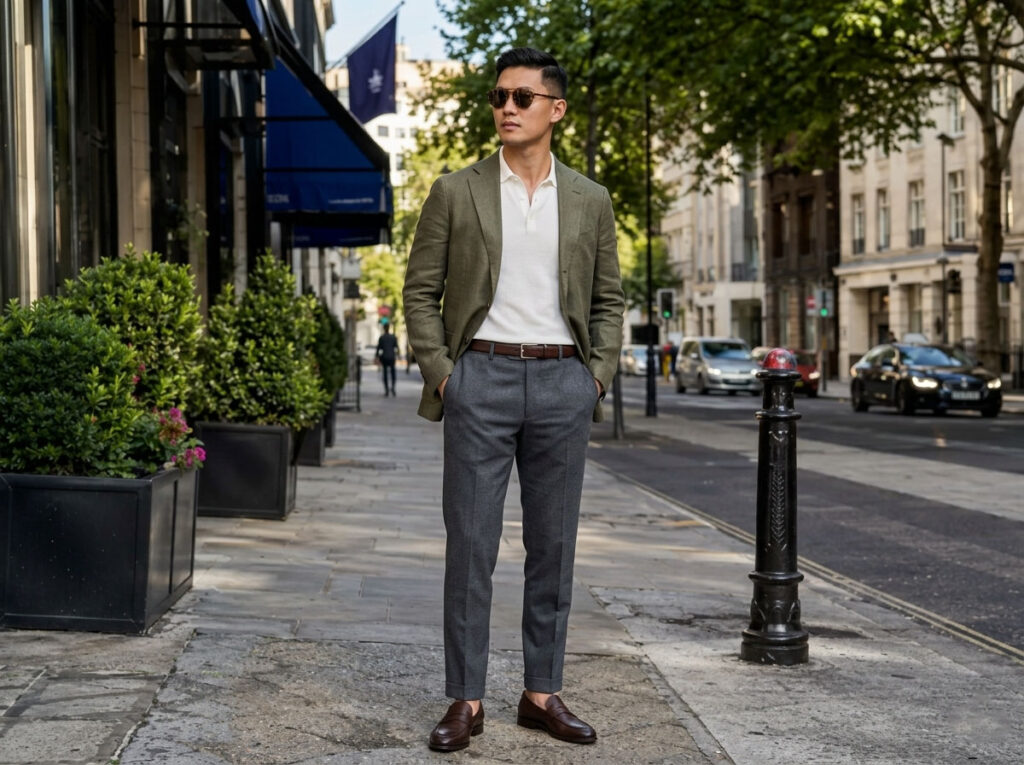
Many men struggle with consistency across seasons: they look well-dressed in one season but lose balance in another. Summer outfits become too casual, while winter outfits often become bulky and unstructured.A truly stable business casual style does not rely on seasonal pieces, but on a consistent dressing logic.
I always stick to the same foundation: tailored fits, clean lines, and low-saturation colors, then adjust through fabric choice and layering. In summer, I use lightweight, breathable fabrics to stay sharp and fresh. In winter, I rely on wool, knits, and layering to stay warm while maintaining structure and avoiding a bulky silhouette.
I follow the same business casual logic all year round, only adjusting fabrics, weight, and layering rather than changing the style itself.
| Season | Tops | Bottoms | Layering / Outerwear | Key Notes |
| Summer | Linen-blend shirts, knitted polos | Light chinos | Unlined blazer (optional) | Focus on breathability; avoid sweat marks |
| Spring | Oxford shirts, lightweight knits | Chinos, dark jeans | Light jackets | Keep the overall palette fresh and clean |
| Autumn | Overshirts, merino wool sweaters | Chinos, wool-blend trousers | Blazer or light coat | Add layering for depth and texture |
| Winter | Turtlenecks, thick knits | Wool trousers, dark jeans | Structured coat or jacket | Maintain clean tailoring; avoid bulk |
To build a clean and sharp business casual look, I always focus on three things: fit, color, and a single visual focal point.
Fit is the foundation: shoulders should align naturally, cuffs should sit cleanly, and trousers should not bunch or stack excessively. The clearer the silhouette, the more polished the overall look. For color, I usually stick to two or three tones only—such as navy, grey, beige, white, and black—keeping everything low-saturation and cohesive.
The final element is the “focal point.” Each outfit only needs one standout piece, such as a blazer, an overcoat, or a pair of well-crafted shoes. Everything else should remain understated to keep the look balanced and refined.
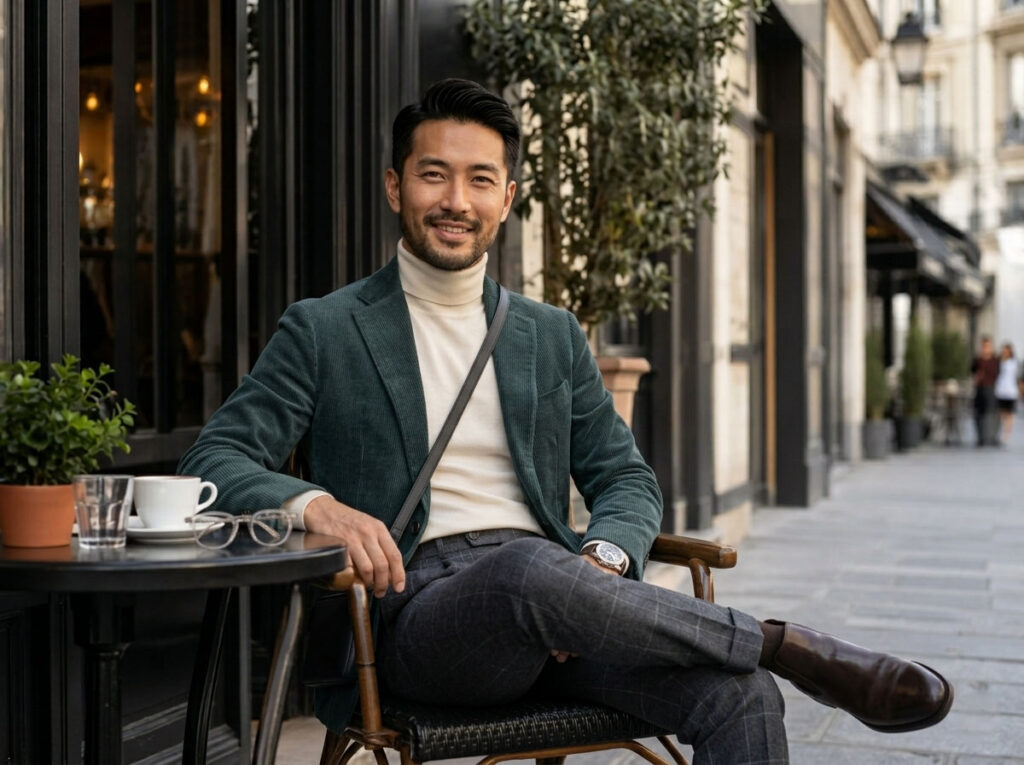
The essence of men’s business casual lies in well-fitted tailoring, clean basics, and one refined statement piece.No matter the occasion, I build every outfit around this simple logic to keep the look clean, sharp, and intentional. Good business casual style is not about what you wear—it’s about whether you look appropriate, composed, and deliberate.
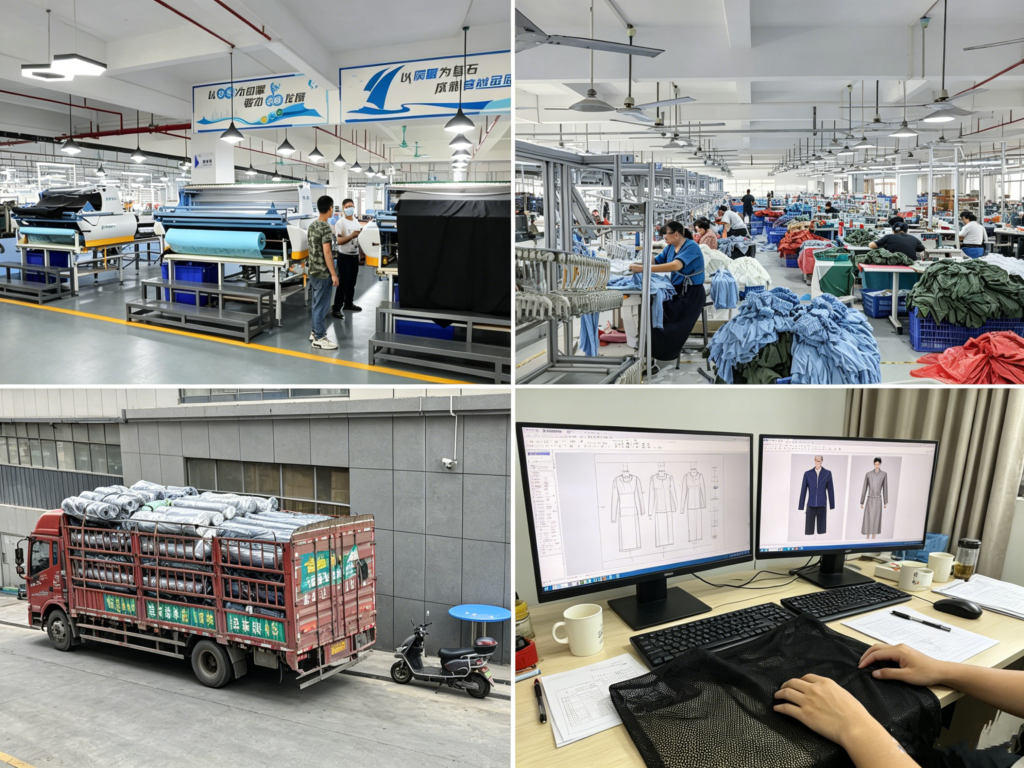
I am the founder of a garment manufacturing company based in Dongguan, China, specializing in B2B production and wholesale for men’s business casual and fashion apparel. Our company, Liantao Apparel, has over 200 employees and provides OEM/ODM services for brands and large retail chains. With many years of export experience, our products are shipped to markets including the UK, the US, and Germany.
Through working with different brand clients, I have noticed a common challenge in executing “business casual” collections: designs often look great on paper, but the final results become inconsistent during material selection, production, and bulk delivery.
In this article, I summarize a more practical framework and execution approach to help brands develop men’s business casual collections. From fabric selection and pattern control to quality standards, the goal is to ensure consistency and scalability—so that the final garments maintain a refined, stable, and professional appearance in real-world wear.
If you have any questions or require a quote, please leave
us a message. Our experts will get back to you within 24 hours to help you choose the ideal fashion products tailored to your needs.
Hi, I’m Lucy Cai, the founder of liantaoapparel.com. I’ve been managing a women’s clothing factory in China for over 16 years. With extensive experience in garment production and OEM services, I’m passionate about sharing insights into women’s fashion, apparel manufacturing, and global sourcing.
If you have any questions or need a quote, please contact us.
Please add us WhatsApp:+86 189 4809 3145
Provide us with detailed information about your requirements, supply design drawings or tech packs,
reference images, and share your ideas.
We will customize the best solution based on your needs and drawings, and provide a specific quote within 24 hours.
Once we receive your confirmation and deposit,we will commence mass production and take care of the subsequent shipping arrangements.