Pants are much more than a basic wardrobe essential. The right cut, fabric, rise, length, pocket design, and waistband can completely change how a garment looks and performs. With so many different types of pants available, understanding the differences between straight-leg, tapered, wide-leg, cargo, jogger, and other styles can make both shopping and product development much easier.
Whether you are building a personal wardrobe, planning a fashion collection, or sourcing custom pants for a clothing brand, knowing how different pants styles are classified is essential. This guide breaks down the most important types of pants, their defining characteristics, typical fabrics, target uses, and manufacturing considerations.
How Do You Classify Pants? 7 Key Factors That Define Every Style
In everyday conversation, people often use terms such as “jeans,” “sweatpants,” or “trousers” to describe pants. In apparel design, however, a more detailed classification system is useful.
Pants can be categorized according to cut, fit, fabric, length, closure, function, pocket construction, and rise. These characteristics work together to determine the garment’s appearance, comfort, and intended market.
The 7 Main Criteria for Classifying Pants
Cut & Fit
Slim fit — Follows the body closely from the hip toward the hem, creating a streamlined silhouette.
Tapered fit — Provides more room through the thigh before narrowing toward the ankle.
Wide leg — Maintains a generous leg width to create a relaxed, flowing silhouette.
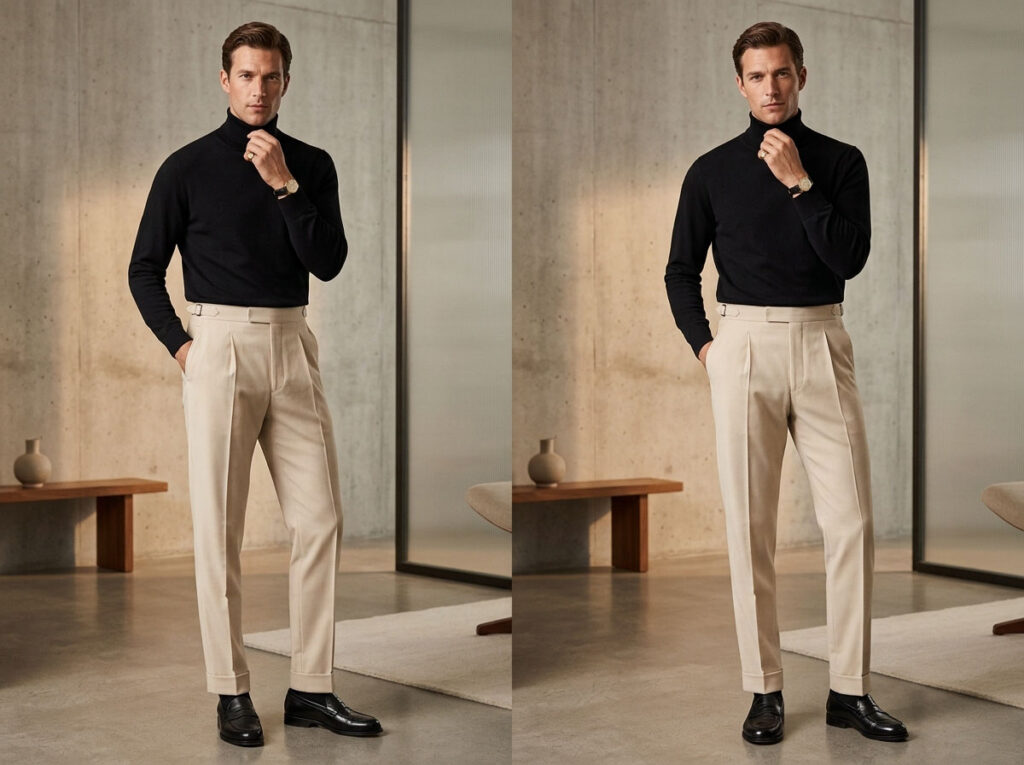
Straight leg — Keeps a relatively consistent width from the thigh to the hem for a classic shape.
Fabric
Denim — Provides structure and durability and is most commonly associated with jeans.
Twill — A versatile woven fabric frequently used for chinos, workwear, and casual trousers.
Jersey — Offers stretch and softness, making it useful for joggers, leggings, and comfortwear.
Woven cotton — Works well for both casual and more structured trouser designs.
Length
Full length — Extends to the ankle or shoe and is common in jeans and trousers.
Cropped — Ends above the ankle or around mid-calf for a lighter, fashion-focused silhouette.
Shorts — Use a shorter inseam and are designed for warm-weather, casual, or athletic applications.
Closure Type
Elastic waist — Prioritizes comfort and is common in joggers, lounge pants, and activewear.
Zipper and button — Creates a more structured closure commonly found in jeans, chinos, and trousers.
Drawstring — Allows adjustable comfort and is frequently used in sweatpants and casual pants.
Purpose
Athleisure — Combines comfort and performance, as seen in joggers and leggings.
Formalwear — Uses cleaner construction and tailoring for suits and dress trousers.
Outdoor/utility — Prioritizes durability, storage, and functionality through styles such as cargo pants.
Pockets
Patch pockets — Add a visible, casual design element while providing practical storage.
Welt pockets — Create a cleaner, more refined finish for tailored pants.
Cargo pockets — Increase storage capacity and reinforce a utility-inspired aesthetic.
Waist Rise
Low-rise — Sits lower on the hips and creates a more fashion-forward silhouette.
Mid-rise — Offers a balanced position and works across many everyday styles.
High-rise — Sits higher on the waist and can visually lengthen the legs.
Classification Factor
Examples
Why It Matters
Cut
Slim, straight, tapered, wide
Defines the silhouette and overall fit
Fabric
Denim, twill, jersey
Affects comfort, structure, stretch, and use
Function
Casual, utility, athleisure
Helps determine construction and features
Length
Full, cropped, short
Changes proportion and styling
Closure
Button, zipper, elastic, drawstring
Influences fit and wearing comfort
Pockets
Patch, welt, cargo
Adds function and visual identity
Rise
Low, mid, high
Changes waist position and body proportion
Tapered vs Slim: What’s the Real Difference?
Slim and tapered pants are often confused because both can create a relatively narrow silhouette. The key difference is how the leg width changes from the thigh to the ankle.
1. Pattern Shape
Slim fit — Remains relatively narrow from the upper leg through the hem, creating a close-fitting shape.
Tapered fit — Starts with more room around the thigh and progressively narrows toward the ankle.
2. Fit and Comfort
Slim — Provides a close fit but may offer less room for muscular or athletic legs.
Tapered — Gives additional thigh space while maintaining a narrower ankle, balancing comfort with structure.
3. Visual Silhouette
Slim — Looks sleek and streamlined and can work particularly well in tailored or minimalist collections.
Tapered — Creates a more dynamic shape that is common in chinos, joggers, and contemporary casualwear.
4. Who It’s For
Slim fit — Often works well for lean or average builds and customers looking for a close silhouette.
Tapered fit — Offers more flexibility for athletic, muscular, or curvier body proportions
Feature
Slim Fit Pants
Tapered Fit Pants
Leg Width
Consistently narrow
Roomier at thigh, narrower at ankle
Comfort
Closer fit
More thigh room
Typical Use
Formal trousers, smart casual
Joggers, chinos, casual trousers
Best For
Lean to average builds
Athletic, muscular, and curvier builds
Straight Leg Pants: Why Is This Classic Fit Still So Versatile?
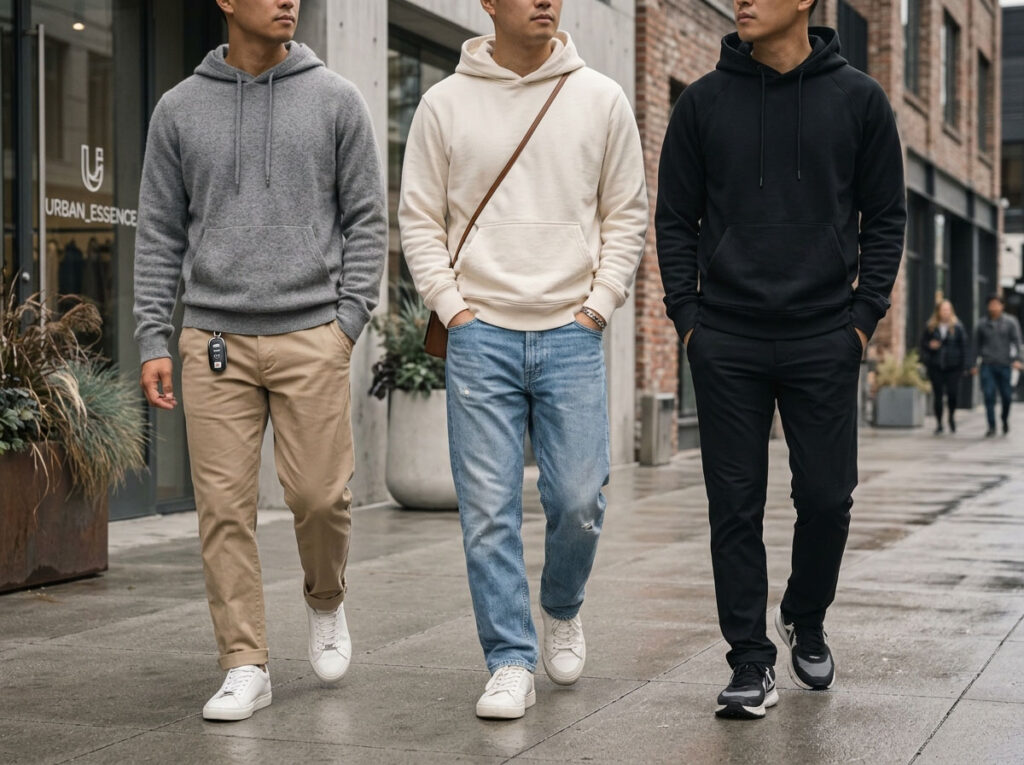
Straight-leg pants remain one of the most adaptable silhouettes in apparel. Unlike skinny, tapered, or flared designs, the leg maintains a relatively consistent width from the thigh through the hem.
This balanced construction makes straight-leg pants suitable for denim, chinos, tailored trousers, workwear, and many unisex collections.
How Are Straight-Leg Pants Constructed?
Design Elements
Consistent leg width — The thigh-to-ankle shape stays relatively uniform for a balanced silhouette.
Mid- to high-rise options — These rises can provide additional structure and make the proportions easier to style.
Flat front or zip fly — Common construction details create a clean appearance.
Multiple fabric options — Denim, twill, and woven cotton can all support the straight-leg shape.
Feature
Straight-Leg Pants
Leg Shape
Uniform width without strong taper or flare
Fit
Balanced and comfortably structured
Common Uses
Casualwear, formalwear, unisex collections
Common Fabrics
Denim, twill, woven cotton
Why Are Straight-Leg Pants So Popular?
Timeless appeal — The silhouette is less dependent on short-term trends.
Easy styling — It works with sneakers, boots, flats, and dress shoes.
Broad market appeal — The balanced shape can be adapted for different demographics and product categories.
Production flexibility — The relatively straightforward leg shape can simplify grading and scaling across sizes.
What Body Shapes Work Well With Straight-Leg Pants?
Straight-leg pants can work across many body proportions because they create a visually balanced line without excessive cling or volume.
Matching Body Types with Straight-Leg Pants
1. Hourglass Shape
Balanced shoulders and hips — A straight leg preserves the body’s natural balance.
Styling advantage — A tucked top or defined waistband can emphasize the waist while keeping the lower silhouette clean.
2. Pear Shape
Wider hips and narrower shoulders — The straight leg can balance the lower body without tightly emphasizing the thighs.
Styling advantage — A structured upper layer can further balance proportions.
3. Rectangle Shape
Similar shoulder, waist, and hip widths — Straight pants introduce a clean vertical line.
Styling advantage — Layering and waist-focused styling can add visual structure.
Body Shape
Effect of Straight-Leg Pants
Hourglass
Maintains balanced proportions
Pear
Creates a more balanced lower silhouette
Rectangle
Adds clean structure and vertical lines
Skinny Pants: Are They Still Relevant in Today’s Fashion Market?
Skinny pants were once dominant across mainstream fashion, from officewear to denim and streetwear. Their market position has changed, but they remain relevant in selected categories.
Instead of treating skinny pants as universally outdated, it is more useful to view them as a specialized fit option. They continue to appear in stretch denim, activewear, men’s formalwear, and specific fashion subcultures.
The Rise, Peak, and Shift of Skinny Pants
1. The Rise
2000s–2010s popularity — Skinny silhouettes became a major mainstream fashion trend.
Celebrity influence — Musicians and fashion personalities helped make narrow-leg styles highly visible.
Mass-market adoption — Large retailers expanded skinny styles across multiple categories.
2. Peak and Market Saturation
Broad adoption — Skinny fits became common across age groups and occasions.
Market saturation — Repetition across the market eventually reduced their novelty.
Trend fatigue — Consumers began looking for looser and more relaxed silhouettes.
3. The Shift Toward Relaxed Fits
Period
Market Position
Key Development
2010–2015
Peak
Skinny fits had broad mainstream appeal
2016–2020
Common
Still widely available but less trend-defining
2021 onward
More selective
Relaxed and wide-leg silhouettes gained attention
4. Where Skinny Pants Still Perform Well
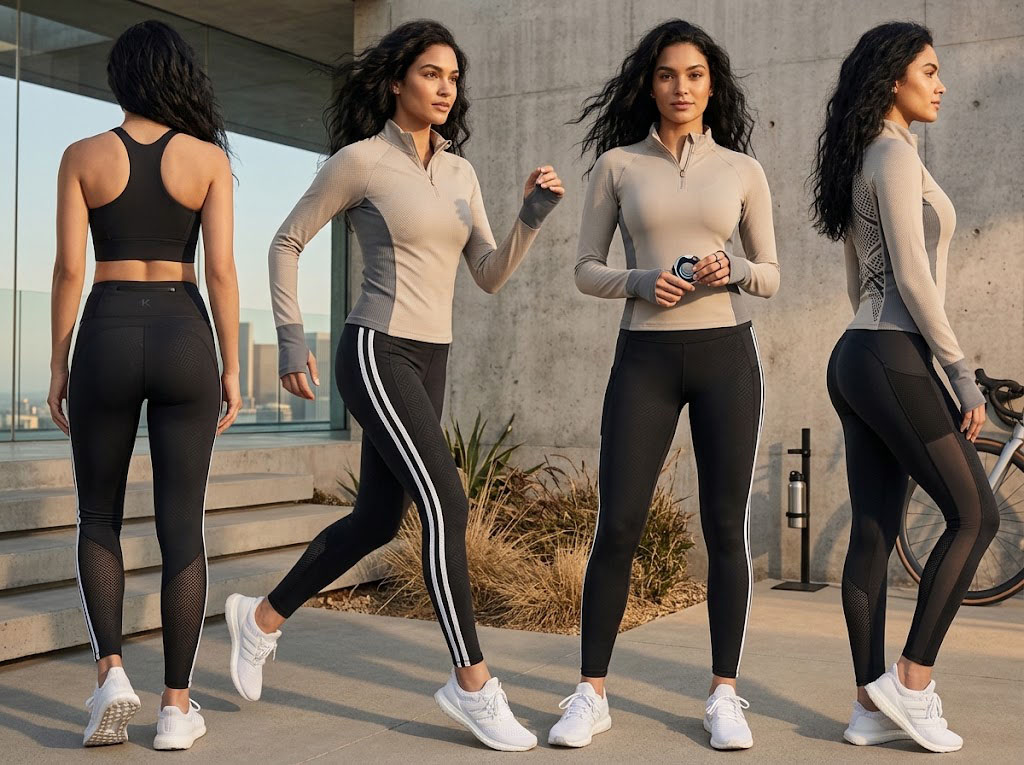
Activewear — Compression leggings and fitted performance pants require close silhouettes for functional reasons.
Men’s formalwear — Slim-cut suit trousers continue to offer a tailored appearance.
Streetwear subcultures — Punk, grunge, and other niche aesthetics may still favor narrow legs.
Fit-option strategies — Brands can retain skinny styles without making them the dominant silhouette.
What Does This Mean for Brands and Buyers?
Avoid overconcentration — A balanced assortment reduces dependence on a single fit trend.
Use targeted positioning — Skinny pants can work well for performance or specific customer groups.
Test demand before scaling — Smaller production runs or preorders can help brands validate demand.
Tapered Pants: Tapered vs Slim—Which Fit Is Better?
Tapered pants provide a useful middle ground between relaxed comfort and a narrow ankle. They generally offer more room through the upper leg while gradually narrowing toward the hem.
This makes them particularly useful for contemporary casualwear, chinos, joggers, and athleisure.
What Is Tapered Fit vs Slim Fit?
Slim fit generally remains narrow through the leg, while tapered fit intentionally changes width from thigh to ankle.
Tapered vs Slim: The Key Differences
1. Pattern Shape
Slim — Narrow throughout most of the leg.
Tapered — More generous at the thigh and narrower at the ankle.
2. Fit and Comfort
Slim — Creates a close, body-conscious fit.
Tapered — Provides additional room where movement often requires it.
3. Visual Silhouette
Slim — Clean and minimal.
Tapered — More dynamic and contemporary.
4. Who It’s For
Slim — Suitable for customers who prefer a close fit.
Tapered — Useful for customers who want thigh comfort without a wide hem.
Feature
Slim Fit
Tapered Fit
Thigh
Narrow
More generous
Ankle
Narrow
Narrow
Silhouette
Sleek
Structured and dynamic
Common Uses
Formalwear, denim
Chinos, joggers, casualwear
Flare & Bell Bottom Pants: What’s the Difference?
Flare and bell-bottom pants both widen toward the hem, but their proportions are different.
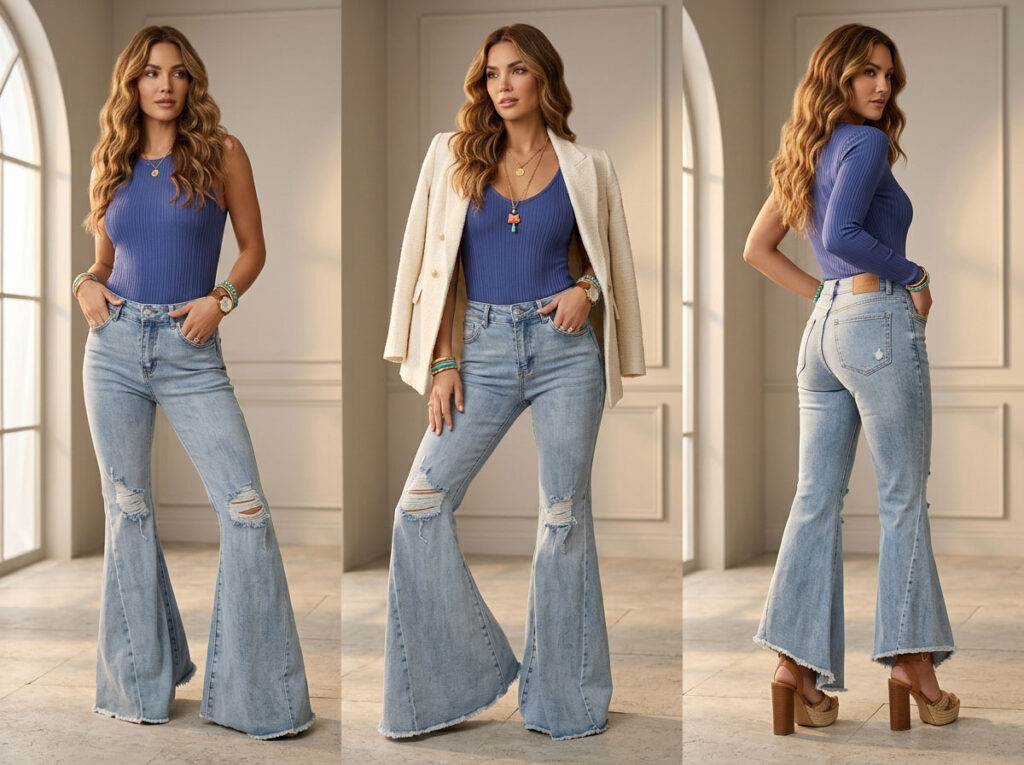
Flare pants generally expand more gradually from around the knee. Bell bottoms create a much more dramatic flare, often beginning higher on the lower leg.
Understanding Flare vs Bell Bottoms
1. Shape & Cut
Flare pants — Create a moderate A-line expansion below the knee.
Bell bottoms — Use a stronger flare and create a more dramatic lower-leg silhouette.
2. Rise & Waist
High-rise versions — Frequently support retro-inspired styling and visually lengthen the legs.
Low-rise versions — Can create a stronger Y2K or fashion-forward direction.
3. Fabric Choices
Denim — Provides structure and is strongly associated with classic flare styles.
Stretch jersey or polyester blends — Allow more movement and fluidity.
Corduroy and velvet — Add texture and reinforce vintage aesthetics.
4. Styling Potential
Flare pants — Pair easily with fitted tops, blouses, boots, and modern casualwear.
Bell bottoms — Work particularly well with platforms, heels, and statement styling.
Feature
Flare Pants
Bell Bottoms
Flare Start
Usually below the knee
Often higher on the lower leg
Hem Width
Moderate
Dramatically wider
Aesthetic
Modern retro
Bold vintage
Trend Flexibility
Relatively adaptable
More trend-dependent
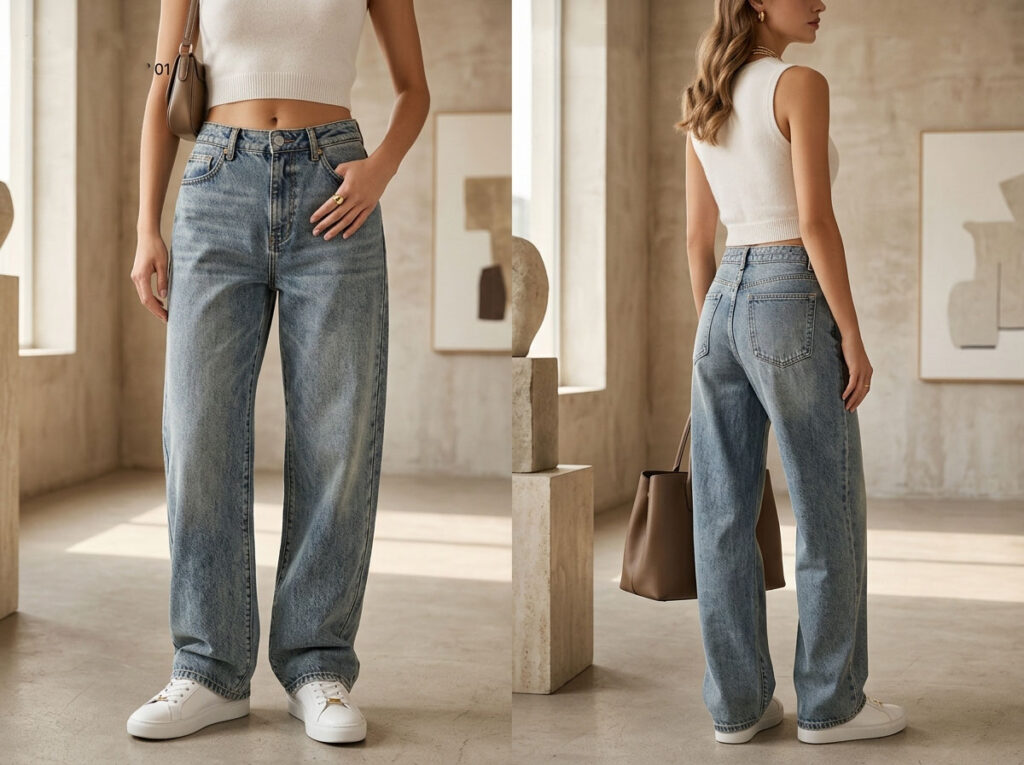
Wide Leg Pants: Why Are They One of Today’s Most Popular Silhouettes?
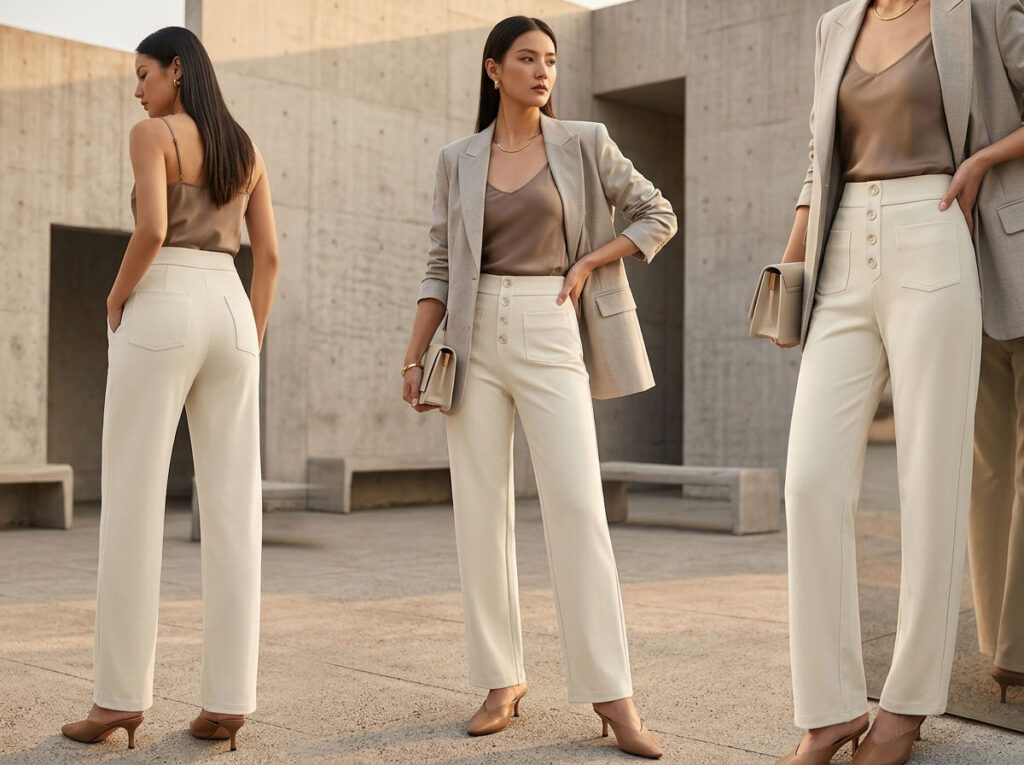
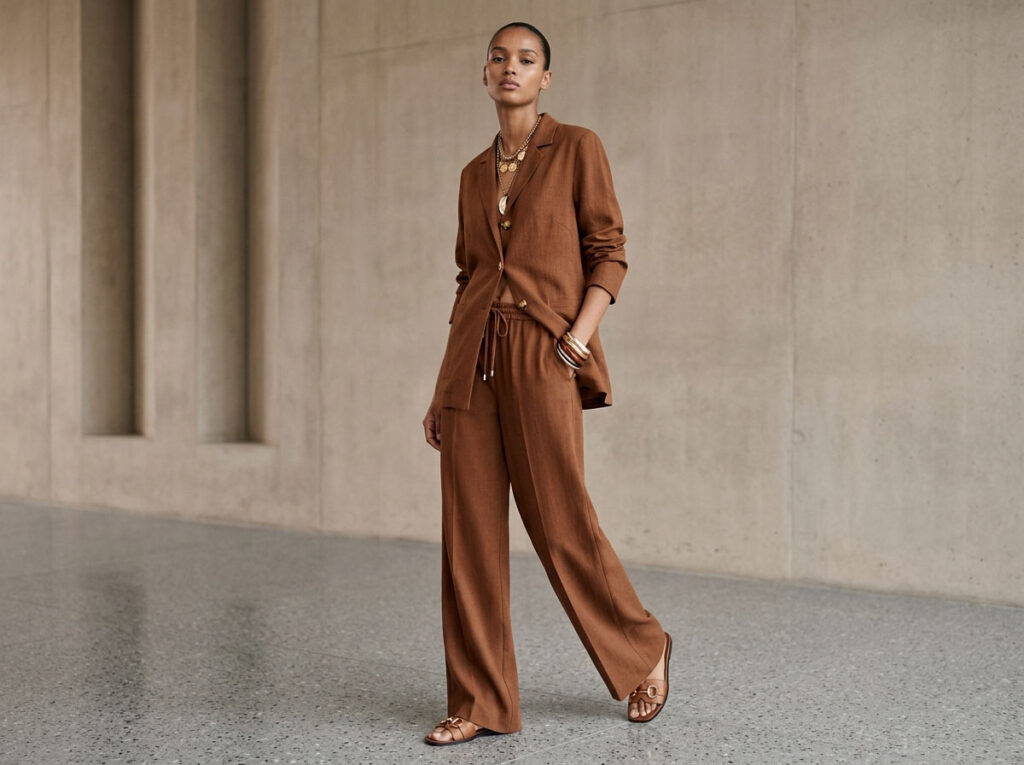
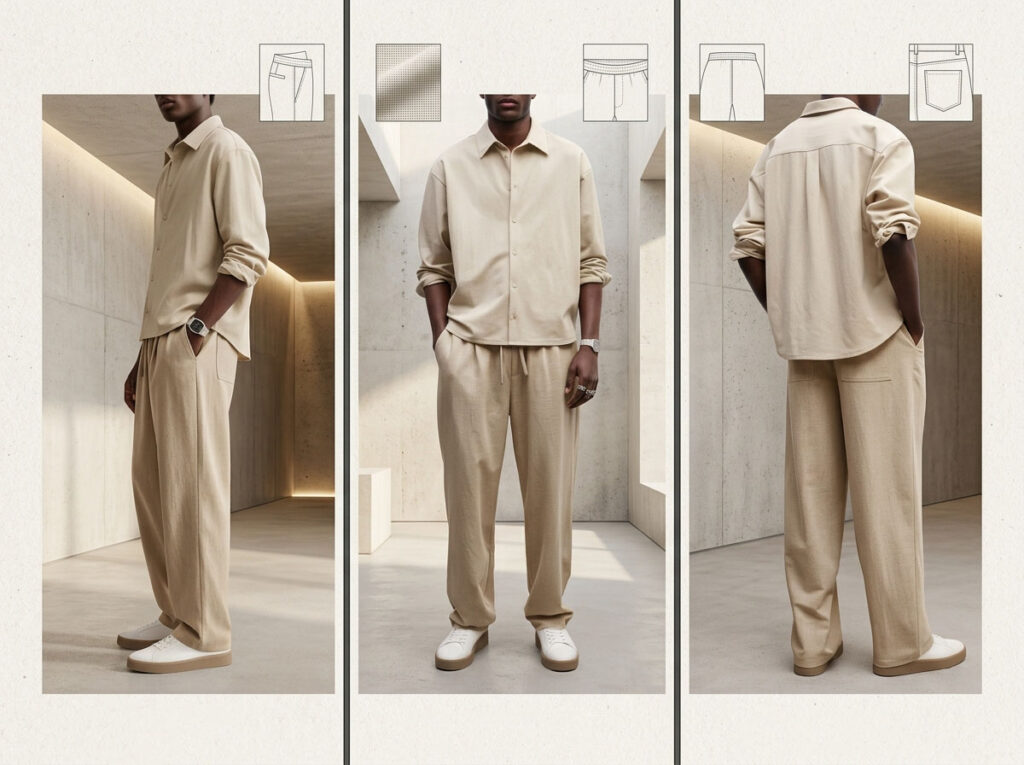
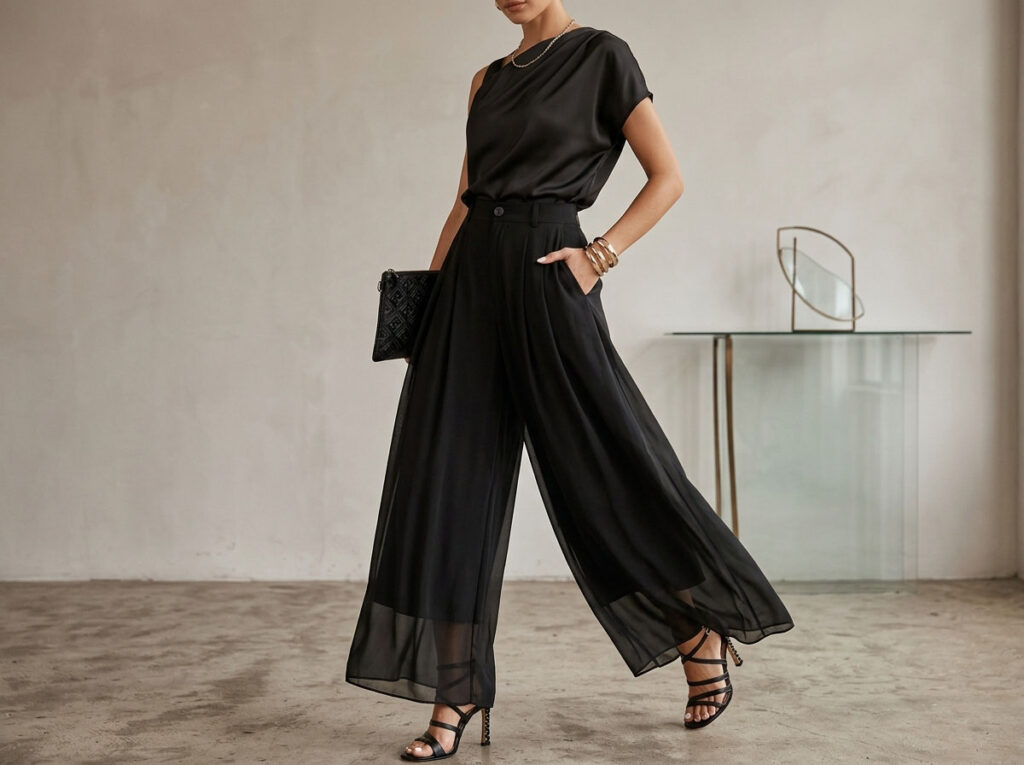
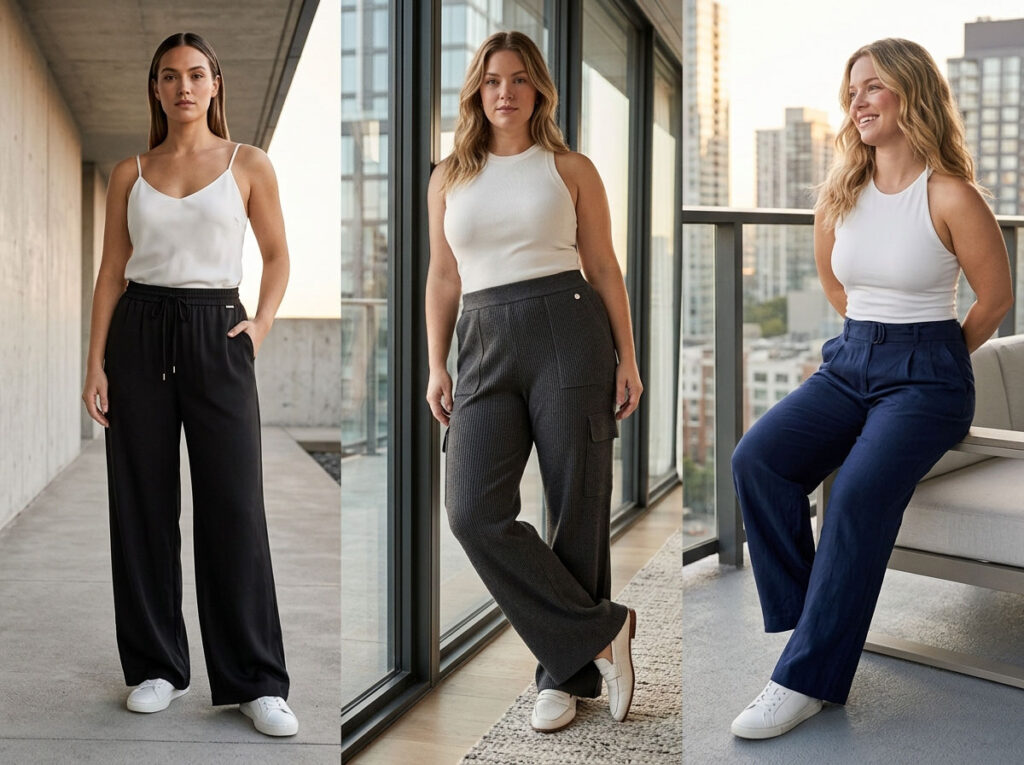
Wide-leg pants create a generous silhouette from the upper leg through the hem. Unlike flared pants, they do not need to expand from a narrow knee; unlike tapered pants, they do not narrow toward the ankle.
Their combination of movement, comfort, and fashion impact makes them useful across workwear, resortwear, streetwear, and athleisure.
What Are Wide-Leg Pants and Why Are They Trending?
Wide-leg pants offer a flowy, spacious silhouette that can feel both relaxed and polished. Their versatility allows brands to reinterpret the same basic shape in different fabrics and lengths.
The Design and Appeal of Wide-Leg Pants
1. Cut & Shape
Consistent width — The leg remains generous from hip or thigh to hem.
High-rise options — These can visually lengthen the legs.
Full-length and cropped versions — Different lengths allow the style to serve multiple markets.
2. Fabric Choice
Lightweight fabrics — Rayon, viscose, and chiffon create movement and drape.
Structured fabrics — Twill, crepe, and denim create more architectural volume.
Stretch blends — Useful for comfortwear and athleisure.
3. Variations Within the Wide-Leg Category
Type
Key Features
Best Use
Palazzo Pants
Extremely wide and fluid
Resortwear, summer collections
Culottes
Wide leg with cropped length
Office casual, streetwear
Wide-Leg Trousers
Tailored, full-length construction
Workwear, formalwear
Lounge Wide Pants
Elastic waist and soft knit
Athleisure, comfortwear
4. Why Consumers Love Them
Breathability — Additional leg room improves airflow and reduces a restrictive feeling.
Body inclusivity — The relaxed silhouette can accommodate a broad range of proportions.
Versatility — The same silhouette can be dressed up or down.
Comfort — Less fabric clinging can make the style attractive for everyday wear.
Styling Tips by Segment
Target Customer
Styling Direction
Gen Z
Baby tees, cropped tops, and statement sneakers
Millennial Women
Fitted blazers, heels, or polished tops
Athleisure Buyers
Crop hoodies, tanks, and casual sandals
Resortwear Customers
Linen wide legs with lightweight tops
Harem Pants: Where Did This Relaxed Style Come From?
Harem pants are recognizable for their loose volume around the hips and thighs, often combined with a tapered or cuffed ankle. Their history is complex, and the modern Western fashion term reflects how designers interpreted silhouettes associated with Middle Eastern and South Asian clothing.
Why Do They Call Them Harem Pants?
The name became established in Western fashion through interpretations of clothing associated with women’s private spaces in parts of the Middle East and South Asia. French designer Paul Poiret helped popularize the style in Paris in the early 20th century.
The Cultural and Fashion Evolution of Harem Pants
1. Origin of the Name
Historical context — The term became associated with loose, flowing trousers and Western interpretations of Eastern dress.
Functional qualities — Loose proportions offered comfort, coverage, and freedom of movement.
2. Western Reinvention
Early 20th-century fashion — Paul Poiret brought a dramatic version of the silhouette to Paris fashion.
Design direction — The style was often paired with flowing tops and emphasized liberation from restrictive corseted dressing.
3. Modern Revival
1980s–1990s — Oversized silhouettes appeared in hip-hop and streetwear.
Today — Harem-inspired pants appear in festivalwear, dancewear, travelwear, and loungewear.
Era
Common Use
Style Direction
Historical Middle East & South Asia
Domestic and traditional dress
Loose, flowing construction
1910s Paris
Haute couture
Dramatic fashion statement
1980s–1990s USA
Hip-hop and streetwear
Oversized and expressive
2000s–Today
Yoga, travel, lounge
Soft and movement-focused
4. Design Features
Drop crotch — Adds volume and creates the signature relaxed shape.
Elastic waistband — Improves everyday comfort and fit flexibility.
Tapered cuffs — Keeps the ankle visually controlled.
Lightweight fabrics — Rayon, cotton, and modal can provide fluid movement.
Cargo Pants: Cargo vs Baggy Pants—What’s the Real Difference?
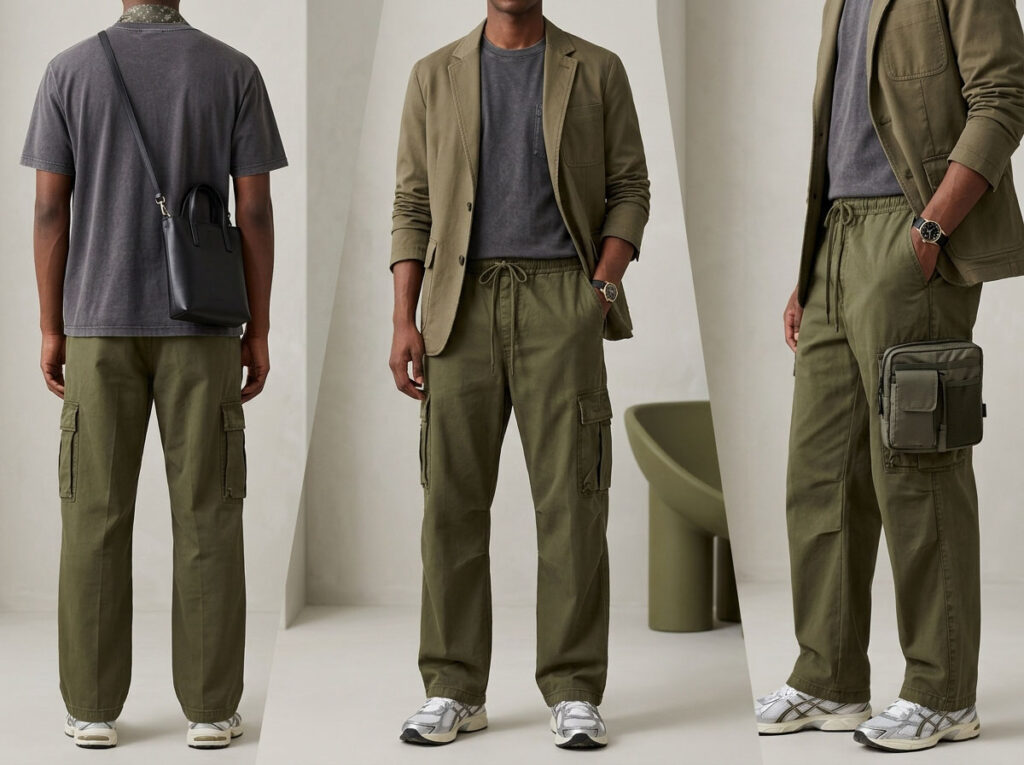
Cargo and baggy pants can both have relaxed silhouettes, but they communicate different design priorities. Cargo pants are defined primarily by utility pockets, while baggy pants are defined by volume and width.
What Is the Difference Between Cargo Pants and Baggy Pants?
Cargo pants traditionally use large side or thigh pockets for storage. Baggy pants do not require a particular pocket construction; their defining characteristic is an oversized leg silhouette.
Design, Function, and Fashion of Cargo vs Baggy Pants
1. Design Features
Cargo Pants
Large side pockets — Provide visible storage and create a utility aesthetic.
Durable fabrics — Twill and ripstop are common choices for structured cargo styles.
Reinforced construction — Double stitching, pocket flaps, and closures can increase durability.
Adjustable details — Drawcords, elastic hems, and zippers can modify the fit.
Baggy Pants
Oversized leg volume — The silhouette is deliberately loose from the upper leg through the hem.
Flexible pocket design — No specific pocket configuration defines the category.
Multiple fabric options — Denim, jersey, fleece, and woven cotton can all create baggy silhouettes.
Silhouette-first design — The visual volume is generally more important than utility details.
2. Function & Origins
Cargo pants — Developed from military and utility clothing, with function and equipment storage as important design drivers.
Baggy pants — Became strongly associated with streetwear and hip-hop culture, where oversized proportions communicated comfort and attitude.
3. Silhouette and Fit
Feature
Cargo Pants
Baggy Pants
Fit
Regular to relaxed
Very loose and oversized
Defining Detail
Utility pockets
Leg volume
Ankle
Straight, cuffed, or tapered
Usually straight or pooled
Primary Use
Utility + streetwear
Streetwear, skatewear, casualwear
4. Fabric & Finish
Cargo Pants
Twill and ripstop — Provide structure and durability.
Cotton-spandex blends — Add mobility without losing the utility appearance.
Nylon and technical fabrics — Support modern outdoor and techwear collections.
Baggy Pants
Heavy denim — Creates structured oversized silhouettes.
Fleece and jersey — Adds softness for comfort-led collections.
Washed finishes — Can reinforce vintage and streetwear aesthetics.
5. When Do Baggy Pants Work Best?
Gen Z streetwear — Oversized proportions align naturally with skate and contemporary streetwear.
Gender-neutral collections — Relaxed volume can simplify unisex styling.
Comfort-focused products — Fleece and terry versions combine fashion with softness.
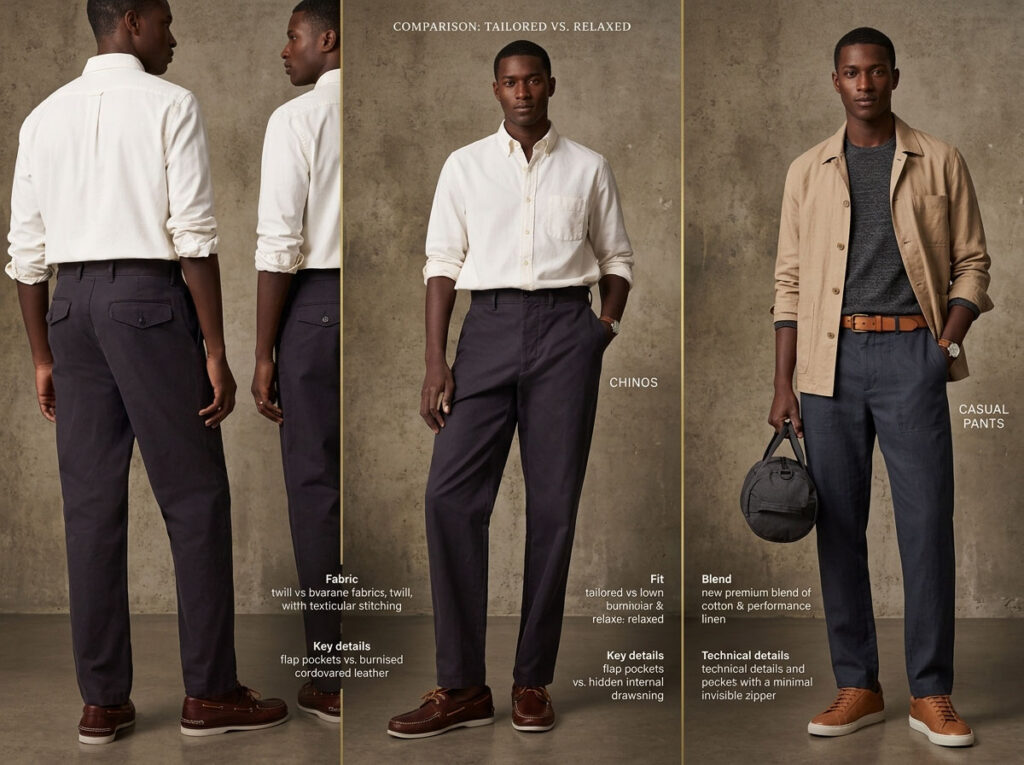
Chinos vs Casual Pants: What’s the Difference?
Chinos are a specific category within casual pants, while “casual pants” is a much broader term.
Chinos are typically made from cotton twill and feature a cleaner, more structured construction. Casual pants can include chinos, joggers, cargo pants, lounge pants, and drawstring styles.
Chinos vs Casual Pants Breakdown
1. Definition & Scope
Chinos — Generally use cotton twill with a tailored waistband, belt loops, and a zip fly.
Casual pants — Cover a much wider range of non-formal styles and constructions.
2. Fabric & Finish
Chinos
Cotton twill — Provides structure while remaining comfortable.
Smooth surface — Supports a cleaner, more polished appearance.
Garment dyeing — Can create softer color and a lived-in appearance.
Other Casual Pants
Fleece and jersey — Support soft, comfort-oriented products.
Ripstop and woven blends — Work well for utility and outdoor styles.
Stretch cotton — Provides mobility for everyday wear.
3. Construction Details
Feature
Chinos
Other Casual Pants
Waistband
Structured with belt loops
Elastic, drawstring, or hybrid
Closure
Zip fly + button
Zipper, pull-on, snaps, or none
Pockets
Slant front + welt back
Patch, cargo, side-seam, kangaroo
Leg Fit
Straight or tapered
Wide, jogger, cuffed, or flared
4. Use Case
Chinos — Work well for business casual, smart weekend outfits, uniforms, and polished everyday dressing.
Other casual pants — Prioritize comfort, streetwear, travel, athleisure, or relaxation.
5. When Are Casual Pants the Better Choice?
Loungewear and travelwear — Elastic waists and softer fabrics improve comfort during long wear.
Athleisure — Jersey and fleece can combine casual styling with movement.
Youth and unisex collections — Relaxed constructions allow more freedom in fit and styling.
Jeans: Are More Expensive Jeans Actually Better Quality?
Price can correlate with higher-quality denim, but a higher retail price does not automatically guarantee superior construction.
Quality jeans should be evaluated through fabric weight, yarn quality, weave, stitching, wash techniques, hardware, pattern accuracy, and fit—not just brand name or price.
What Makes Jeans High Quality?
1. Denim Fabric Quality
Fabric weight — Heavier denim can provide greater structure and durability, although the ideal weight depends on the intended product.
Premium denim sources — Japanese selvedge and high-quality ring-spun denim are valued in premium denim markets.
Fiber composition — 100% cotton creates a structured, authentic denim feel, while small amounts of elastane can improve comfort.
2. Construction & Stitching
Higher stitch density — Can improve durability in high-stress areas.
Chain-stitch hems — Common in heritage and selvedge-inspired denim.
Bartacks — Reinforce pocket corners and other stress points.
Clean stitching — Consistent stitch length and alignment contribute to perceived quality.
3. Wash Techniques & Finishing
Basic washes — Rinses and simple enzyme treatments provide a cleaner and more economical finish.
Advanced washes — Stone washing, sanding, whiskering, and laser effects create more complex appearances.
Eco-finishing — Ozone and other lower-impact technologies can support sustainability goals.
4. Hardware & Trims
Quality zippers and rivets — Improve durability and contribute to the product’s visual identity.
Button fly options — Can reinforce a heritage or premium positioning.
Leather patches and internal finishing — Add additional brand and construction details.
Feature
Basic Jeans
Premium Jeans
Fabric
Lightweight or stretch denim
Heavier ring-spun or selvedge denim
Stitching
Standard lockstitch
Reinforced and/or chain stitching
Wash
Rinse or basic enzyme wash
Multi-step or specialty finishing
Fit
Standardized block
More detailed pattern development
Hardware
Standard trims
Premium zippers, rivets, and buttons
5. When Should You Invest in Higher-Quality Jeans?
Longevity-focused customers — Premium construction matters more when durability is part of the product story.
Premium casual brands — Better materials can support higher perceived value.
Sustainability-led collections — Longer product life can complement slow-fashion positioning.
High-AOV DTC brands — Better fit and construction may help reduce returns and improve reviews.
Joggers & Sweatpants: Are They Really the Same Thing?
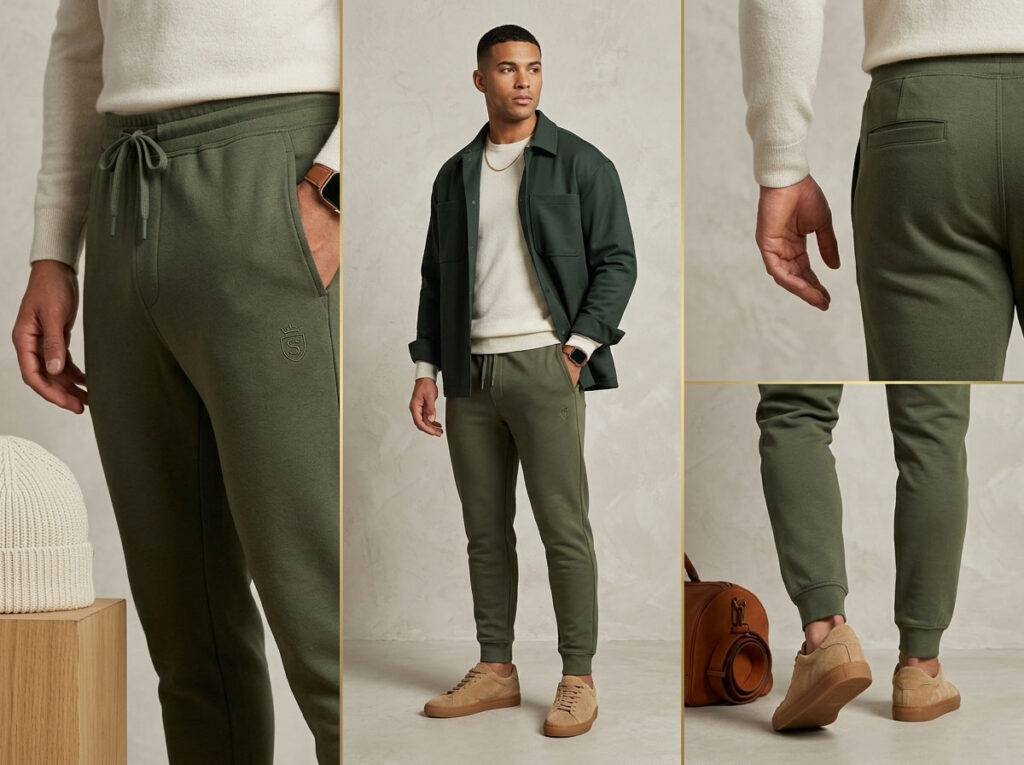
Joggers and sweatpants belong to the same broader casualwear category, but they are not identical.
Joggers generally use a tapered silhouette and ribbed or elastic cuffs, while sweatpants are often looser, heavier, and more focused on warmth and relaxation.
Are Joggers and Sweatpants the Same Thing?
Not exactly. The difference is primarily visible in silhouette, fabric weight, ankle construction, and intended styling.
Joggers vs. Sweatpants: A Detailed Breakdown
1. Fit & Shape
Joggers
Tapered legs — Create a cleaner, more modern silhouette.
Ribbed or elastic cuffs — Secure the ankle and emphasize the taper.
Closer fit — Often includes some stretch for mobility.
Sweatpants
Straight or relaxed legs — Prioritize comfort and volume.
Open or elastic hems — Allow more traditional sweatpant silhouettes.
Looser construction — Supports lounging and relaxed movement.
2. Fabric Weight & Use
Joggers
Lightweight to midweight fabrics — French terry, jersey, and performance blends are common.
Active lifestyle use — Suitable for errands, travel, light activity, and streetwear.
Sweatpants
Heavier fabrics — Fleece and brushed cotton provide warmth.
Comfort-first use — Ideal for lounging, recovery, and colder weather.
3. Design Features
Feature
Joggers
Sweatpants
Fabric
Cotton blends, performance knits
Fleece, heavier cotton
Silhouette
Tapered or slim
Loose, straight, or baggy
Waistband
Elastic + drawstring
Elastic or wide waistband
Ankle
Ribbed cuff
Ribbed cuff or open hem
Styling
Streetwear, athleisure
Loungewear, classic sportswear
4. Styling & Trends
Joggers
Sneakers and fitted tops — Create a contemporary athleisure look.
Bombers and streetwear layers — Reinforce the fashion-oriented silhouette.
Sweatpants
Hoodies and oversized tees — Create a relaxed, comfort-led outfit.
Slippers and casual footwear — Reinforce the lounge and recovery positioning.
Pencil Pants: What Makes This Sleek Trouser Style Different?
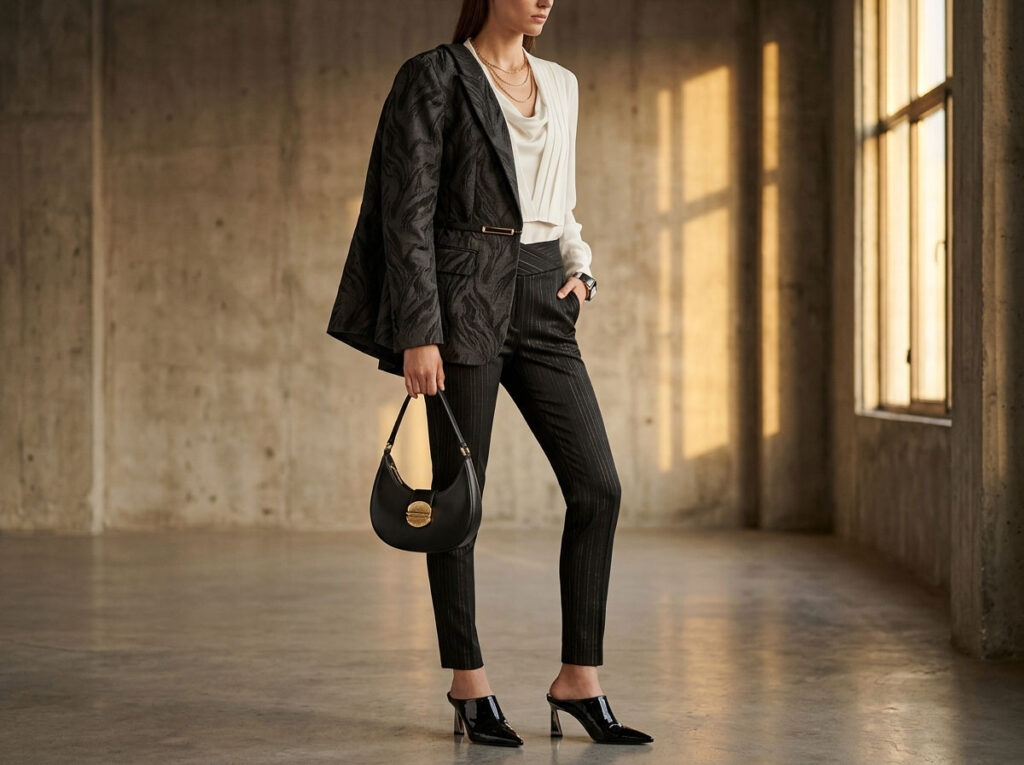
Pencil pants offer a narrow, streamlined silhouette inspired by the clean elegance associated with pencil skirts. They are particularly suitable for professional, smart-casual, and minimalist collections.
What Is a Pencil Pant?
Pencil pants are narrow-fitting trousers that typically follow the body from the waist toward the ankle without the dramatic flare of bootcut or wide-leg styles.
Key Features and Styling of Pencil Pants
1. Cut & Silhouette
Narrow fit — Creates a sleek line from waist toward ankle.
Mid- or high-rise — Provides structure and supports polished styling.
Minimal flare — Keeps the silhouette clean and controlled.
Ankle length — Often ends around or slightly above the ankle.
2. Fabric Choices
Cotton twill and stretch poplin — Combine structure with everyday comfort.
Suiting blends — Support more formal applications.
2–5% elastane or spandex — Can provide additional movement and recovery.
3. Closure & Finish
Tailored waistband — Creates a refined appearance.
Zip fly or side zipper — Supports a clean front.
Darts or creases — Add shaping and structure.
Clean hem — Avoids unnecessary bulk at the ankle.
4. Use Case
Corporate officewear — The narrow silhouette works naturally with blazers and tailored tops.
Formal uniforms — Provides a polished, consistent appearance.
Smart-casual collections — Can transition between professional and everyday dressing.
Minimalist womenswear — Supports clean and simple product aesthetics.
Feature
Pencil Pants
Slim Fit Pants
Silhouette
Straight, narrow, clean
Close-fitting with more shaping
Stretch
Moderate
Often higher
Hem
Usually straight
Can be cropped or cuffed
Styling
Professional and polished
Casual to semi-formal
Leather Pants: Are They Still a Strong Fashion Choice?
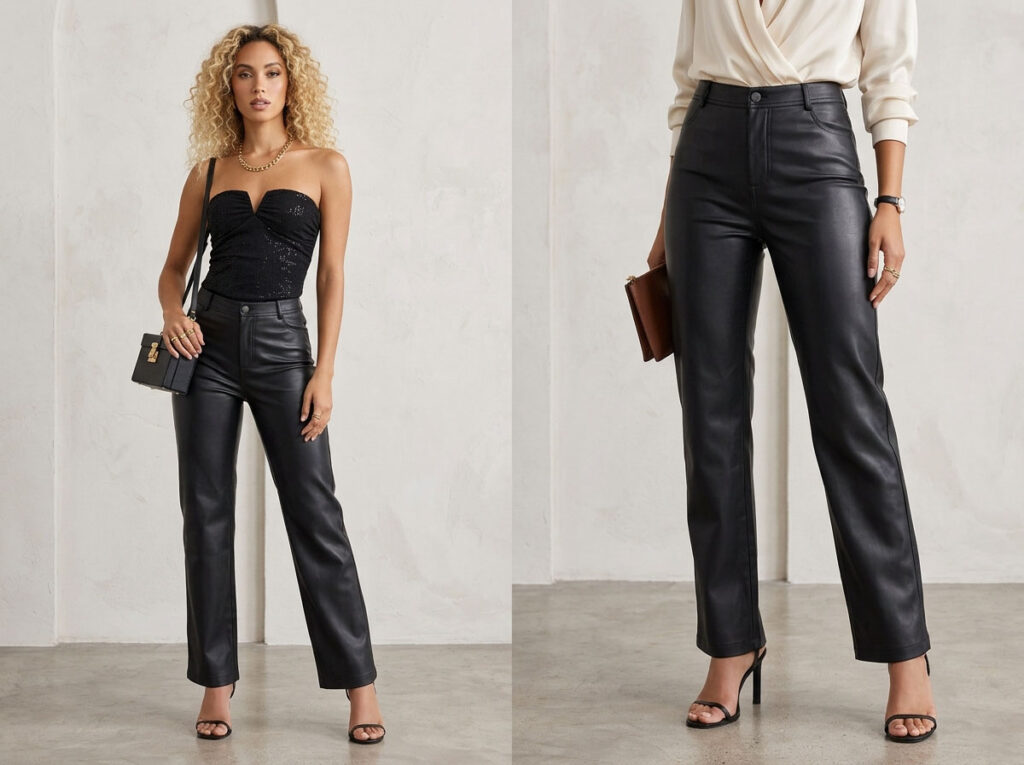
Leather pants have evolved from a highly dramatic statement piece into a more versatile category. Modern versions range from genuine leather trousers to faux-leather joggers and wide-leg PU styles.
Are Leather Pants Still a Thing?
Yes. Leather and leather-look pants continue to appear in elevated streetwear, minimalist wardrobes, seasonal capsules, and statement collections. Faux and vegan alternatives have also made the category more accessible to a wider range of brands and consumers.
How Leather Pants Are Evolving in Today’s Market
1. Shifting Style Identities
Traditional image — Historically associated with rock, rebellion, and glamorous statement dressing.
Modern interpretation — Can now look minimal, refined, sporty, or casual depending on the cut and finish.
Styling flexibility — Sweaters, trench coats, sneakers, boots, and tailored pieces can all change the product’s positioning.
2. Key Leather Pant Silhouettes
Leather Pant Style
Description
Target Customer
Straight-Leg Leather Pants
Clean and tailored with subtle edge
Minimalist fashion customers
Faux-Leather Joggers
Relaxed fit with elastic waist and cuffs
Athleisure and Gen Z
High-Waisted Wide Legs
Dramatic but polished
Fashion-forward women
Cropped/Split-Hem Pants
Edgy and footwear-friendly
Streetwear consumers
3. Material Matters
Genuine Leather
Premium hand feel — Offers a distinctive natural texture and luxury positioning.
Higher cost — Requires more expensive raw material and specialized handling.
Long service life — Can develop character over time when properly maintained.
Faux/Vegan Leather
PU and recycled alternatives — Provide options across different price points and brand strategies.
Broad market appeal — Can support accessible and contemporary collections.
4. Who’s Buying?
Millennial customers — Often use leather pants as elevated wardrobe basics.
Gen Z consumers — May favor bold textures and oversized silhouettes.
Influencer-led labels — Use statement bottoms to create visual impact.
DTC brands — Can position leather-look pants as high-impact hero products.
Corduroy Pants: Why Can This Fabric Be More Expensive to Produce?
Corduroy looks relatively simple, but its raised wale structure creates additional manufacturing requirements.
Why Are Corduroy Pants So Expensive?
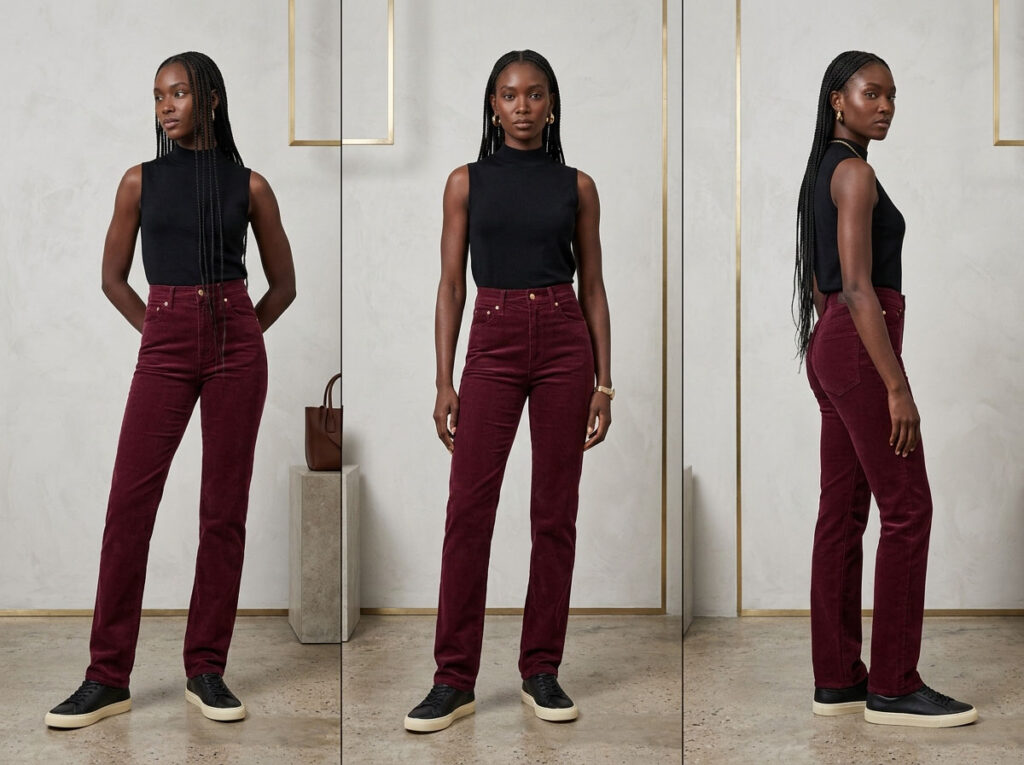
Corduroy uses a cut-pile construction that creates its distinctive vertical ridges. Yarn consumption, dyeing, finishing, directional cutting, and fabric handling can all affect production cost.
The Cost Breakdown of Corduroy Pants
1. Complex Fabric Structure
Cut-pile construction — Creates the characteristic raised wales.
Multiple yarn systems — The fabric requires yarns for both the base and pile.
Precision cutting — Improper handling can damage or flatten the pile.
2. Wale Density and Yarn Consumption
Wale Count
Look & Feel
Relative Cost Impact
8–10 wales/in
Bold and retro
Moderate
12–16 wales/in
Classic casual texture
Balanced
18+ wales/in
Fine and refined
More delicate and potentially higher cost
More wale density can increase yarn and finishing requirements, although final cost also depends on fiber, weight, dyeing, and supplier specifications.
3. Dyeing and Finishing
Pre-treatment — Helps prepare the pile fabric for consistent dyeing.
Post-dye finishing — Brushing, steaming, and setting help preserve the surface texture.
Color control — Pile direction can change how colors appear under different lighting conditions.
4. Yield & Cutting Waste
Directional nap — Pattern pieces generally need to follow the same direction.
Higher fabric consumption — Complex silhouettes can increase cutting waste.
Shrinkage control — Fabric dimensional change needs to be considered before final pattern approval.
5. Who Is Willing to Pay More?
Heritage brands — Corduroy supports vintage and traditional positioning.
Texture-focused consumers — The wale surface provides a tactile fashion element.
Unisex streetwear brands — Corduroy works well for seasonal and retro collections.
Natural-fiber customers — Cotton corduroy can fit heritage and material-focused stories.
Cuffed Pants: What Are They and Why Do Designers Use Them?
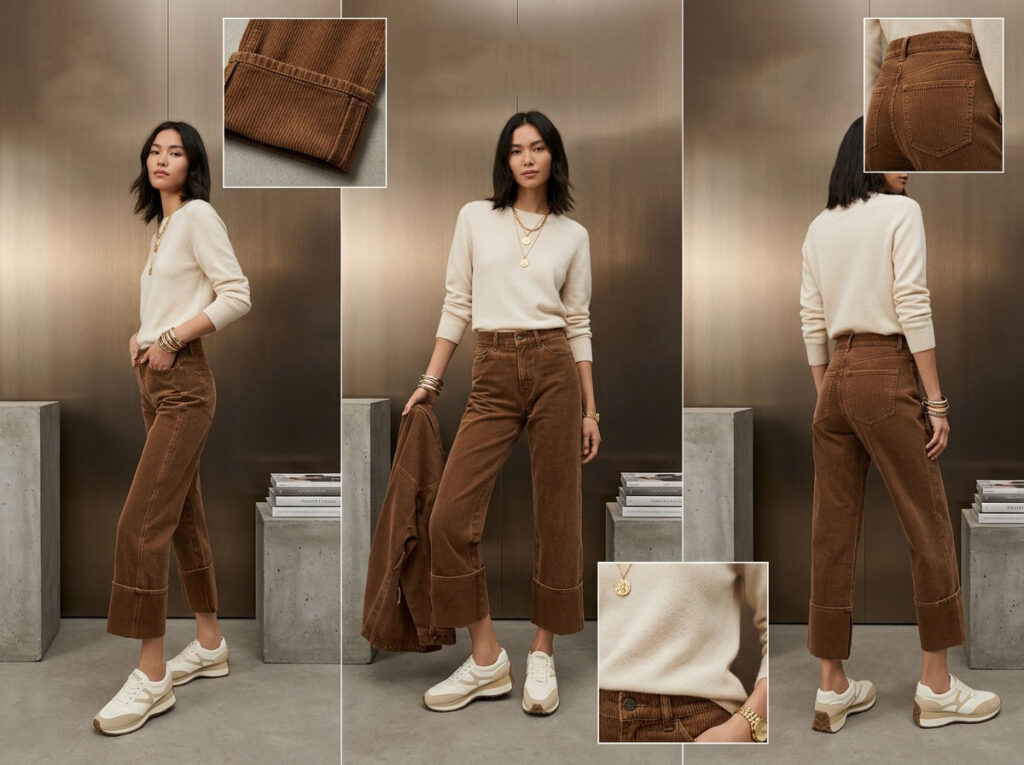
Cuffed pants feature a turned-up or constructed hem that adds visual weight to the leg opening. The cuff can be permanently sewn, rolled, elasticated, or adjustable depending on the garment category.
What Are Cuffed Pants and How Are They Used in Different Styles?
Cuffs are both functional and decorative. They can improve the hang of certain trousers, visually highlight footwear, and help define the identity of casual, formal, utility, or athletic pants.
Types, Benefits, and Styling of Cuffed Pants
1. Types of Cuffs
Cuff Type
Description
Common Applications
Turned-Up Cuff
Folded and usually stitched into place
Dress pants, chinos
Elastic Cuff
Rib or elastic construction around ankle
Joggers, activewear
Rolled Hem
Adjustable casual fold
Jeans, chinos, cargos
Snap/Drawcord Cuff
Adjustable functional closure
Utility pants, streetwear
2. Functional Benefits
Adds hem weight — Can improve the way the leg hangs.
Protects the edge — Certain cuff constructions can reduce direct wear on the hem.
Highlights footwear — Useful when shoes are an important part of the styling.
Secures the ankle — Elastic cuffs help keep joggers in place during movement.
3. Styling Context
Formalwear — Turned-up suit trousers can reinforce a traditional tailoring aesthetic.
Streetwear — Elastic cuffs create a sharper ankle line on cargos and joggers.
Casualwear — Rolled denim or chinos create a relaxed appearance.
Relaxed Fit Pants: Is Relaxed Fit Bigger Than Regular Fit?
Relaxed fit and regular fit are not interchangeable terms. Relaxed pants generally provide additional ease around the hips, seat, and thighs, while regular fit follows the body’s proportions more closely.
Is Relaxed Fit Larger Than Regular Fit?
Yes, in most apparel sizing systems, relaxed fit provides additional room compared with regular fit, particularly around the upper leg and seat.
Comparing Relaxed Fit vs. Regular Fit Pants
1. Silhouette & Shape
Feature
Regular Fit
Relaxed Fit
Hip & Thigh
Standard ease
Extra ease
Leg Opening
Consistent or slightly tapered
Often wider or straight
Rise
Usually mid to high
Mid to high, sometimes lower
Seat
Follows body contours
More room and less cling
2. Use Cases
Regular Fit
Office pants and chinos — Offers a clean, versatile silhouette.
Classic denim — Works well for everyday wear.
Semi-formal dressing — Provides enough structure without being overly tight.
Relaxed Fit
Streetwear — Supports oversized and contemporary styling.
Loungewear — Maximizes comfort and movement.
Plus-size collections — Additional ease can improve wearing comfort.
Retro styles — Works naturally with vintage-inspired proportions.
3. Fabric Consideration
Medium- to heavyweight fabrics — Cotton twill, denim, and French terry can hold relaxed silhouettes effectively.
Soft fabrics — Can create a draped and comfortable appearance.
Structured materials — Help prevent oversized garments from looking shapeless.
4. Fit Specification Difference
Measurement, Size M
Regular Fit
Relaxed Fit
Hip Width
53 cm
56 cm
Thigh Width
31 cm
34 cm
Leg Opening
20 cm
22 cm
These values should be treated as an example specification rather than a universal size standard.
Chiffon Pants: What Makes Them Ideal for Lightweight Fashion Collections?
Chiffon pants are designed around movement, drape, and lightness rather than structure.
What Are Chiffon Pants and When Should You Use Them in a Collection?
Chiffon pants are lightweight trousers made from plain-woven chiffon, which may be produced from silk, polyester, rayon, or blended fibers. They are often sheer or semi-sheer and may require lining or layering for appropriate coverage.
Understanding the Style and Application of Chiffon Pants
1. Design Features
Loose or wide-leg silhouettes — Enhance the fabric’s natural movement.
High-waisted cuts — Can visually lengthen the body and support elegant drape.
Elastic or smocked waists — Improve comfort and flexibility.
Lining or inner shorts — Help address opacity requirements.
2. Fabric Properties
Lightweight construction — Creates an airy hand feel.
Semi-sheer appearance — Supports elegant and layered fashion applications.
Fluid drape — Makes chiffon suitable for warm-weather and occasionwear.
Fraying risk — Requires appropriate seam finishing during production.
3. Common Variants
Chiffon Pant Type
Key Features
Best Use
Wide-Leg Chiffon Pants
Long, flowing silhouette
Resortwear, formalwear
Split-Leg Chiffon Pants
Side openings for movement
Beach-to-evening styling
Layered Chiffon Pants
Sheer outer layer over a base
High fashion, modestwear
Printed Chiffon Pants
Floral or abstract graphics
Summer and boho collections
4. Customer Profile
Fashion-forward women — Often seek lightweight statement pieces.
Travelers and vacation shoppers — Appreciate breathable fabrics and easy movement.
Occasionwear customers — Chiffon can support elegant evening and event collections.
Sustainability-focused brands — Recycled synthetic options can support alternative material strategies.
Long Knit Pants: Why Are They Becoming a Comfort-Fashion Essential?
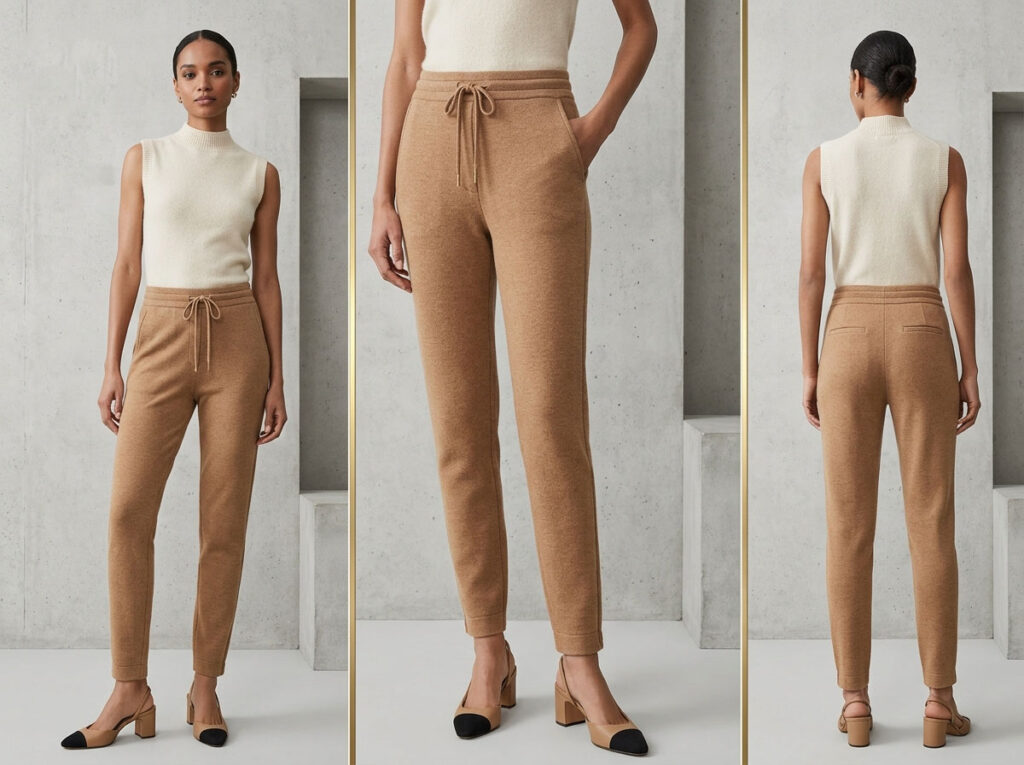
Long knit pants combine the softness and stretch of knit fabrics with the full-length coverage of trousers.
What Are Long Knit Pants and Why Are They Trending?
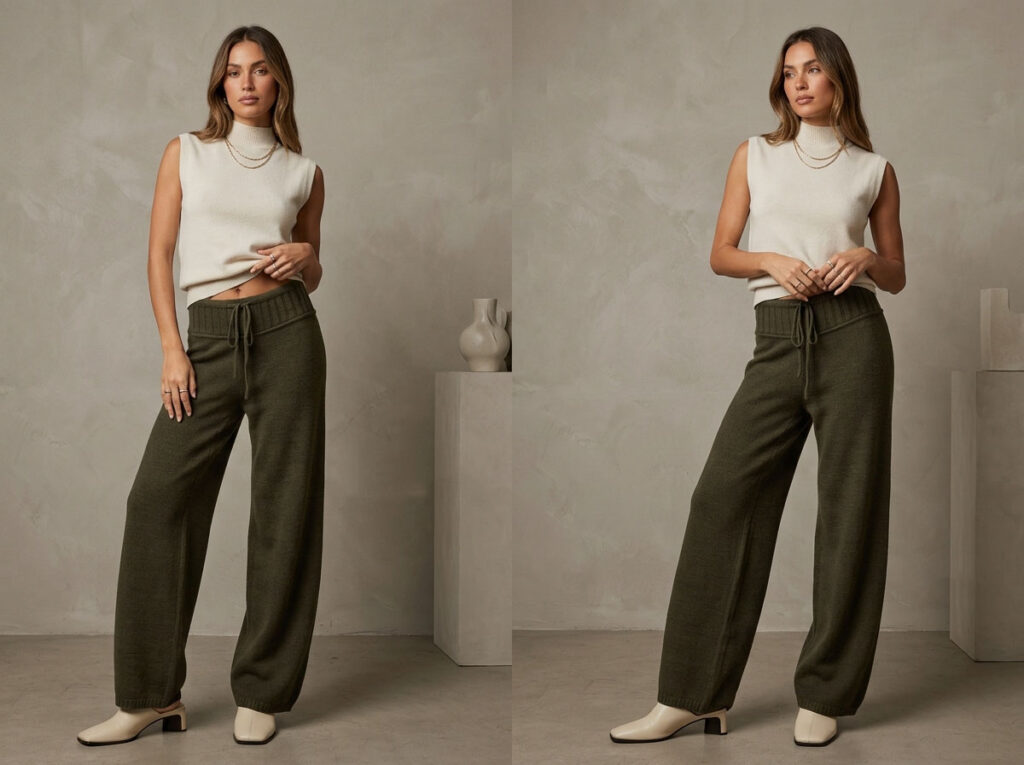
Long knit pants are full-length bottoms made from knitted rather than woven fabrics. Their construction can range from straight and lounge silhouettes to flared and wide-leg designs.
Features, Fabrics, and Fashion Functions of Long Knit Pants
1. Fabric Characteristics
Jersey knit — Lightweight and suitable for everyday comfort.
Rib knit — Adds texture and vertical visual lines.
Sweater knit — Provides additional warmth for cooler seasons.
Stretch blends — Improve recovery and help the garment maintain shape.
2. Design Features
Element
Typical Long Knit Pant Specification
Waistband
Elastic or drawstring
Leg Shape
Straight, flared, or slightly wide
Hem
Stitched, raw, or decorative edge
Pocket
Minimal or omitted to preserve drape
3. Popular Variants
Ribbed knit flare pants — Fit closer through the thigh before opening toward the hem.
Straight knit lounge pants — Provide a clean silhouette for matching comfort sets.
Co-ord knit sets — Pair matching pants with tops or cardigans for a coordinated product.
High-waisted knit pants — Visually lengthen the legs and layer easily with different tops.
4. Target Consumers
Millennials and Gen Z — Often value minimalist comfort-driven products.
Women seeking versatile basics — Knit pants can move between home, travel, and casual settings.
Travel and WFH customers — Soft stretch fabrics support long periods of wear.
What Do S and R Mean in Pants? Understand Short, Regular & Long Sizes
If you have purchased pants from international size charts, you may have seen letters such as S, R, and L next to a waist size.
How Do Inseam Codes Affect Sizing and Production?
In many apparel size systems, S means Short, R means Regular, and L means Long. These labels typically refer to different inseam lengths while keeping the waist measurement within the same size family.
Code
Meaning
Approximate Inseam
S
Short
28–30 in
R
Regular
31–32 in
L
Long
33–36 in
Actual measurements vary by brand, market, garment category, and sizing system, so manufacturers should always confirm the target market’s specification before production.
Why Does It Matter in Manufacturing?
Lower return rates — More accurate inseam options can reduce complaints about pants being too short or too long.
Consistent fit standards — Defined inseam specifications help factories maintain accurate patterns and grading.
Better product development — Confirming the target market’s preferred length before pattern making can prevent costly revisions.
What Do You Call Pants With Side Pockets? 3 Utility Styles to Know
Pants with prominent side pockets are most commonly associated with cargo pants, but cargo is not the only category.
Side-Pocketed Pants Across Categories
The appropriate name depends on the pocket construction, placement, number of pockets, and intended function.
Type
Pocket Style
Typical Use
Cargo Pants
Large expandable or flap pockets
Outdoor, utility, streetwear
Utility Pants
Multiple reinforced pockets
Workwear and practical fashion
Carpenter Pants
Tool loops plus utility pockets
DIY, crafts, workwear
Fashion Impact
Military influence — Large pockets can immediately create a rugged utility aesthetic.
Athleisure crossover — Cargo joggers and technical pants combine storage with softer silhouettes.
Unisex appeal — Functional side-pocket designs can work across men’s, women’s, and gender-neutral collections.
Technical-fabric potential — Nylon, stretch twill, and water-repellent fabrics can modernize traditional utility pants.
For brands developing private-label pants, pocket design should be considered together with fabric, reinforcement, hardware, and the intended customer. A pocket that looks attractive but lacks sufficient reinforcement can become a quality problem during production.
Conclusion
There is no single “best” type of pants. The right style depends on the intended silhouette, customer, fabric, function, price point, and market positioning.
Straight-leg pants offer timeless versatility. Skinny pants provide a close silhouette for specific markets. Tapered pants combine thigh room with a narrow ankle, while wide-leg and relaxed styles prioritize movement and contemporary proportions. Cargo and utility pants emphasize function, chinos and pencil pants offer more polished styling, and jeans remain one of the most versatile denim categories.
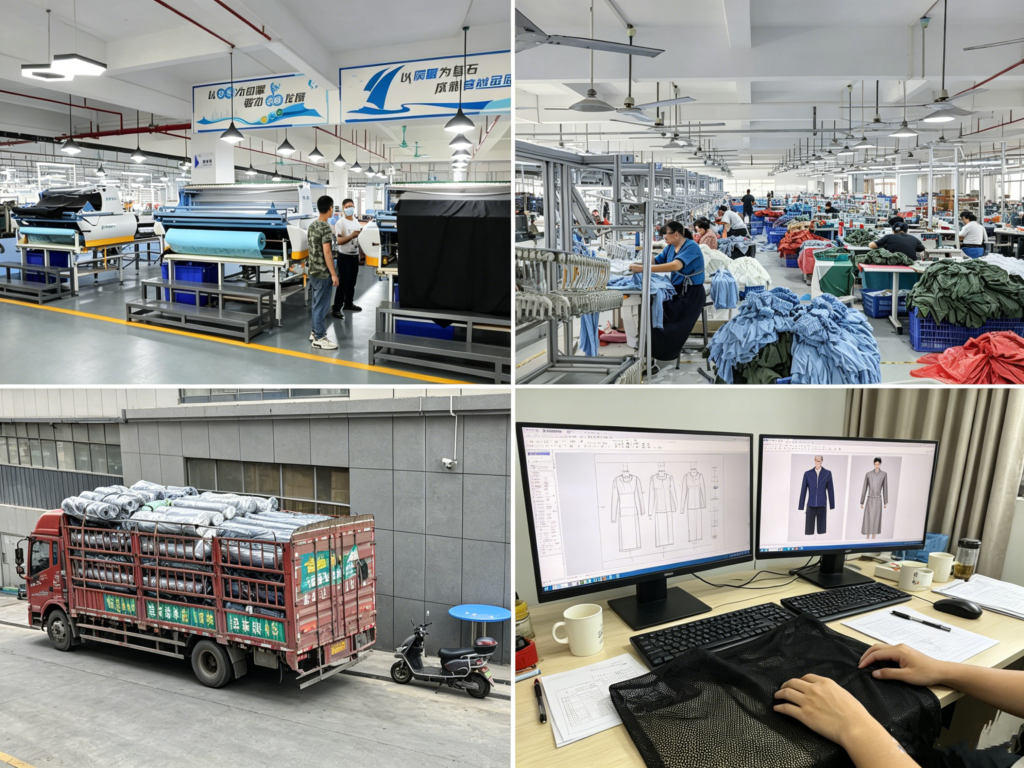
For apparel brands, the classification of pants is more than a fashion exercise. Cut, fabric, rise, inseam, pocket construction, waistband, closures, and finishing all influence the final product. Understanding these details makes product development, sourcing, sampling, grading, and quality control much more efficient.
When developing a private-label or custom pants collection, it is also important to define the intended fit before pattern making. A clear specification for inseam, thigh width, rise, leg opening, fabric weight, stretch, and pocket placement gives manufacturers a stronger technical foundation for consistent production.
The world of pants is broad, but once the major silhouettes and construction principles are understood, choosing or developing the right style becomes much easier.
We're Ready to Collaborate with You
If you have any questions or require a quote, please leave us a message. Our experts will get back to you within 24 hours to help you choose the ideal fashion products tailored to your needs.
Hi, I’m Lucy Cai, the founder of liantaoapparel.com. I’ve been managing a women’s clothing factory in China for over 16 years. With extensive experience in garment production and OEM services, I’m passionate about sharing insights into women’s fashion, apparel manufacturing, and global sourcing.