


🏭 Looking for a Custom Apparel Manufacturer?
We are a leading OEM/ODM clothing factory with 20+ years of export experience. Custom styles, flexible MOQs, and retail-ready quality.
Booty shorts have become a popular product category in women’s activewear, dancewear, and casual clothing. Their fitted silhouette, short inseam, and flexible construction make them suitable for different activities and style preferences.
For clothing brands, however, developing a successful pair of booty shorts involves more than choosing an attractive design. Fabric stretch, opacity, recovery, waistband construction, sizing, and seam durability all affect the final product.
Whether you are developing workout booty shorts, dance shorts, or a private-label activewear collection, understanding these details can help you make better sourcing and production decisions.
In this guide, we’ll explore different types of booty shorts, compare common fabric options, explain how to evaluate fit, and introduce practical quality tests before bulk production. We’ll also cover what brands should consider when choosing a custom booty shorts manufacturer.
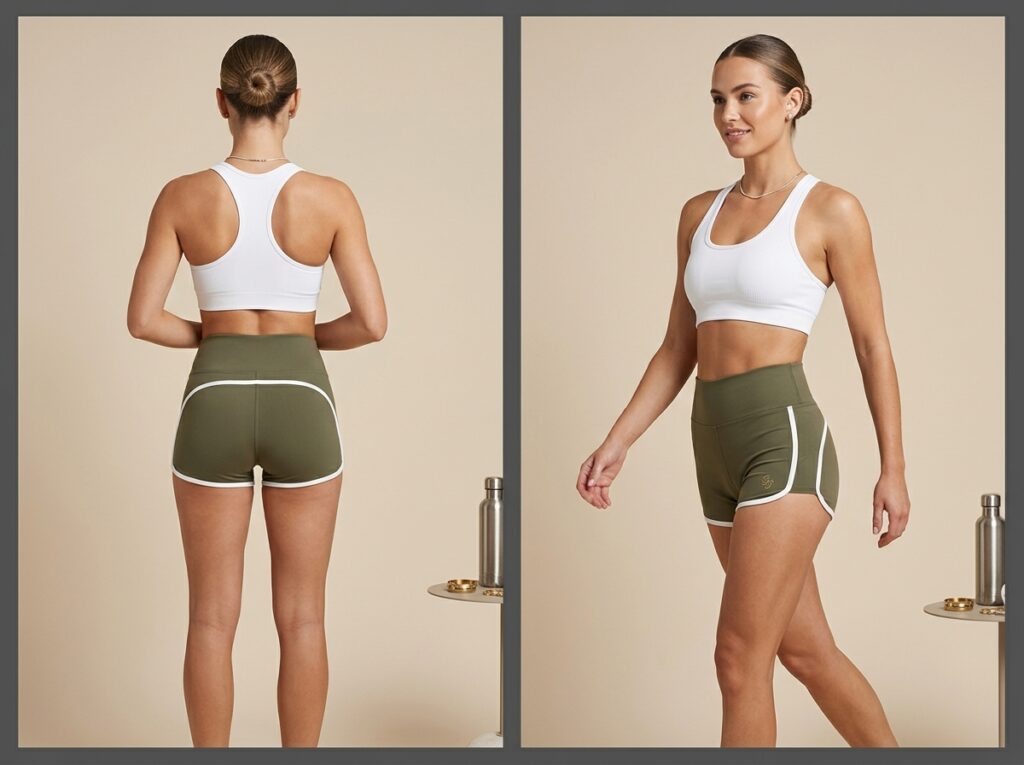
Booty shorts are short, fitted shorts designed to follow the body’s shape. They are commonly used in activewear, dancewear, fitness clothing, and casual fashion.
Unlike loose-fitting athletic shorts, most booty shorts feature a close-fitting silhouette and stretch fabric. Depending on the design, they may include a high waistband, seamless construction, scrunch detailing, or compression features.
For apparel brands, booty shorts offer several development possibilities:
Although these styles share a similar silhouette, they may require different fabric specifications and construction methods.
Choosing the right style depends on the target customer, intended activity, and brand positioning.
| Type | Main Features | Common Applications | Development Focus |
|---|---|---|---|
| High-waisted booty shorts | Higher waistband and fitted silhouette | Gym and everyday activewear | Waistband height and support |
| Scrunch booty shorts | Gathered back seam detail | Fitness and fashion activewear | Seam construction and gathering consistency |
| Seamless booty shorts | Reduced traditional seam construction | Yoga and fitness collections | Knitting structure and fit |
| Compression booty shorts | Designed with a closer, supportive fit | Training and sportswear | Fabric compression and recovery |
| Dance booty shorts | Short fitted silhouette | Dance studios and performance wear | Movement and secure fit |
| Basic workout booty shorts | Simple fitted design | General activewear | Stretch, opacity, and durability |
For brands, it is useful to define the intended product category before selecting a fabric. A dance short and a compression short may look similar, but their performance requirements can be different.
Fabric selection affects comfort, fit, opacity, stretch, and durability. Most fitted activewear shorts use knitted fabrics containing synthetic fibers with elastane.
The right material depends on the intended use and the desired balance between softness, support, weight, and cost.
| Fabric Type | Typical Characteristics | Potential Advantages | Points to Evaluate |
|---|---|---|---|
| Nylon / Elastane | Smooth, stretchy knitted fabric | Soft hand feel and flexible fit | Cost, pilling, and recovery |
| Polyester / Elastane | Stretch synthetic knit | Versatile development and color options | Hand feel, opacity, and surface quality |
| Cotton / Elastane | Cotton-rich stretch knit | Familiar cotton hand feel | Moisture handling and dimensional stability |
| Recycled Polyester / Elastane | Polyester blend using recycled content | May support recycled-material product positioning | Certification and traceability |
| Seamless Knit | Knitted garment or fabric construction | Reduced traditional seam placement | Machine capability and pattern consistency |
These are general material categories, not guaranteed performance rankings. The final result depends on yarn, fabric construction, GSM, finishing, and garment design.
Nylon and polyester are both common choices for stretch activewear. Neither is automatically better for every product.
| Comparison | Nylon / Elastane | Polyester / Elastane |
|---|---|---|
| Hand feel | Often selected for a smooth, soft feel | Depends on yarn and finishing |
| Stretch | Depends on elastane percentage and knit construction | Depends on elastane percentage and knit construction |
| Moisture management | Depends on fiber, construction, and finishing | Depends on fiber, construction, and finishing |
| Color options | Multiple dyeing and finishing options | Multiple dyeing and finishing options |
| Cost | Depends on yarn specification and sourcing | Depends on yarn specification and sourcing |
| Typical use | Premium-feel activewear | A broad range of activewear products |
For a brand developing booty shorts, the best approach is to compare actual fabric swatches and test them under the same conditions.
Fit is one of the most important parts of developing booty shorts. A garment that is too tight may restrict movement, while a garment that is too loose may shift during exercise.
A complete size specification should include more than waist and hip measurements.
| Measurement | Purpose | What to Check |
|---|---|---|
| Waist circumference | Controls waistband fit | Comfortable fit without excessive pressure |
| Hip circumference | Controls body fit | Appropriate ease and coverage |
| Front rise | Determines front waist position | Comfort and waistband placement |
| Back rise | Affects seat coverage | Coverage during movement |
| Inseam | Defines short length | Consistent length across sizes |
| Leg opening | Controls thigh fit | Avoid excessive tightness or looseness |
| Waistband height | Defines upper-body coverage | Stability and comfort |
Brands should create a measurement chart for every size and establish clear grading rules between sizes.
There is no universal best inseam for booty shorts. The right length depends on the product’s purpose and target customer.
| Design Direction | General Length Approach | Product Consideration |
|---|---|---|
| Short booty shorts | Shorter inseam | Prioritize coverage and secure fit |
| Standard workout shorts | Moderate inseam | Balance movement and coverage |
| Longer fitted shorts | Extended inseam | Provide additional thigh coverage |
During sample development, brands should evaluate the shorts on fit models with different body proportions. The same inseam measurement can look different depending on rise, hip shape, and leg opening.
Opacity is an important quality consideration for workout booty shorts. A fabric may look opaque when laid flat but become more transparent when stretched.
This is why brands should evaluate opacity under conditions that reflect actual garment use.
The following is a suggested product-development test, not a completed laboratory study.
Test objective: Compare the opacity of different stretch fabrics under controlled conditions.
Test samples:
Suggested procedure:
| Test Item | Sample A | Sample B | Sample C |
|---|---|---|---|
| Fabric composition | Record actual value | Record actual value | Record actual value |
| GSM | To be measured | To be measured | To be measured |
| Relaxed-state appearance | Record result | Record result | Record result |
| Stretched-state appearance | Record result | Record result | Record result |
| Stretch percentage | Record value | Record value | Record value |
| Lighting conditions | Record setup | Record setup | Record setup |
| Final assessment | Pending | Pending | Pending |
Important: A visual opacity test is a comparative screening method. It should not be presented as a certified squat-proof rating unless a defined and validated test method supports that claim.
For more consistent results, brands should standardize the extension percentage, lighting, background, specimen dimensions, and photography conditions.
Stretch recovery affects how well fitted shorts retain their shape after movement. Poor recovery may contribute to bagging around the waist, hips, or leg openings.
A controlled comparison can help brands select fabrics for different activewear applications.
Compare the stretch and recovery performance of three proposed fabric compositions.
| Sample | Proposed Composition | Main Evaluation |
|---|---|---|
| A | 78% Nylon / 22% Elastane | Stretch and recovery |
| B | 80% Polyester / 20% Elastane | Stretch and dimensional behavior |
| C | 75% Nylon / 25% Elastane | Recovery at a different elastane percentage |
These are suggested development samples, not tested results or universal recommendations.
A simple recovery calculation can be used when the test conditions and measurement method are clearly defined:
Recovery (%) = (Extended Length − Recovered Length) ÷ (Extended Length − Original Length) × 100
For example, if a specimen measures 10 cm initially, 15 cm when extended, and 11 cm after recovery, its calculated recovery is 80%.
This is an illustrative calculation only, not a measured result from the proposed samples.
| Measurement | Sample A | Sample B | Sample C |
|---|---|---|---|
| Original length | To be tested | To be tested | To be tested |
| Extended length | To be tested | To be tested | To be tested |
| Recovered length | To be tested | To be tested | To be tested |
| Recovery percentage | To be calculated | To be calculated | To be calculated |
| Number of test cycles | Record actual value | Record actual value | Record actual value |
| Final evaluation | Pending | Pending | Pending |
Once the factory or testing laboratory completes the experiment, use a bar chart to compare the measured recovery percentages of Samples A, B, and C.
Do not insert estimated values or assumed performance scores. The chart should include the test date, specimen count, extension percentage, recovery time, and testing conditions.
Leg openings that move or roll during exercise can affect comfort and product performance.
Several factors may contribute to this problem:
To reduce these risks, brands should conduct movement trials during sample approval. Squats, lunges, walking, and sitting tests can help identify fit problems before bulk production.
Fabric testing is only one part of activewear quality control. Finished garments also need to be inspected for construction, fit, and appearance.
| Test or Inspection | What It Evaluates | Why It Matters |
|---|---|---|
| GSM measurement | Fabric weight | Helps maintain fabric consistency |
| Dimensional stability | Changes after washing | Helps control size variation |
| Stretch and recovery | Fabric response after extension | Supports fitted garment performance |
| Opacity evaluation | Transparency under stretch | Helps assess coverage |
| Pilling resistance | Surface changes after friction | Evaluates appearance durability |
| Colorfastness | Color change and transfer | Helps protect garment appearance |
| Seam strength | Seam performance under stress | Reduces seam failure risks |
| Measurement inspection | Finished garment dimensions | Controls size consistency |
| Appearance inspection | Sewing, labels, and finishing | Checks overall product quality |
The test methods and acceptance criteria should be selected according to the product, fabric construction, buyer requirements, and applicable laboratory standards.
Custom booty shorts allow brands to create products that match their own design direction, target customer, and price positioning.
Before requesting a sample, define the main product specifications.
| Development Area | Available Design Directions |
|---|---|
| Fabric composition | Nylon/elastane, polyester/elastane, cotton blends |
| Fabric weight | Lightweight, medium-weight, or custom GSM |
| Waistband | High waist, wide waistband, elastic waistband |
| Fit | Standard, fitted, or compression-oriented |
| Inseam | Short, medium, or longer length |
| Back detail | Plain back, scrunch detail, shaped seams |
| Construction | Standard sewn construction or seamless development |
| Branding | Printed logo, heat transfer, embroidery, labels |
| Colors | Custom solid colors and seasonal color palettes |
| Packaging | Brand-specific labels and packaging options |
Not every factory offers every construction method. Seamless production, specialized compression development, and certain finishing processes may require specific machinery or external production partners.
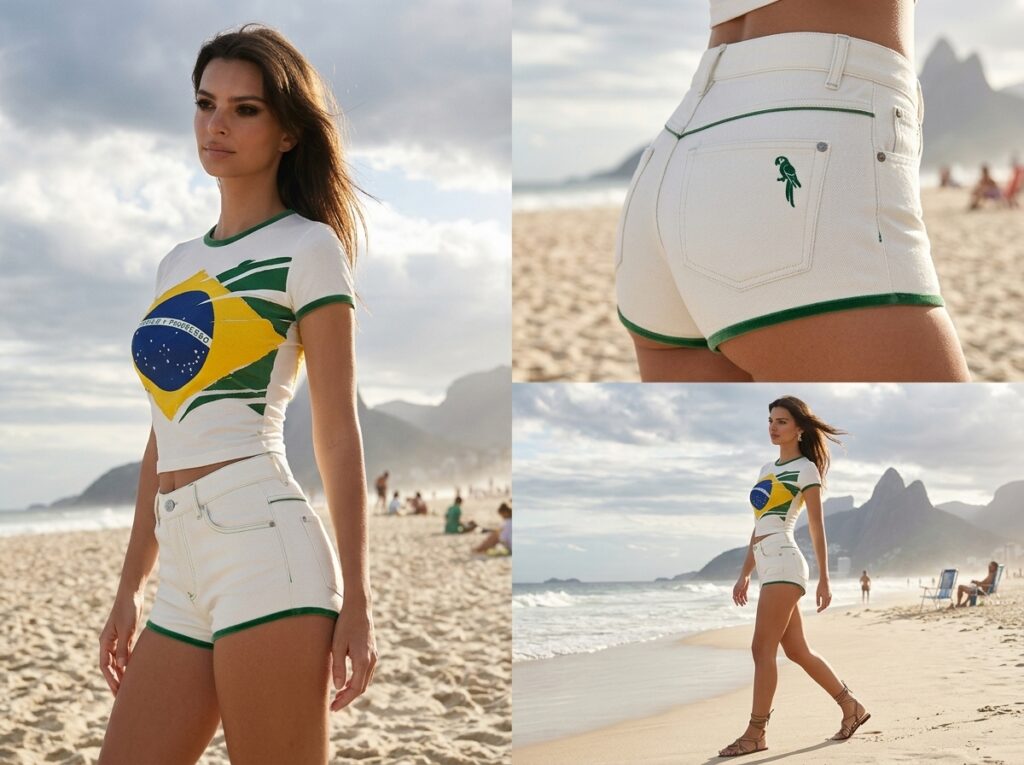
A coordinated activewear collection can include several complementary products:
When developing multiple products, confirm that fabric shades, hand feel, and finishing remain consistent across styles.
Finding the right manufacturer is an important step for private-label brands and activewear buyers.
A suitable supplier should be able to understand your product specifications, coordinate sample development, and confirm the production capabilities required for your design.
Before choosing a factory, consider these questions:
| Question | Why It Matters |
|---|---|
| Can the factory work with stretch knitted fabrics? | Confirms experience with common activewear materials |
| Can it develop custom patterns and size specifications? | Helps achieve the intended fit |
| Can it produce different waistband designs? | Supports product differentiation |
| Can it arrange fabric and garment testing? | Helps verify agreed quality requirements |
| Can it manage custom colors and branding? | Supports private-label development |
| Can it confirm production capacity? | Helps align orders with launch schedules |
| Can it explain its quality-control process? | Helps buyers understand inspection procedures |
Before placing a bulk order, review the approved sample, measurement chart, fabric specifications, color standard, and packaging requirements.
MOQ, sample costs, production lead times, and available manufacturing processes should be confirmed directly with the supplier. These details depend on the design, fabric, order quantity, and production schedule.
A clear inquiry helps a manufacturer understand the project and assess its feasibility.
Prepare the following information before requesting a quotation:
| Required Information | Example |
|---|---|
| Product category | Women’s workout booty shorts |
| Reference images | Front, back, and construction details |
| Fabric composition | Target nylon / elastane or polyester / elastane blend |
| Fabric weight | Target GSM or approved swatch |
| Size range | XS–XL or custom size range |
| Measurements | Waist, hip, rise, inseam, and leg opening |
| Design details | Waistband, seams, scrunch detail, and pockets |
| Colors | Pantone references or physical swatches |
| Branding | Logo, labels, and packaging |
| Quantity | Estimated units per color and size |
| Testing requirements | Opacity, stretch recovery, shrinkage, and other agreed tests |
| Target delivery date | Required shipment window |
Providing these details early can reduce unnecessary sample revisions and help both sides evaluate the project more efficiently.
Booty shorts are commonly used for workout clothing, dancewear, fitness activities, and casual fashion. Their fitted design and short length make them suitable for different product categories.
Nylon / elastane and polyester / elastane are common options for stretch activewear. The best choice depends on hand feel, opacity, recovery, weight, cost, and the intended use.
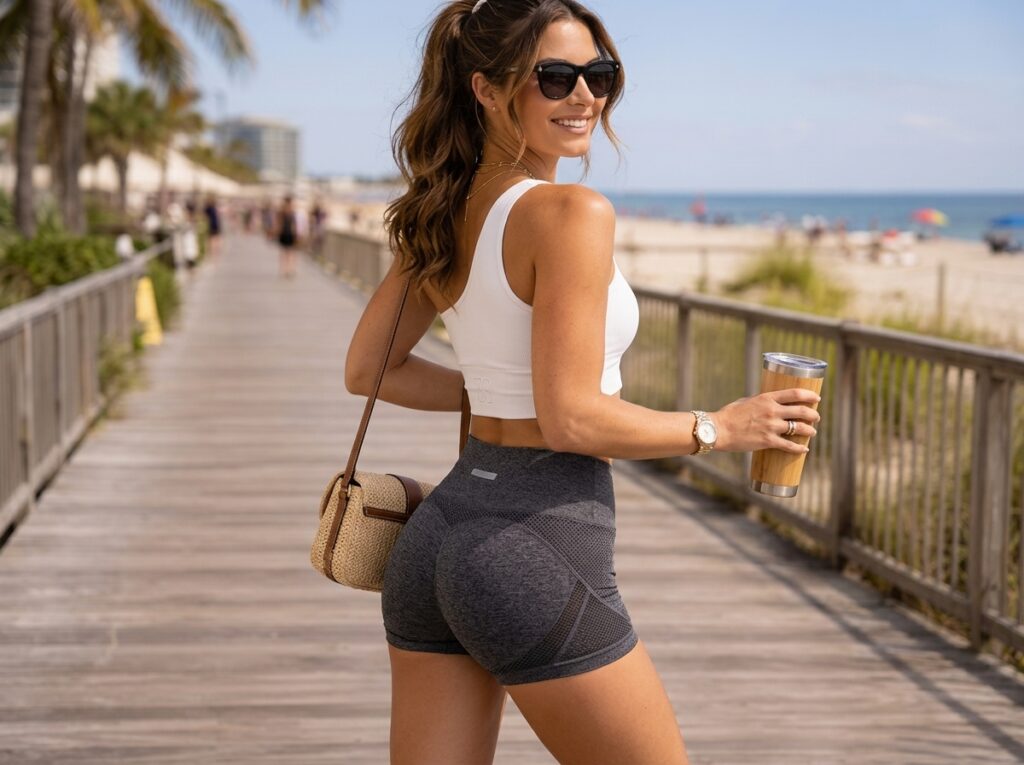
Not necessarily. Both materials can work well when developed with suitable yarns, knitting structures, and finishing. Actual samples should be compared before bulk production.
A controlled opacity evaluation can compare fabric appearance in relaxed and stretched conditions. Standardized lighting, background, extension percentage, and specimen dimensions are important for meaningful comparisons.
Possible causes include unsuitable leg opening measurements, insufficient recovery, pattern imbalance, and construction issues. Movement trials can help identify the problem during sample development.
Custom development may include fabric colors, logos, labels, waistband designs, and packaging. The available options depend on the manufacturer’s production capabilities.
Review fabric specifications, fit samples, size grading, opacity, stretch recovery, dimensional stability, seam construction, color consistency, and the approved production sample.
A successful booty shorts collection needs more than a fitted silhouette. Fabric selection, stretch recovery, opacity, sizing, waistband construction, and sewing quality all influence the finished product.
For brands planning a private-label activewear range, defining these requirements before sampling can help reduce development problems and improve production consistency.
If you are looking for a manufacturer for custom women’s booty shorts, prepare your reference images, fabric requirements, size chart, and estimated order quantity.
Contact Liantao Apparel to discuss your custom activewear development and manufacturing requirements.
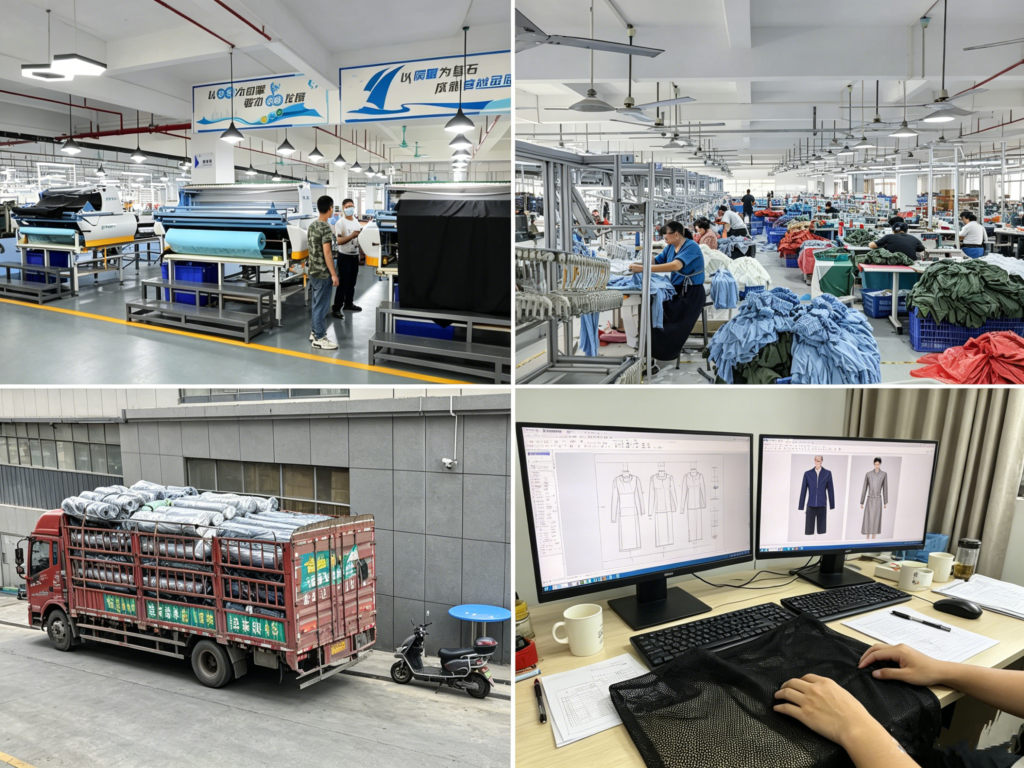
If you have any questions or require a quote, please leave
us a message. Our experts will get back to you within 24 hours to help you choose the ideal fashion products tailored to your needs.
Hi, I’m Lucy Cai, the founder of liantaoapparel.com. I’ve been managing a women’s clothing factory in China for over 16 years. With extensive experience in garment production and OEM services, I’m passionate about sharing insights into women’s fashion, apparel manufacturing, and global sourcing.
If you have any questions or need a quote, please contact us.
Please add us WhatsApp:+86 189 4809 3145
Provide us with detailed information about your requirements, supply design drawings or tech packs,
reference images, and share your ideas.
We will customize the best solution based on your needs and drawings, and provide a specific quote within 24 hours.
Once we receive your confirmation and deposit,we will commence mass production and take care of the subsequent shipping arrangements.


