


🏭 Looking for a Custom Apparel Manufacturer?
We are a leading OEM/ODM clothing factory with 20+ years of export experience. Custom styles, flexible MOQs, and retail-ready quality.
Choosing the right sweatshirt involves more than selecting a comfortable fabric or an attractive design. For clothing brands, fashion startups, and apparel buyers, understanding sweatshirt construction, fabric weight, fit, customization options, and manufacturing processes is essential to developing a successful product.
Whether you are launching a private label clothing brand, expanding an existing streetwear collection, or sourcing sweatshirts for bulk orders, the right manufacturing decisions can influence product quality, customer satisfaction, and production costs.
This guide explains what a sweatshirt is, how it differs from a sweater and hoodie, which fabrics are commonly used, and how to develop custom sweatshirts with an OEM or ODM apparel manufacturer.
It also covers important considerations when choosing a sweatshirt manufacturer, from sampling and customization to bulk production and quality control.
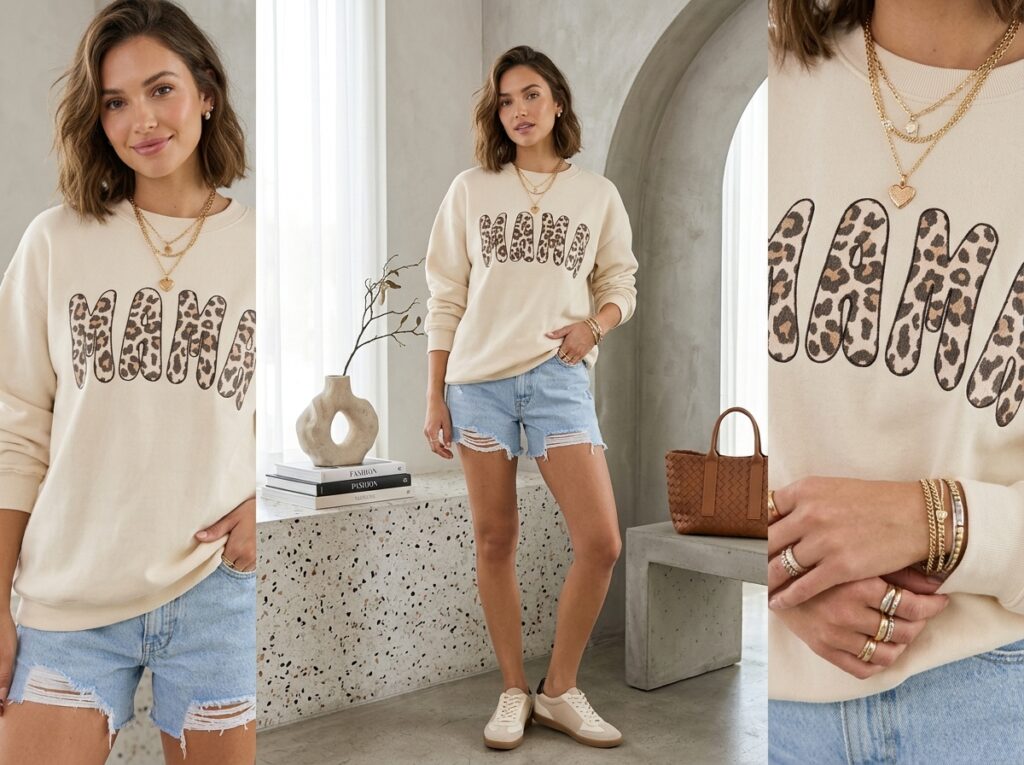
A sweatshirt is a casual upper-body garment typically made from knitted sweatshirt fabric. It is commonly designed with long sleeves, a crew neckline, ribbed cuffs, and a ribbed hem.
Unlike lightweight T-shirts, sweatshirts generally use thicker fabrics designed to provide additional coverage, comfort, and warmth. They are widely used in casualwear, sportswear, streetwear, and everyday apparel collections.
For clothing brands, sweatshirts are also versatile products that can be developed in different fabric weights, silhouettes, colors, and decorative styles.
A traditional sweatshirt usually includes several structural elements:
Crew Neckline
The crewneck is one of the most recognizable sweatshirt designs. Its rounded neckline provides a simple appearance and works well for basic collections, promotional apparel, and streetwear products.
Ribbed Cuffs
Ribbed fabric is commonly used at the sleeve openings. It helps the cuffs maintain their shape and creates a secure fit around the wrists.
Ribbed Hem
The bottom hem often uses elastic rib fabric to provide structure and help the garment maintain its silhouette.
Shoulder Construction
Different shoulder constructions create different visual effects. Regular shoulders offer a more traditional fit, while dropped shoulders create a relaxed, oversized appearance.
Interior Fabric Finish
Depending on the fabric, the inside of a sweatshirt may feature loopback construction or a brushed surface.
These construction details influence the final appearance, comfort, and production requirements of the garment.
Clothing brands can develop several sweatshirt styles depending on their target market:
When developing a new sweatshirt collection, brands should consider the target customer, intended season, retail positioning, and desired fit before selecting the fabric and construction.
Sweatshirts, sweaters, and hoodies are sometimes grouped together as casual or cold-weather clothing. However, they differ in fabric construction, garment structure, and design features.
Understanding these differences helps clothing brands select the right product category and communicate product specifications more accurately.
A sweatshirt is typically made from knitted sweatshirt fabric, such as French Terry or brushed fleece.
A sweater is generally produced using sweater-knitting techniques and yarns such as cotton, wool, or blended fibers.
Their main differences include:
From a manufacturing perspective, sweatshirts and sweaters require different fabric development and production considerations.
The main difference between a traditional sweatshirt and a hoodie is the hood.
A classic crewneck sweatshirt generally has no hood, while a hoodie features an attached hood. Hoodies may also include drawstrings, kangaroo pockets, or other functional details.
Both products can use similar sweatshirt fabrics, including French Terry and brushed fleece.
For brands developing casualwear or streetwear collections, the choice often depends on the desired product appearance and customer preferences.
| Feature | Sweatshirt | Sweater | Hoodie |
|---|---|---|---|
| Typical fabric | French Terry or fleece | Sweater knit | French Terry or fleece |
| Hood | Usually no | Usually no | Yes |
| Common neckline | Crew neck | Various necklines | Hooded |
| Interior | Loopback or brushed | Depends on knit structure | Loopback or brushed |
| Common details | Ribbed cuffs and hem | Knit patterns | Hood, drawstring, pockets |
| Development focus | Fabric and garment construction | Yarn and knitting structure | Hood and pocket construction |
For apparel buyers, these categories can serve different purposes within the same collection. A brand might offer crewneck sweatshirts, hoodies, and knitted sweaters as complementary products rather than treating them as interchangeable designs.
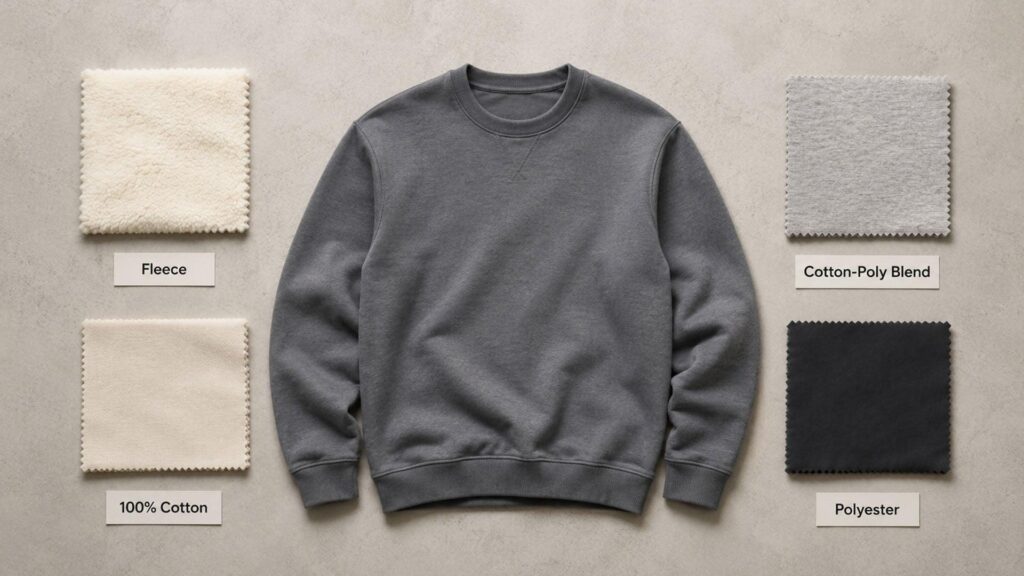
Fabric selection is one of the most important decisions when developing a sweatshirt.
The fabric affects the garment’s weight, hand feel, drape, appearance, and wearing experience. It also influences manufacturing requirements and the final product cost.
Different brands may require different fabric specifications depending on their product positioning.
Cotton sweatshirt fabric is commonly selected for casualwear and everyday apparel.
Its characteristics include:
However, brands should consider shrinkage, colorfastness, and dimensional stability when selecting cotton fabrics.
Pre-shrinking or other suitable finishing processes may be considered depending on the fabric and product requirements.
Cotton polyester blends combine two different fiber types in one fabric.
Depending on the fiber ratio and fabric construction, blended fabrics may offer a balance of comfort, durability, appearance retention, and manufacturing cost.
They are commonly considered for:
The actual performance depends on the fiber composition, yarn quality, knitting structure, and finishing process.
French Terry and brushed fleece are two common fabric choices for sweatshirts.
French Terry
French Terry typically features a smooth outer surface and looped yarns on the inside.
Its construction makes it suitable for lightweight and midweight sweatshirts, depending on the selected fabric specification.
Brands may choose French Terry for transitional-season clothing, casual collections, and relaxed everyday styles.
Brushed Fleece
Brushed fleece is produced by applying a brushing process to the fabric surface, creating a softer, fuzzy interior.
It is commonly used for sweatshirts and hoodies designed for colder conditions.
The brushing process and fabric composition influence the final hand feel and appearance.
GSM stands for grams per square meter. It measures the weight of fabric per unit area.
In sweatshirt manufacturing, GSM is an important specification because it helps brands communicate their desired fabric weight.
However, a higher GSM does not automatically mean better quality or greater warmth.
Other factors also matter, including:
When selecting sweatshirt fabric, brands should consider the intended season, target retail price, desired silhouette, and customer expectations.
It is also advisable to review physical fabric swatches before approving bulk production.
| Fabric Type | Main Characteristics | Potential Applications |
|---|---|---|
| 100% Cotton | Natural cotton fiber content | Premium casualwear |
| Cotton Polyester Blend | Blended fiber construction | Everyday basics |
| French Terry | Loopback interior | Lightweight and midweight sweatshirts |
| Brushed Fleece | Soft brushed interior | Cold-weather collections |
| Heavyweight Sweatshirt Fabric | Higher fabric weight | Oversized streetwear |
At Liantao Apparel, fabric selection can be discussed according to the product design and sourcing requirements.
For an accurate quotation, buyers should provide their preferred fabric composition, GSM, color, and reference samples where available.
The fit of a sweatshirt influences both its appearance and wearing experience.
For clothing brands, selecting the right silhouette is essential because the same fabric can produce very different results depending on the pattern and garment construction.
Regular Fit
Regular-fit sweatshirts generally follow a more traditional body shape.
They are suitable for basic apparel collections, corporate clothing, and everyday casualwear.
Oversized Fit
Oversized sweatshirts feature a looser silhouette with additional room through the body and sleeves.
Common design elements include:
Oversized styles are frequently used in streetwear and contemporary casual collections.
When developing custom sweatshirts, brands should consider the following details:
Neckline Construction
The neckline should match the intended design and fit requirements. Crewneck styles may require particular attention to neckline dimensions and rib fabric specifications.
Sleeve Design
Regular sleeves and raglan sleeves create different silhouettes and require different pattern constructions.
Rib Fabric
The rib fabric used at the neckline, cuffs, and hem should be selected according to the desired elasticity and recovery.
Decorative Details
Printing, embroidery, patches, and other decorative elements can help distinguish a sweatshirt collection.
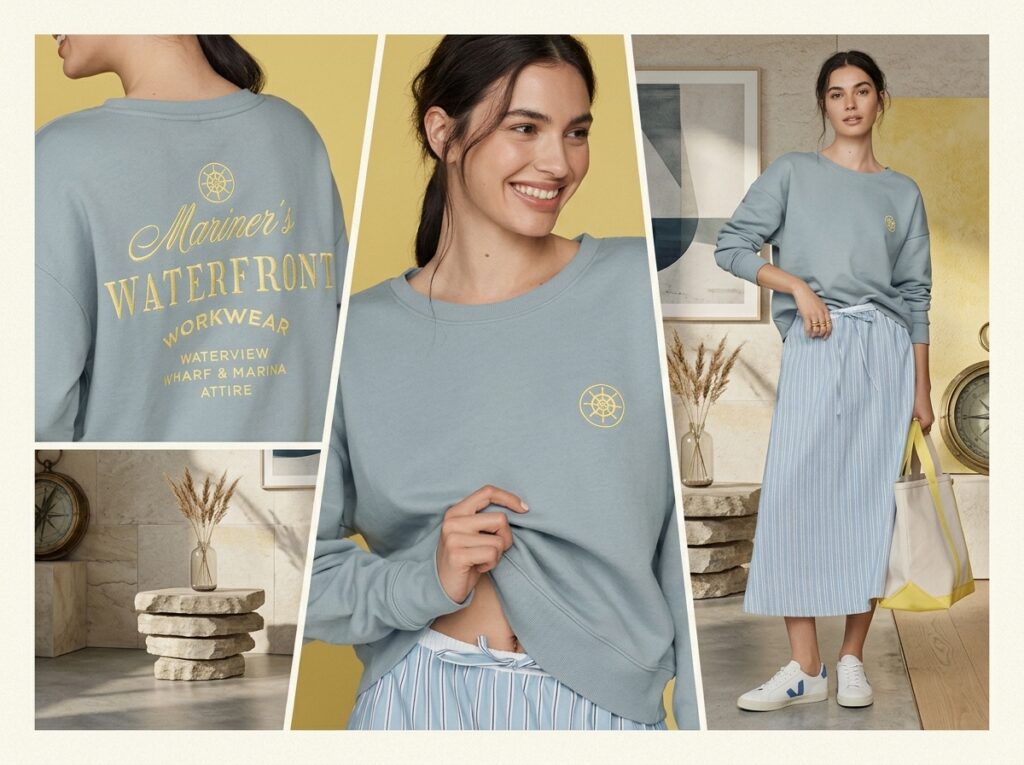
Before bulk production, brands should establish a clear size specification.
Common measurement points include:
A complete measurement chart should also include measurement instructions and acceptable tolerances.
Sample garments should be reviewed before bulk production to confirm the fit and measurements.
Custom sweatshirt manufacturing allows clothing brands to develop products that reflect their own design identity.
Instead of purchasing standard ready-made garments, brands can work with an apparel manufacturer to customize fabrics, colors, patterns, labels, decorative details, and packaging.
The customization process generally involves several stages.
Start by defining the product you want to develop.
For example:
Prepare a design sketch, reference garment, or technical specification to communicate your requirements.
After confirming the design, select the appropriate fabric.
Important specifications include:
If you have a particular fabric in mind, provide a reference swatch so the manufacturer can evaluate its suitability.
Decorative techniques play an important role in sweatshirt branding.
Different techniques create different visual effects.
Printing Options
Depending on the design and production requirements, printing options may include:
Embroidery Options
Embroidery can create a textured and more dimensional brand appearance.
Common options include:
The appropriate method depends on the artwork, fabric characteristics, logo size, and desired appearance.
A physical sample is recommended before approving the final production method.
Brand identity extends beyond the main garment design.
Custom branding options may include:
These details help create a more consistent brand presentation.
Before bulk production, the manufacturer should prepare samples according to the agreed specifications.
A typical development process includes:
The approved sample should serve as the reference for the final production order.
Clothing brands can consider different manufacturing cooperation models.
| Model | Description | Suitable For |
|---|---|---|
| OEM | Production based on the buyer’s design and specifications | Brands with established designs |
| ODM | Product development using the manufacturer’s design or development capabilities | Brands seeking development support |
| Private Label | Products carrying the buyer’s own brand identity | Businesses building their own clothing labels |
The exact scope of OEM and ODM services should be confirmed with the manufacturer before starting a project.
At Liantao Apparel, buyers can discuss their sweatshirt development requirements and explore suitable customization and manufacturing solutions.
Learn more about our OEM and ODM apparel manufacturing services.
Finding a suitable sweatshirt manufacturer is an important step for clothing brands and apparel sourcing teams.
A competitive quotation is not the only factor to consider. Buyers should also evaluate product development capabilities, fabric sourcing, sampling quality, production management, and quality inspection procedures.
Start by checking whether the manufacturer has experience producing the types of garments you need.
Important questions include:
Requesting relevant product samples or production references can help you evaluate the manufacturer’s capabilities.
Minimum order quantity (MOQ) is an important consideration for new brands and established apparel companies.
MOQ may vary depending on:
Buyers should also confirm whether the MOQ applies per style, color, or order.
When requesting a quotation, clarify whether the price includes fabric, accessories, printing, embroidery, labels, and packaging.
For more information, read our guide to custom clothing manufacturing, MOQ, pricing, and the full production process.
A professional development process should clearly distinguish between sampling, pre-production approval, bulk manufacturing, and transportation.
The manufacturing timeline may depend on:
Buyers should request a project-specific timeline rather than relying on general estimates.
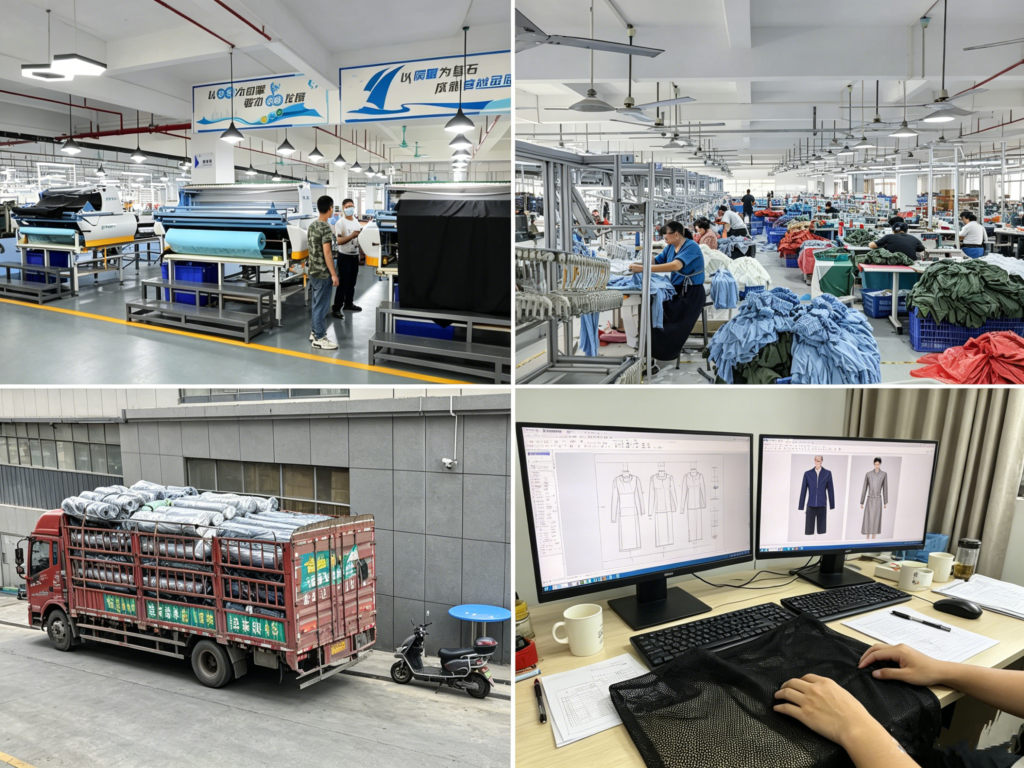
Quality control should cover the entire production process, not just the final garment.
A structured inspection process can include five stages.
1. Raw Material QC
Fabric inspection may cover GSM, shrinkage, colorfastness, and fabric defects.
2. Cutting QC
Inspection focuses on cutting accuracy, panel symmetry, and the positioning of prints or embroidery.
3. In-line Sewing QC
Production checks may include stitch density, seam appearance, sewing consistency, and seam strength.
4. Final Garment QC
Finished garments are inspected for measurements, appearance, stains, skipped stitches, damage, and other specified requirements.
5. Packing QC
The packing stage may include label verification, carton specifications, packaging requirements, and barcode scanning.
The exact inspection criteria and acceptance tolerances should be agreed upon before production.
For more detailed sourcing guidance, see our article on apparel manufacturer selection and bulk production quality control.
Before selecting a supplier, consider asking:
A manufacturer that communicates clearly about specifications, costs, production limitations, and quality requirements can make the sourcing process easier to manage.
The MOQ depends on the fabric, design, colors, accessories, and customization requirements.
Stock fabrics may offer different order conditions from fully customized fabrics or garment-washed styles.
Before placing an order, ask the manufacturer to clarify the MOQ per style and color.
The production timeline depends on sampling requirements, material availability, order quantity, and design complexity.
A typical project may involve initial sampling, sample revisions, pre-production approval, bulk production, and shipping.
Ask your manufacturer for a detailed timeline based on your specific order.
Yes. Depending on the manufacturer’s capabilities, customization options may include screen printing, DTG, DTF, puff printing, embroidery, woven labels, printed labels, and custom hangtags.
You should provide your logo artwork and branding requirements during the development stage.
French Terry generally features a loopback interior, while brushed fleece has a softer, fuzzy interior created through a brushing process.
French Terry is commonly used for lightweight and midweight sweatshirts, while brushed fleece is often selected for products designed for colder conditions.
The final choice depends on fabric specifications and the intended product application.
To receive a more accurate quotation, prepare the following information:
Providing these details helps the manufacturer understand your requirements and evaluate the project more efficiently.
Developing a successful sweatshirt collection requires the right combination of fabric selection, garment construction, fit, customization, and manufacturing quality.
Whether you are creating basic crewneck sweatshirts, heavyweight streetwear, oversized styles, or custom hoodies, working with an experienced apparel manufacturing partner can help turn your product ideas into finished garments.
At Liantao Apparel, we work with clothing brands and apparel buyers on custom clothing development and manufacturing requirements.
If you are planning a new sweatshirt collection, share your design references, fabric preferences, customization details, and estimated order quantity with our team.
We can discuss suitable manufacturing options and help you evaluate the next steps for your project.
Looking for a custom sweatshirt manufacturer for your clothing brand?
Contact Liantao Apparel to discuss your OEM/ODM apparel manufacturing requirements.
If you have any questions or require a quote, please leave
us a message. Our experts will get back to you within 24 hours to help you choose the ideal fashion products tailored to your needs.
Hi, I’m Lucy Cai, the founder of liantaoapparel.com. I’ve been managing a women’s clothing factory in China for over 16 years. With extensive experience in garment production and OEM services, I’m passionate about sharing insights into women’s fashion, apparel manufacturing, and global sourcing.
If you have any questions or need a quote, please contact us.
Please add us WhatsApp:+86 189 4809 3145
Provide us with detailed information about your requirements, supply design drawings or tech packs,
reference images, and share your ideas.
We will customize the best solution based on your needs and drawings, and provide a specific quote within 24 hours.
Once we receive your confirmation and deposit,we will commence mass production and take care of the subsequent shipping arrangements.


