


🏭 Looking for a Custom Apparel Manufacturer?
We are a leading OEM/ODM clothing factory with 20+ years of export experience. Custom styles, flexible MOQs, and retail-ready quality.
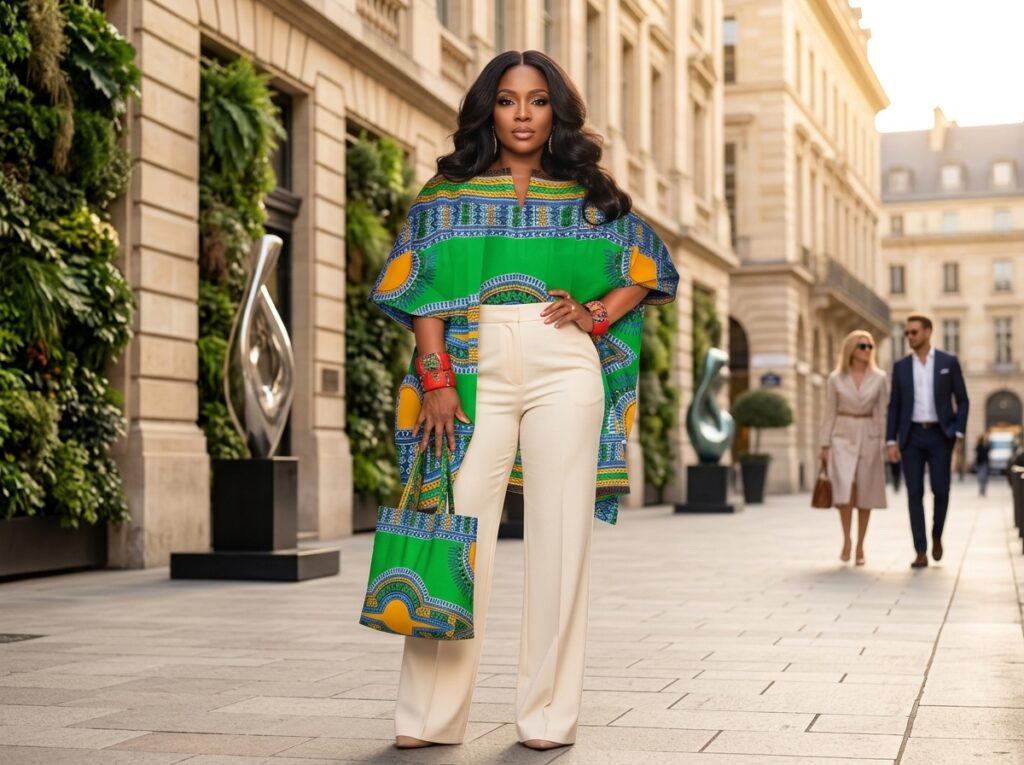
A dashiki is more than a colorful shirt. With its distinctive neckline, relaxed silhouette, and expressive patterns, it is a garment with deep cultural roots and a place in contemporary fashion. Today, dashiki-inspired clothing can be found in casual collections, resort wear, coordinated outfits, and independent fashion brands.
For clothing brands and wholesale buyers, developing a dashiki collection involves more than choosing an attractive print. Fabric selection, pattern placement, garment construction, sizing, cultural context, and production quality all affect the final product.
This guide explains what a dashiki is, explores common dashiki styles and fabrics, and outlines how brands can approach custom dashiki clothing development and bulk manufacturing.
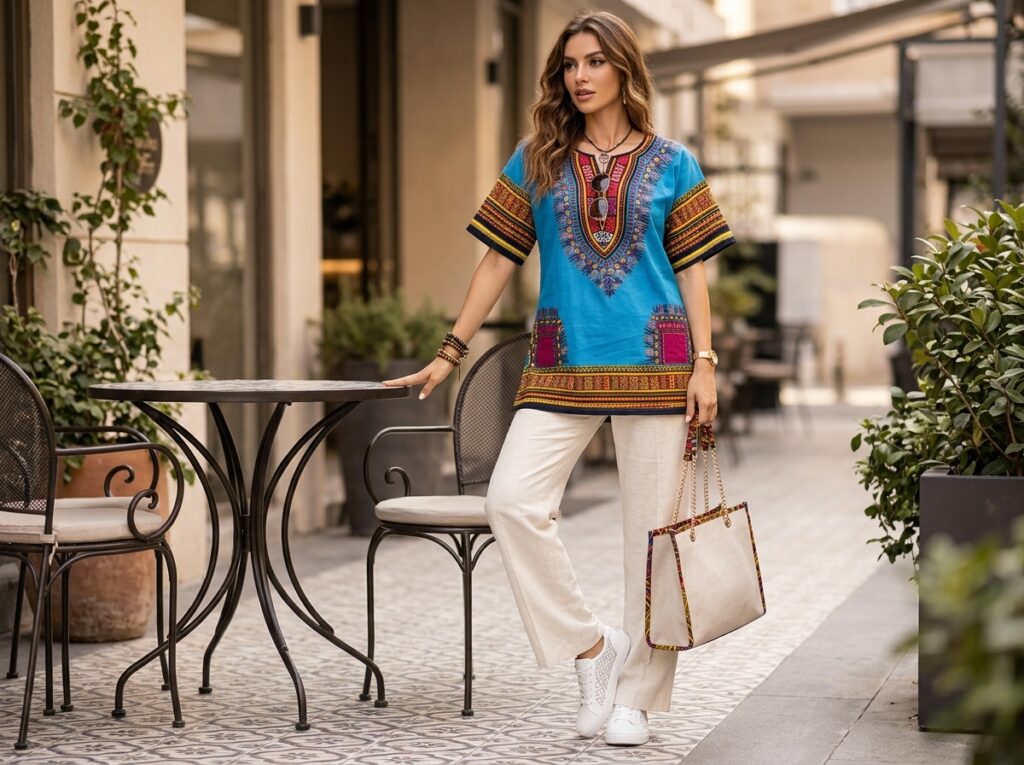
A dashiki is a loose-fitting tunic traditionally associated with West African clothing. Common design features include a relaxed body, a neckline that may be V-shaped or decorated with embroidery, and colorful fabric or patterned details. Depending on the design, a dashiki may have short sleeves, long sleeves, or wider kimono-style sleeves.
The word is commonly traced to the Yoruba term danshiki. Historical accounts connect it to the Hausa phrase dan ciki, referring to a short tunic traditionally worn beneath a larger robe. Earlier forms were practical garments, while later interpretations developed into a wider range of everyday and fashion styles.
The dashiki also has an important place in modern African diasporic history. It became more widely visible in the United States during the late 1960s, when people adopted African-inspired clothing to express connections with African heritage, Pan-African identity, and the Black Power movement. It was worn by men and women and became recognizable as both clothing and a cultural statement.
Over time, designers and manufacturers introduced different interpretations. Some retained the loose tunic silhouette and decorative neckline, while others developed dresses, coordinated sets, and contemporary versions with modified sleeves, pockets, or closures.
When developing a dashiki-inspired collection, brands should understand that the garment is not simply a generic name for all African clothing. African dress traditions are diverse, and different garments, textiles, and motifs have their own histories. Avoid treating unrelated cultural designs as interchangeable.
For brands: A strong dashiki collection starts with an understanding of the garment’s cultural background. Design decisions should be intentional, and any use of culturally specific motifs should be researched and handled respectfully.
Dashiki clothing is available in several silhouettes. The traditional loose tunic remains a recognizable option, but modern collections may include longer shirts, dresses, and matching separates.
The best style for a collection depends on its target customer, intended use, price positioning, and preferred fit.
| Style | Common design features | Product development considerations |
|---|---|---|
| Classic dashiki shirt | Loose body, decorative neckline, pullover construction | Neckline finishing, print placement, overall proportions |
| Men’s dashiki | Relaxed tunic, short or long sleeves | Length, shoulder width, sleeve shape, matching bottoms |
| Women’s dashiki dress | Tunic-inspired dress silhouette | Dress length, waist shaping, lining, fit and movement |
| Dashiki two-piece set | Coordinated top and bottom | Print matching, separate size grading, set packaging |
| Modern dashiki | Updated silhouette or construction details | Design consistency, sample fitting, brand-specific details |
These categories are useful for organizing a product range, but they are not rigid rules. A brand can develop a distinctive style by combining familiar dashiki elements with its own silhouette and construction choices.
For brands: Start with one or two clear product types rather than launching too many variations at once. A focused range makes sampling, costing, size development, and inventory planning easier to manage.
Fabric has a major influence on the appearance, comfort, drape, and durability of a dashiki. A fabric that works well for a structured shirt may not be suitable for a flowing dress. Buyers should therefore select materials according to the intended silhouette and wearing conditions.
Cotton
Cotton is a familiar option for casual clothing. It can provide a comfortable hand feel and is available in different weights and constructions. For dashiki shirts, buyers may consider woven cotton fabrics that can support the garment’s shape without making it unnecessarily heavy.
African-inspired printed fabrics
Colorful prints are often central to the visual identity of dashiki clothing. Printed fabrics can be used across the body or placed selectively around the neckline, sleeves, cuffs, and hem. Before production, buyers should confirm the print scale, color consistency, repeat size, and fabric composition.
Cotton blends
Cotton blends may offer different combinations of softness, durability, wrinkle performance, and cost. Their suitability depends on the fiber content and fabric construction. Buyers should assess the actual material rather than assuming that every blend will perform in the same way.
Lightweight fabrics
Lightweight woven fabrics may be appropriate for warm-weather styles and flowing silhouettes. However, a lightweight material should still provide sufficient opacity, stability, and seam performance for the intended garment.
Decorative fabrics and trims
Some dashiki designs use embroidery, contrast panels, or decorative details around the neckline and cuffs. These elements can help establish a distinctive product identity, but they also add construction requirements and may affect production cost.
When sourcing fabric for a custom dashiki, review these points:
There is no single best fabric for every dashiki. The correct choice depends on the garment design, target market, budget, and required performance.
For brands: Approve the actual fabric and print before bulk production. Record the confirmed composition, weight, color reference, and any test requirements in the product specification or Tech Pack.
Pattern and color are often the first elements customers notice in a dashiki. They can define the character of a collection, but successful design also depends on placement, proportion, and construction.
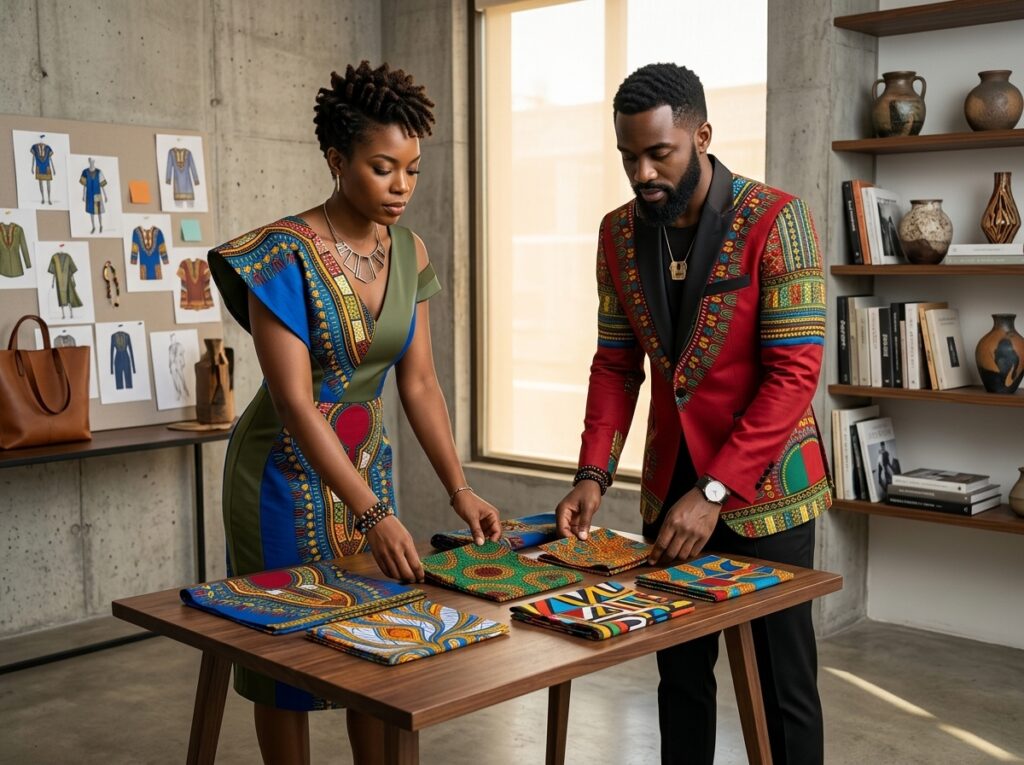
A brand can choose an all-over print, a smaller repeat, or a fabric with concentrated decoration around selected garment areas. The choice affects the overall appearance:
Do not assume that every geometric or colorful print is a traditional dashiki motif. If a design references a particular community, textile tradition, or symbolic pattern, research its context before using it commercially.
Color selection should reflect the intended customer and collection direction. A bright palette may suit a statement piece, while a more restrained palette can work for a contemporary casual range.
Consider how the main fabric color interacts with the neckline, embroidery, buttons, labels, and matching bottoms. For coordinated sets, confirm that the colors and print scale remain consistent across all components.
The neckline is an important design area. Options may include a V-shaped opening, a rounded opening, a decorative front panel, or embroidery around the neck. The finish should be comfortable against the skin and stable after repeated wear.
If embroidery is included, confirm the stitch density, thread colors, backing material, and placement. Excessively dense embroidery may change the fabric’s hand feel or cause puckering, especially on lightweight materials.
Sleeve shapes can range from simple short sleeves to long or wide sleeves. Pockets, side vents, and hem shaping can also influence function and appearance. These details should be included in the technical drawing and checked during sample fitting.
Private-label details may include a main label, size label, care label, hangtag, or custom packaging. Their placement should complement the garment rather than compete with its design.
For brands: Create a clear design brief before sampling. Include reference images, artwork files, print placement, color references, embroidery details, and construction notes. This reduces ambiguity when the design moves from concept to sample.
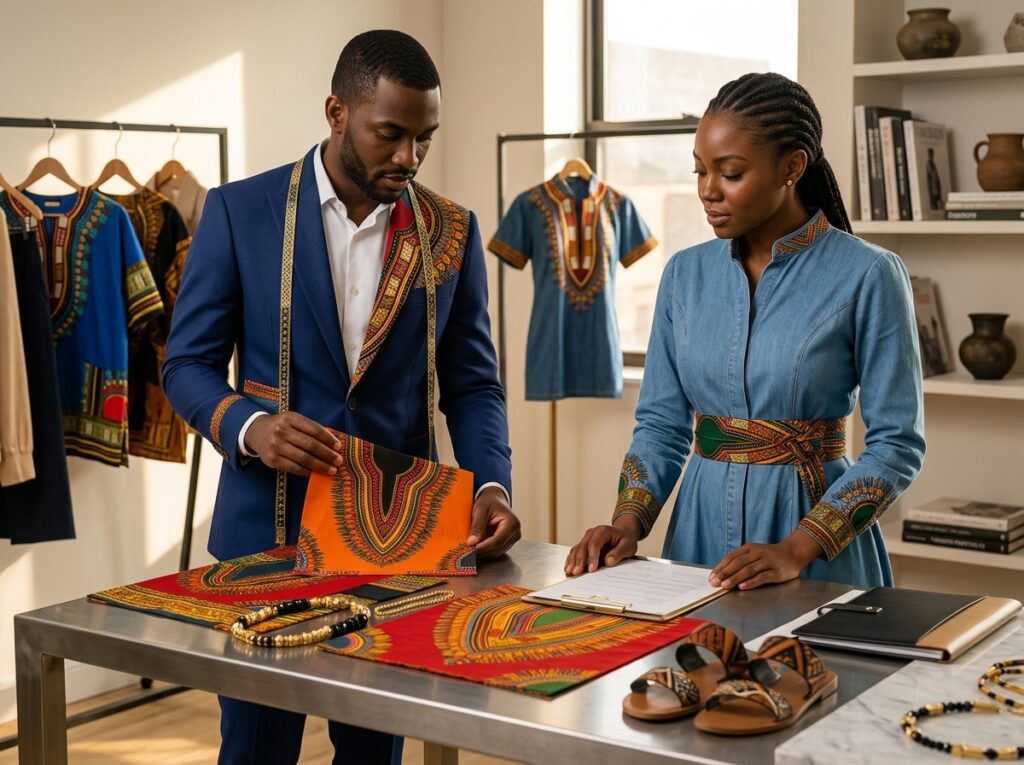
A dashiki is often recognized by its relaxed fit, but “loose-fitting” does not mean that every size should have the same proportions. A garment can be intentionally roomy while still having a considered shoulder width, sleeve length, body length, and neckline opening.
For a classic tunic, the body may be wider than a conventional fitted shirt. The amount of ease should be defined in the measurement specification. If the design is intended to be oversized, specify how much additional room is required rather than relying on the word “oversized” alone.
For women’s dashiki dresses, decide whether the design should remain loose throughout or include shaping at the waist. For longer styles, check how the garment moves when walking and sitting.
A useful size chart should identify the points of measurement, such as:
The measurement method should be consistent across sizes. For example, specify whether chest measurements are taken flat or as a full circumference. A sample should be measured against the approved specification before grading the remaining sizes.
Dashiki shirts can be paired with trousers, jeans, shorts, or coordinated bottoms. Dashiki dresses can be styled as standalone garments or with selected accessories. Matching headwraps or complementary pieces may also be included in a collection where appropriate.
For brands: Test the fit on the intended customer profile. Approve the base sample first, then review the graded size set to check that proportions remain balanced across the full size range.
Custom manufacturing allows a clothing brand to develop dashiki products around its own design direction, customer requirements, and brand identity. Depending on the factory’s confirmed capabilities, development may involve an existing reference style, a new pattern, custom fabric sourcing, print development, or private-label finishing.
OEM (Original Equipment Manufacturing) is suitable when a brand already has a design, reference sample, or Tech Pack. The manufacturer develops the garment according to the supplied specifications and agreed production requirements.
ODM (Original Design Manufacturing) may be suitable when a brand needs support with product development. The scope can include design refinement, pattern development, material suggestions, and sample creation. The exact services vary by manufacturer and should be confirmed before a project begins.
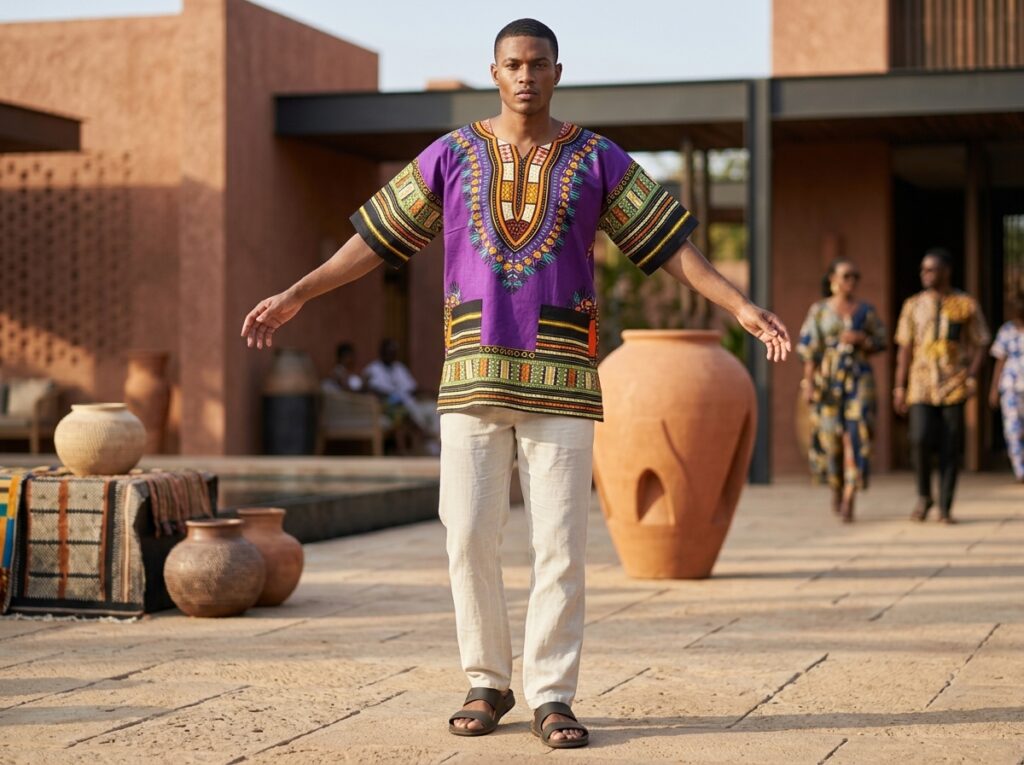
A custom dashiki project may include:
Not every manufacturer offers every option. Confirm which processes are handled in-house and which are sourced from external suppliers.
A typical development process follows several stages:
A Tech Pack helps communicate the product requirements clearly. For a dashiki, it should ideally include:
For a manufacturer such as Liantao Apparel, its stated OEM/ODM services include pattern making, Tech Pack development, custom fabric support, and branding services. The company also states that it provides custom labels and packaging as part of its one-stop services. However, Dashiki-specific fabric, print, embroidery, MOQ, and production capabilities should be confirmed for each project before an order is placed.
For brands: Treat sample approval as a production control point. Do not rely on verbal descriptions alone; keep the approved sample, Tech Pack, and written order specifications aligned.
Choosing a manufacturer is not simply about finding the lowest quotation. A reliable production partner should be able to understand the design, confirm material and construction requirements, communicate production constraints, and maintain agreed quality standards.
If you are searching for a dashiki manufacturer, custom dashiki manufacturer, or dashiki clothing wholesale supplier, evaluate the following areas before committing to a bulk order.
| Evaluation factor | What to check | Why it matters |
|---|---|---|
| Product understanding | Experience with similar silhouettes, prints, and construction | Helps identify development requirements early |
| Fabric sourcing | Composition, weight, print options, availability, and testing | Supports consistent product quality |
| Sampling | Pattern development, sample revisions, and approval process | Allows design and fit issues to be resolved before bulk |
| MOQ and pricing | Minimum quantity, cost breakdown, and price validity | Helps assess commercial feasibility |
| Quality control | Inspection stages, measurement checks, and defect handling | Reduces the risk of inconsistent bulk production |
| Lead time | Sampling, material preparation, production, and shipping estimates | Supports realistic launch planning |
| Communication | Written specifications, progress updates, and clear responsibilities | Reduces misunderstandings during development |
Before selecting a supplier, ask:
Ask for evidence that relates to the specific requirements of your product. A factory’s general clothing experience does not automatically confirm that it can execute every dashiki design, print technique, or embroidery detail.
Liantao Apparel is based in Dongguan, Guangdong, China. Its supplied company information states that it has 20+ years of expertise, works with 200+ skilled workers, and offers OEM/ODM services including pattern making, Tech Pack development, custom fabric support, and branding.
The company’s stated MOQ starts from 80 pieces per design/colorway. Its supplied reference timelines are approximately 7–14 days for sample development and around 15–28 days for bulk production of 80 pieces. These are reference figures, not guaranteed timelines for every order. Actual requirements may vary according to the design, material availability, sample revisions, quantity, and shipping arrangements.
For a dashiki project, the next step is to share the design and confirm the specific requirements directly. This should include the fabric, print or embroidery method, garment construction, size range, target quantity, and packaging needs. The manufacturer can then assess whether the requested product is suitable for its production setup and provide a project-specific quotation and schedule.
1. What is the typical MOQ for custom dashiki clothing?
MOQ varies by manufacturer, fabric, print method, colorway, and construction. Some suppliers set a minimum per design, while others apply separate minimums for each color or fabric. Ask for the MOQ breakdown before finalizing the product range. Liantao Apparel’s stated general MOQ starts from 80 pieces per design/colorway, but the MOQ for a specific dashiki project must be confirmed.
2. Can I create my own dashiki designs with a clothing manufacturer?
Yes, custom development may be possible through OEM or ODM services. A brand can provide its own Tech Pack, artwork, and reference sample, or discuss development support with the manufacturer. Confirm the factory’s capabilities for the required fabric, print, embroidery, and construction before proceeding.
3. What fabrics are commonly used for dashiki clothing?
Dashiki garments can be made from different materials, including cotton, printed cotton fabrics, blends, and other woven fabrics. The best option depends on the intended fit, drape, comfort, appearance, and price target. Confirm composition and fabric weight before approving a sample.
4. How long does it take to manufacture custom dashiki clothing?
The timeline depends on sampling, fabric sourcing, print or embroidery development, sample revisions, order quantity, and production capacity. Ask the manufacturer to separate the sample development period, bulk production period, and shipping estimate. Do not treat a general lead-time estimate as a guarantee for a new design.
5. How can I ensure the quality of bulk dashiki orders?
Start with a clear Tech Pack and an approved pre-production sample. Confirm fabric and print specifications, measurement tolerances, stitching, neckline finishing, and labeling. Agree on inspection requirements before production and request the inspection results or supporting records before shipment.
A successful dashiki collection combines a considered understanding of the garment’s cultural background with practical product development. The silhouette, fabric, print, neckline, fit, and finishing details should work together to create a product that meets the expectations of its target customers.
For clothing brands and wholesale buyers, the most effective approach is to define the product requirements before requesting a quotation. Prepare reference designs, confirm the fabric and print, establish the size range, and approve a sample before moving into bulk production.
If you are planning a custom dashiki project, share your design references, target quantity, fabric preferences, and branding requirements with Liantao Apparel to discuss whether the project fits its OEM/ODM services.
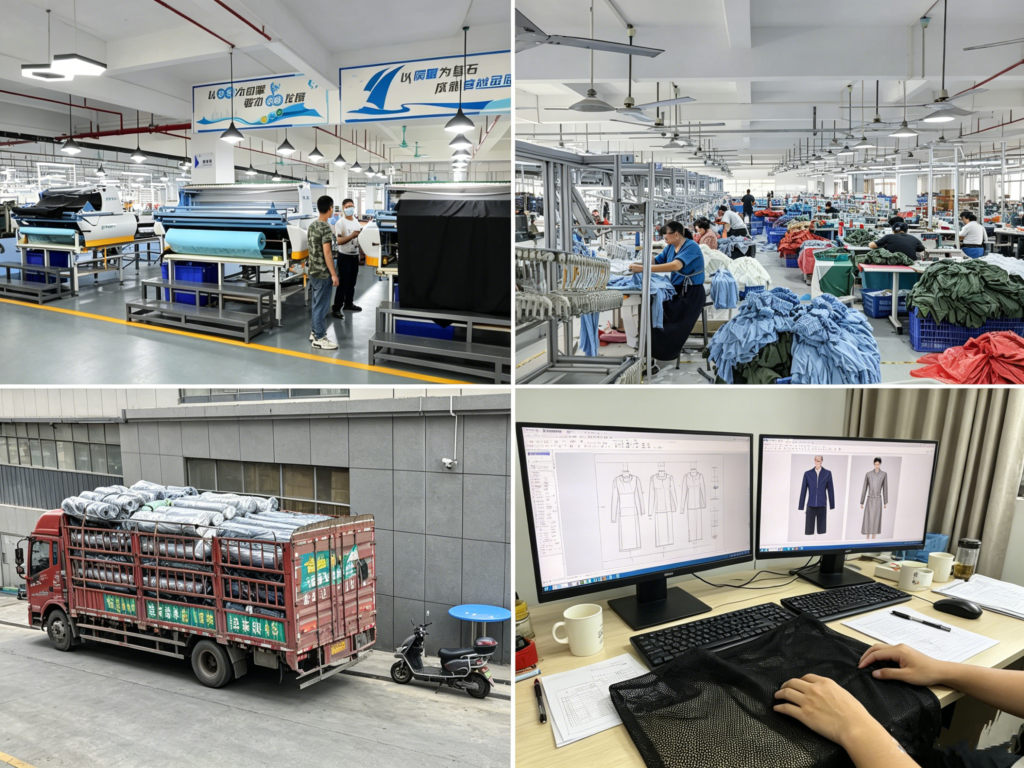
If you have any questions or require a quote, please leave
us a message. Our experts will get back to you within 24 hours to help you choose the ideal fashion products tailored to your needs.
Hi, I’m Lucy Cai, the founder of liantaoapparel.com. I’ve been managing a women’s clothing factory in China for over 16 years. With extensive experience in garment production and OEM services, I’m passionate about sharing insights into women’s fashion, apparel manufacturing, and global sourcing.
If you have any questions or need a quote, please contact us.
Please add us WhatsApp:+86 189 4809 3145
Provide us with detailed information about your requirements, supply design drawings or tech packs,
reference images, and share your ideas.
We will customize the best solution based on your needs and drawings, and provide a specific quote within 24 hours.
Once we receive your confirmation and deposit,we will commence mass production and take care of the subsequent shipping arrangements.


