


🏭 Looking for a Custom Apparel Manufacturer?
We are a leading OEM/ODM clothing factory with 20+ years of export experience. Custom styles, flexible MOQs, and retail-ready quality.
Does cotton shrink after washing? Yes. Cotton can shrink when exposed to heat, moisture, and mechanical action during washing and drying. However, the amount of shrinkage depends on several factors, including fabric construction, fiber composition, finishing treatments, and laundry conditions.
For clothing brands and manufacturers, cotton shrinkage is more than a laundry concern. It can affect garment measurements, fit, product consistency, and customer satisfaction.
In this guide, we explain why cotton shrinks, how different cotton fabrics behave, how to prevent shrinkage, and how clothing brands can test cotton fabric before bulk production.

Cotton is a natural cellulosic fiber with good moisture absorption. Its structure and the way it is processed during fabric manufacturing influence how it responds to washing and drying.
There are several reasons why cotton fabric may shrink.
Cotton fibers absorb moisture during washing. Changes in moisture and the conditions during drying can affect the dimensions of cotton fabrics, especially when the fabric has not received suitable dimensional stabilization.
High temperatures during washing and drying can increase the risk of cotton shrinkage. Heat may contribute to dimensional changes in the fabric, particularly when combined with moisture and mechanical action.
During spinning, knitting, weaving, dyeing, and finishing, fabrics may experience mechanical tension. Some of this tension can be released during subsequent washing, resulting in changes to fabric dimensions.
Washing machines and tumble dryers create friction and movement. Repeated mechanical action can contribute to fabric relaxation and dimensional changes.
The key point is that cotton shrinkage is not caused by water alone. Fiber characteristics, manufacturing processes, heat, and mechanical action can all influence the final result.
For more information, see the CottonWorks guide to cotton fabric dimensional change.
The fiber composition of a fabric can influence its shrinkage behavior. However, cotton content alone does not determine how much a garment will shrink.
Different fabric constructions and finishing treatments also matter.
Pure cotton fabric can shrink during washing and drying, especially if it has not received appropriate shrinkage-control treatment.
It is commonly used for T-shirts, sweatshirts, dresses, and other everyday clothing products.
Cotton-polyester blends combine the moisture absorption and natural feel of cotton with the dimensional stability and durability characteristics of polyester.
These fabrics may show less shrinkage than comparable untreated 100% cotton fabrics, although the actual result depends on the blend ratio and fabric construction.
Cotton-spandex fabrics combine cotton with elastane to provide stretch and flexibility.
They are commonly used in fitted T-shirts, leggings, and other stretch garments. Brands should evaluate both dimensional stability and elasticity after washing.
Knit and woven cotton fabrics can behave differently during washing.
For example, cotton jersey used in T-shirts has a different structure from woven cotton used in shirts or dresses. Their shrinkage behavior should therefore be evaluated separately.
| Fabric Type | Shrinkage Considerations | Important Factors |
|---|---|---|
| 100% Cotton | Can experience dimensional changes | Finishing, fabric construction, washing conditions |
| Cotton Polyester | May offer improved dimensional stability | Fiber ratio, construction, heat exposure |
| Cotton Spandex | Both shrinkage and stretch recovery matter | Elastane content, finishing, care conditions |
| Cotton Jersey | Requires attention to length and width changes | Knit structure, finishing, washing method |
The main takeaway is that blended fabrics may offer different dimensional stability characteristics, but no fiber composition should be assumed to be completely shrink-proof without testing.
Pre-shrunk cotton is cotton fabric that has undergone a treatment intended to reduce dimensional changes during later washing and use.
It is commonly used in clothing products where maintaining garment measurements is important.
Pre-shrunk cotton is processed to reduce the amount of shrinkage that may occur after the fabric becomes a finished garment.
The purpose is to improve dimensional stability and make the fabric more predictable during use.
One common approach is mechanical pre-shrinking, which helps control fabric dimensions before the material is used for garment production.
The specific process depends on the fabric type, manufacturing equipment, and finishing requirements.
Yes. Pre-shrunk cotton can still experience some dimensional changes.
Pre-shrinking reduces shrinkage risk but does not guarantee that the fabric will maintain exactly the same measurements under every washing and drying condition.
Brands should not rely only on a supplier’s description of fabric as pre-shrunk.
Before bulk production, it is important to review available fabric test results and evaluate the material under the intended washing conditions.
Pre-shrunk cotton can help improve product consistency, but testing remains important.
There is no single shrinkage percentage that applies to every cotton fabric.
The actual amount depends on fiber composition, fabric construction, finishing treatments, and washing conditions.
Different cotton fabrics may respond differently to washing.
For example, cotton jersey, cotton fleece, and woven cotton fabrics have different structures. Their dimensional changes should not be treated as identical.
Fabric shrinkage can occur in different directions.
For woven fabrics, manufacturers commonly evaluate lengthwise and widthwise dimensional changes. For knitted fabrics, the corresponding measurements are often described as length and width.
Both directions matter because changes can affect garment fit and appearance.
The following factors can influence shrinkage:
Brands and manufacturers can calculate shrinkage by comparing the original fabric dimensions with the dimensions measured after washing and drying.
The basic formula is:
Shrinkage (%) = [(Original Size − Washed Size) ÷ Original Size] × 100
For example, if a fabric measurement changes from 100 cm to 97 cm, the shrinkage is 3%.
This is an illustrative calculation, not a universal cotton shrinkage rate.
For reliable results, measurements should be taken under consistent and documented testing conditions.
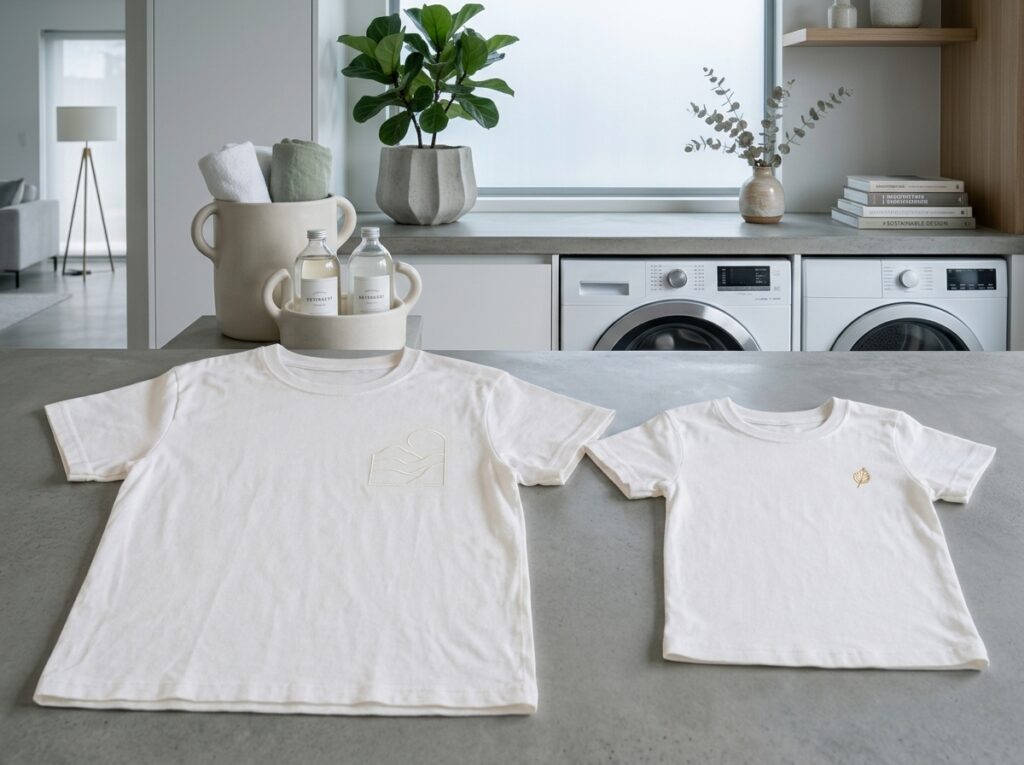
Although cotton shrinkage cannot always be eliminated, proper washing and drying practices can help reduce the risk.
Using cold or cool water can help reduce heat-related shrinkage.
Always check the garment care label before choosing a washing temperature, since different cotton garments may have different care requirements.
A gentle washing cycle can reduce excessive mechanical action.
This is particularly useful for lightweight cotton garments and products with delicate construction details.
High-temperature tumble drying can increase the risk of shrinkage.
When appropriate, air-drying or using a lower dryer temperature can help reduce heat exposure.
Care instructions should be based on the garment’s fabric composition and construction.
A pure cotton T-shirt, a cotton-polyester sweatshirt, and a cotton-spandex garment may require different care approaches.
Avoid excessive pulling or stretching when cotton garments are wet.
Handle them gently during washing, drying, and reshaping to help maintain their original appearance.
The best approach is to follow the care instructions provided for the specific garment rather than applying one washing method to every cotton product.
For clothing brands, fabric shrinkage should be evaluated before bulk production.
A fabric test can help identify potential dimensional changes and reduce the risk of finished garments failing to meet measurement requirements.
Use fabric samples that match the material intended for bulk production.
The fiber composition, construction, weight, and finishing treatment should be representative of the actual order.
Measure the fabric before washing.
Record the original length and width so that the results can be compared after testing.
Define the washing and drying conditions before starting the test.
These may include:
Consistent conditions make the results easier to compare.
After washing and drying, measure the fabric again.
Compare the new dimensions with the original measurements and calculate the shrinkage percentage in each direction.
Compare the test results with the brand’s product specifications and dimensional stability requirements.
If the fabric does not meet the required standards, consider reviewing the material, finishing process, or garment measurements before production.
One recognized reference is AATCC TM135 – Dimensional Changes of Fabrics after Home Laundering.
This method addresses dimensional changes in fabrics after home laundering. Brands and manufacturers can refer to the applicable test method when establishing fabric evaluation procedures.
The exact testing conditions and acceptance requirements should be agreed upon before production.
A practical testing workflow is:
Fabric Selection → Original Measurement → Washing Test → Drying → Final Measurement → Shrinkage Evaluation
Testing representative fabric before bulk production helps brands make more informed sourcing and production decisions.
For clothing brands, selecting cotton fabric involves more than checking whether a material is 100% cotton.
Fabric performance, garment design, production requirements, and quality expectations should all be considered.
Confirm the fiber composition before placing an order.
A fabric labeled as cotton may contain other fibers, so brands should review the actual composition and ensure it matches the product specifications.
Fabric construction affects appearance, hand feel, stretch, and dimensional behavior.
Brands should select suitable knit or woven structures according to the intended product.
Fabric weight should also match the garment design and target market.
Ask the fabric supplier whether the material has undergone pre-shrinking or other finishing treatments.
Where available, request relevant test results instead of relying only on general product descriptions.
Before bulk production, review samples to check:
For cotton T-shirts, sweatshirts, and other garments, sample evaluation helps identify potential issues before larger quantities are produced.
Brands should communicate their fabric specifications, measurement tolerances, and quality expectations clearly.
It is also important to understand how the manufacturer manages fabric consistency, sample approval, and finished garment inspection.
If you are sourcing custom cotton clothing, explore our custom OEM and ODM clothing manufacturing services.
You can also read our guide to apparel manufacturer selection and bulk quality control for more information about evaluating manufacturing partners.
A reliable sourcing process should connect fabric selection, sample development, testing, and bulk production rather than treating them as separate decisions.
Not necessarily. Cotton may shrink during washing, but the amount depends on fabric construction, finishing treatments, and washing conditions. Properly processed cotton can have better dimensional stability, although some shrinkage may still occur.
Cotton can still experience dimensional changes when washed in cold water. However, cold water generally reduces exposure to heat, which can help lower the risk of heat-related shrinkage.
Yes. High dryer temperatures can increase the risk of cotton shrinkage. Following the care label and avoiding excessive heat can help maintain garment dimensions.

Sometimes, gentle reshaping while the fabric is damp may improve the fit of a slightly shrunken cotton garment. However, results vary, and it may not return to its original measurements.
So, does cotton shrink? Yes, cotton can shrink during washing and drying, but the amount depends on fabric composition, construction, finishing treatments, and care conditions.
For consumers, following garment care instructions and avoiding excessive heat can help reduce shrinkage. For clothing brands, the most important steps are selecting suitable cotton fabrics, reviewing pre-shrinking treatments, testing samples, and establishing clear quality requirements before bulk production.
If you are developing custom cotton T-shirts, sweatshirts, dresses, or other apparel products, working with a manufacturing partner that understands fabric selection, sampling, and production requirements can help you manage product consistency from development to bulk manufacturing.
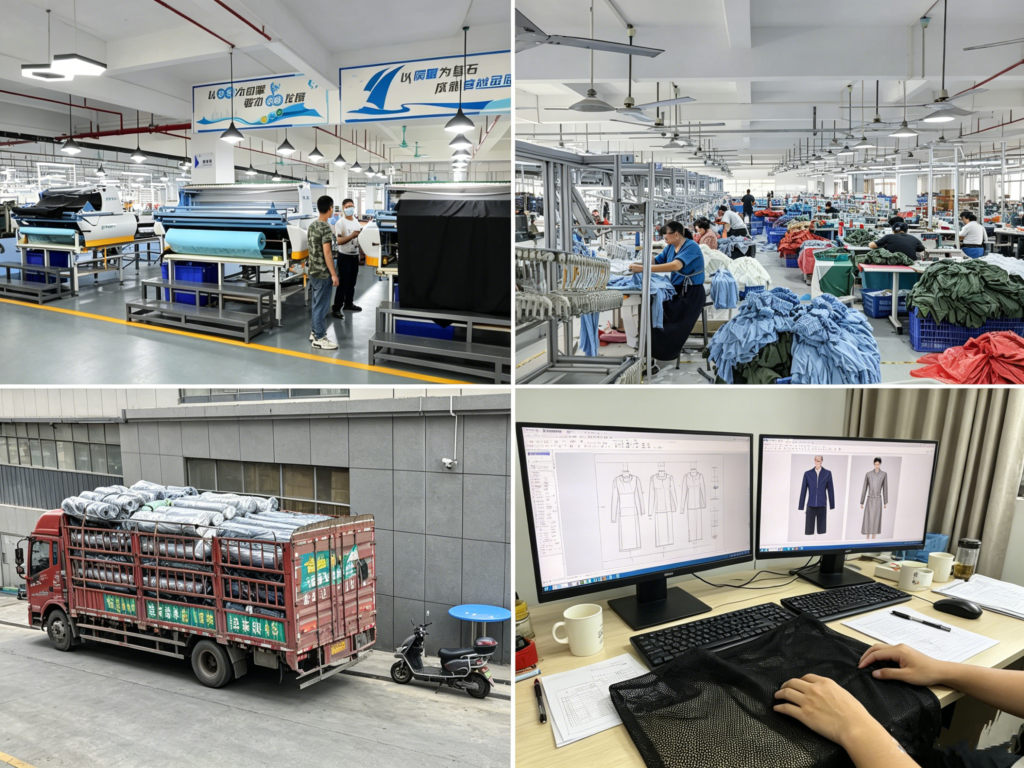
If you have any questions or require a quote, please leave
us a message. Our experts will get back to you within 24 hours to help you choose the ideal fashion products tailored to your needs.
Hi, I’m Lucy Cai, the founder of liantaoapparel.com. I’ve been managing a women’s clothing factory in China for over 20 years. With extensive experience in garment production and OEM services, I’m passionate about sharing insights into women’s fashion, apparel manufacturing, and global sourcing.
If you have any questions or need a quote, please contact us.
Please add us WhatsApp:+86 189 4809 3145
Provide us with detailed information about your requirements, supply design drawings or tech packs,
reference images, and share your ideas.
We will customize the best solution based on your needs and drawings, and provide a specific quote within 24 hours.
Once we receive your confirmation and deposit,we will commence mass production and take care of the subsequent shipping arrangements.


