


🏭 Looking for a Custom Apparel Manufacturer?
We are a leading OEM/ODM clothing factory with 20+ years of export experience. Custom styles, flexible MOQs, and retail-ready quality.
When researching clothing products, shopping online, or working with a clothing manufacturer, you may come across the words clothes, clothing, and apparel. These terms are closely related, but they are not always used in the same way.
Understanding the meaning of clothes and apparel can help you use these words correctly in everyday communication, product descriptions, and business documents. It can also help clothing brands and buyers understand common terminology used in the apparel industry.
This guide explains the definitions, grammatical differences, product categories, and manufacturing applications of these terms. It also explores how businesses can select apparel products and find a suitable clothing manufacturer.
The words clothes and apparel both refer to items people wear to cover, protect, or decorate their bodies. The main difference is how they are commonly used.

Clothes is a plural noun that refers to the items people wear, such as shirts, trousers, dresses, jackets, and coats.
It is a common word in everyday English. People use it when talking about shopping, getting dressed, washing laundry, or choosing an outfit.
Examples include:
There is no singular form of clothes. When referring to one item, use a word such as shirt, dress, or garment.
Apparel is an uncountable noun that means clothing or garments. In North American English, it is commonly used in retail and business contexts, especially when referring to clothing products sold in stores.
Examples include:
For a more detailed definition, see Oxford’s definition of apparel.
In business communication, apparel often sounds more formal and industry-oriented than clothes.
Key takeaway: Clothes and apparel refer to similar products, but clothes is more common in everyday conversation, while apparel is frequently used in retail, manufacturing, and commercial contexts.
Although these three words have overlapping meanings, they differ in grammar and typical usage. Understanding these differences helps avoid mistakes in product descriptions, emails, and business communication.
Clothes refers to the garments people wear. It is always used in the plural form.
Correct examples:
Incorrect example:
Use a piece of clothing or name the specific item instead.
Clothing refers to clothes as a general category or collection. It is an uncountable noun, so it does not normally take a plural ending.
Correct examples:
To refer to one item, say an item of clothing or a piece of clothing.
Apparel is also generally uncountable. It is widely used in commercial and industry-related expressions.
Common examples include:
It is especially useful when discussing clothing as a product category or part of a business.
The Collins guide to the difference between clothes, clothing, and cloth provides further examples of these language distinctions.
| Word | Grammar | Main Meaning | Common Context |
|---|---|---|---|
| Clothes | Plural noun | Items people wear | Everyday conversation |
| Clothing | Uncountable noun | Clothes as a general category | Retail and general descriptions |
| Apparel | Uncountable noun | Clothing products | Business and manufacturing |
Key takeaway: The three terms have similar meanings, but their grammatical forms and common contexts differ. Choose the word that fits the sentence rather than treating them as completely interchangeable.
Apparel covers a broad range of clothing products for different customers, activities, and occasions. For clothing brands and buyers, understanding these categories helps organize product collections and identify suitable manufacturing requirements.
Tops are garments worn on the upper body. Common examples include:
Different tops require different fabrics, fits, and construction details. For example, a lightweight T-shirt and a heavyweight hoodie have different material and sewing requirements.
Bottoms are garments worn on the lower body. Common products include:
Brands should consider waist construction, fit, fabric stretch, pockets, and finishing details when developing these products.
This category includes dresses, jumpsuits, rompers, and other garments designed as one-piece outfits.
Product development may involve fabric drape, silhouette, length, closures, lining, and fit requirements.
Sportswear and activewear are designed for exercise, training, or other active lifestyles.
Examples include:
These products may require stretch fabrics, breathable materials, and construction that supports movement.
Other apparel categories include sleepwear, swimwear, underwear, and workwear.
Each category has different requirements related to comfort, fabric selection, fit, and intended use.
Key takeaway: Apparel includes many clothing categories, from everyday T-shirts and dresses to sportswear and specialty garments. Product requirements depend on how and where each garment will be worn.
The terms apparel industry and fashion industry are related, but they do not describe exactly the same scope of business.
The apparel industry focuses on clothing products and the businesses involved in developing, manufacturing, distributing, and selling them.
Its activities may include:
An apparel manufacturer, for example, focuses on turning product specifications and designs into finished garments.
The fashion industry has a broader scope. It includes apparel as well as fashion design, accessories, branding, marketing, retail experiences, and consumer trends.
Businesses in this industry may work with clothing, bags, footwear, jewelry, and other fashion-related products.
Apparel is an important part of the fashion industry, but the two terms are not identical.
A clothing brand may participate in both areas: developing apparel products while also building a fashion identity through design, marketing, and customer experience.
For manufacturers, the main focus is usually product development, garment construction, production, and quality requirements. For fashion brands, these activities are part of a broader business strategy.
Key takeaway: The apparel industry focuses on clothing products and their supply chain, while the fashion industry covers a wider range of products, businesses, and consumer activities.
Apparel manufacturing involves multiple stages. A clear development process helps brands communicate product requirements and gives manufacturers the information needed to produce garments consistently.
The process starts with a product concept. A brand decides what garment to develop, who will wear it, and what features it should include.
The initial plan may cover:
A Tech Pack communicates the technical requirements of a garment to the manufacturer.
It may include technical drawings, measurements, fabric specifications, color references, labels, trims, and construction details.
Clear specifications help reduce misunderstandings during sampling and production.

The manufacturer and brand select materials based on the product’s intended use.
Common considerations include:
For example, a cotton T-shirt and a stretch activewear garment need different fabric characteristics.
A sample allows the brand to evaluate the garment before bulk production.
The review may cover measurements, fit, fabric, stitching, color, and finishing. If adjustments are needed, the brand communicates them to the manufacturer for revision.
After the sample and specifications are approved, the order can proceed to bulk production.
Quality inspection should follow agreed product requirements. Depending on the garment, checks may include measurements, stitching, fabric appearance, labels, and overall workmanship.
Finished garments are packed according to the agreed packaging and labeling requirements. The manufacturer and buyer should also confirm shipping arrangements before dispatch.
Key takeaway: Apparel manufacturing moves from product planning and technical development to sampling, bulk production, inspection, and shipment. Each stage needs clear specifications and communication.
Choosing the right apparel products is an important step when building a clothing brand. The product range should reflect customer needs, brand positioning, and manufacturing requirements.
Start by understanding who will buy your products.
Consider their age group, lifestyle, preferred styles, purchasing habits, and intended use for the garments.
A brand targeting everyday casual wear may need a different collection from one focusing on yoga or outdoor activities.
Choose products that fit your brand identity and market.
Possible starting categories include:
A focused product range can make sourcing and product development easier to manage.
Fabric selection should match the garment’s intended purpose.
Consider comfort, durability, stretch, breathability, weight, and care requirements. Do not choose materials based on appearance alone.
Your target retail price influences fabric selection, construction details, branding, and production decisions.
Build a product cost plan that considers materials, manufacturing, packaging, shipping, and other relevant expenses.
A clothing collection should have a clear visual direction. Colors, silhouettes, materials, and branding details should work together across different products.
Key takeaway: Successful apparel product planning begins with the target customer and product category, followed by fabric selection, quality requirements, and pricing decisions.
Finding the right apparel manufacturer is important for brands planning custom clothing development or bulk production. A suitable supplier should be able to understand your product requirements and support the production process.
Ask whether the factory has experience producing the specific garments you need.
For example, T-shirts, hoodies, dresses, and activewear may involve different fabrics, patterns, construction methods, and finishing requirements.
Review relevant product examples rather than relying only on a general list of manufacturing capabilities.
Understand what services the manufacturer can provide.
Depending on the supplier, these may include:
If you need support with product development as well as manufacturing, compare the manufacturer’s OEM and ODM capabilities.
You can learn more about custom OEM and ODM clothing manufacturing services offered by Liantao Apparel.
Sampling is an important opportunity to check whether the manufacturer understands your design and specifications.
Review the sample’s measurements, fit, fabric, stitching, and finishing. Provide clear feedback before approving bulk production.
Ask how the factory checks garments during and after production.
Clarify which product details will be inspected, what standards will be followed, and how defects or production issues will be handled.
For more guidance, read our article on how to choose a reliable apparel manufacturer.
Before placing an order, discuss minimum order quantities, sample costs, production schedules, payment terms, packaging, and shipping.
These conditions vary by manufacturer and product, so obtain written confirmation before proceeding.
Key takeaway: A reliable apparel manufacturer should have relevant product experience, suitable development services, clear quality procedures, and transparent communication about order requirements.
They have similar meanings because both refer to items people wear. However, clothes is more common in everyday conversation, while apparel is frequently used in retail, commercial, and manufacturing contexts.
Both are generally uncountable nouns and refer to clothing products. Clothing is a broad everyday term, while apparel is often used in business and retail descriptions, particularly in North American English.
Yes, apparel is generally more formal and industry-oriented than clothes. It is commonly used in expressions such as apparel brand, apparel manufacturer, and sports apparel.
Apparel includes T-shirts, shirts, hoodies, sweatshirts, trousers, jeans, dresses, skirts, activewear, sleepwear, and other garments.

An apparel manufacturer produces clothing based on a brand’s or buyer’s requirements. Depending on its services, the manufacturer may support product development, pattern making, sampling, fabric selection, branding, bulk production, and quality inspection.
Clothes, clothing, and apparel all refer to garments, but their grammar and common usage differ. Clothes is a plural noun used in everyday conversation, clothing is an uncountable general term, and apparel is commonly used in retail and manufacturing contexts.
For clothing brands and buyers, understanding apparel terminology is a useful starting point for product planning and supplier communication. The next step is choosing suitable products, defining clear specifications, and finding a manufacturer that can support the required development and production process.
Whether you are developing T-shirts, hoodies, dresses, or other clothing products, working with an experienced OEM/ODM manufacturer can help turn your product ideas into finished garments.
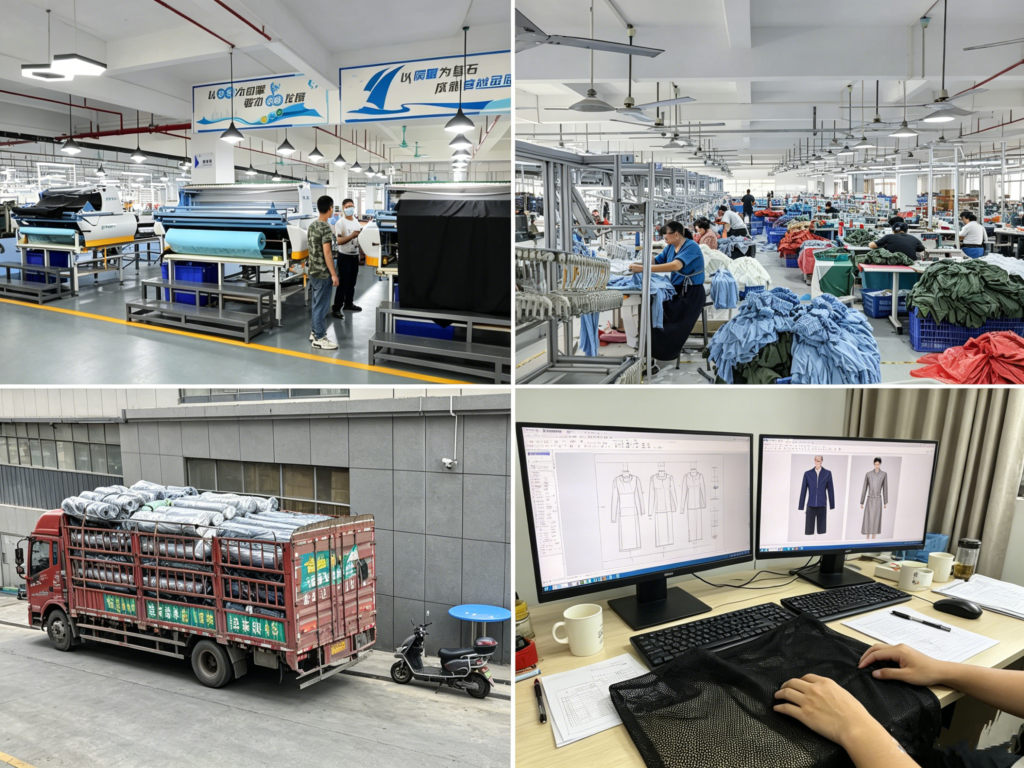
If you have any questions or require a quote, please leave
us a message. Our experts will get back to you within 24 hours to help you choose the ideal fashion products tailored to your needs.
Hi, I’m Lucy Cai, the founder of liantaoapparel.com. I’ve been managing a women’s clothing factory in China for over 20 years. With extensive experience in garment production and OEM services, I’m passionate about sharing insights into women’s fashion, apparel manufacturing, and global sourcing.
If you have any questions or need a quote, please contact us.
Please add us WhatsApp:+86 189 4809 3145
Provide us with detailed information about your requirements, supply design drawings or tech packs,
reference images, and share your ideas.
We will customize the best solution based on your needs and drawings, and provide a specific quote within 24 hours.
Once we receive your confirmation and deposit,we will commence mass production and take care of the subsequent shipping arrangements.


