


🏭 Looking for a Custom Apparel Manufacturer?
We are a leading OEM/ODM clothing factory with 20+ years of export experience. Custom styles, flexible MOQs, and retail-ready quality.
Elastane spandex fabric is widely used in modern clothing because it provides stretch, flexibility, and a comfortable fit. From activewear and leggings to jeans, swimwear, and underwear, this elastic fiber helps garments move with the body while maintaining their shape.
However, choosing the right elastane fabric involves more than checking its stretch percentage. Fiber composition, fabric construction, recovery, durability, and end-use requirements all influence the final garment’s performance.
For clothing brands, fashion startups, and apparel buyers, understanding elastane spandex fabric can make fabric sourcing and product development more efficient. This guide explains what elastane is, how it works, its common fabric blends, and what to consider before bulk production.
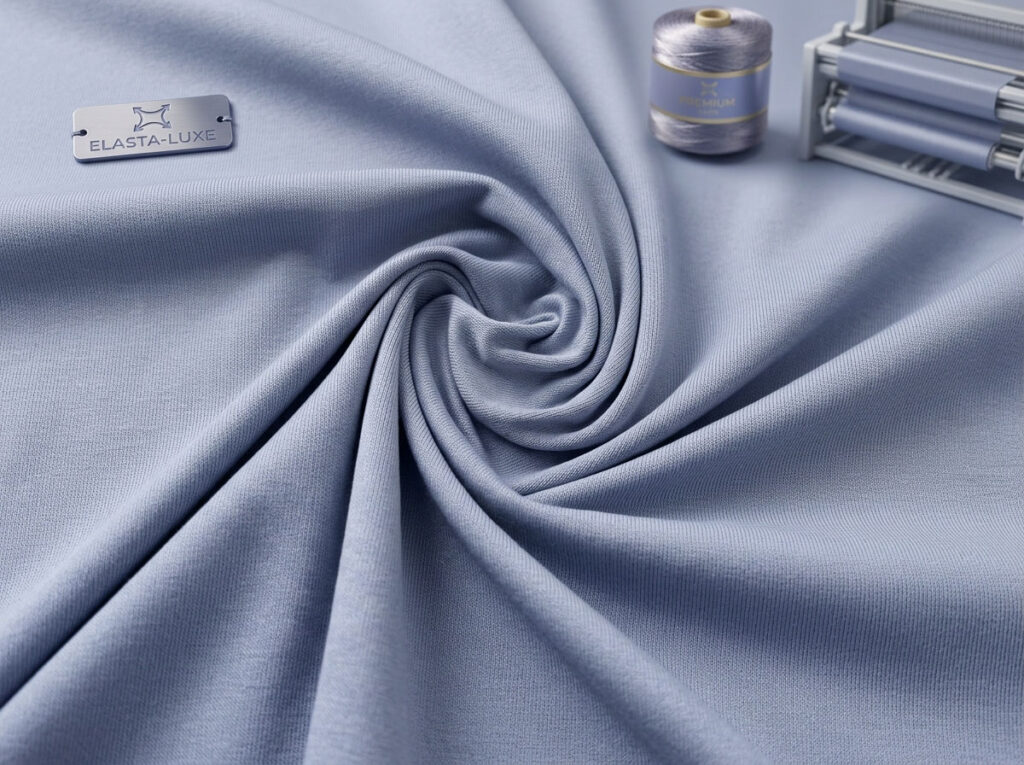
Elastane spandex fabric refers to textile materials containing elastane, a synthetic elastic fiber that gives fabrics additional stretch and recovery.
Elastane is commonly blended with other fibers rather than used alone. Cotton, polyester, and nylon are popular partners because they contribute different characteristics to the finished fabric.
For example, cotton provides a soft, familiar feel, while polyester can contribute durability and easier care. Elastane adds flexibility, helping the garment stretch during movement and return toward its original shape.
Yes. Elastane and spandex are two names for the same general type of synthetic elastic fiber.
These terms should not be confused. Not every fabric containing elastane or spandex contains branded LYCRA® fiber.
For a more detailed explanation, see the difference between LYCRA®, spandex, and elastane from The LYCRA Company.
Elastane is a fiber, not a complete fabric.
It is combined with other fibers and processed through knitting or weaving to create textiles with different appearances, textures, and performance characteristics.
Therefore, when sourcing elastane spandex fabric, buyers should evaluate the complete fabric composition and construction rather than focusing only on the presence of elastane.
The main reason manufacturers use elastane is its ability to stretch and recover. However, the performance of a finished fabric depends on its fiber blend, construction, elastane quality, and manufacturing process.
Here are the most important properties to consider.
Elastane allows a fabric to extend when pulled or worn. This makes it suitable for close-fitting garments and clothing designed for active movement.
The amount and direction of stretch depend on the fabric construction and the way elastic yarns are incorporated.
Elastic recovery describes a fabric’s ability to return toward its original dimensions after stretching.
Good recovery helps garments maintain their intended fit instead of becoming loose or baggy after repeated wear.
Elastane blends can improve freedom of movement, particularly in garments that fit closely to the body.
When combined with suitable base fibers, the fabric can provide a balance of softness, flexibility, and support.
Elastane can help clothing maintain its original silhouette during regular use.
This is especially useful for leggings, fitted tops, underwear, and stretch denim, where consistent fit is important.
Elastane-containing fabrics can perform differently depending on fiber quality, fabric construction, dyeing, finishing, and garment care.
Excessive heat and unsuitable washing conditions may affect elasticity over time. Buyers should evaluate care requirements for the intended product.
For additional technical information, see elastane fiber properties and applications, including its elasticity and recovery characteristics.
Elastane fabric is usually made by combining a small proportion of elastic fiber with other textile fibers. The main fiber determines many of the fabric’s characteristics, while elastane contributes stretch and recovery.
The following blends are commonly used in apparel production.
Cotton elastane fabric combines cotton with elastane to create a material that offers a familiar cotton feel with added flexibility.
Common applications include:
This blend is suitable for brands looking for everyday clothing with a closer fit and more movement than comparable non-stretch cotton fabrics.
Polyester spandex fabric combines polyester with elastane.
Polyester contributes strength, dimensional stability, and relatively easy-care characteristics, while elastane adds stretch.
Common applications include:
The actual moisture management, breathability, and drying performance depend on the yarn, fabric structure, and finishing.
Nylon spandex fabric is commonly selected for garments that require a smooth feel, flexibility, and a close fit.
Typical applications include:
Nylon-based blends can offer a different surface feel and appearance from polyester-based fabrics, so sample evaluation is important.
Viscose elastane fabric combines the soft drape of viscose with the flexibility of elastane.
It is often considered for fashion garments where comfort and a fluid appearance are important.
Potential applications include:
| Fabric Blend | Main Characteristics | Common Applications |
|---|---|---|
| Cotton + Elastane | Soft feel with added stretch | T-shirts, jeans, casualwear |
| Polyester + Spandex | Stretch with polyester-based performance characteristics | Activewear, sportswear |
| Nylon + Spandex | Smooth feel and flexible fit | Leggings, swimwear, dancewear |
| Viscose + Elastane | Soft drape and flexibility | Dresses, tops, fashionwear |
There is no universally best blend. The right choice depends on the garment’s design, target customer, expected performance, and price positioning.
Elastane spandex fabric is used across many apparel categories because it helps clothing accommodate body movement and maintain a comfortable fit.
Activewear is one of the most recognizable applications of elastane blends.
Leggings, sports bras, fitted tops, and training garments often use polyester-spandex or nylon-spandex fabrics.
When selecting fabric for sportswear, brands should consider:
The appropriate specifications depend on the intended activity and garment design.
Stretch denim and casual trousers often incorporate elastane to improve comfort.
A small amount of elastane can help garments accommodate movement while preserving a denim or woven-fabric appearance.
Brands should evaluate waistband comfort, knee recovery, seat fit, and the overall silhouette when developing stretch trousers.
Swimwear commonly uses nylon-spandex or polyester-spandex blends.
These fabrics are designed to provide a close fit and flexibility in water-related activities.
For swimwear development, buyers should pay attention to stretch recovery, fabric opacity when wet, lining compatibility, and resistance to the conditions in which the garment will be used.
Elastane is also used in underwear, bras, and other fitted garments.
Its flexibility helps garments fit closely to the body while supporting movement.
Softness, skin comfort, seam construction, and recovery are important considerations for these products.
Elastane can also be incorporated into fashion fabrics to improve comfort and fit.
Viscose-elastane blends, for example, may be used for fitted dresses, skirts, and tops that require both drape and flexibility.
Elastane, spandex, and polyester are not three interchangeable fabric names.
Elastane and spandex refer to the same type of elastic fiber, while polyester is a separate synthetic fiber with different characteristics.
Understanding the distinction helps brands communicate accurate fabric specifications to suppliers.
| Comparison | Elastane / Spandex | Polyester |
|---|---|---|
| Fiber category | Synthetic elastic fiber | Synthetic textile fiber |
| Main role | Adds stretch and recovery | Provides the main fabric structure and other performance characteristics |
| Stretch | High elasticity | Depends on yarn and fabric construction |
| Shape recovery | Designed to provide elastic recovery | Depends on construction and fabric properties |
| Common apparel use | Stretch blends, leggings, fitted garments | Sportswear, T-shirts, jackets, uniforms |
Neither fiber is automatically better. They serve different purposes.
Polyester is commonly used as a primary fiber in apparel, while elastane is often added to improve stretch and fit.
For example, polyester-spandex fabric combines the characteristics of both fibers. Polyester forms much of the fabric structure, while spandex contributes elasticity.
For brands developing activewear, the decision should be based on the intended product rather than choosing one fiber over the other.
Another important distinction is the difference between generic fiber names and trademarks.
Elastane and spandex are generic terms. LYCRA® is a registered brand.
If a brand specifically requires LYCRA® fiber, this should be stated in the fabric sourcing specification and verified with the supplier.
Choosing the right spandex fabric starts with understanding the product requirements.
A fabric suitable for stretch denim may not be the best choice for yoga leggings or swimwear. Brands should evaluate several factors before confirming a material.
Start by identifying the garment category and how customers will wear it.
Consider:
These questions help narrow down suitable fabric blends.
Ask suppliers for the complete fiber composition.
For example, a specification may identify a polyester-spandex or nylon-spandex blend.
The exact percentages should be selected according to the desired stretch, recovery, hand feel, and garment performance. Avoid choosing a blend based only on a general industry recommendation.
Fabric weight influences thickness, coverage, drape, and garment appearance.
A lightweight stretch fabric may be suitable for certain fitted tops, while a heavier material may be preferred for leggings or structured garments.
However, GSM alone does not determine quality. Fabric construction and yarn characteristics also matter.
Determine whether the product requires two-way or four-way stretch.
The required stretch direction should match the garment pattern and movement requirements.
Check whether the fabric meets the desired color, texture, and finish.
For bulk orders, confirm color consistency and evaluate the fabric under appropriate lighting conditions.
Always review physical samples before approving a fabric for production.
Check stretch, recovery, opacity, hand feel, shrinkage, and compatibility with the intended garment construction.
A sample review can help identify issues before they affect a larger order.
Fabric testing is an important step in clothing development. It helps brands evaluate whether the selected material meets the product’s requirements.
The testing process should reflect the intended use of the garment.
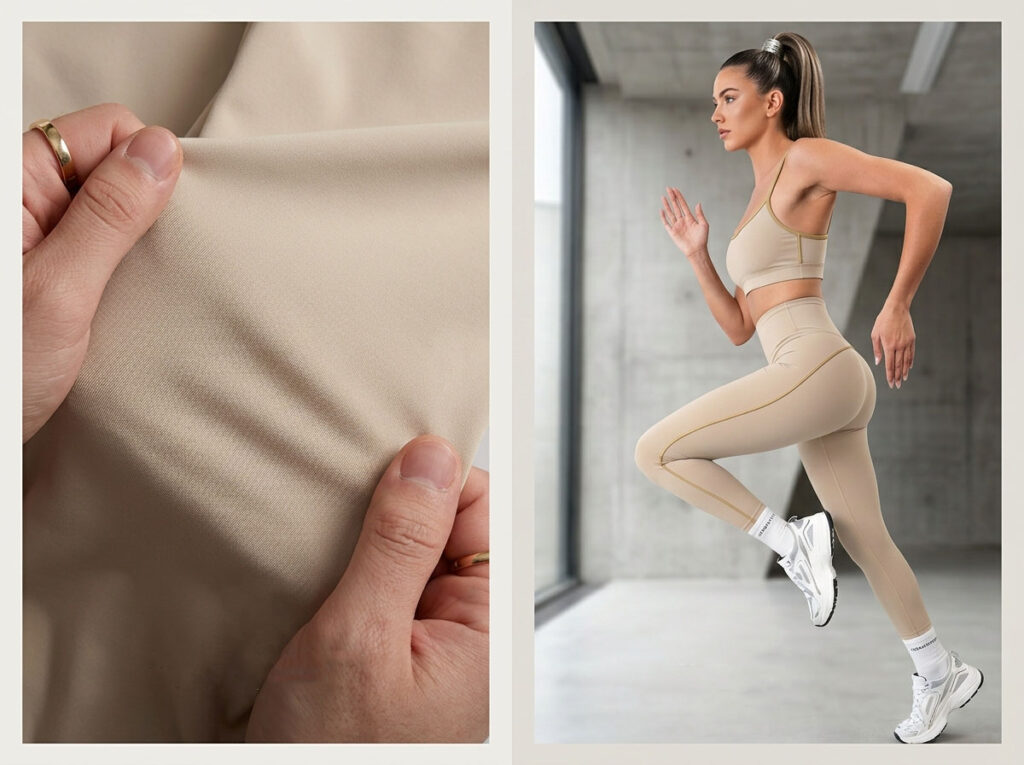
Stretch the fabric in the required directions and observe how easily it extends.
Compare the result with the intended product specification.
For garments requiring four-way stretch, test both lengthwise and crosswise directions.
After stretching the fabric, release it and observe whether it returns toward its original dimensions.
Poor recovery may lead to garments becoming loose or losing their intended fit.
For a more consistent evaluation, brands can define a repeatable testing procedure and compare results across fabric batches.
Wash and dry the fabric according to the intended care instructions.
Measure the fabric before and after washing to identify dimensional changes.
Shrinkage results should be reviewed against the product’s approved specifications rather than relying on a general percentage.
For leggings, sports bras, and fitted garments, opacity is particularly important.
Stretch the fabric to simulate the conditions under which the garment will be worn. Check whether the material becomes excessively transparent.
Review the fabric for color consistency, visible defects, pilling, and surface damage.
Where necessary, request appropriate test reports from the supplier or an independent testing provider.
Fabric performance alone does not determine the final product quality.
Once the fabric has been selected, evaluate a finished garment sample.
Check:
These checks help brands confirm that the fabric works with the pattern and construction.
Sourcing elastane spandex fabric for a clothing brand requires coordination between fabric selection, product development, sampling, and bulk production.
Working with an experienced apparel manufacturer can help simplify communication and reduce misunderstandings during development.
Before contacting a manufacturer, prepare the basic product requirements.
Include:
A clear specification gives suppliers a better understanding of the project.
Share your product requirements and ask which fabric options may be suitable.
For example, a brand developing yoga leggings may evaluate nylon-spandex and polyester-spandex options.
The final selection should be based on physical samples and product testing rather than assumptions about fiber names alone.
Sampling allows brands to evaluate the fabric and garment together.
Review the fit, measurements, stitching, fabric behavior, and overall appearance.
If adjustments are needed, communicate them clearly before approving the final sample.
Before production begins, confirm the approved materials, colors, measurements, construction details, and quality expectations.
The bulk production process should follow the approved sample and product specifications.
When comparing suppliers, consider their experience with your garment category, communication, product development support, sampling process, and quality management.
You can also review our guide on how to choose a reliable apparel manufacturer to understand the key points involved in supplier evaluation.
For brands looking for product development and production support, explore our custom OEM and ODM clothing manufacturing services.
Liantao Apparel provides OEM/ODM clothing manufacturing services. Brands can discuss their garment requirements, fabric preferences, and development needs with the team to explore suitable production options.
The goal is to establish clear specifications before bulk production so that the finished garments meet the brand’s expectations.
Yes. Elastane and spandex are two generic names for the same type of synthetic elastic fiber. Elastane is more commonly used in many international markets, while spandex is widely used in the United States.
Yes. Elastane is an elastic fiber designed to stretch and recover. When blended with cotton, polyester, nylon, or other fibers, it can give the finished fabric additional flexibility.
The actual stretch performance depends on the blend ratio, yarn, fabric construction, and finishing process.
Neither is universally better. Spandex provides elasticity, while polyester is commonly used as a primary textile fiber. Polyester-spandex blends combine characteristics of both fibers and are widely used in stretch apparel.
Elastane fabric can lose elasticity over time due to repeated wear, washing, heat exposure, and unsuitable care conditions.
Following the garment’s care instructions and avoiding excessive heat can help maintain fabric performance.
There is no single best blend for every type of activewear.
Polyester-spandex and nylon-spandex are common options. The right choice depends on the intended activity, fabric weight, stretch requirements, hand feel, opacity, and durability expectations.
Elastane spandex fabric plays an important role in modern apparel because it adds stretch, flexibility, and recovery to a wide range of textiles.
Whether you are developing activewear, stretch denim, swimwear, underwear, or fitted fashion garments, choosing the right blend requires careful consideration of fiber composition, fabric weight, construction, and end-use requirements.
For clothing brands and apparel buyers, the best approach is to define product specifications, evaluate fabric samples, test performance, and approve garment samples before bulk production.
With a clear development process and the right manufacturing partner, brands can make more informed fabric decisions and develop stretch garments that meet their target market’s expectations.
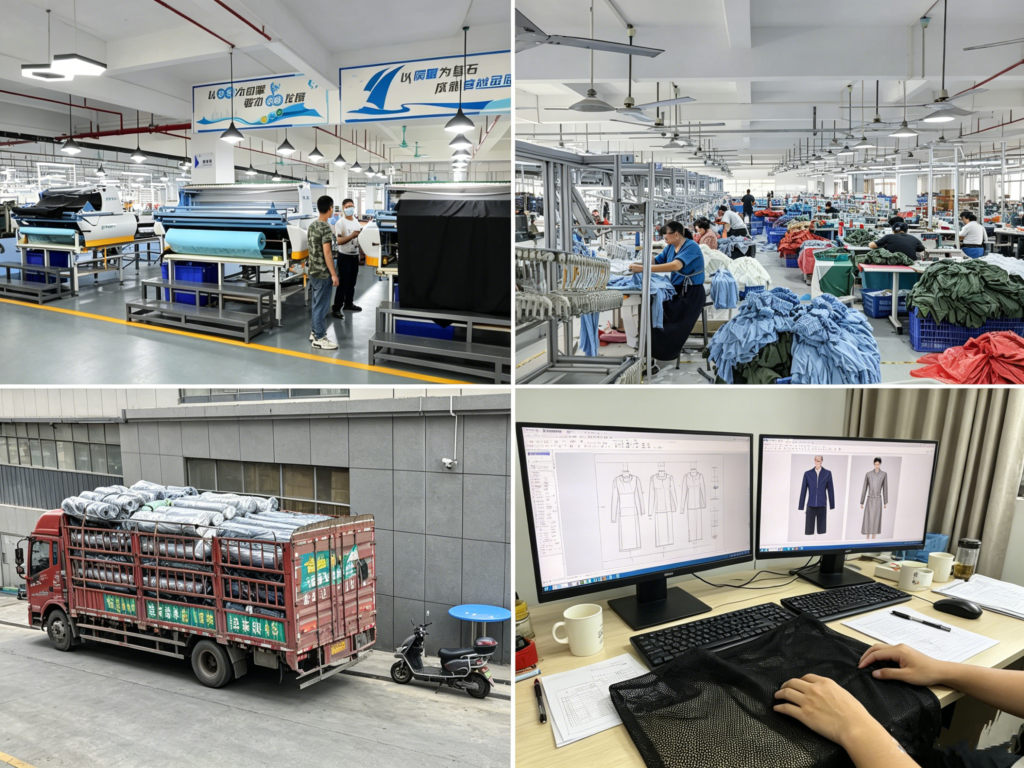
If you have any questions or require a quote, please leave
us a message. Our experts will get back to you within 24 hours to help you choose the ideal fashion products tailored to your needs.
Hi, I’m Lucy Cai, the founder of liantaoapparel.com. I’ve been managing a women’s clothing factory in China for over 20 years. With extensive experience in garment production and OEM services, I’m passionate about sharing insights into women’s fashion, apparel manufacturing, and global sourcing.
If you have any questions or need a quote, please contact us.
Please add us WhatsApp:+86 189 4809 3145
Provide us with detailed information about your requirements, supply design drawings or tech packs,
reference images, and share your ideas.
We will customize the best solution based on your needs and drawings, and provide a specific quote within 24 hours.
Once we receive your confirmation and deposit,we will commence mass production and take care of the subsequent shipping arrangements.


