🏭 Looking for a Custom Apparel Manufacturer?
We are a leading OEM/ODM clothing factory with 20+ years of export experience. Custom styles, flexible MOQs, and retail-ready quality.
In my 20 years of managing garment production lines, I’ve seen hundreds of classic accessories get reinvented, but nothing matches the dramatic comeback of the Bolo Tie in 2026. For decades, people associated this braided cord and metal slide strictly with Texas oil barons and old-school cowboys. But on today’s high-fashion and streetwear runways, it has evolved into a sleek, gender-neutral alternative to the traditional silk tie. The secret to pulling it off isn’t just about looking confident; as a manufacturer, I know it’s about the physics of the outfit—how the weight of the pendant interacts with your shirt collar’s stiffness, and where the tips land on your placket. Today, I’m stripping away the outdated styling myths to show you exactly how to wear a bolo tie like a modern style icon without looking like you’re heading to a costume party.

Many people call the bolo tie a “cowboy tie” or “Western tie” and think it only belongs in cowboy fashion. In fact, bolo ties have become a stylish accessory that blends vintage charm with modern fashion.
A bolo tie usually features a leather cord or braided string with a decorative sliding clasp and metal tips at the ends. Unlike a traditional necktie, it doesn’t require tying a knot — you simply adjust the slide for the perfect fit, making it both easy to wear and highly distinctive.
A bolo tie stands out not only because of its Western roots, but also because of its simple yet distinctive design. A classic bolo tie is made up of three main parts: the cord, the slide clasp, and the tips.
The cord is usually made from leather and can be either round or flat. Genuine leather cords are the most classic and widely used option. Today, braided synthetic materials and sweat-resistant cords are also popular, especially for long hours of wear.
Different materials create different looks:
The slide clasp is the focal point of the entire bolo tie and plays a major role in defining its style.
Popular clasp styles include:
Whenever I test a new bolo tie, I always slide the clasp up and down a few times to check its quality. A well-made clasp should feel secure, stay in place, and not rotate easily.
overall design. Common shapes include cone, bullet, and arrow styles. Metal tips also add weight and help the tie hang more naturally.
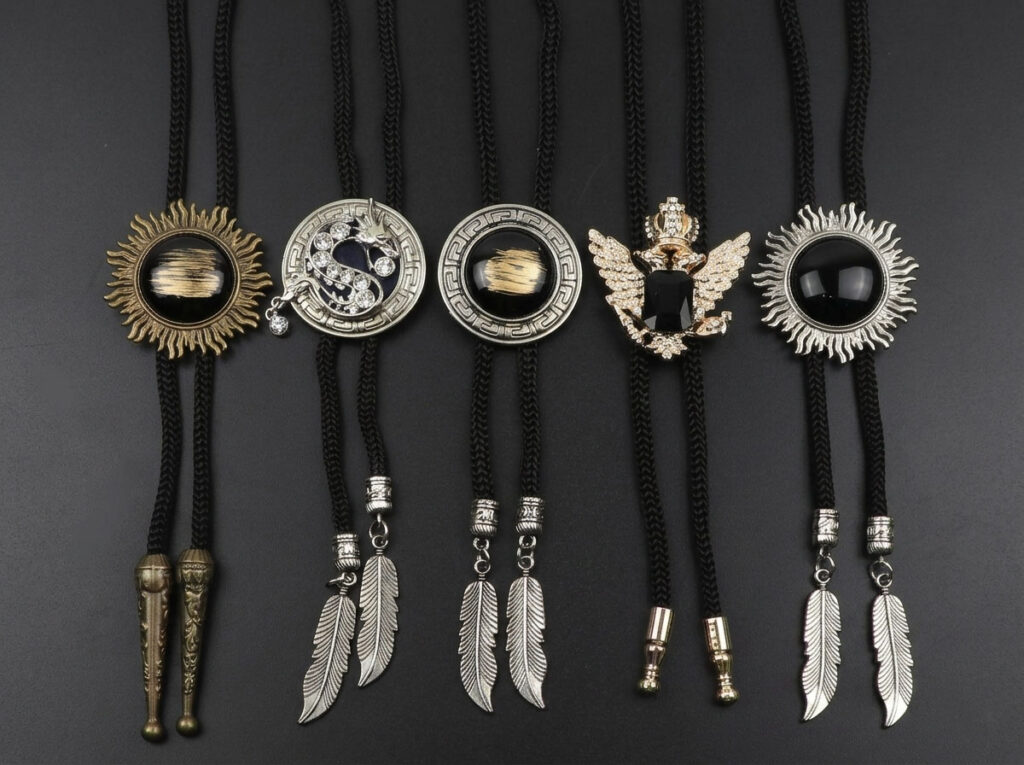
For everyday men’s styling, I prefer a leather bolo tie with a simple oval slide clasp for a clean and timeless look.For women’s styling, a thinner cord with a sparkling gemstone or decorative slide creates a more eye-catching and fashionable appearance.Because of its versatile structure, a bolo tie pairs easily with T-shirts, button-up shirts, and even jackets, adding personality and dimension to almost any outfit.
The Essential Parts of a Bolo Tie: What Makes a Quality Design?
Part | What to Look For | Why It Matters |
Cord | Smooth texture, comfortable flexibility, sweat resistance | A high-quality cord feels comfortable for all-day wear and keeps its shape over time. |
Slide Clasp | Firm grip, smooth backing, secure adjustment | A good slide stays in place without rotating, giving the bolo tie a cleaner and more polished appearance. |
Tips | Balanced weight, refined finish, durable material | Well-crafted tips add elegance, help the tie hang naturally, and complete the overall look. |
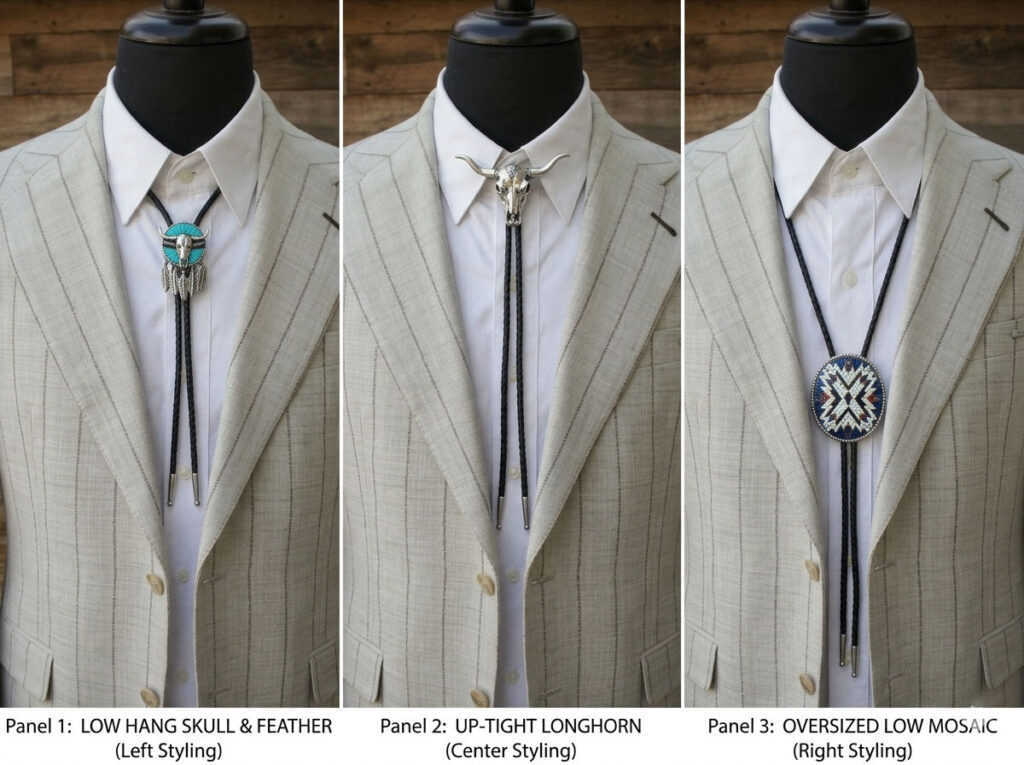
The key to wearing a bolo tie casually is to keep the rest of your outfit simple and understated. Pair it with plain T-shirts, denim shirts, or neutral jackets, and avoid busy prints or overly Western-themed clothing that can make the look feel like a costume. Leave one or two buttons undone and let the slide sit around mid-chest for a relaxed, natural feel instead of a tight, formal look.
Shoes are flexible—you don’t need cowboy boots. Sneakers or simple leather shoes work well and make the outfit feel more modern. The main rule is balance: let the bolo tie be the statement piece, while everything else stays minimal and clean.
The key to casual bolo tie styling is balanced proportions and visual restraint. I prefer thin cord bolo ties with simple, minimal slides—such as small star shapes or silver oval designs. Paired with a plain white T-shirt or denim shirt, the look stays clean and detailed without feeling overly theatrical.
When wearing flannel shirts, leaving only the top button undone and positioning the slide slightly lower helps reduce formality and creates a more relaxed feel. For bottoms, jeans and sneakers are enough to keep the outfit modern and effortless—cowboy boots are optional, not necessary.
When adding outerwear, trucker jackets or bomber jackets work better for a modern streetwear vibe. Try to avoid overly bold Western elements (like animal-head slides) paired with busy prints, as this can easily feel overdone.
For a refined touch, a turquoise slide can elevate darker outfits by adding a subtle focal point. In general, keep accessories minimal—a bolo tie alone already provides enough visual impact.
Item | Best Choice | Why It Works |
T-shirt | Solid, plain crew neck | Creates a clean, minimal base that lets the bolo tie stand out |
Shirt | Denim or flannel | Adds texture and balance without overpowering the look |
Slide Size | Small to medium | Keeps the style subtle instead of costume-like |
Position | Mid-chest level | Gives a relaxed, effortless vibe instead of a formal tie feel |
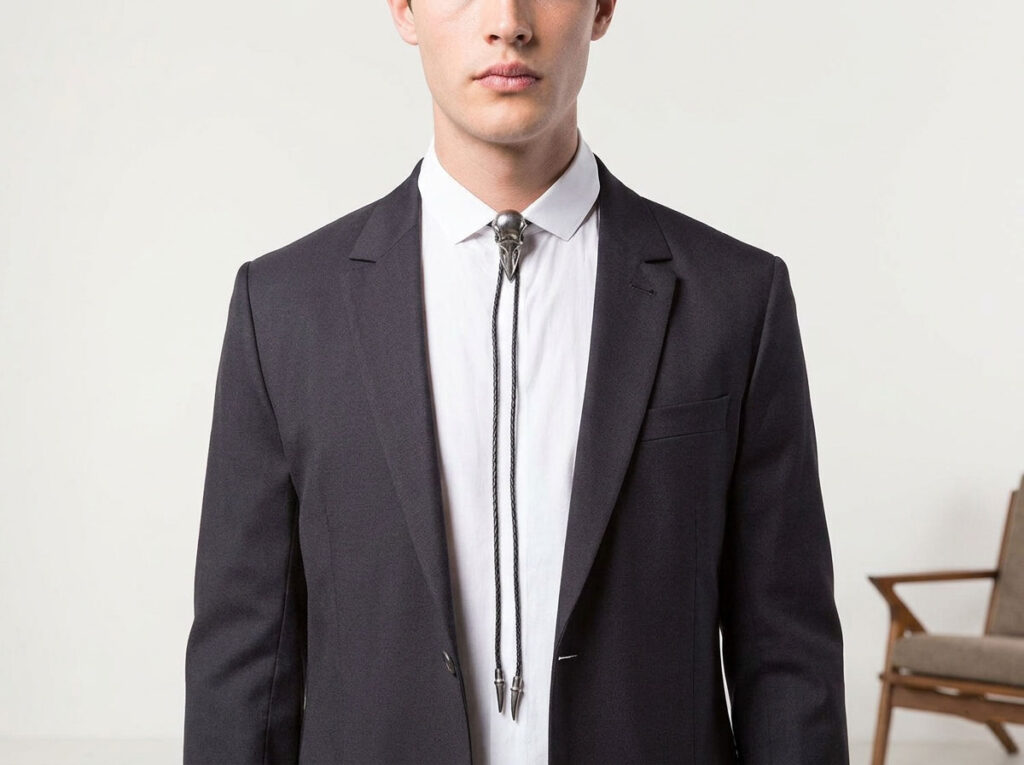
At a brand gala, I wore a tailored dark suit with a bolo tie. Under the lights, it stood out as both formal and expressive, sparking questions about whether it still fits formal dress codes.
A bolo tie can work with a suit when kept clean and controlled: top button fastened, slide centered, and metal tones coordinated. For more formal settings like a tailcoat, choose a minimal design and let it act as a subtle detail rather than the focus.
A bolo tie should sit naturally under the suit lapels, remaining subtle rather than eye-catching. A medium-thickness cord works best, offering a clean look without feeling too delicate or too heavy. For the slide, polished silver or minimal decorative accents are ideal, and the metal tone should match other accessories like your watch or belt buckle for a cohesive finish.
Color balance is key. A navy suit pairs best with black or dark brown cords, as white can appear too sharp and distracting. Grey suits are more versatile, working well with either black or brown options. The goal is to maintain a clean, controlled visual harmony rather than contrast for its own sake.
Bolo ties can be appropriate for formal settings such as weddings, provided the style remains understated. Always confirm the dress code in advance. When worn with a tuxedo, the slide should be small and refined, avoiding overly Western or decorative motifs to preserve a formal aesthetic.
When wearing a suit, always fasten the top button so the bolo tie sits centered. For a more formal interpretation, the slide can be positioned slightly higher so the ends of the cord are partially hidden by the jacket front, creating a cleaner and more streamlined silhouette.
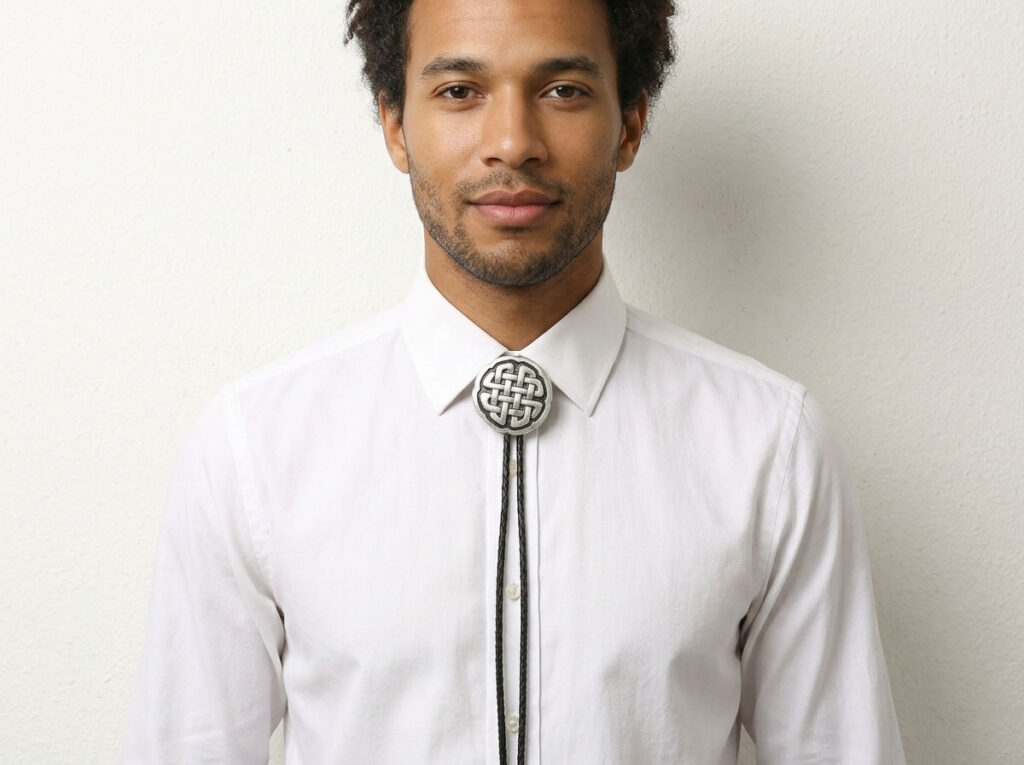
Occasion | Shirt Style (Top Button) | Slide Position | Slide Style |
Business Formal | Fully buttoned at the top | High placement, close to the collar | Polished metal, clean and minimal |
Cocktail Event | Buttoned, tailored silhouette | Mid-high placement, slightly relaxed feel | Stone inlay, more decorative |
Tuxedo / Tailcoat | Fully buttoned for structure | High and minimal placement | Small, refined, understated luxury |
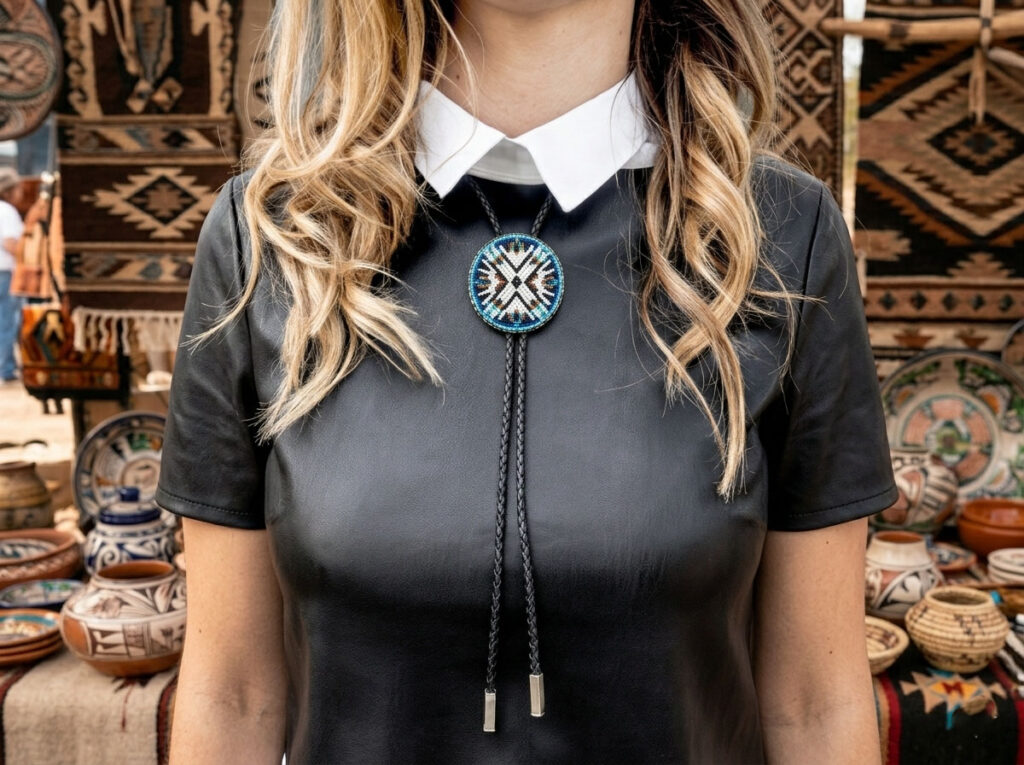
A bolo tie isn’t just for Western-inspired looks—it can also be a stylish accessory that highlights both individuality and elegance.
Choose a slim cord, a delicate slide, and soft accents such as pearls or gemstones to maintain a feminine touch while adding a fashionable edge. Bolo ties pair beautifully with shirts, dresses, and blazers, and can even be worn as a necklace, bringing a unique and modern flair to everyday outfits.
Women can create a softer, more elegant look by choosing bolo ties with slim cords, beaded details, or delicate slides. Pair them with silk blouses, blazers, or simple dresses such as V-neck and shirt dresses. For patterned outfits, a minimalist slide helps keep the look balanced and stylish.
A turquoise or gemstone slide can add color and personality to a basic outfit. Match the gemstone with your earrings for a coordinated appearance. Boots and loafers pair well with bolo ties, while a T-shirt and cropped jacket create a relaxed, modern style. In summer, a white bolo cord adds a fresh and lightweight touch.
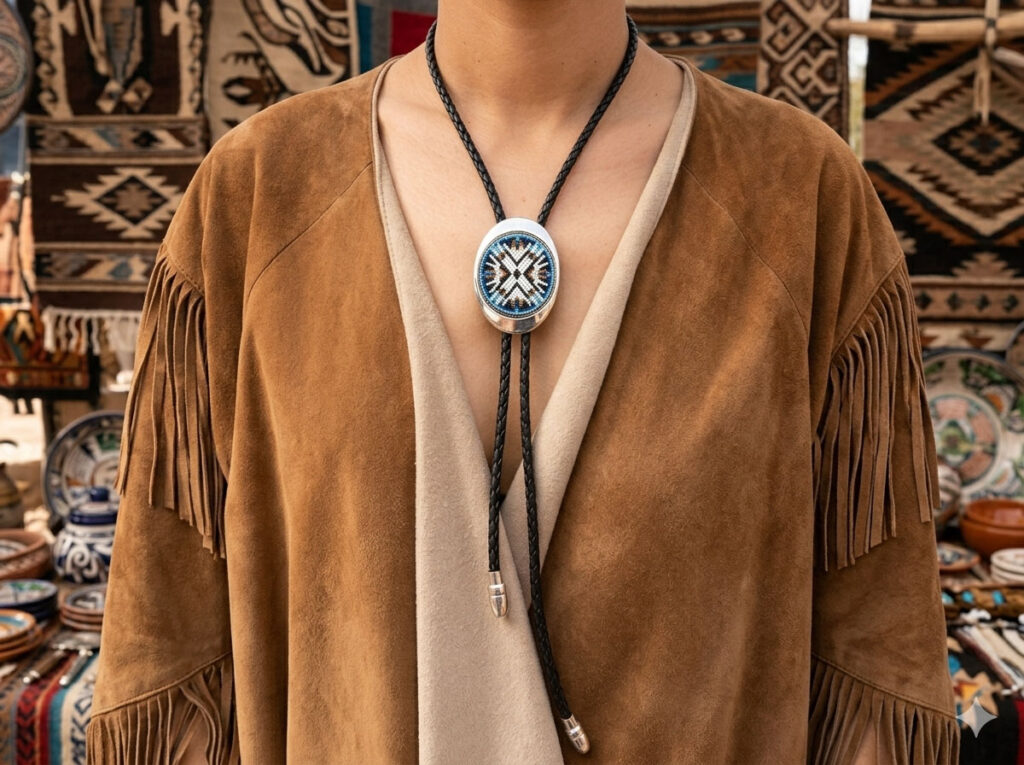
Outfit | Cord Style | Slide Design | Wearing Position | Style Effect |
Silk blouse | Slim cord | Small stone slide | Low, pendant style | Elegant, soft, and lightweight luxury |
Blazer | Medium slim cord | Metal oval slide | High, close to the collar | Sharp, structured, and powerful look |
Shirt dress | Slim cord | Beaded slide | Mid-low position | Relaxed elegance with layered detail |

The length of a bolo tie may seem minor, but it has a big impact on overall balance and appearance. Too short looks tight and awkward; too long can feel unstructured and unbalanced.
Standard lengths are 36–40 inches (91–102 cm) for men and 34–38 inches (86–97 cm) for women. Ideally, the ends should fall around the middle of the chest, and when adjusted, sit near the belt line for a clean, proportional look.
Category | Length (inches) | Length (cm) | Fit Guidance |
Men | 38–40 in | 97–102 cm | Standard fit |
Women | 34–38 in | 86–97 cm | Slightly shorter proportion |
Taller individuals | 40–42 in | 102–107 cm | Prevents high riding position |
Children | 30–34 in | 76–86 cm | Smaller, safer fit |
In terms of materials, leather styles are classic and versatile, woven cords are more durable and suitable for everyday wear, while metal or gemstone designs are better for formal occasions. For styling, it’s recommended to keep elements consistent: pair darker cords with suits for a subtle, refined look, and use lighter or contrasting colors for casual outfits to add visual depth.
Height | Recommended Length | Cord Type | Style Use |
< 165 cm | 34–36 in (86–91 cm) | Slim leather | Casual, lightweight styling |
165–185 cm | 38–40 in (97–102 cm) | Leather / synthetic cord | Versatile, everyday wear |
> 185 cm | 40–42 in (102–107 cm) | Medium-weight leather | Formal-ready, balanced proportion |
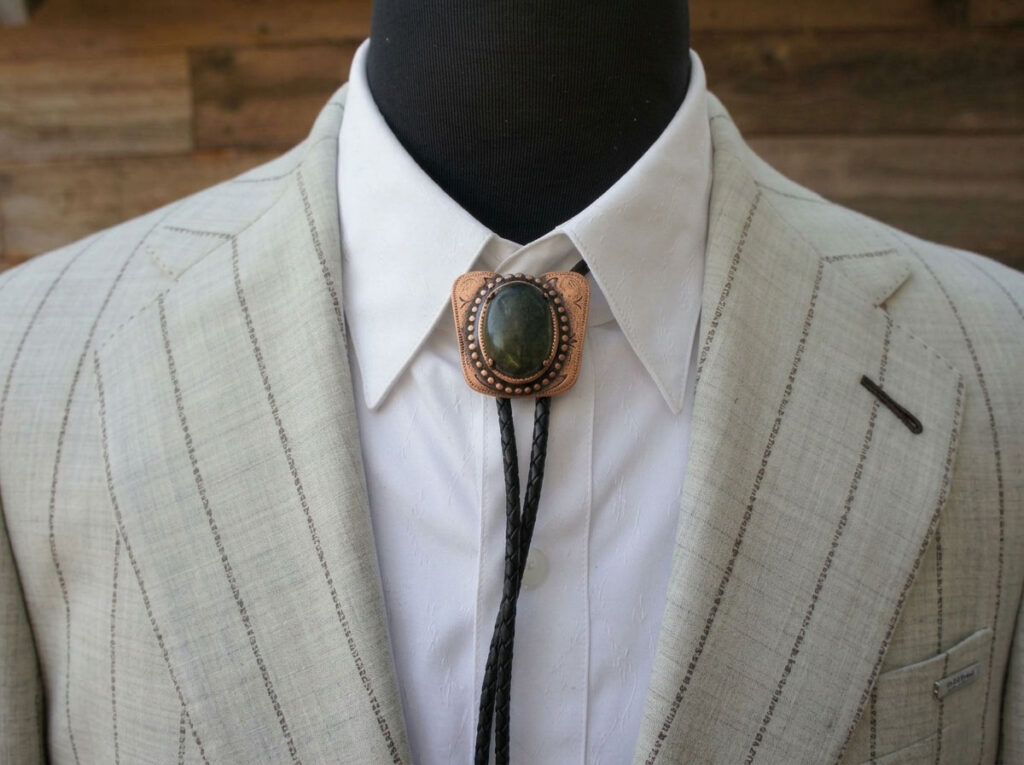
The bolo tie is widely worn in Western fashion and is generally not considered offensive. However, it has connections to Indigenous design traditions, so cultural awareness is important.
The key principle is “respect first, style second.” Choose products from reputable makers and avoid using sacred or religious symbols as fashion accessories.
The bolo tie blends Western style with diverse design influences, including elements of Indigenous craftsmanship. Because of this, it is important to approach its use with cultural sensitivity and respect.
Avoid copying tribal patterns or ceremonial symbols. When choosing materials such as turquoise, pay attention to their origin and authenticity, and avoid counterfeit or misleading markings. In general, the bolo tie itself is not inherently offensive—the key lies in design choice and how it is presented.
For formal settings, neutral designs such as polished metal, geometric shapes, or plain gemstones are recommended. Vintage pieces should be properly researched and preserved. By following these principles, the bolo tie can be worn confidently and respectfully.
Principle | What to Do | Why It Matters |
Sourcing | Choose reputable manufacturers with transparent origins | Ensures authenticity and avoids misuse of cultural designs |
Symbols | Avoid sacred, ceremonial, or religious motifs | Prevents cultural misrepresentation or offense |
Attribution | Credit the artisan or cultural source when known | Respects craftsmanship and preserves cultural integrity |
Center the slide at the neckline and button the top shirt button to keep the look stable and symmetrical. Let both ends hang evenly for a clean, balanced line, and keep the cord clean for a polished finish.If the slide slips, add a small piece of thin felt or slightly tighten the clasp to increase friction and improve hold.
Wearing a bolo tie is less about tying and more about positioning. Think of it like a necklace—place it around the neck and slide the clasp up to the center of the collar for a balanced, symmetrical look.
For formal shirts and suits, button the top button for structure. With T-shirts, the neckline can remain open for a more relaxed style. If the slide tends to slip, adding a thin piece of felt at the back or slightly adjusting the tension can improve grip.
For care, gently steam the cord and hang it vertically to maintain shape. When traveling, roll it loosely in a soft pouch to prevent deformation. When buying, it’s best to try it on with your shirt to ensure the correct length and proportion.
Issue | Fix | Time Required |
Slide slipping | Add a small felt pad or slightly tighten the clasp | 1–2 minutes |
Twisted cord | Hang the tie overnight to let it naturally straighten | ~8 hours |
Uneven ends | Adjust the slide and re-check length balance | ~30 seconds |
Wearing a bolo tie is not complicated—the key lies in consistency and proportion. Button the top shirt button for structure, center the slide for symmetry, adjust the length according to the occasion, and match the metal elements with the overall style. When these details are in place, the bolo tie becomes more than an accessory—it becomes a clean, refined, and expressive style statement.
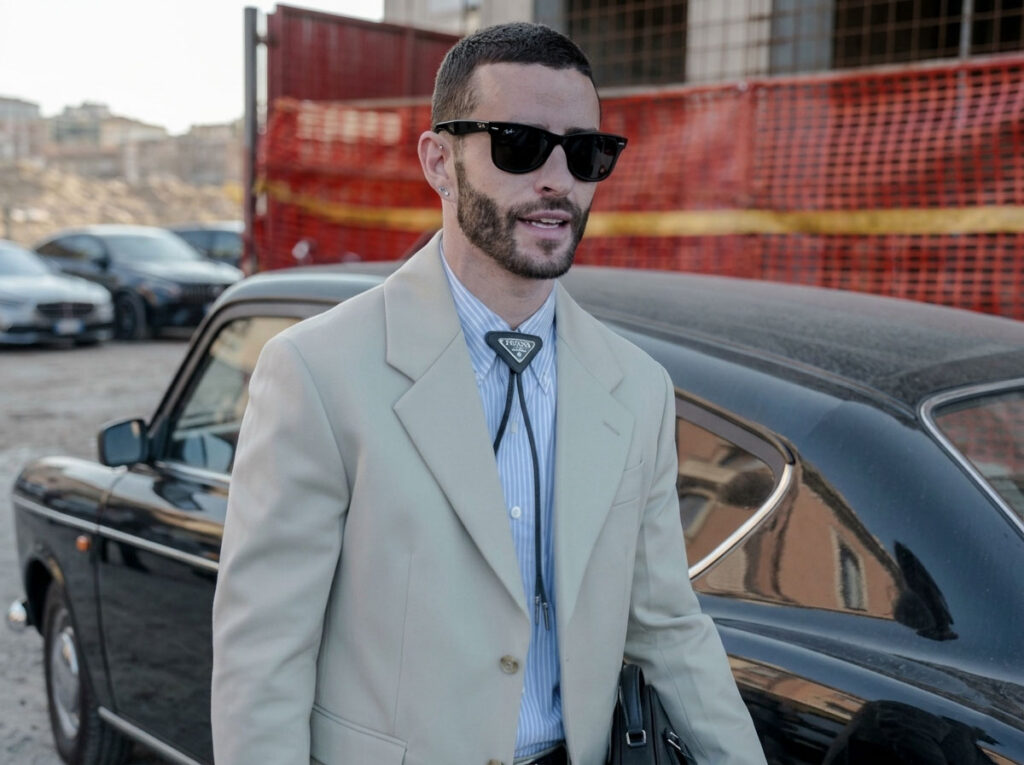
Liantao Apparel helps bolo tie brands turn design ideas into production-ready products with stable quality and consistent detailing. With over 16 years of manufacturing experience, we support clients through full OEM/ODM services—from material sourcing (leather cords, braided ropes, metal slides, and gemstone accents) to sampling and bulk production. We focus on key technical details such as slide tension, cord durability, finishing consistency, and wearing comfort, ensuring every bolo tie performs well in both everyday and formal styling. By combining flexible customization with strict quality control, we help brands build scalable bolo tie collections that are both visually distinctive and commercially reliable.

If you have any questions or require a quote, please leave
us a message. Our experts will get back to you within 24 hours to help you choose the ideal fashion products tailored to your needs.
Hi, I’m Lucy Cai, the founder of liantaoapparel.com. I’ve been managing a women’s clothing factory in China for over 16 years. With extensive experience in garment production and OEM services, I’m passionate about sharing insights into women’s fashion, apparel manufacturing, and global sourcing.
If you have any questions or need a quote, please contact us.
Please add us WhatsApp:+86 189 4809 3145
Provide us with detailed information about your requirements, supply design drawings or tech packs,
reference images, and share your ideas.
We will customize the best solution based on your needs and drawings, and provide a specific quote within 24 hours.
Once we receive your confirmation and deposit,we will commence mass production and take care of the subsequent shipping arrangements.