🏭 Looking for a Custom Apparel Manufacturer?
We are a leading OEM/ODM clothing factory with 20+ years of export experience. Custom styles, flexible MOQs, and retail-ready quality.
Elastane is one of the most important stretch fibers used in modern apparel. Known in many markets as spandex, and associated with branded names such as LYCRA® fiber, it is valued for exceptional elasticity, stretch recovery, lightweight performance, and its ability to improve the fit of garments. The exact performance of an elastane-containing fabric, however, also depends on the fiber percentage, yarn construction, fabric structure, finishing, and the other fibers used in the blend.
Elastane is widely used in leggings, sports bras, swimwear, underwear, cycling apparel, yoga clothing, fitted tops, and other garments that require stretch and shape retention.
For apparel brands, understanding elastane fabric is important because a small percentage of stretch fiber can significantly change the fit, comfort, recovery, and performance of a garment.
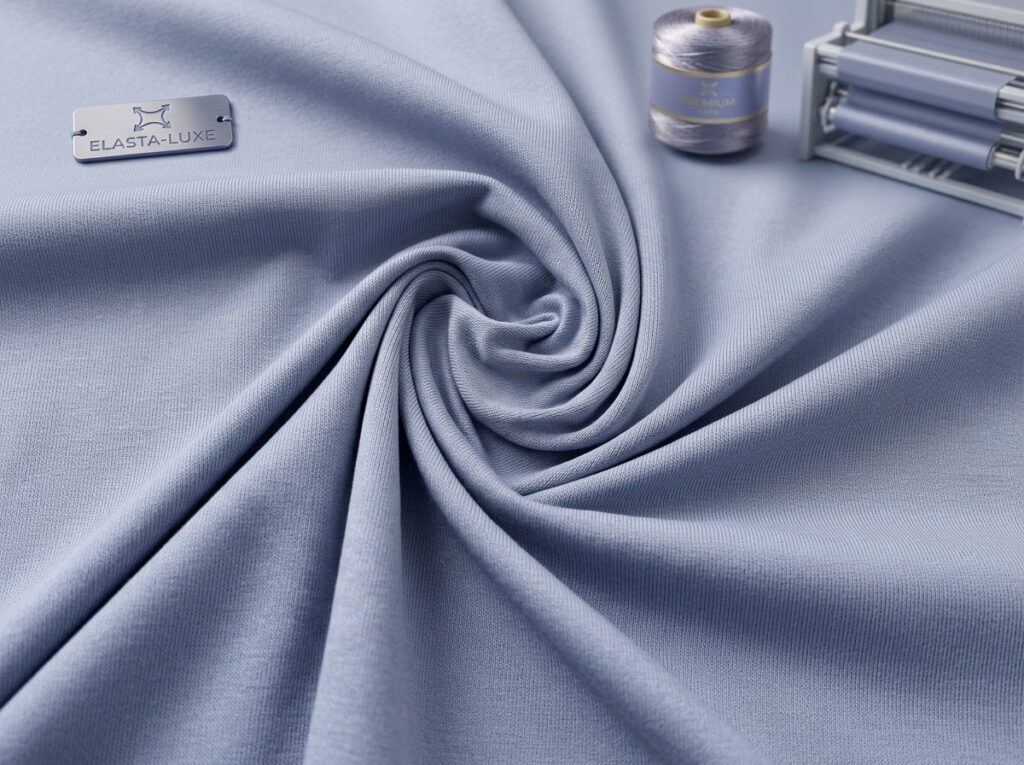
| Fabric Property | Elastane Fabric Details |
|---|---|
| Fabric Name | Elastane |
| Common Names | Spandex; LYCRA® is a branded fiber name |
| Fiber Type | Synthetic elastic fiber based on polyurethane chemistry |
| Common Uses | Leggings, sports bras, swimwear, underwear, cycling wear, yoga wear, fitted apparel, compression products |
| Stretch | Exceptionally high |
| Recovery | High when properly engineered |
| Moisture Performance | Depends mainly on the fabric structure and blend |
| Breathability | Depends on fabric construction, weight, and fiber blend |
| Heat Retention | Generally low in lightweight stretch constructions |
| Pilling Risk | Depends on the blend, yarn, surface, and finishing |
| Typical Blends | Cotton, polyester, nylon, modal, viscose, and other textile fibers |
| Care | Follow the garment care label; excessive heat should generally be avoided |
| Major Production Regions | China and other major synthetic-fiber manufacturing regions |
Elastane is a synthetic elastic fiber designed to stretch substantially and recover its original dimensions after the stretching force is removed.
It is commonly called spandex in the United States and Canada and elastane in many other markets. LYCRA® is a registered brand name associated with specific branded fibers from The LYCRA Company and should not be used as a generic substitute for all elastane.
Unlike fabrics such as cotton or polyester, elastane is rarely used alone in mainstream apparel. It is usually combined with other fibers to provide controlled stretch, recovery, comfort, and fit.
Elastane is produced from polyurethane-based polymer chemistry. The polymer is processed into elastic fibers that can be incorporated into yarns and fabrics.
Because the fiber is synthetic, its raw-material supply chain is different from that of natural cellulose fibers such as cotton or regenerated fibers such as Lyocell.
For apparel development, the important consideration is not only the elastane percentage but also how the fiber is incorporated into the fabric. A 5% elastane jersey and a 20% elastane compression knit can have completely different stretch and recovery characteristics.
Elastane was commercialized in the mid-20th century and transformed apparel design by making close-fitting, stretchable garments much more practical.
Its adoption expanded from lingerie and foundation garments into sportswear, swimwear, medical textiles, fashion apparel, and performance clothing.
Today, elastane is particularly important in products where the garment must repeatedly stretch and return to shape, including leggings, cycling shorts, sports bras, compression garments, and fitted fashion pieces.
Modern elastane is primarily used as a performance-enhancing fiber rather than as the sole material in a garment.
Its role may include:
At Liantao, elastane-containing fabrics are evaluated according to the intended garment, target fit, stretch requirements, fabric weight, recovery, and production specifications.
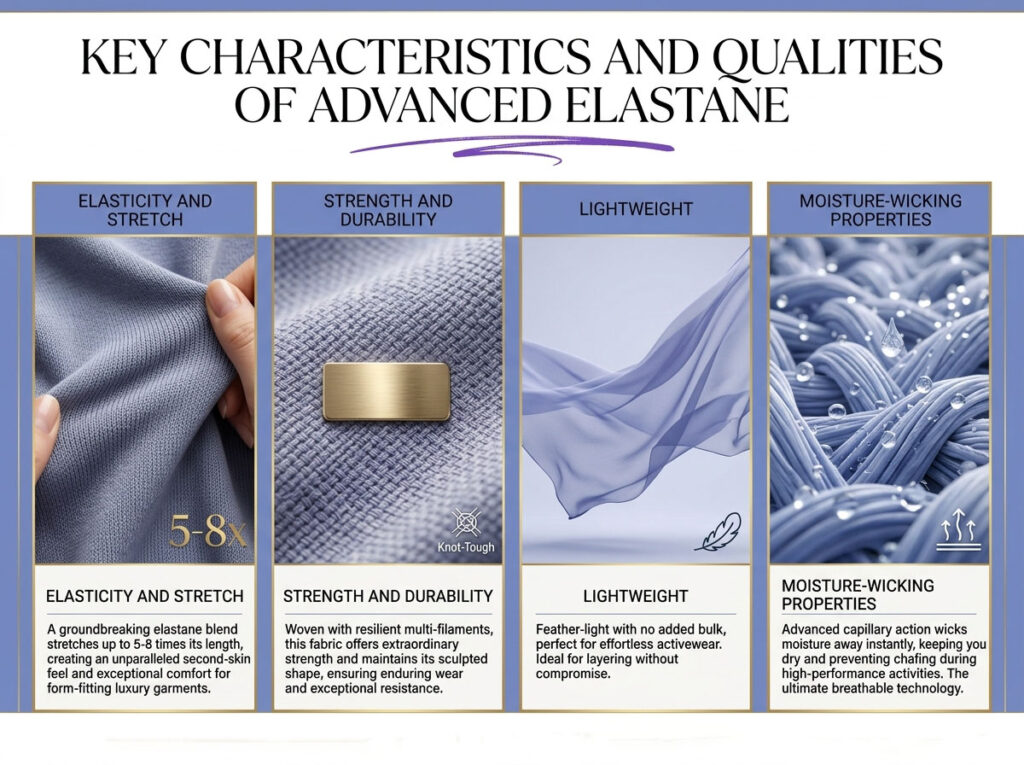
Elastane is distinctive because it can deliver a level of stretch and elastic recovery that most conventional apparel fibers cannot provide on their own.
Its value is especially apparent when garments need repeated movement, close body contact, or shape retention.
Cotton is valued for softness, breathability, moisture absorption, and its natural hand feel. Elastane is valued primarily for elasticity and recovery.
A cotton-elastane blend can combine these properties, which is why stretch cotton is widely used in T-shirts, jeans, underwear, and casual apparel.
For fitted clothing, adding elastane can improve mobility and reduce the restrictive feeling of a 100% cotton fabric.
Nylon provides durability, strength, abrasion resistance, and a smooth technical hand feel. Elastane provides substantially greater elasticity and recovery.
A nylon-elastane blend is therefore common in performance apparel because nylon can contribute durability while elastane provides stretch.
Polyester is known for durability, dimensional stability, versatility, and competitive cost. Elastane contributes stretch and recovery.
Polyester-elastane fabrics are frequently used in activewear because the two fibers can be engineered to balance performance, comfort, shape retention, and moisture management.
The final performance depends on the fiber ratio, yarn construction, fabric structure, finishing, and garment design, rather than on one fiber in isolation.
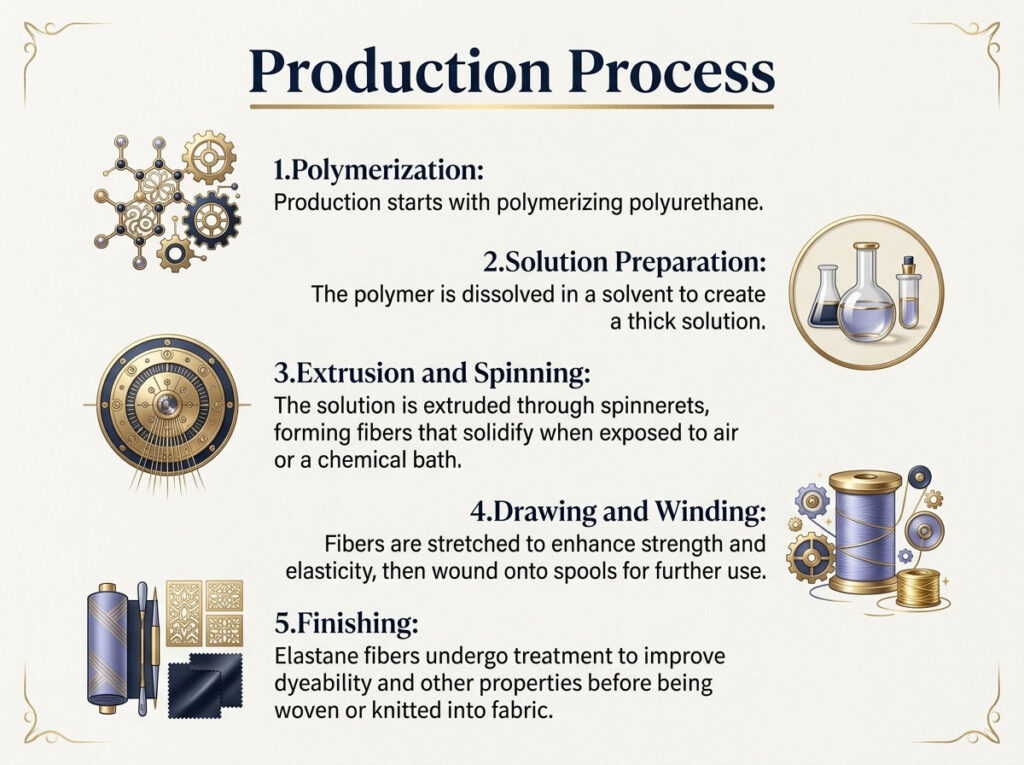
Elastane manufacturing begins by creating a suitable polyurethane-based polymer and converting it into a spinnable material.
The resulting fibers are then stretched, stabilized, processed, and incorporated into yarns or fabrics according to the intended application.
The precise chemistry and processing conditions differ by producer and technology. For buyers, supplier documentation and fabric testing are more useful than assuming all elastane fibers have identical performance.
Elastane is produced across several major textile and synthetic-fiber manufacturing regions.
For sourcing teams, production location should be considered together with fiber specification, supplier capability, certifications, testing, lead time, and quality consistency.
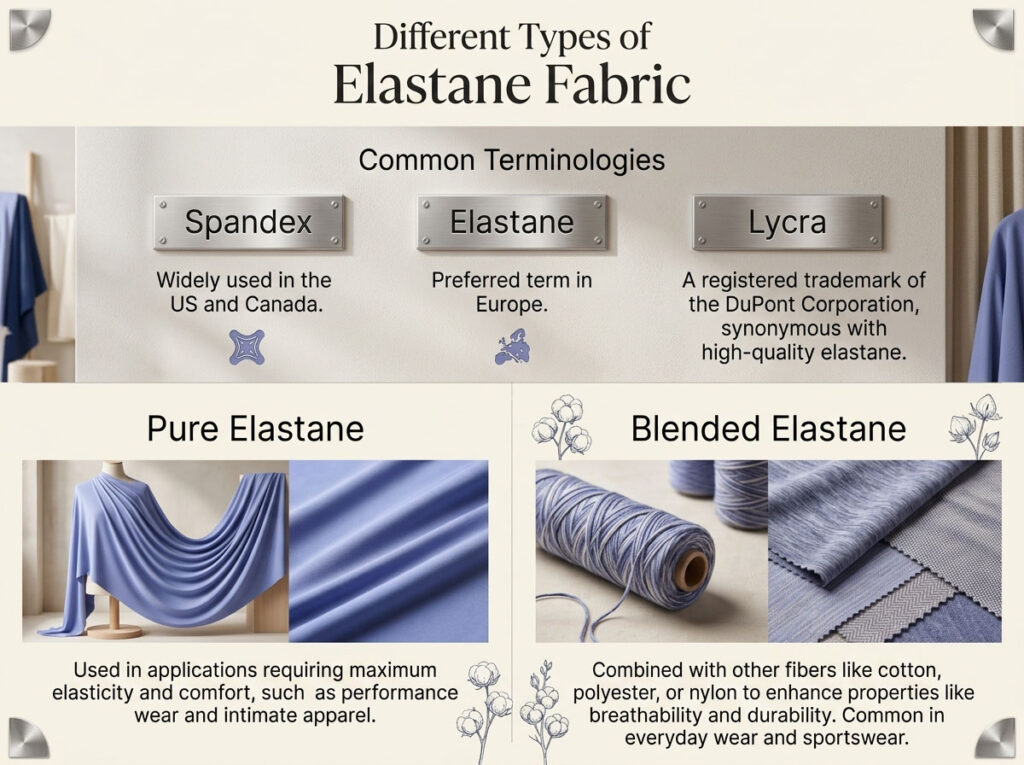
Strictly speaking, elastane is a fiber rather than one single fabric construction. The finished fabric can vary significantly depending on what the elastane is blended with and whether the material is knitted or woven.
Using the correct terminology is important for product descriptions, specifications, labeling, and sourcing documents.
The best blend depends on the garment’s intended use rather than simply choosing the highest elastane percentage.
Elastane is widely used because stretch and recovery can improve both garment performance and comfort.
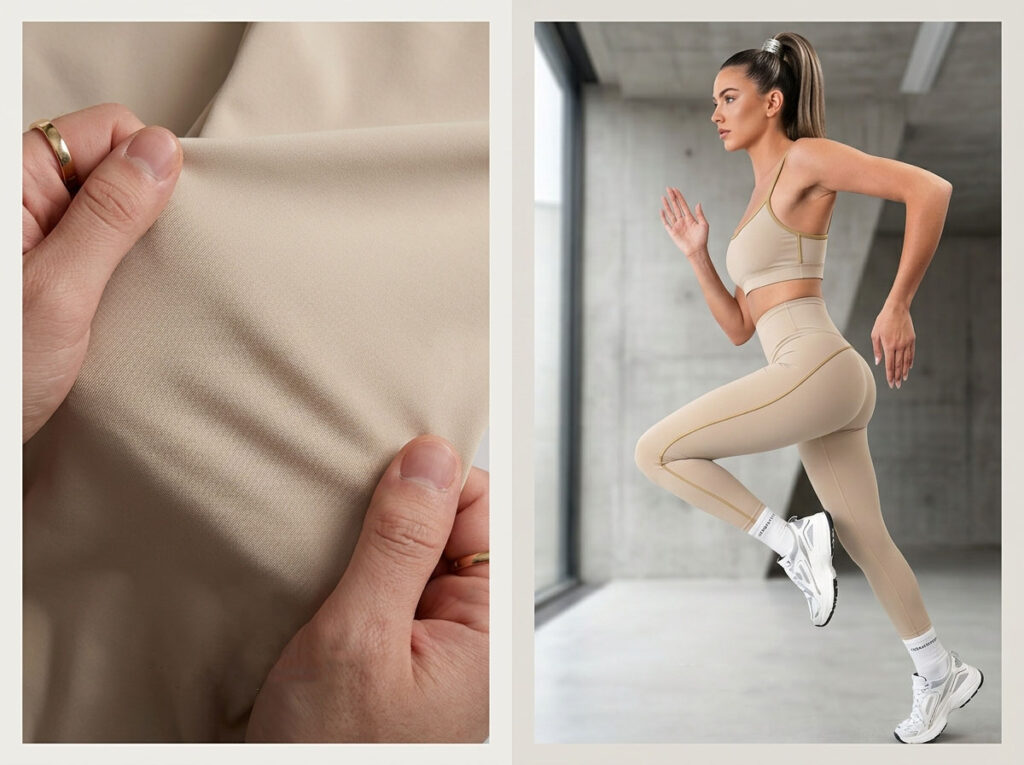
Elastane plays an important role in activewear because garments need to move with the body.
Swimwear often uses elastane with nylon or polyester because the garment needs stretch, recovery, and close body contact.
Performance claims such as chlorine resistance should be verified against the specific fabric and finishing system rather than assumed from the presence of elastane alone.
Elastane has become equally important in everyday clothing.
Elastane is also used in selected medical and therapeutic textile products where controlled stretch is required.
Medical products should always be developed to the applicable performance and regulatory requirements rather than treated as ordinary apparel.
Elastane also has selected uses beyond traditional clothing.
The broad application range of elastane reflects its role as a performance-enhancing fiber rather than a conventional standalone fabric.
The cost of elastane-containing fabric varies significantly according to the elastane percentage, base fiber, fabric weight, yarn quality, knitting or weaving construction, finishing, dyeing, certifications, order quantity, and production location.
A fixed price range can quickly become outdated or misleading because two fabrics with the same fiber content may have very different specifications and manufacturing costs.
For B2B buyers, the most useful approach is to request quotations against a complete specification including fiber percentage, GSM, width, construction, finish, color, MOQ, testing requirements, and delivery terms.
China has a mature textile manufacturing ecosystem covering synthetic fibers, yarns, knitting, dyeing, finishing, and garment production.
The cost advantage of sourcing in China cannot be reduced to a single “average elastane price,” because actual quotations vary by material specification, factory, order size, exchange rates, and production conditions.
For brands sourcing from China, the priority should be comparable specifications and reliable quality, rather than choosing the lowest quoted price.
At Liantao, fabric selection can be evaluated alongside garment construction, order quantity, target cost, performance requirements, and quality standards so brands can compare like-for-like products.
Elastane offers important performance advantages, but it also presents environmental challenges that brands should consider.
Because elastane is a synthetic polymer, its production relies on fossil-derived chemical feedstocks in conventional systems. Its elastic properties also make recycling more complex when it is tightly blended with other fibers.

Brands should therefore avoid treating “recyclable” or “recycled” as automatic properties of any elastane-containing fabric. The actual claim depends on the material and certification pathway.
Textile manufacturers are working on ways to reduce the impact associated with synthetic fiber production through improved chemical management, energy efficiency, resource optimization, and alternative feedstocks.
For apparel brands, supplier selection matters because factory-level environmental performance can vary substantially even when the same fiber is used.
Blending elastane with preferred fibers can reduce the impact associated with the primary fiber in some applications, although the presence of elastane can still create end-of-life recycling challenges.
Potential combinations include:
Sustainability claims should be supported by appropriate documentation rather than based solely on the presence of one preferred fiber.
At Liantao, sustainable elastane apparel development focuses on material choices, product durability, production efficiency, quality control, and responsible supplier evaluation.
Rather than treating a single “eco” fiber as the complete solution, the goal is to consider the entire product lifecycle—from material selection and cutting efficiency to garment durability, care requirements, and end-of-life considerations.
For brands developing leggings, sports bras, cycling apparel, swimwear, or other stretch garments, material selection and construction should support both performance and responsible product development.
When purchasing elastane fabric, buyers should evaluate fiber composition, stretch and recovery, durability, dimensional stability, colorfastness, chemical safety, and any applicable certifications.
A certification does not automatically prove every performance or sustainability claim, so each standard should be interpreted according to what it actually covers.
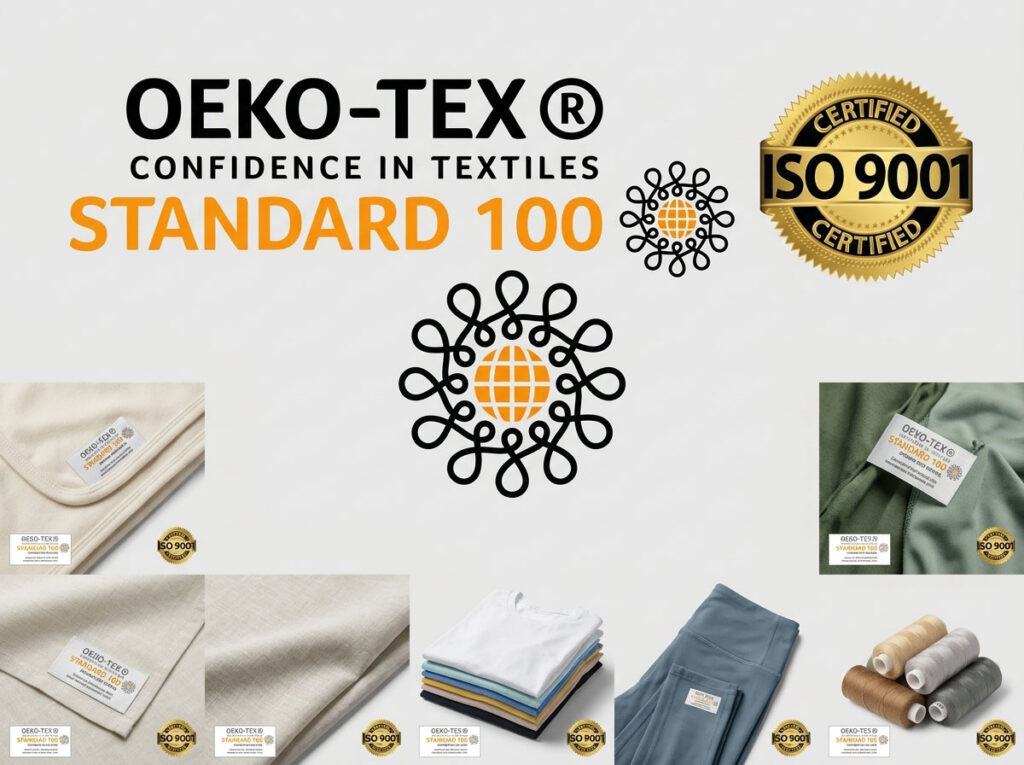
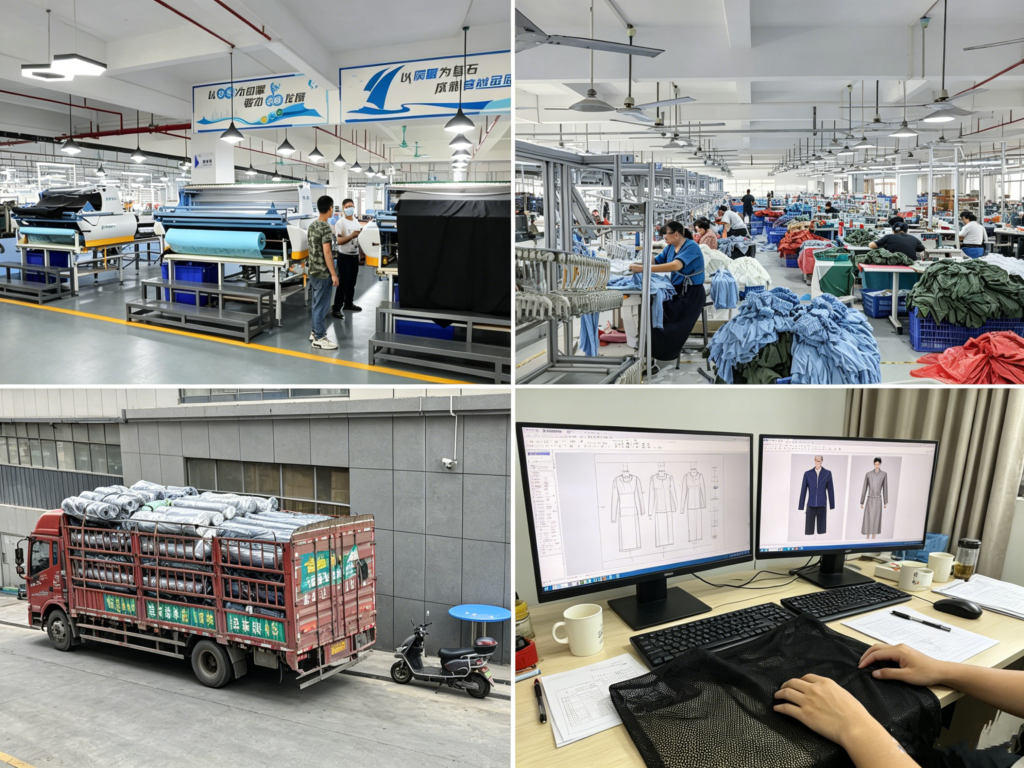
At Liantao, elastane apparel development is built around consistent specifications, appropriate fabric selection, fit control, and production quality.
The objective is to ensure that the chosen elastane blend provides the required stretch, recovery, comfort, durability, and appearance for the intended product.
For brands developing performance apparel, the final quality depends on the complete system: fiber composition, yarn, fabric construction, finishing, pattern, sewing, washing, and quality control.
Whether the product is leggings, sports bras, cycling shorts, swimwear, underwear, or stretch fashion apparel, the right elastane specification should be selected according to the garment’s actual performance requirements.
Elastane is therefore more than a stretch fiber. It is a key material for modern apparel development, and the best results come from matching the right fiber ratio, fabric construction, garment design, and manufacturing process to the end use.
If you have any questions or require a quote, please leave
us a message. Our experts will get back to you within 24 hours to help you choose the ideal fashion products tailored to your needs.
Hi, I’m Lucy Cai, the founder of liantaoapparel.com. I’ve been managing a women’s clothing factory in China for over 16 years. With extensive experience in garment production and OEM services, I’m passionate about sharing insights into women’s fashion, apparel manufacturing, and global sourcing.
If you have any questions or need a quote, please contact us.
Please add us WhatsApp:+86 189 4809 3145
Provide us with detailed information about your requirements, supply design drawings or tech packs,
reference images, and share your ideas.
We will customize the best solution based on your needs and drawings, and provide a specific quote within 24 hours.
Once we receive your confirmation and deposit,we will commence mass production and take care of the subsequent shipping arrangements.