


🏭 Looking for a Custom Apparel Manufacturer?
We are a leading OEM/ODM clothing factory with 20+ years of export experience. Custom styles, flexible MOQs, and retail-ready quality.
Finding garment suppliers in China is relatively easy. Finding a supplier that can meet your product specifications, order quantity, quality requirements, and delivery schedule is a different challenge. When evaluating China garment suppliers, quality control should be your top priority.
A supplier may have an attractive website, a large product catalog, and competitive prices. However, these details alone do not establish whether the company operates its own production facilities, has experience with your garment category, or can deliver consistent results at scale.
At Liantao Apparel, we believe that successful clothing production starts with a structured sourcing process. Instead of choosing a supplier based only on price or online presentation, buyers should verify manufacturing capabilities, compare equivalent quotations, evaluate samples, and document production requirements before committing to a bulk order.
In this guide, we explain where to find garment suppliers in China, how to evaluate a China manufacturer for clothing, and how to use a practical five-step vetting test to reduce sourcing risks.
The goal is simple: identify suppliers that are suitable for your business, not just suppliers that appear in search results.

Start by defining your garment category, target quantity, material requirements, customization needs, budget, and delivery timeline.
Next, build a shortlist through supplier websites, B2B marketplaces, the Canton Fair, trade shows, professional referrals, and direct factory outreach. Verify each candidate’s business identity and production capabilities before requesting detailed quotations.
Then compare suppliers using the same product specifications, evaluate physical samples, and confirm quality-control procedures and production terms in writing.
For a significant order, consider an independent factory audit or pre-production inspection. Do not rely on a supplier’s website, marketplace badge, or verbal assurance as the sole evidence of reliability.
One of the most common sourcing mistakes is searching for a general clothing supplier before defining the actual production requirements.
The more specific your requirements, the easier it becomes to identify suitable manufacturers and eliminate suppliers that do not fit your project.
Before contacting suppliers, prepare the following information:
A complete brief helps suppliers quote the same project rather than making different assumptions about the product.
For example, two quotations for a hoodie may not be comparable if they use different fabric weights, printing methods, zipper specifications, or packaging.
There is no single sourcing channel that works best for every buyer. Each channel offers different advantages, costs, and verification requirements.
| Sourcing channel | Main advantage | Main limitation | Best suited for |
|---|---|---|---|
| B2B marketplaces | Convenient supplier discovery and initial quotation requests | Listings do not independently prove production capability | Buyers building an initial shortlist |
| Direct manufacturer websites | Access to company information and product-specific services | Claims may require independent verification | Buyers with defined garment requirements |
| Trade shows | Opportunity to examine samples and meet suppliers directly | Travel, time, and follow-up costs | Buyers comparing multiple suppliers in person |
| Professional referrals | May provide firsthand experience with a supplier | Results depend on the relevance and recency of the referral | Brands seeking trusted introductions |
| Sourcing agents | Can support supplier identification, communication, and coordination | Service fees and supplier relationships need to be understood | Buyers needing local sourcing support |
B2B marketplaces
Platforms such as Alibaba and Made-in-China can help you discover candidates and request initial quotations. Treat listing information and verification badges as starting points for due diligence rather than guarantees of production quality.
Direct manufacturer websites
A supplier’s own website can help you assess its stated product focus, customization services, and communication process. Check whether the examples shown are relevant to the products you intend to manufacture.
Trade shows
Trade shows allow buyers to examine samples and discuss requirements face-to-face. Prepare a consistent question list and record each supplier’s answers so that follow-up comparisons remain objective.
Professional referrals
A referral is more useful when it comes from a buyer who ordered a similar garment, used a comparable order quantity, and can describe the actual production experience.
Sourcing agents
An agent may help coordinate supplier research, sampling, inspections, and communication. Before engaging one, clarify fees, responsibilities, potential conflicts of interest, and who contracts with the factory.
For most buyers, combining two or more sourcing channels is more robust than relying on a single directory.
How can you determine whether a garment supplier is worth pursuing?
Use the following five-step process to evaluate candidates consistently. This is a practical screening protocol designed for buyers; it should not be interpreted as a completed study of supplier performance.
Request the supplier’s full legal company name, registered business details, operating address, and relevant business documentation.
Check whether the information is consistent across the quotation, invoice, contract, and payment instructions.
If the supplier claims to operate a factory, ask for evidence of the actual production site. A registered trading company is not automatically unreliable, but buyers should understand whether manufacturing is performed in-house or outsourced.
Warning sign: The supplier refuses to clarify the contracting entity, production location, or party responsible for manufacturing.
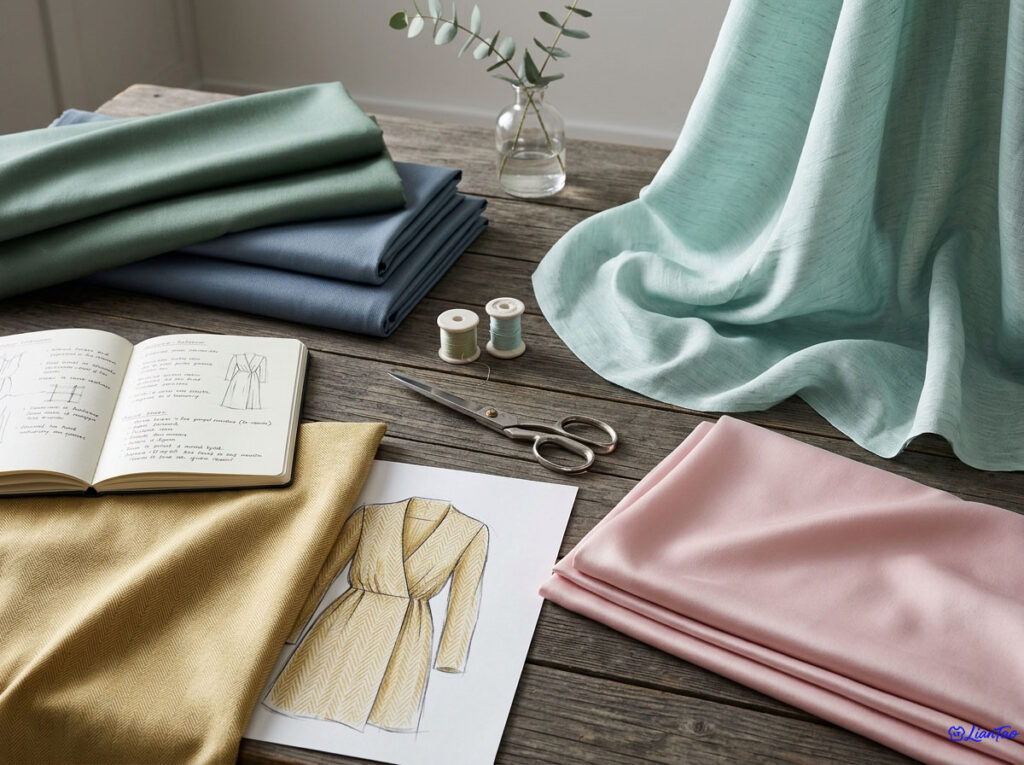
Do not judge capability by the number of products displayed in a catalog.
Ask for examples of similar garments and confirm that the supplier understands the technical requirements of your project.
For a T-shirt program, relevant questions may concern fabric weight, neck construction, shrinkage, printing, and size consistency.
For hoodies, you may need to discuss fleece or French terry, rib specifications, hood construction, stitching, and finishing.
Warning sign: The supplier repeatedly avoids product-specific questions or cannot explain how your requirements will be implemented.
Request written quotations using the same specifications and quantity breakdown.
Your comparison should include:
A quotation with a lower unit price may exclude important services or use different materials. Evaluate the complete commercial offer rather than comparing a single number.
Warning sign: The supplier cannot explain major price differences or repeatedly changes essential quotation terms without a clear reason.
A sample is an opportunity to verify the proposed product before bulk production.
Review the garment against the approved specifications, including:
Record discrepancies and request revisions when necessary.
For products with important performance or compliance requirements, identify appropriate testing methods and acceptance criteria before production.
Warning sign: The supplier pressures you to approve bulk production before resolving material or construction issues in the sample.
Before placing a bulk order, document how the supplier will control the production process.
Discuss pre-production approvals, measurement tolerances, inspection procedures, defect handling, production milestones, and responsibility for resolving nonconforming goods.
Depending on the order’s size and risk, consider an independent factory audit, pre-production review, or inspection before shipment.
Warning sign: Quality requirements remain vague, the supplier refuses reasonable verification, or production commitments are not documented.
Passing these five steps does not guarantee perfect production. It does, however, create a more defensible basis for selecting a supplier and managing the risks that remain.
A useful supplier evaluation should produce evidence that other buyers can understand and, ideally, reproduce.
We recommend running a small, controlled sourcing test rather than relying on informal impressions.
Which shortlisted garment suppliers provide the strongest combination of product fit, quotation transparency, sample quality, and documented production controls?
The sample size above is a proposed starting point for a small buyer-led screening exercise, not a statistically representative sample of China’s garment manufacturing industry.
| Criterion | Suggested weight | Evidence to collect |
|---|---|---|
| Product fit | 25% | Relevant production examples and technical responses |
| Sample quality | 25% | Sample inspection against approved specifications |
| Quotation transparency | 20% | Completeness and consistency of written quotations |
| Quality-control readiness | 20% | Inspection procedures and documented acceptance criteria |
| Communication | 10% | Clarity, consistency, and responsiveness during the test |
| Total | 100% |
The weights are illustrative and should be adjusted to the buyer’s priorities. For example, a brand producing premium garments may assign greater importance to sample quality and process control.
Score each criterion from 1 to 5 using predefined rules. Keep unverified criteria separate from confirmed results.
A weighted score can then be calculated as:
Weighted supplier score = Sum of (criterion score ÷ 5 × criterion weight)
For example, a score of 4 out of 5 on a criterion weighted at 25% contributes 20 percentage points to the overall score.
This calculation standardizes comparisons, but the resulting score is a decision aid—not an independently validated prediction of supplier reliability.
After completing the test, publish:
Do not publish test results until the underlying records have been collected and reviewed. If the results cover only a small shortlist, describe them as findings from that specific exercise rather than general conclusions about all Chinese suppliers.
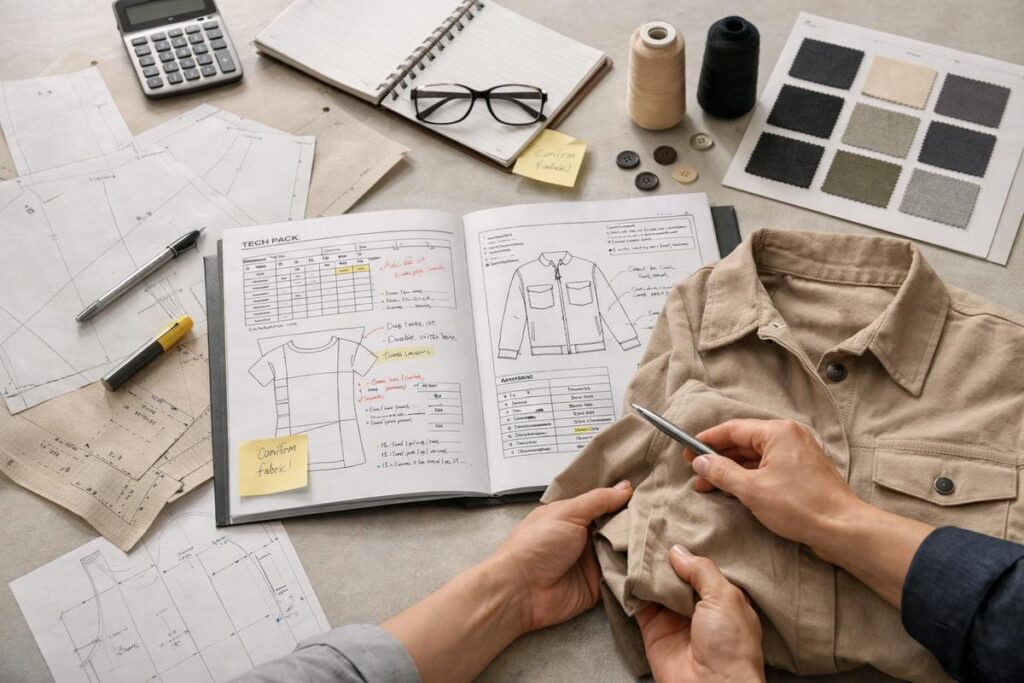
A chart is valuable when it helps a buyer understand a real pattern in the data.
Once the supplier test is complete, consider three visualizations.
Chart A: Supplier screening funnel
Show the number of suppliers discovered, contacted, responding with complete quotations, passing initial verification, and passing sample evaluation.
This helps readers understand where candidates drop out of the selection process.
Chart B: Supplier score comparison
Use a bar chart to compare the weighted scores of the shortlisted suppliers. Include the scoring scale and explain which criteria contributed to each score.
Chart C: Quotation completeness
Compare the percentage of suppliers that clearly documented each required item, such as MOQ, sample fees, material specifications, lead time, and quality-control arrangements.
These charts should be based on actual collected data. If the sample size is small, show the number of suppliers alongside percentages so readers can interpret the results correctly.
Supplier verification should continue after the first quotation.
Consider investigating further when you encounter the following situations.
An individual warning sign does not automatically prove fraud or poor manufacturing capability. The appropriate response is to pause, request evidence, independently verify the information, and assess the overall risk before proceeding.
For payments, confirm bank details through a trusted communication channel and ensure that the receiving entity matches the agreed commercial arrangement.
Finding a suitable supplier is only the beginning. A well-managed clothing production process needs clear approvals and responsibilities at each stage.
The buyer provides a technical pack, reference samples, or a detailed product brief. The supplier reviews feasibility, materials, construction, and estimated costs.
The supplier develops a sample for review. The buyer evaluates fit, measurements, materials, and finishing, then documents any required revisions.
The final specifications, materials, approved sample, order quantity, and commercial terms are confirmed before bulk production begins.
Production proceeds according to the agreed schedule and quality requirements. Any proposed changes to materials or construction should be approved through a documented process.
The finished order is checked against the agreed acceptance criteria. Shipping documents, packaging requirements, delivery terms, and outstanding issues are resolved before dispatch.
Lead times vary by garment type, material availability, order quantity, customization, and factory capacity. Request a project-specific schedule rather than relying on a generic production estimate.
Different buyers need different supplier capabilities.
| Buyer profile | Priority requirements | Questions to ask |
|---|---|---|
| Startup launching a private-label brand | Product development, manageable MOQ, sampling support | Can you support the required customization and order quantity? |
| Established clothing brand | Consistent quality, repeat production, capacity planning | How do you maintain specifications across repeat orders? |
| Wholesale buyer | Commercial pricing, clear quantities, reliable delivery | What is included in the quotation at each order volume? |
| Promotional merchandise buyer | Printing or embroidery, order coordination, schedule | Can the supplier meet the required decoration and delivery specifications? |
| Technical or performance apparel brand | Specialized construction and relevant testing | What technical processes and testing capabilities can be verified? |
A supplier that works well for one business may be unsuitable for another. The goal is to align manufacturing capabilities with your product requirements, purchasing model, and risk tolerance.
At Liantao Apparel, we understand that sourcing decisions involve more than comparing unit prices.
Buyers need to communicate their specifications clearly, understand what is included in a quotation, evaluate samples, and establish realistic production expectations before committing to an order.
Our recommended starting point is a structured discussion about your product category, estimated quantity, customization requirements, target budget, and delivery timeline.
These details help establish whether a manufacturing project is suitable and what information is needed for the next step.
If you are considering Liantao Apparel as a manufacturing partner, share your product brief and purchasing requirements so that the project can be evaluated on its actual specifications.
Specific MOQ requirements, product capabilities, certifications, production capacity, and lead times should be confirmed for your project rather than assumed.
Choosing the right garment supplier requires a repeatable process.
Define your product requirements, shortlist relevant candidates, verify company and manufacturing details, compare complete quotations, evaluate physical samples, and document production and quality expectations.
The objective is not simply to find a company that can offer a low price. It is to find a supplier whose capabilities and commercial terms match the needs of your business.
Looking for a clothing production partner in China?
Contact Liantao Apparel with your product category, estimated order quantity, customization requirements, and target delivery date.
A clear brief is the first step toward evaluating your project and determining whether we are the right manufacturing partner for your brand.
You can discover candidates through B2B marketplaces, direct manufacturer websites, trade shows, professional referrals, and sourcing agents. Verify the supplier’s identity, relevant experience, production arrangements, and quality controls before placing an order.
Request the company’s legal details, production address, and evidence of manufacturing capability. A video walkthrough, site visit, or independent audit can provide additional assurance. Clarify whether the company manufactures in-house or uses subcontractors.
No. Trading companies can provide useful sourcing and coordination services, particularly when buyers need multiple product categories. The important questions are who manufactures the garments, what services are included, and who is responsible for quality and delivery.
Compare MOQ, unit price, sampling fees, fabric specifications, customization, packaging, estimated lead time, payment terms, and delivery arrangements. Ensure all candidates are quoting against the same product brief.
Verify the supplier, approve a physical sample, document specifications, agree on quality requirements, confirm payment details, and establish a clear production schedule. Consider independent inspections when appropriate for the order’s value and risk.

A garment supplier is a broad term for a business that supplies finished clothing. A manufacturer produces the garments directly, although some manufacturers outsource particular processes. Confirm the actual production arrangement instead of relying solely on the label used in marketing.
About Liantao Apparel
Liantao Apparel works with prospective buyers to discuss apparel manufacturing requirements and evaluate potential production projects. Contact us with your product specifications and estimated order quantity to discuss the next steps. Working with certified China garment suppliers helps minimize bulk order risks.
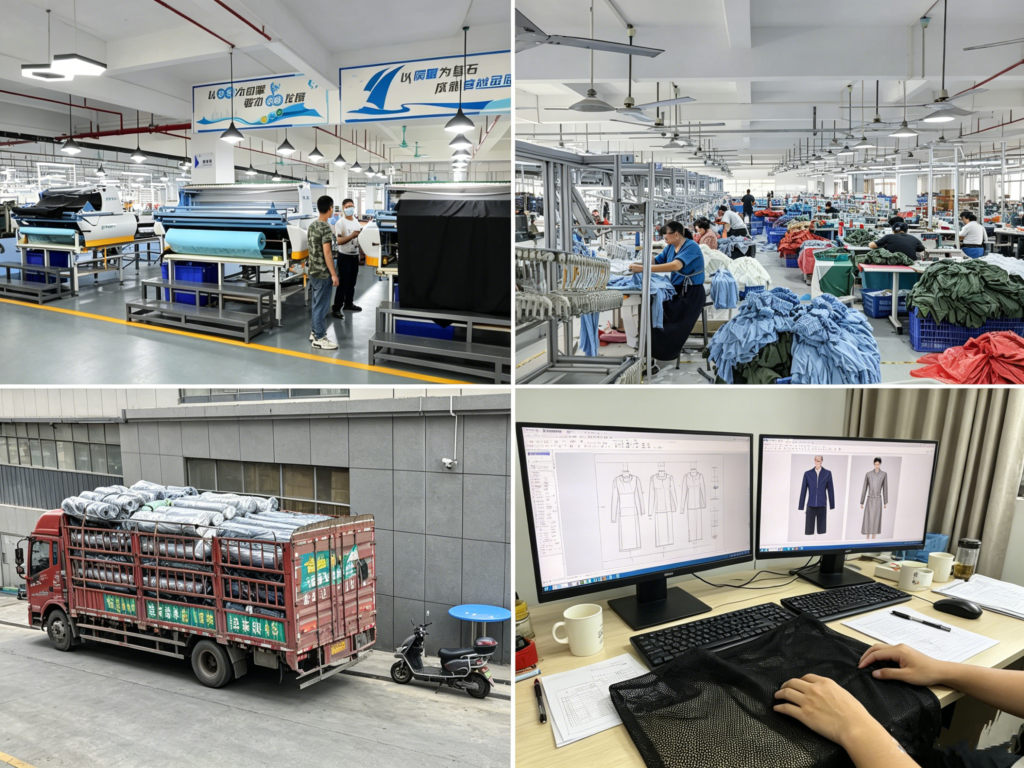
If you have any questions or require a quote, please leave
us a message. Our experts will get back to you within 24 hours to help you choose the ideal fashion products tailored to your needs.
Hi, I’m Lucy Cai, the founder of liantaoapparel.com. I’ve been managing a women’s clothing factory in China for over 16 years. With extensive experience in garment production and OEM services, I’m passionate about sharing insights into women’s fashion, apparel manufacturing, and global sourcing.
If you have any questions or need a quote, please contact us.
Please add us WhatsApp:+86 189 4809 3145
Provide us with detailed information about your requirements, supply design drawings or tech packs,
reference images, and share your ideas.
We will customize the best solution based on your needs and drawings, and provide a specific quote within 24 hours.
Once we receive your confirmation and deposit,we will commence mass production and take care of the subsequent shipping arrangements.


