


🏭 Looking for a Custom Apparel Manufacturer?
We are a leading OEM/ODM clothing factory with 20+ years of export experience. Custom styles, flexible MOQs, and retail-ready quality.
Is made in China apparel good quality?
For clothing brands, this is more than a question about a country of origin. It is a purchasing decision that affects product consistency, customer satisfaction, production costs, and brand reputation.
China has a broad apparel manufacturing ecosystem, covering fabric sourcing, garment construction, printing, embroidery, finishing, and large-scale production. However, not every manufacturer offers the same capabilities, and the country of origin alone does not determine the quality of a finished garment.
At Liantao Apparel, we believe that clothing buyers should evaluate the actual product, manufacturing process, and quality-control system rather than rely on assumptions about where a garment is made.
In this guide, we examine how garments made in China move from design to finished product, explain which quality indicators buyers should check, and introduce a repeatable sample-testing framework to use before approving bulk production.
Our central question is simple: How can a clothing brand verify that a manufacturer can deliver the quality it requires—not just promise it?

Made in China apparel can range from basic, cost-focused garments to highly customized products with demanding material, construction, and finishing requirements.
The outcome depends on several factors:
For buyers, the most reliable approach is to define acceptance criteria, evaluate physical samples, and verify the manufacturer’s processes before committing to a bulk order.
The label “Made in China” is not a quality grade. The actual garment and the evidence behind its production standards matter more.
The phrase made in China apparel generally refers to clothing manufactured in China. However, the phrase alone does not tell a buyer which factory produced the garment, where its fabric originated, which processes were performed in-house, or what quality standards were applied.
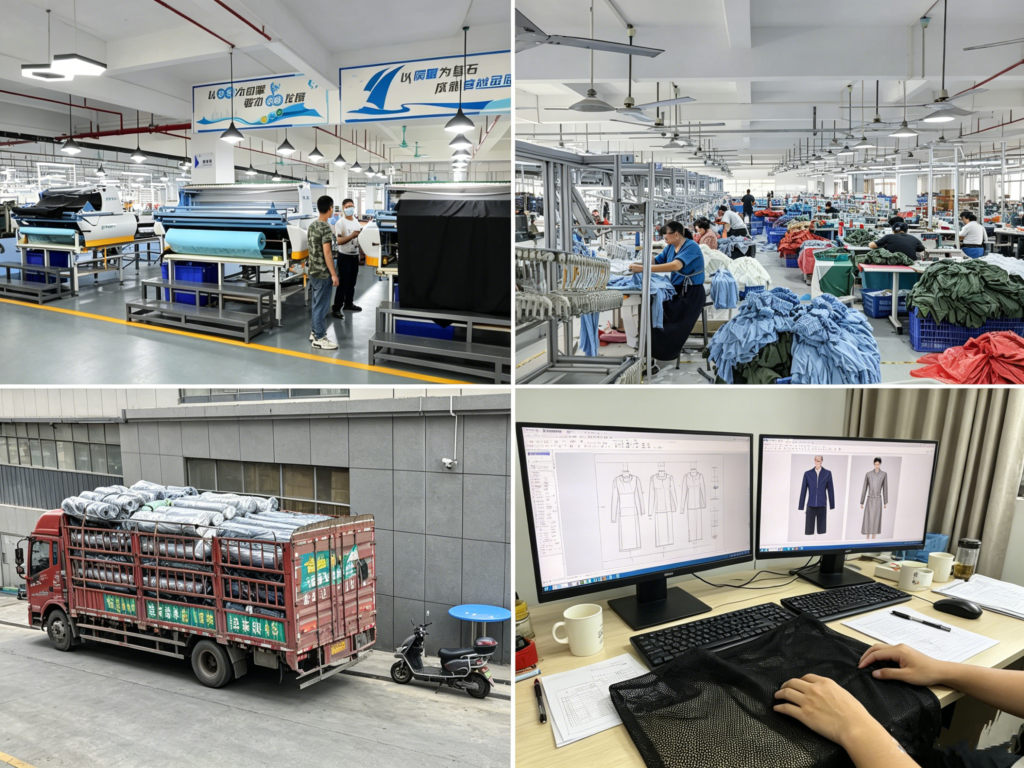
A finished garment may involve multiple stages and suppliers.
For example, a hoodie project could involve fabric production, dyeing, cutting, sewing, printing, labeling, finishing, inspection, and packaging. Different suppliers may perform different stages.
When evaluating garments made in China, buyers should distinguish between three things:
Country of origin: Where the product legally qualifies as originating under the applicable origin rules.
Manufacturing location: Where particular production operations take place.
Product quality: How closely the finished garment meets its agreed specifications and performance requirements.
These concepts are related but not interchangeable.
Origin-labeling requirements vary by destination market and product. For example, U.S. Customs and Border Protection provides guidance on country-of-origin labeling for textile and apparel products, while the U.S. Federal Trade Commission explains applicable textile labeling requirements. Importers should verify the rules relevant to their product and destination before approving labels.
Understanding the production process helps buyers identify where quality problems can occur and which approvals are needed.
Production begins with a design, technical pack, reference garment, or detailed product brief.
The manufacturer reviews measurements, materials, construction details, customization requirements, and production feasibility.
A complete technical pack should identify relevant details such as:
Clear specifications give the manufacturer a defined target and make later inspections more objective.
Fabric and trims have a direct influence on the finished garment.
A buyer should consider fiber composition, fabric weight, construction, hand feel, stretch, recovery, color, and finishing. The appropriate requirements depend on the intended product and its use.
For example, two T-shirts may both use cotton but differ considerably in fabric weight, yarn characteristics, knitting structure, finishing, and fit.
For a hoodie, fabric weight and composition should be considered alongside shrinkage, surface appearance, rib performance, and the garment’s intended warmth.
Do not approve materials solely because their names sound similar. Specify the relevant properties and verify them against the agreed requirements.
The manufacturer develops a sample to evaluate the proposed design, fit, construction, and materials.
Sampling provides an opportunity to identify issues before bulk production. Buyers should review measurements, proportions, workmanship, trims, and decoration against the technical specifications.
If changes are needed, record them clearly and request a revised sample where appropriate.
After the materials and pre-production requirements are approved, fabric is prepared and cut according to the pattern.
The garment components are then assembled using the specified construction methods.
Potential issues include inaccurate cutting, inconsistent seam allowances, skipped stitches, uneven seams, incorrect component placement, and variation between sizes.
Quality checks during production can help identify problems before they affect a large number of finished garments.
Depending on the design, garments may undergo printing, embroidery, washing, pressing, trimming, or other finishing operations.
These processes require product-specific acceptance criteria.
For printed garments, buyers may need to assess placement, color, registration, surface appearance, and durability under the intended care conditions.
For embroidered products, relevant checks include placement, stitch consistency, backing, thread appearance, and fabric distortion.
Finished garments are checked against the agreed specifications and inspection plan.
Depending on the product, this may include measurements, workmanship, appearance, labeling, packaging, and relevant performance tests.
The order should be released for shipment according to the agreed acceptance criteria and contractual arrangements.
A clear production workflow creates checkpoints where defects can be detected, documented, and corrected.
A useful quality test needs more than a general impression that a garment looks good.
We recommend evaluating samples against a predefined checklist before approving bulk production.
Research note: The following is a proposed buyer-led testing protocol. It is not a report of a completed laboratory experiment or a statistically representative survey of Chinese apparel manufacturers. Actual findings should be published only after samples have been tested and the results recorded.
| Quality dimension | What to check | Evidence to record |
|---|---|---|
| Fabric quality | Composition, weight, construction, and appearance | Supplier specifications and relevant test results |
| Measurement accuracy | Key garment dimensions and tolerances | Measurement sheet and deviations |
| Workmanship | Stitching, seams, construction, and finishing | Inspection checklist and defect photographs |
| Color and decoration | Color consistency, print placement, and embroidery | Approved reference and inspection findings |
| Performance | Relevant shrinkage, colorfastness, or other product-specific properties | Test method, conditions, and results |
| Labeling and packaging | Required information, placement, and packaging specifications | Approved artwork and final inspection records |
Each dimension should be evaluated against the product’s requirements rather than a universal score that assumes all garments have the same purpose.
For example, a basic promotional T-shirt and a technical performance garment may require different tests and acceptance criteria.
Step 1: Establish a baseline.
Prepare a technical pack and approved reference requirements before evaluating the sample.
Step 2: Record sample measurements.
Measure the relevant points using a consistent method. Record the actual measurements, specified tolerances, and any deviations.
Step 3: Inspect construction and appearance.
Check the seams, stitching, garment shape, finishing, and decorative elements. Photograph any issues and identify their locations.
Step 4: Perform relevant performance tests.
Where appropriate, assess shrinkage, colorfastness, pilling, seam strength, or other properties using suitable methods and agreed test conditions.
Do not compare results obtained under different conditions as if they were equivalent.
Step 5: Document the decision.
Classify each requirement as passed, failed, or pending verification. Resolve important failures before approving bulk production.
This method turns subjective feedback into a more consistent decision process.
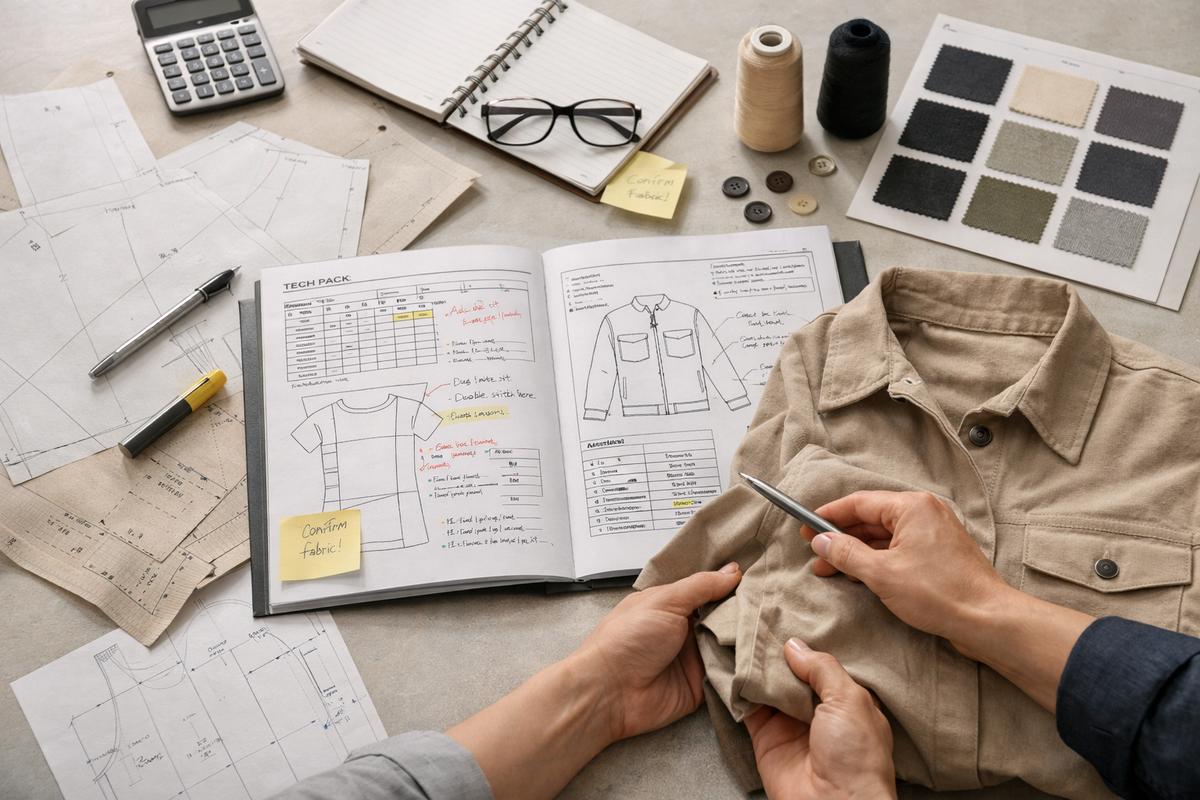
A useful research article should show the data behind its conclusions.
Rather than inventing industry-wide defect rates or claiming to have tested factories that have not been evaluated, we recommend collecting evidence from actual samples or production lots.
For each garment sample, record:
| Data field | Example of what to record |
|---|---|
| Sample ID | Unique identifier for the sample |
| Product category | T-shirt, hoodie, sweatshirt, or other garment |
| Sample source | Supplier or production project reference |
| Measurement result | Actual value, target, tolerance, and deviation |
| Workmanship findings | Number and type of observed defects |
| Performance test | Method, conditions, and measured result |
| Acceptance decision | Pass, fail, or pending |
| Corrective action | Required revision and verification status |
This structure creates an auditable record rather than a collection of unsupported quality claims.
After testing a defined set of samples, calculate the percentage that meets all pre-established critical requirements.
Acceptance rate = Samples passing the defined criteria ÷ Total samples evaluated × 100
For example, if 8 of 10 tested samples pass the predefined criteria, the acceptance rate for that particular test is 80%.
This is a hypothetical calculation to illustrate the method, not a measured result for Liantao Apparel or Chinese apparel manufacturers generally.
When reporting an actual result, state the sample count, product category, testing period, criteria, and whether the samples represent independent suppliers or repeated samples from the same supplier.
A bar chart can show the number of observed issues in each category, such as measurement deviations, stitching problems, print defects, and labeling errors.
This makes it easier to identify recurring problems and prioritize corrective actions.
Be clear about the unit of analysis. Ten defects in one garment are not equivalent to ten defective garments.
For a selected measurement point, compare actual measurements with the target and allowed tolerance.
A deviation chart can show whether results remain within the specified range and whether a systematic pattern exists.
If you publish these charts, include the underlying test records or a clear description of the methodology. Do not label illustrative figures as real experimental results.
The country of manufacture is only one consideration when choosing a production partner.
Compare manufacturers based on their fit with your product requirements and the evidence they can provide.
| Evaluation factor | What to ask | Why it matters |
|---|---|---|
| Product specialization | Which garment categories do you produce regularly? | Relevant experience may improve execution of product-specific requirements. |
| Material control | How are fabric and trims specified and approved? | Material variation can affect the finished product. |
| Sampling process | How are sample revisions documented? | Clear approvals reduce ambiguity before bulk production. |
| Quality management | Which inspections and tests are performed? | Documented controls make quality expectations easier to verify. |
| Production planning | How is capacity and scheduling confirmed? | Realistic planning supports delivery commitments. |
| Communication | How are technical changes and issues documented? | Clear communication helps prevent specification errors. |
A lower price does not automatically mean a better deal.
Before comparing quotations, confirm that suppliers are quoting the same fabric specifications, construction details, customization, quantities, packaging, inspection requirements, and delivery terms.
Ask each supplier to identify exclusions and assumptions.
The comparison should focus on the complete commercial offer, including the costs and responsibilities associated with sampling, quality control, and delivery.
Quality problems can occur in any manufacturing market. The important question is whether the risks have been identified and managed.
When a technical pack lacks measurements, material details, or construction requirements, suppliers may interpret the design differently.
How to reduce the risk: Document critical requirements and approve a physical sample before bulk production.
An alternative fabric or trim may look similar but perform differently.
How to reduce the risk: Specify the approved materials and require written approval for substitutions.
A sample may meet expectations while bulk production varies if the process is not monitored.
How to reduce the risk: Define inspection checkpoints, acceptance criteria, and corrective-action procedures.
If the purchase agreement does not specify how nonconforming products will be handled, disputes may arise after shipment.
How to reduce the risk: Agree on inspection procedures, defect classification, notification deadlines, and remedies before production.
Material delays, product complexity, revisions, and production capacity can affect the schedule.
How to reduce the risk: Confirm a project-specific timeline and identify the approvals or materials that must be completed before production can begin.
A structured process does not eliminate every risk, but it makes risks more visible and easier to manage.
The keyword “made in China apparel” may attract several different audiences. Some are looking for finished clothing, while others need a manufacturing partner.
For Liantao Apparel, the most commercially relevant audiences are likely to include the following groups.
Fashion brands developing new collections
These buyers need a supplier that can interpret product specifications, develop samples, and support the intended production plan.
Private-label entrepreneurs
They may need custom garments, branded labels, printing, embroidery, and support with product development.
T-shirt and hoodie sourcing managers
They need to evaluate material options, customization requirements, quantities, quotation terms, and repeat-production consistency.
OEM/ODM buyers
They need clarity on design responsibilities, product-development support, intellectual property, and manufacturing scope.
Wholesale and bulk-order buyers
They typically prioritize commercial pricing, quality consistency, production capacity, and delivery planning.
The best way to qualify a lead is to ask what the buyer wants to produce, the estimated quantity, the level of customization, and the intended delivery date.
A consumer researching a clothing label may be interested in the topic without having any intention to purchase manufacturing services. A brand founder preparing a production order is a more direct commercial prospect.

If you are sourcing garments made in China, use a documented process to move from research to production.
The outcome should be a decision supported by evidence rather than a general assumption about a supplier or manufacturing country.
For larger or higher-risk orders, consider independent inspections and relevant laboratory testing. Select testing methods based on the garment, intended use, applicable regulations, and contractual requirements.
At Liantao Apparel, we understand that clothing brands need more than a production quotation. They need a clear understanding of product requirements, material choices, sampling, quality expectations, and the commercial terms associated with manufacturing.
Our recommended starting point is to review the garment category, technical specifications, estimated quantity, customization requirements, target budget, and delivery timeline.
This provides a basis for discussing the project and determining the next steps.
If you are considering Liantao Apparel as a manufacturing partner, share your product brief and purchasing requirements so that the project can be assessed against its actual needs.
Specific product capabilities, MOQs, certifications, production capacity, and lead times should be confirmed directly for the proposed order.
The quality of a garment should be demonstrated through its specifications, sample performance, manufacturing controls, and final inspection—not assumed from its country of origin.
Whether you are developing a private-label T-shirt line, a custom hoodie collection, or another apparel product, define your requirements and evaluate the supplier before committing to bulk production.
Looking for an apparel manufacturing partner?
Contact Liantao Apparel with your product category, estimated order quantity, material requirements, and customization details.
A clear product brief is the first step toward determining whether we are the right production partner for your brand.
It can be. Quality depends on the materials, manufacturing capabilities, technical specifications, production controls, and inspection procedures used for the particular product. Country of origin alone is not a reliable measure of garment quality.
Review a physical sample against approved measurements, materials, construction, finishing, and performance requirements. Record defects and deviations, and use relevant testing methods when necessary.
Check fabric specifications, measurements, stitching, fit, color, printing or embroidery, labels, and packaging. Define acceptance criteria in advance and document sample approval.
Not necessarily. A country-of-origin statement does not automatically mean that every material or component originated in that country. Origin determinations depend on applicable rules and the product’s manufacturing history.
Shortlist suppliers with relevant product experience, verify their business and manufacturing arrangements, compare equivalent quotations, evaluate samples, and confirm their quality-control procedures before placing an order.
Provide a technical pack or detailed product brief, estimated quantities, material specifications, customization requirements, packaging details, quality expectations, and delivery destination. These details help the supplier evaluate feasibility and prepare a meaningful quotation.
About Liantao Apparel
Liantao Apparel works with prospective buyers to discuss apparel manufacturing requirements and evaluate potential production projects. Contact us with your product specifications and estimated order quantity to discuss the next steps.
If you have any questions or require a quote, please leave
us a message. Our experts will get back to you within 24 hours to help you choose the ideal fashion products tailored to your needs.
Hi, I’m Lucy Cai, the founder of liantaoapparel.com. I’ve been managing a women’s clothing factory in China for over 16 years. With extensive experience in garment production and OEM services, I’m passionate about sharing insights into women’s fashion, apparel manufacturing, and global sourcing.
If you have any questions or need a quote, please contact us.
Please add us WhatsApp:+86 189 4809 3145
Provide us with detailed information about your requirements, supply design drawings or tech packs,
reference images, and share your ideas.
We will customize the best solution based on your needs and drawings, and provide a specific quote within 24 hours.
Once we receive your confirmation and deposit,we will commence mass production and take care of the subsequent shipping arrangements.


