


🏭 Looking for a Custom Apparel Manufacturer?
We are a leading OEM/ODM clothing factory with 20+ years of export experience. Custom styles, flexible MOQs, and retail-ready quality.
Light purple is a versatile color family that can bring softness, personality, and visual interest to a clothing collection
From lavender hoodies and lilac T-shirts to pastel sweatshirts and custom streetwear, light purple can work across different apparel categories. It can look clean and minimal when paired with white or grey, romantic when combined with blush pink, or more contemporary when balanced with navy, charcoal, or muted green.
For clothing brands, however, choosing an attractive color combination is only the beginning.
The same light purple shade can look different depending on fabric composition, surface texture, dyeing method, lighting, and garment construction. A lavender cotton T-shirt may look different from a lavender polyester hoodie, even when both are developed using the same initial color reference.
That is why color selection should be considered alongside fabric sourcing, lab dip approval, sample development, and bulk production quality control.
In this guide, we explore what colors go with light purple, how to use light purple in apparel design, which fabrics work well with this shade, and how brands can test color consistency before placing bulk clothing orders.
Whether you are developing custom hoodies, private-label T-shirts, or a new seasonal clothing collection, these ideas can help you turn a color concept into a production-ready product.
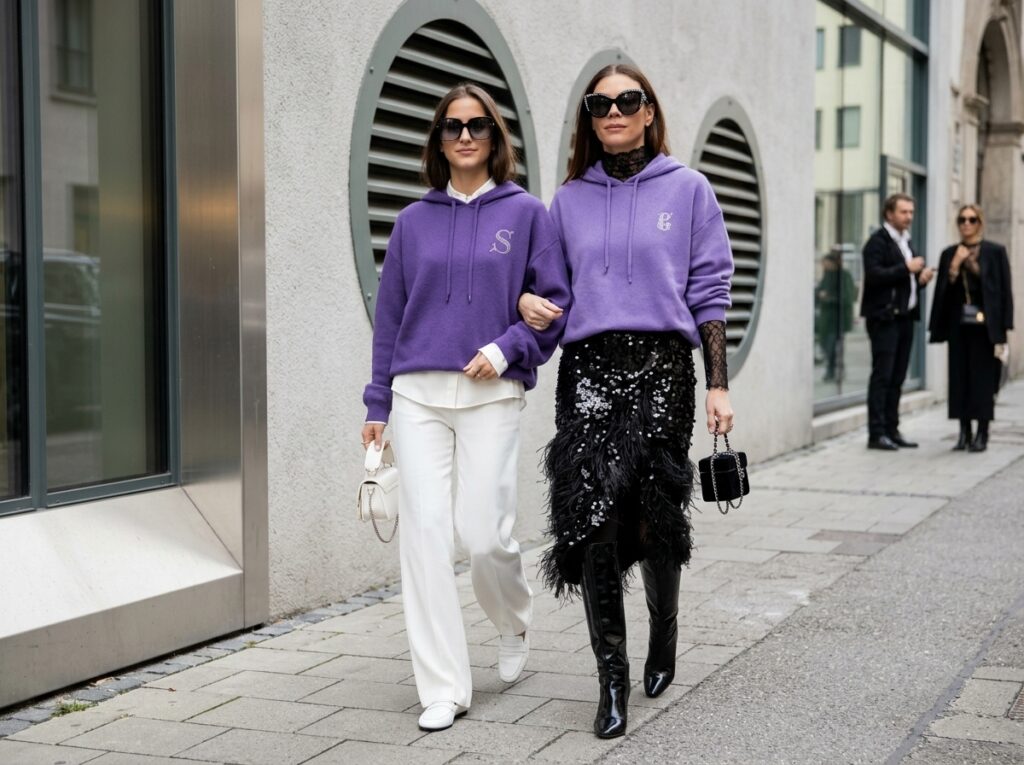
Light purple is a broad color category that includes several pale purple tones. Depending on its undertone, a light purple shade may look pinkish, bluish, greyish, or slightly muted.
Understanding these differences is important when developing clothing because a small change in undertone can influence the overall appearance of a garment.
| Color Name | General Appearance | Common Design Direction | Apparel Applications |
|---|---|---|---|
| Light purple | A broad category of pale purple shades | Soft and versatile | T-shirts, hoodies, knitwear |
| Lavender | Often a cooler, slightly blue-toned purple | Calm and fresh | Sweatshirts, casual tops, activewear |
| Lilac | Often a softer pink-toned purple | Romantic and delicate | Blouses, dresses, lightweight knitwear |
| Pastel purple | A pale, softened purple with relatively low visual intensity | Youthful and playful | Streetwear, T-shirts, casual collections |
| Dusty lavender | A muted purple with a greyish appearance | Understated and sophisticated | Premium casualwear, sweaters, outerwear |
These names are useful starting points, but they are not universal technical color specifications.
For manufacturing, do not rely on a color name alone. Use an approved physical swatch or an agreed color reference, and confirm the target shade through the fabric supplier’s sampling process.
Light purple continues to appear in fashion color discussions and seasonal palettes.
For example, Pantone included Burnished Lilac (PANTONE 15-1905 TCX) in its London Fashion Week Spring/Summer 2026 Fashion Color Trend Report. The shade is described as a smoky lavender tone with a vintage character.
Messe Frankfurt’s Ambiente Trends 26+ also included Diluted Lilac in its light color palette, alongside soft neutrals and other pastel shades.
These references suggest that muted lilac and lavender tones can be relevant sources of inspiration for product development. They should be treated as trend references rather than guarantees of commercial demand.
For apparel brands, the practical opportunity is to translate these color directions into wearable products with clear fabric, fit, and branding decisions.
Light purple works with both neutral colors and selected accent shades.
The best combination depends on the desired product identity. A minimalist fashion label may prefer light purple and white, while a streetwear brand may use light purple with charcoal or navy for stronger contrast.
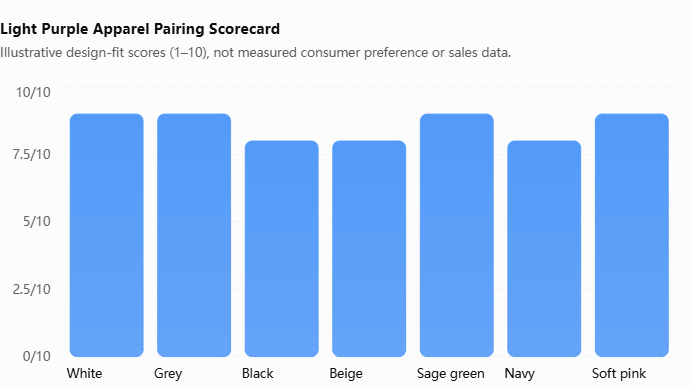
Here are seven combinations worth considering for clothing collections.
Light purple and white create a fresh, uncomplicated color combination.
White provides visual space and allows the purple shade to remain the main focus. This pairing works particularly well for spring and summer collections.
Product ideas:
Manufacturing consideration: White printing or embroidery on light purple fabric should be checked against the actual fabric shade. A design that looks balanced on a digital mockup may appear too subtle or too bright on the finished garment.
Grey creates a more neutral appearance and can make light purple suitable for everyday clothing.
Light grey produces a softer combination, while charcoal grey creates more contrast.
Product ideas:
Manufacturing consideration: Grey fabrics may have different undertones. Cool grey generally creates a more coordinated appearance with bluish lavender, while warmer grey may suit pinkish lilac.
Black adds depth and creates a more noticeable contrast with light purple.
This combination is useful for brands developing contemporary streetwear, graphic T-shirts, and casual collections.
Product ideas:
Manufacturing consideration: Check the contrast between the garment base and the printed or embroidered artwork. Fine black details may need adjustments to remain clear on textured fabrics.
Beige introduces warmth and balances the cooler appearance of many light purple shades.
This pairing works well for brands looking to create understated casualwear or neutral-inspired collections.
Product ideas:
Manufacturing consideration: Beige can vary from yellow-toned cream to pink-toned sand. Choose a reference shade that complements the undertone of the selected purple fabric.
Sage green creates a softer alternative to stronger green shades.
The combination can work well for lifestyle brands, casual collections, and spring-inspired apparel.
Product ideas:
Manufacturing consideration: Both colors should be evaluated together under consistent lighting. A very grey sage green may make a bright lavender shade look more saturated than expected.
Navy adds depth without creating the same visual intensity as black.
It can make light purple feel more structured and suitable for casual officewear, premium basics, and everyday collections.
Product ideas:
Manufacturing consideration: Confirm that navy components maintain a consistent appearance across fabrics and trims. Different dye processes can produce visible shade differences.
Light purple and soft pink create a gentle, coordinated pastel palette.
This combination is particularly suitable for feminine casualwear, lifestyle collections, and seasonal fashion products.
Product ideas:
Manufacturing consideration: Similar pastel shades can look too close together if their lightness and saturation are nearly identical. Use a clear contrast in shade or texture to keep the design visually interesting.
| Color Combination | Visual Character | Suitable Apparel Products | Suggested Brand Direction |
|---|---|---|---|
| Light purple + white | Clean and fresh | T-shirts, hoodies, sweatshirts | Minimalist and everyday |
| Light purple + grey | Modern and understated | Sweatshirts, joggers, knitwear | Contemporary casualwear |
| Light purple + black | Bold and contrasting | Graphic T-shirts, streetwear hoodies | Urban and streetwear |
| Light purple + beige | Soft and refined | Knitwear, casual sets, sweatshirts | Premium lifestyle |
| Light purple + sage green | Natural and relaxed | T-shirts, hoodies, coordinated sets | Lifestyle and contemporary |
| Light purple + navy | Balanced and structured | Shirts, sweatshirts, casual jackets | Smart casual |
| Light purple + soft pink | Playful and romantic | T-shirts, tops, lounge sets | Feminine and seasonal |
Light purple can be used as a main garment color, a secondary color, or a branding detail.
The right approach depends on your target customer, product category, and desired retail positioning.
Light purple hoodies can create a softer alternative to traditional black, grey, and navy fleece products.
Popular development directions include:
When developing a custom hoodie, confirm the fabric weight, composition, brushing, rib construction, and target fit.
A color reference should be approved on the actual hoodie fabric rather than on a different material.
Light purple T-shirts are suitable for graphic apparel, basic collections, and branded merchandise.
Consider these approaches:
For printed T-shirts, evaluate the interaction between the fabric color and the printing method.
Sweatshirts offer more opportunities for combining colors and textures.
For example, a lavender body can be paired with cream rib cuffs, tonal embroidery, or a contrasting neckline.
For bulk production, make sure the body fabric and rib fabric are visually coordinated. Even when both materials are described as the same color, differences in fiber composition or dyeing can create visible shade variations.
Fabric selection affects how light purple looks and performs.
The same color may appear different on smooth cotton jersey, brushed fleece, French terry, or polyester blends.
| Fabric Type | Typical Apparel Application | Appearance of Light Purple | Important Considerations |
|---|---|---|---|
| Cotton jersey | T-shirts and casual tops | Usually matte and natural | GSM, shrinkage, surface quality |
| French terry | Sweatshirts and lightweight hoodies | Soft with a structured appearance | Loop construction, weight, shrinkage |
| Brushed fleece | Hoodies and sweatpants | Soft and cozy, sometimes visually deeper | Brushing consistency, pilling, color variation |
| Cotton-polyester blend | Sweatshirts and casualwear | Depends on fiber blend and surface | Dye compatibility and fiber composition |
| Polyester knit | Sportswear and performance tops | Can appear smoother or more saturated | Dye method, color fastness, performance |
| Rib knit | Cuffs, collars, and waistbands | May appear slightly different from the body fabric | Stretch recovery and shade matching |
Fabric texture affects how light reflects from the garment surface.
A smooth jersey may appear cleaner and more uniform, while brushed fleece can create a softer visual effect.
The following factors should be considered during material selection:
For brands developing a light purple collection, request fabric swatches before finalizing the color direction.
Color matching is a critical step when developing custom apparel.
A digital design file can communicate the general direction, but it cannot fully predict how a color will appear on a finished garment.
This is particularly important for light purple because small differences in hue, saturation, or brightness can make two fabrics look noticeably different.
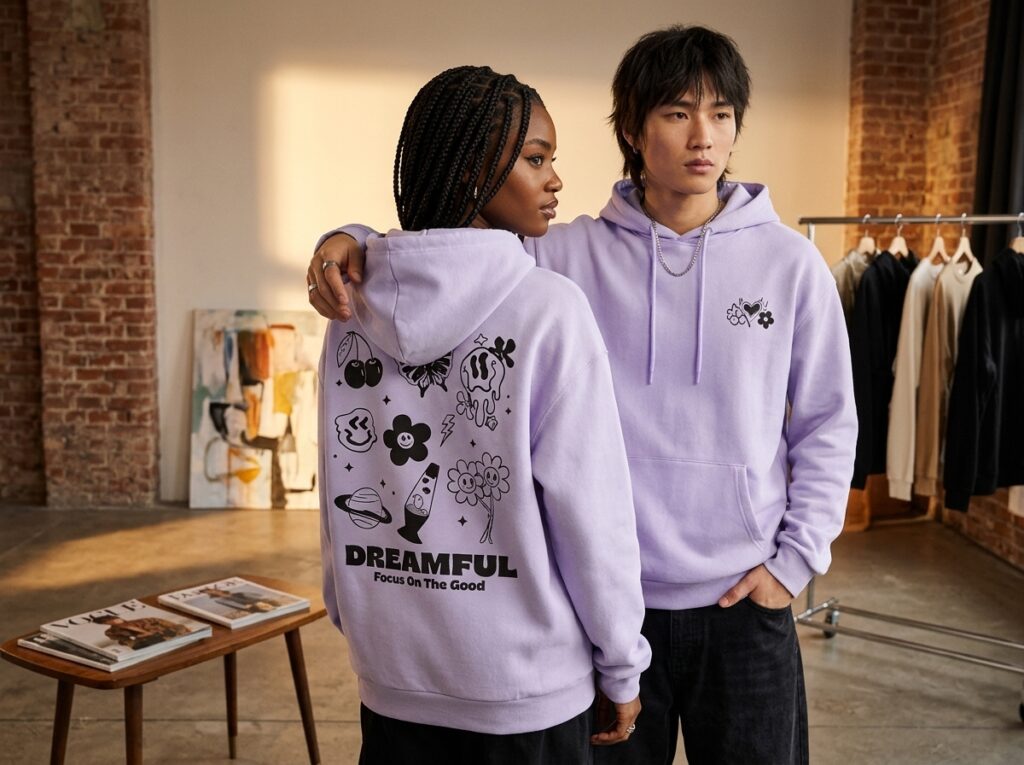
A lab dip is a small dyed fabric sample prepared to evaluate a proposed color before bulk dyeing.
The manufacturer or dyeing supplier compares the lab dip with the buyer’s approved color reference.
The buyer can review the sample and request adjustments before confirming the shade for production.
A typical color approval process includes:
HEX and RGB values are useful for design communication, websites, and digital mockups.
However, a screen displays color using emitted light, while a garment reflects light from its surface.
The result can differ because of:
For production, use an agreed physical color standard or suitable textile color reference, then approve the shade on the actual fabric.
A useful way to demonstrate apparel manufacturing quality is to run a controlled color-consistency test.
For this example, imagine a brand developing a light purple hoodie collection in cotton-polyester fleece.
The purpose of the test is to check whether the approved shade remains consistent across different sample and production fabric batches.
Important: The following is a proposed test protocol. It does not represent actual Liantao Apparel test results. The sample size, acceptance limits, and measurements should be established and recorded during a real test.
Evaluate whether light purple fabric samples remain visually and instrumentally consistent when produced in different batches.
| Test Element | Proposed Test Setup |
|---|---|
| Product | Light purple fleece hoodie |
| Fabric | Approved cotton-polyester fleece |
| Reference | Buyer-approved physical color standard |
| Sample groups | Three independently prepared fabric batches |
| Sampling | Five fabric specimens from each batch |
| Total specimens | 15 |
| Inspection method | Visual comparison and spectrophotometer measurement, where available |
| Lighting | Controlled and documented viewing conditions |
| Main indicators | Color difference, shade consistency, visible defects |
Compare each fabric specimen against the approved color reference.
Look for:
Use consistent lighting and viewing conditions. Record any visible differences rather than relying only on memory or informal descriptions.
Where suitable equipment is available, use a calibrated spectrophotometer to measure color difference.
A common color-difference framework is CIEDE2000, often represented as ΔE00.
A smaller ΔE00 indicates a closer color match under the selected measurement conditions.
However, there is no single universal acceptance threshold for every apparel product. The buyer and manufacturer should agree on the applicable tolerance, measurement conditions, and reference standard before production.
For washable garments, compare the appearance of the fabric before and after a defined washing procedure.
Record:
Where relevant, use an applicable standardized colorfastness test method and a qualified testing laboratory.
| Batch | Specimen ID | Initial Color Reading | Post-Wash Reading | ΔE00 vs. Reference | Visual Result |
|---|---|---|---|---|---|
| A | A1 | Record actual value | Record actual value | Calculate | Pass / Review |
| A | A2 | Record actual value | Record actual value | Calculate | Pass / Review |
| B | B1 | Record actual value | Record actual value | Calculate | Pass / Review |
| B | B2 | Record actual value | Record actual value | Calculate | Pass / Review |
| C | C1 | Record actual value | Record actual value | Calculate | Pass / Review |
| C | C2 | Record actual value | Record actual value | Calculate | Pass / Review |
This table is a sample reporting format. It deliberately leaves measurement fields blank until real measurements are available.
If the fabric batches show consistent measurements and no unacceptable visual differences, the color approval process is more reliable.
If differences are found, investigate potential causes such as:
Document corrective actions and repeat the relevant checks before bulk production approval.
For brands, this process helps reduce the risk of receiving hoodies or T-shirts with visibly different shades in the same order.
A successful color concept needs to be translated into a complete product-development plan.
For example, a fashion brand may want to launch a light purple capsule collection containing hoodies, T-shirts, and sweatpants.
The project should begin with a product brief.
| Product | Fabric Direction | Design Details | Possible Color Combination |
|---|---|---|---|
| Oversized hoodie | Cotton-polyester fleece | Embroidered chest logo | Light purple + white |
| Basic T-shirt | Cotton jersey | Minimal front print | Light purple + black |
| Crewneck sweatshirt | French terry or fleece | Tonal embroidery | Light purple + grey |
| Sweatpants | Matching fleece | Elastic waistband and drawcord | Light purple + cream |
| Zip-up hoodie | Fleece or suitable knit | Custom zipper and branding | Light purple + navy |
This is an illustrative product plan, not a statement that every manufacturer offers all listed materials or customization options.
To receive a useful quotation, prepare:
The more complete your brief, the easier it is for a manufacturer to evaluate the project.
Not every apparel manufacturer has the same fabric sourcing, color development, or production capabilities.
If you are planning a light purple clothing collection, evaluate potential manufacturing partners against the following criteria.
Ask whether the manufacturer can help coordinate fabric sourcing, lab dips, color approvals, and material selection.
This is particularly important when your collection uses several garment categories or different fabric compositions.
Look for experience with the products you intend to develop.
A factory that produces cotton T-shirts may not necessarily have the same experience with fleece hoodies, performance fabrics, or more complex garments.
Confirm how samples are developed, reviewed, and revised.
Ask how changes to measurements, fabric, color, and construction are documented.
Ask how fabric shades are checked before cutting and whether production batches are compared against an approved reference.
A documented approval process is more useful than a general statement that a factory provides quality control.
Confirm whether MOQ applies per style, color, fabric, or total order.
For custom colors, also ask whether the dyeing supplier has separate minimum requirements.
Confirm who handles sample approvals, production updates, and quality issues.
Keep the approved color reference, technical specifications, and any changes documented.
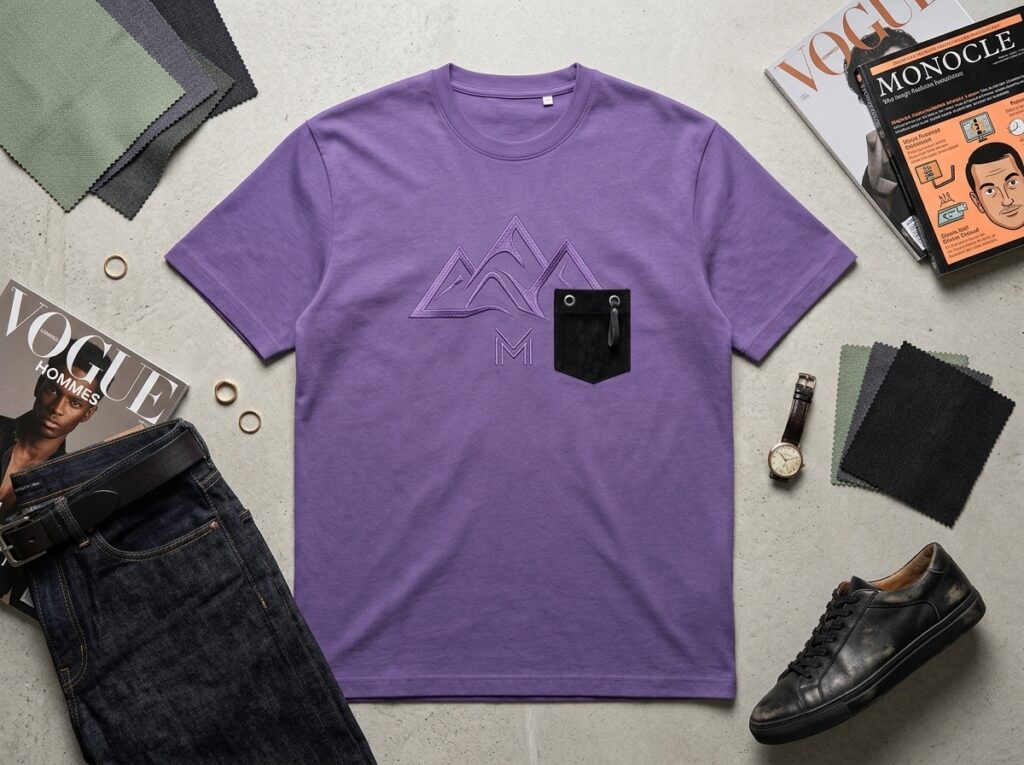
Light purple looks simple in a digital mockup, but there are several ways a production project can go wrong.
Relying only on HEX codes. Digital values are useful for visual direction, but a physical fabric reference is more reliable for production approval.
Using different fabrics without checking color appearance. Cotton jersey and polyester fleece may display the same nominal color differently.
Approving a sample under inconsistent lighting. Lighting conditions can change how a shade appears, so use documented and repeatable inspection conditions.
Ignoring rib and trim color differences. Rib fabrics, zippers, drawcords, and other components should be checked against the main garment fabric.
Changing fabric after color approval. A material substitution may affect the final appearance and should trigger a new review where necessary.
Skipping bulk fabric inspection. A sample that looks correct does not automatically guarantee that all production fabric will match.
Choosing a color without considering the target customer. A muted lavender and a brighter pastel purple may appeal to different brand identities and product categories.
Light purple works well with white, grey, black, beige, sage green, navy, and soft pink. The best combination depends on the shade’s undertone and the desired style.
Not exactly. Light purple is a broad color category, while lavender generally refers to a more specific shade. Retail descriptions can overlap, so use a physical color reference for manufacturing.
Yes. Light purple can work well for pullover hoodies, zip-up hoodies, oversized sweatshirts, and coordinated casualwear. Fabric weight, construction, and approved color matching should be considered during development.
Cotton jersey is a common option for casual T-shirts, while cotton blends may be suitable for other performance or cost requirements. The best choice depends on hand feel, weight, shrinkage, durability, and the intended product positioning.
Start with an agreed color reference, request lab dips, approve the shade on the actual fabric, and compare bulk production batches against the approved reference. Where available, use instrumental color measurement to support the inspection process.
You can develop a coordinated color direction across different fabrics, but the final shades may not look identical because fiber composition and dyeing processes differ. Each material should be reviewed and approved separately.
A lab dip is a small dyed fabric sample used to evaluate a proposed color before bulk dyeing. It allows the buyer to review and approve the shade before larger quantities are produced.
Provide product designs, fabric requirements, color references, measurements, branding details, estimated quantities, and delivery expectations. A complete tech pack is particularly useful for custom OEM production.
Manufacturers with relevant product and color-development capabilities may be able to produce custom light purple hoodies and T-shirts. Confirm fabric availability, color approval procedures, MOQ, sampling support, and production requirements directly with the supplier.
Light purple offers fashion brands several ways to create distinctive clothing collections.
It can be paired with white for a clean look, grey for understated casualwear, black for streetwear, beige for a softer premium direction, or sage green for a contemporary lifestyle palette.
However, successful apparel development requires more than choosing the right combination.
Brands should also consider fabric construction, fiber composition, color references, lab dip approval, sample development, and bulk production inspection.
If you are developing custom light purple hoodies, T-shirts, sweatshirts, or a private-label collection, start with a clear product brief and an approved fabric color reference.
Planning your next custom apparel collection?
Liantao Apparel can be introduced here as a manufacturing partner for brands exploring custom clothing development, private-label apparel, and bulk production.
Share your product designs, preferred light purple shade, fabric requirements, estimated order quantities, and branding details to discuss your project.
Contact Liantao Apparel to discuss your custom apparel manufacturing requirements.
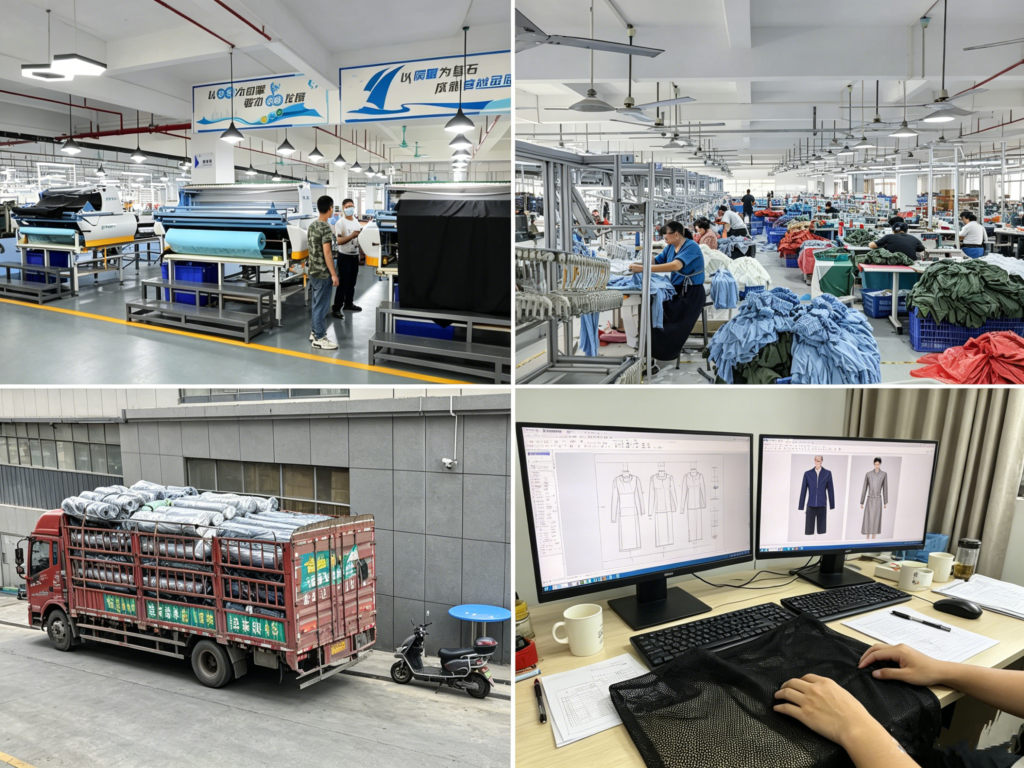
If you have any questions or require a quote, please leave
us a message. Our experts will get back to you within 24 hours to help you choose the ideal fashion products tailored to your needs.
Hi, I’m Lucy Cai, the founder of liantaoapparel.com. I’ve been managing a women’s clothing factory in China for over 16 years. With extensive experience in garment production and OEM services, I’m passionate about sharing insights into women’s fashion, apparel manufacturing, and global sourcing.
If you have any questions or need a quote, please contact us.
Please add us WhatsApp:+86 189 4809 3145
Provide us with detailed information about your requirements, supply design drawings or tech packs,
reference images, and share your ideas.
We will customize the best solution based on your needs and drawings, and provide a specific quote within 24 hours.
Once we receive your confirmation and deposit,we will commence mass production and take care of the subsequent shipping arrangements.


