


🏭 Looking for a Custom Apparel Manufacturer?
We are a leading OEM/ODM clothing factory with 20+ years of export experience. Custom styles, flexible MOQs, and retail-ready quality.
Women’s sweat shorts have become an important part of casualwear, loungewear, and everyday collections. Among the products attracting attention, Gap women’s VintageSoft Terry sweat shorts provide a useful example of how fabric, fit, and garment details work together to create a comfortable everyday style.
Gap’s 3.5-inch VintageSoft Terry Relaxed Sweat Shorts feature a cotton-blend French terry fabric, an elasticized waistband, drawcords, side pockets, and a back patch pocket. The listed fabric composition is 92% cotton and 8% recycled polyester. The product also features a relaxed fit and a 3.5-inch inseam.
For apparel brands and clothing buyers, this product offers more than a style reference. It provides a starting point for understanding how to develop women’s French terry shorts with the right fabric weight, silhouette, construction, and finishing.
In this guide, we’ll examine the product’s key features, explain how French terry differs from fleece, and discuss the quality tests buyers should consider before bulk production. We’ll also explore how brands can develop custom women’s sweat shorts with a clothing manufacturer.
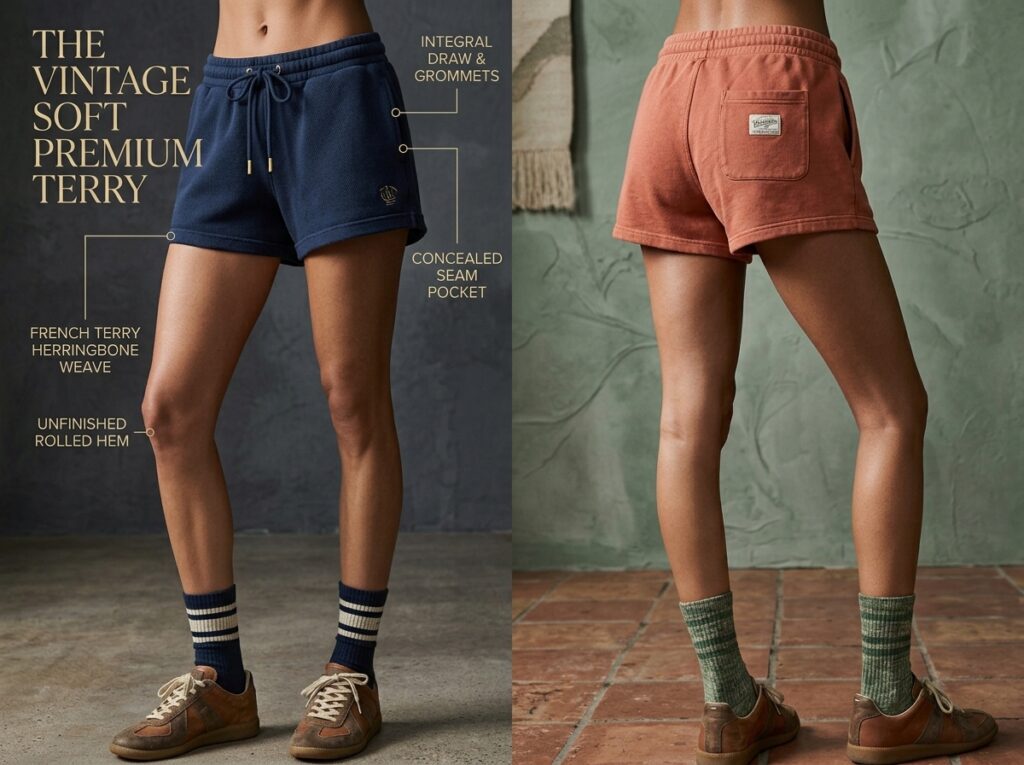
Gap women’s VintageSoft Terry sweat shorts are casual cotton-blend shorts designed for relaxed everyday wear. Their combination of French terry fabric, an adjustable waistband, and a comfortable silhouette makes them suitable as a reference for casualwear and loungewear development.
The 3.5-inch VintageSoft Terry Relaxed Sweat Shorts have several identifiable product features:
| Product Feature | Listed Specification | Why It Matters |
|---|---|---|
| Fabric | 92% cotton, 8% recycled polyester | Defines the fiber composition |
| Fabric construction | Light French terry | Creates a loop-textured fabric structure |
| Fit | Relaxed fit | Provides ease through the body |
| Rise | Mid rise | Influences waist positioning |
| Inseam | 3.5 inches / approximately 9 cm | Determines the short length |
| Waistband | Elasticized with drawcords | Allows waist adjustment |
| Pockets | Side on-seam pockets and back patch pocket | Adds everyday functionality |
| Hem | Raw edge hem | Creates a casual design detail |
Source: Gap’s published product description. Specifications may vary by product version, color, or season.
For brands developing a similar product, these details can be used as a starting specification. However, a reference product should not replace original design development. Buyers should define their own fabric weight, measurements, pocket dimensions, stitching, trims, and finishing requirements.
French terry is a knitted fabric commonly recognized by its smooth outer face and looped inner surface. Unlike conventional brushed fleece, standard French terry usually retains visible loops on the inside rather than having the entire reverse surface brushed into a fuzzy layer.
This construction makes French terry a practical option for sweat shorts, sweatshirts, joggers, and lightweight casualwear.
| Feature | French Terry | Brushed Fleece |
|---|---|---|
| Inner surface | Usually looped | Brushed and fuzzy |
| Outer surface | Generally smooth | Generally smooth |
| Fabric feel | Depends on yarn, weight, and finishing | Often softer and warmer due to brushing |
| Typical use | Sweat shorts, joggers, lightweight sweatshirts | Sweatpants, hoodies, warmer sweatshirts |
| Seasonal positioning | Often suitable for transitional and warmer conditions | Often selected for cooler conditions |
| Development focus | Loop structure, weight, shrinkage, and surface quality | Brushing consistency, pilling, weight, and dimensional stability |
The table describes common constructions rather than guaranteed performance. Fiber composition, yarn quality, knitting density, dyeing, and finishing can all change the final result.
Several characteristics make French terry worth considering:
However, buyers should evaluate the actual fabric sample rather than assume that every French terry fabric has the same softness, stretch, or durability.
The Gap VintageSoft Terry product description emphasizes a light French terry construction, a brushed outside, and a textured inside. This combination creates a specific surface character that brands can use as a reference when developing their own fabric.
For manufacturers, the important point is to translate a general product reference into measurable specifications.
| Development Area | Questions to Confirm |
|---|---|
| Fabric weight | What GSM is required for the finished fabric? |
| Fiber composition | Is the fabric cotton, cotton-polyester, or another blend? |
| Surface finish | Is brushing required on the outer face? |
| Inner texture | Should the reverse retain visible loops? |
| Hand feel | Should the finished fabric feel soft, compact, or lightweight? |
| Stretch | Does the design require mechanical stretch or elastane? |
| Color | Is the product solid-dyed, garment-dyed, or pigment-finished? |
A useful development brief should describe both the visual target and the measurable fabric requirements. Terms such as “soft,” “vintage,” and “lightweight” are helpful design references, but they are not sufficient production specifications.
Fit is one of the most important factors in women’s sweat shorts development. Even when two products use similar French terry fabric, differences in rise, hip ease, leg opening, and inseam can create very different silhouettes.
The Gap 3.5-inch product is described as relaxed fit, mid-rise, and mid-thigh length.
| Measurement | What It Controls | Development Consideration |
|---|---|---|
| Waist circumference | Waist fit | Define relaxed and stretched measurements |
| Hip circumference | Seat and hip ease | Avoid excessive tightness or unwanted volume |
| Front rise | Front waist positioning | Coordinate with the intended rise |
| Back rise | Seat coverage | Check comfort during movement |
| Inseam | Short length | Confirm the target length by size |
| Leg opening | Thigh ease and silhouette | Check for unwanted tightness or rolling |
| Outseam | Overall garment length | Coordinate with rise and inseam |
For a consistent fit across sizes, brands should develop a complete size specification and grading rules. The sample should also be evaluated on different body sizes rather than relying on one fit model.
| Inseam | General Appearance | Potential Customer Preference |
|---|---|---|
| 3–3.5 inches | Shorter, higher-thigh silhouette | Customers who prefer a shorter casual style |
| 5 inches | Mid-length silhouette | Customers looking for additional thigh coverage |
| 7 inches | Longer silhouette | Customers who prefer more coverage or a relaxed longer fit |
These are general design descriptions, not universal fit rules. The final appearance also depends on body proportions, rise, hip width, and leg opening.
For brands, it can be useful to develop more than one inseam option within a collection. This creates product differentiation without requiring a completely different fabric program.
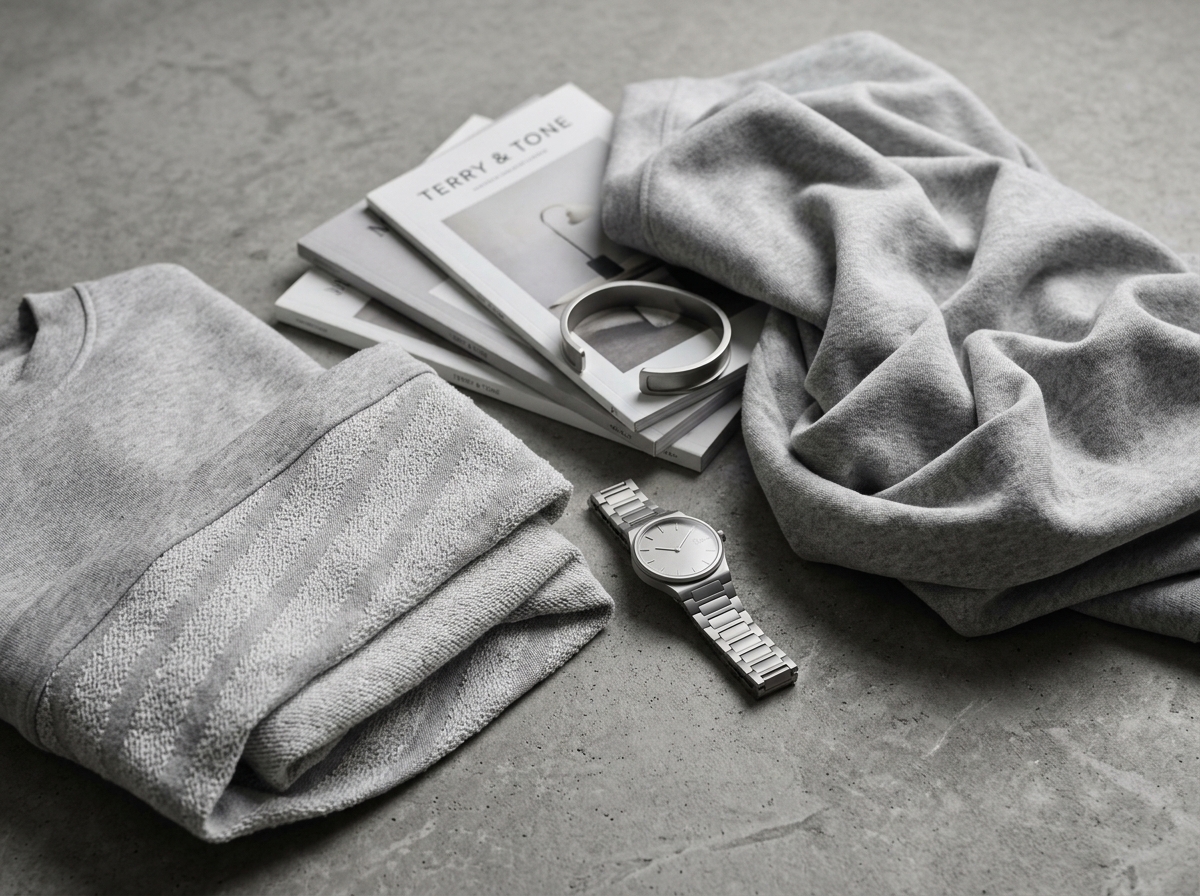
The best fabric depends on the intended use, climate, product positioning, and target retail price.
French terry is often selected for lighter casualwear concepts, while brushed fleece is commonly used when a warmer, fuzzier interior is desired.
| Buying Factor | French Terry | Brushed Fleece |
|---|---|---|
| Interior texture | Looped | Fuzzy and brushed |
| Warmth | Depends on GSM and composition | Often warmer at comparable constructions |
| Surface appearance | Defined knit texture | Softer brushed appearance |
| Product direction | Casual shorts and lightweight sets | Cozy shorts and colder-weather sets |
| Main quality concerns | Loop consistency, shrinkage, pilling | Pilling, brushing consistency, dimensional stability |
Neither fabric is automatically superior. A heavier French terry may perform differently from a lightweight fleece, so buyers should compare actual samples under the same test conditions.
French terry sweat shorts can change in size after laundering. The amount of dimensional change depends on fiber composition, yarn, knitting construction, dyeing, finishing, and washing conditions.
Cotton-rich fabrics deserve particular attention during shrinkage testing. However, a cotton-polyester blend should not automatically be considered shrink-proof.
Other appearance issues may also occur after washing:
One customer review on a Gap 3.5-inch product specifically mentions shrinkage and leg rolling after washing. This is an individual review, not evidence that every garment has the same problem. Nevertheless, it highlights two useful quality-control checkpoints for brands developing similar products.
A controlled fabric comparison can help buyers make better decisions before approving bulk production.
The following is a proposed test protocol. It is not a report of completed laboratory testing, and no actual test results are claimed.
Compare three candidate fabric compositions to understand how they perform in shrinkage, pilling, colorfastness, and recovery.
| Sample | Proposed Composition | Main Evaluation Focus |
|---|---|---|
| A | 100% cotton French terry | Dimensional change and surface appearance |
| B | 92% cotton / 8% polyester French terry | Comparison with a cotton-rich blend |
| C | 90% cotton / 8% polyester / 2% elastane French terry | Stretch and recovery as well as dimensional stability |
These are proposed test compositions, not verified Gap fabric specifications. Sample C is an experimental development option.
For a useful comparison, prepare samples with comparable fabric weight, construction, dyeing, and finishing wherever possible.
A suggested procedure:
| Test | What It Measures | Suggested Reference Method |
|---|---|---|
| Fabric weight | Mass per unit area | ISO 3801 / ASTM D3776 |
| Dimensional change | Shrinkage or growth after washing | ISO 6330 + ISO 5077 |
| Pilling resistance | Surface pilling after friction | ISO 12945 series |
| Colorfastness to washing | Color change and staining | ISO 105-C06 |
| Colorfastness to rubbing | Dry and wet color transfer | ISO 105-X12 |
| Stretch and recovery | Extension and recovery behavior | Select a method suitable for the fabric construction |
The exact test edition, specimen preparation, laundering conditions, and acceptance limits should be agreed with the testing laboratory and the buyer.
| Test Item | Sample A | Sample B | Sample C |
|---|---|---|---|
| Initial GSM | To be tested | To be tested | To be tested |
| Length change after washing | — | — | — |
| Width change after washing | — | — | — |
| Pilling grade | — | — | — |
| Wash colorfastness | — | — | — |
| Dry rubbing grade | — | — | — |
| Wet rubbing grade | — | — | — |
| Stretch recovery | — | — | — |
| Final evaluation | Pending | Pending | Pending |
Use the following formula to calculate dimensional change:
Shrinkage (%) = (Original Measurement − Measurement After Washing) ÷ Original Measurement × 100
For example, if a fabric specimen measures 50 cm before washing and 48.5 cm afterward, the calculated shrinkage is 3%.
This is an illustrative calculation, not a measured result from the proposed fabric samples.
The chart below is a demonstration of how test results could be visualized. The values are hypothetical and are not measured performance scores or a ranking of the three fabric compositions.
| Evaluation Category | Sample A | Sample B | Sample C |
|---|---|---|---|
| Shrinkage control | 3/5 | 4/5 | 4/5 |
| Pilling resistance | 3/5 | 3/5 | 3/5 |
| Colorfastness | 4/5 | 4/5 | 4/5 |
| Stretch recovery | 1/5 | 1/5 | 4/5 |
Important: These demonstration scores must not be published as actual product performance data. Replace them with laboratory results before using the chart as evidence in marketing or sourcing materials.
The purpose of this test is to show why fiber composition alone cannot determine fabric quality. Construction, finishing, and test conditions also matter.
Before approving bulk production, buyers should evaluate both fabric and finished garment quality.
The following checklist covers common inspection points:
| Inspection Area | Potential Problem | Recommended Check |
|---|---|---|
| Fabric surface | Uneven loops or visible defects | Inspect fabric under consistent lighting |
| Fabric weight | GSM variation | Measure multiple fabric locations |
| Color | Shade variation between panels or lots | Compare approved shade standards |
| Waistband | Uneven elastic tension | Measure waistband and test recovery |
| Drawcord | Uneven length or insecure attachment | Check dimensions and attachment strength |
| Pockets | Uneven placement or weak seams | Inspect pocket dimensions and stitching |
| Leg opening | Rolling or uneven hems | Evaluate after laundering |
| Seams | Skipped stitches or open seams | Inspect seam construction and strength |
| Garment measurements | Inconsistent sizing | Measure samples against the approved specification |
A fabric test cannot replace finished-garment inspection. For example, a fabric may perform well in shrinkage testing while the waistband, pocket construction, or leg opening still has a problem.
Brands looking to create their own version of women’s terry sweat shorts should begin with a clear product development brief.
Instead of simply requesting a product that looks like a reference style, define the key construction and performance requirements.
| Development Area | Possible Options |
|---|---|
| Fabric composition | Cotton, cotton-polyester, cotton-elastane |
| Fabric construction | French terry or brushed fleece |
| Fabric weight | Defined according to the intended product and sample evaluation |
| Fit | Slim, regular, relaxed, oversized |
| Inseam | Short, mid-length, or longline |
| Waistband | Elastic waistband, drawcord waistband, rib waistband |
| Pockets | Side pockets, back patch pockets, hidden pockets |
| Hem finish | Raw edge, folded hem, coverstitch hem |
| Branding | Woven label, printed label, embroidery, hangtag |
| Color | Custom solid colors, garment-dyed effects, seasonal shades |
The right combination depends on the target customer and the product’s intended retail positioning.
A coordinated set can help brands create a more complete casualwear collection.
For example, French terry shorts can be developed alongside:
When developing matching products, brands should pay attention to fabric shade consistency, surface appearance, and finishing across different garment styles.
Selecting a manufacturer is not only about finding a factory that can sew shorts. Buyers should assess its ability to understand specifications, develop samples, control quality, and maintain consistency during bulk production.
Before choosing a supplier, consider the following questions:
| Question | Why It Matters |
|---|---|
| Can the supplier work with French terry fabric? | Confirms experience with the required fabric category |
| Can the supplier follow a detailed measurement specification? | Helps control fit and grading |
| Can the supplier develop custom waistbands and pocket details? | Supports product differentiation |
| Can the supplier coordinate fabric and color approvals? | Helps reduce shade and material inconsistencies |
| Can the supplier arrange relevant quality tests? | Provides evidence for agreed product requirements |
| Can the supplier support private-label branding? | Helps create a brand-specific finished product |
| Can the supplier confirm bulk production capacity? | Helps align orders with the launch schedule |
For a first order, buyers should request a development sample and review it against the approved tech pack before moving forward.
Actual MOQ, sampling fees, production lead time, available testing services, and OEM/ODM scope should be confirmed directly with the manufacturer. These details vary by fabric, design, order quantity, and production schedule.
A complete inquiry helps a manufacturer evaluate the project more accurately.
Prepare the following information before requesting a quotation:
| Required Information | Example or Description |
|---|---|
| Product type | Women’s French terry sweat shorts |
| Reference image | Front, back, and detail images |
| Fabric composition | Target fiber percentages |
| Fabric weight | Target GSM or approved swatch |
| Fit | Relaxed, regular, or oversized |
| Size range | XS–XL or another defined range |
| Inseam | 3.5 inches, 5 inches, or custom |
| Color | Pantone reference or physical swatch |
| Branding | Logo, labels, and packaging requirements |
| Order quantity | Estimated units per color and size |
| Testing requirements | Shrinkage, pilling, colorfastness, and other agreed tests |
| Target delivery date | Required shipment window |
The more precise the brief, the easier it is to assess fabric availability, sample requirements, cost, and production feasibility.
Gap lists the 3.5-inch VintageSoft Terry Relaxed Sweat Shorts as 92% cotton and 8% recycled polyester. Buyers should check the product listing for the specific version they are purchasing because product details may change.
French terry is a knitted fabric with a relatively smooth face and looped reverse. It is commonly used in sweatshirts, joggers, shorts, and casualwear.
They can be suitable for casual summer collections, depending on the fabric weight, construction, and climate. Lightweight options may be more appropriate for warmer conditions, but the actual sample should be evaluated before selection.
The main difference is inseam length. A 3.5-inch design creates a shorter silhouette, while a 5-inch design provides more thigh coverage. Rise and leg opening also influence the final appearance.
They may shrink after washing, depending on the fabric and finishing process. Buyers should request dimensional stability testing and follow the agreed care instructions.
Custom development may include fabric composition, GSM, fit, inseam, waistband, pockets, color, labels, and packaging. Confirm the manufacturer’s actual development and production capabilities before placing an order.
Important checks include fabric weight, dimensional change, pilling, colorfastness, seam strength, and finished-garment measurements. The required tests should match the product’s end use and buyer specifications.
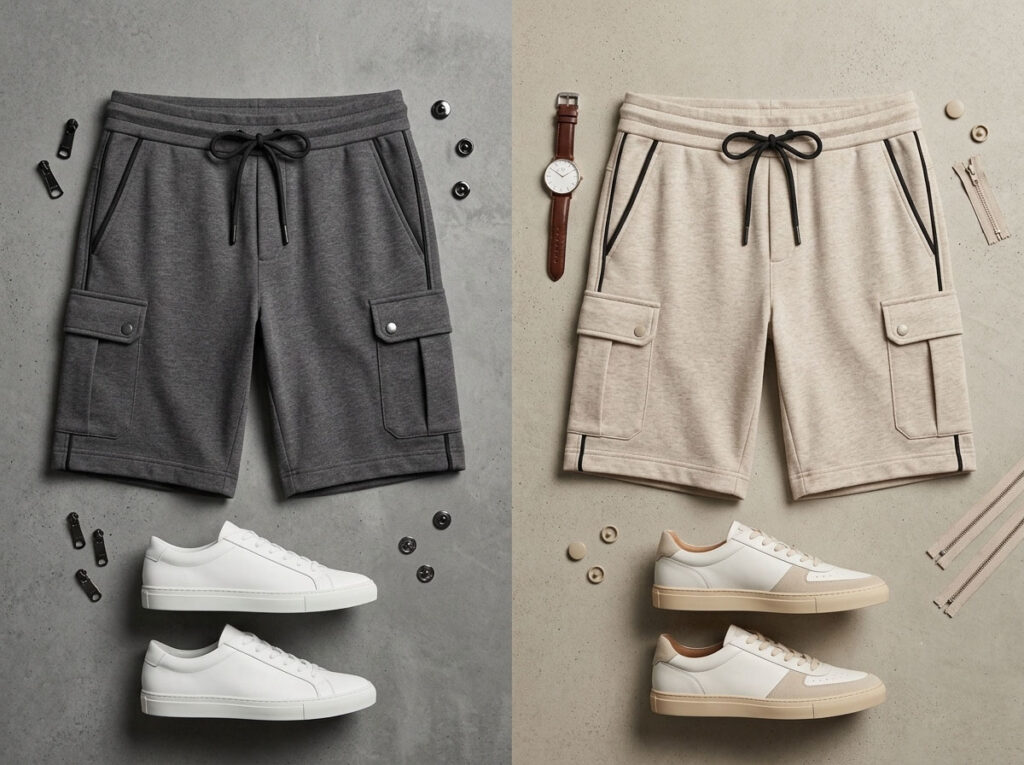
Gap women’s VintageSoft Terry sweat shorts offer a useful product reference for brands exploring relaxed women’s casualwear. However, a successful private-label product needs more than a similar appearance.
Fabric composition, weight, fit, waistband construction, inseam, finishing, and washing performance should all be defined and evaluated before bulk production.
If you are planning a women’s sweat shorts collection, prepare your reference images, target fabric specifications, size chart, and estimated order quantity. Liantao Apparel can discuss your product requirements and confirm the available development and manufacturing options for your project.
Contact Liantao Apparel to discuss your custom women’s sweat shorts project.
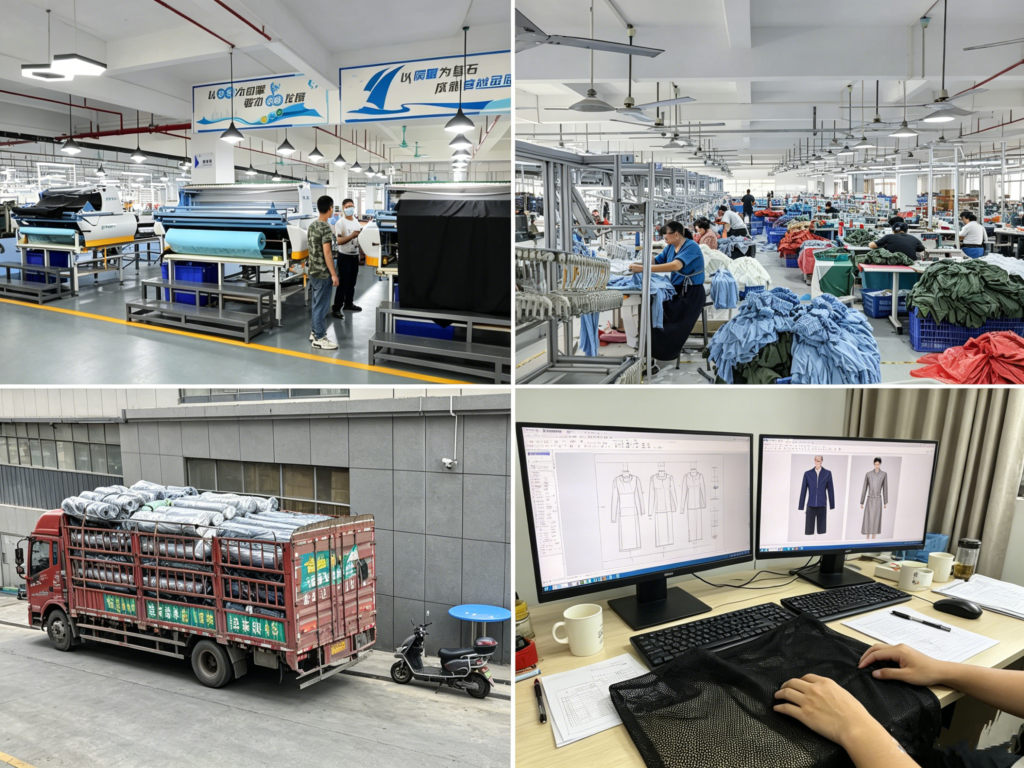
If you have any questions or require a quote, please leave
us a message. Our experts will get back to you within 24 hours to help you choose the ideal fashion products tailored to your needs.
Hi, I’m Lucy Cai, the founder of liantaoapparel.com. I’ve been managing a women’s clothing factory in China for over 16 years. With extensive experience in garment production and OEM services, I’m passionate about sharing insights into women’s fashion, apparel manufacturing, and global sourcing.
If you have any questions or need a quote, please contact us.
Please add us WhatsApp:+86 189 4809 3145
Provide us with detailed information about your requirements, supply design drawings or tech packs,
reference images, and share your ideas.
We will customize the best solution based on your needs and drawings, and provide a specific quote within 24 hours.
Once we receive your confirmation and deposit,we will commence mass production and take care of the subsequent shipping arrangements.


