🏭 Looking for a Custom Apparel Manufacturer?
We are a leading OEM/ODM clothing factory with 20+ years of export experience. Custom styles, flexible MOQs, and retail-ready quality.
In my 20 years of managing garment production lines, I’ve seen thousands of hoodies, but nothing quite matches the technical complexity of a BAPE Full-Zip Shark. To a casual observer, it’s just loud graphics and a heavy price tag. But as a manufacturer, I see the precision required to align a full-face zipper, the high-density ‘WGM’ varsity patching, and the specific heavyweight Japanese terry cotton that gives it that structured, armor-like fit. As we move through 2026, BAPE remains the ultimate ‘flex,’ yet most buyers don’t know what actually goes into making one. Today, I’m pulling back the curtain on the craftsmanship, the culture, and the real value behind the ape—so you can decide if it’s a worthy investment for your collection.
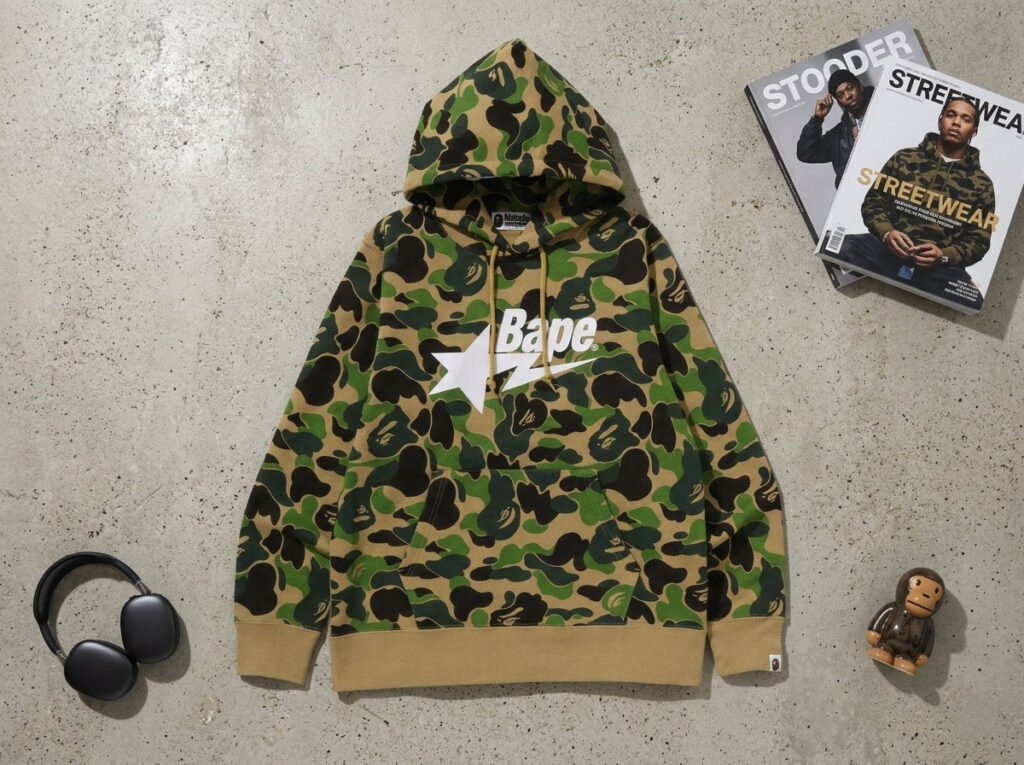
A Bathing Ape (BAPE) is a Japanese streetwear brand founded in Tokyo’s Harajuku district in 1993 by Nigo.
The name “A Bathing Ape” comes from a Japanese phrase that humorously criticizes people who are too comfortable and indulgent in life. Together with designer SK8THING, Nigo created the iconic Ape Head logo and camouflage graphics, turning BAPE into more than just clothing — it became a symbol of street culture.
BAPE became important because it changed the direction of global streetwear. Through limited releases, bold graphics, collaborations, and strong visual identity, the brand successfully expanded from Tokyo to the international market and heavily influenced Hip-Hop and youth culture.
Classic pieces such as the Shark Hoodie, ABC Camo, and Ape Head logo remain highly recognizable today, making BAPE one of the most influential streetwear brands in the world.
A Bathing Ape released products in limited quantities and mainly sold through its own stores.This made the brand feel rare and exclusive. BAPE became more than clothing — it became a symbol of street culture. Its scarcity strategy later influenced many modern streetwear brands.
BAPE gained international popularity largely through collaborations with artists like Pharrell Williams and Kanye West, as well as its strong connection to music and sneaker culture.
One major turning point was the “Bapesta” sneaker designed with Kanye West. Its bold design and highly recognizable look quickly attracted sneaker enthusiasts and helped BAPE expand into the global market.
As the brand grew, BAPE expanded its product range to include T-shirts, hoodies, jackets, and accessories. However, signature elements like the Shark Hoodie, camouflage patterns, and the Ape Head logo have remained central to the brand’s identity.
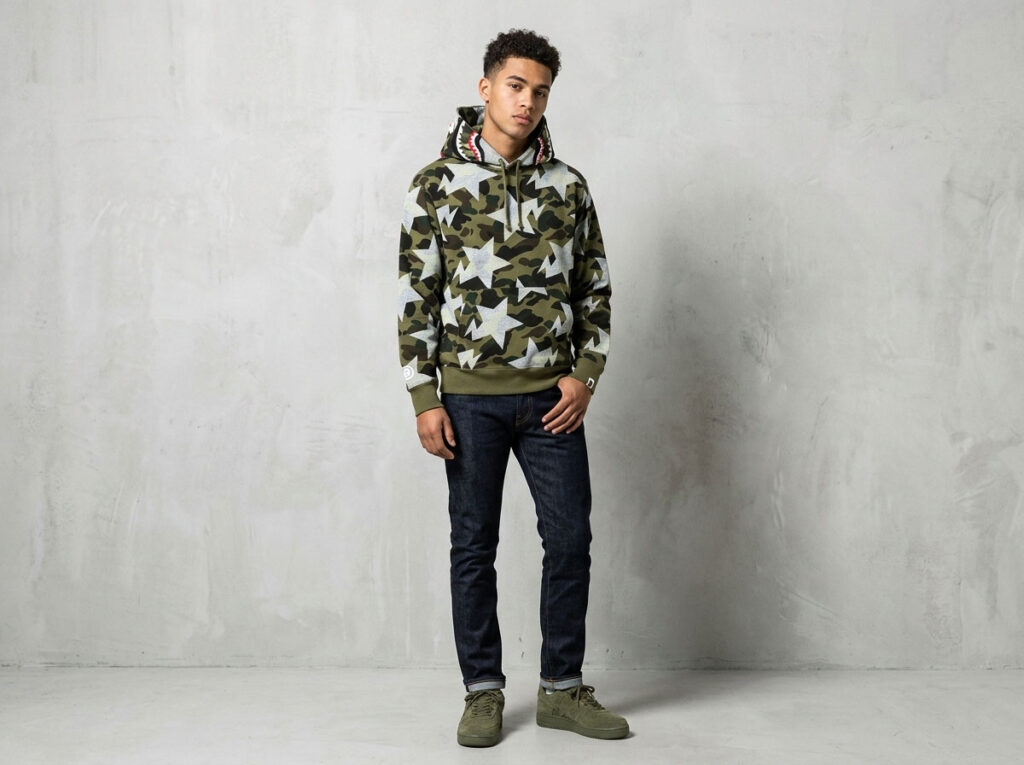
BAPE hoodies have become iconic in streetwear culture not simply because they look bold, but because they combine strong visual impact, symbolic design, and cultural storytelling into one piece. A true BAPE hoodie is never just a basic garment—it is a recognizable identity statement.
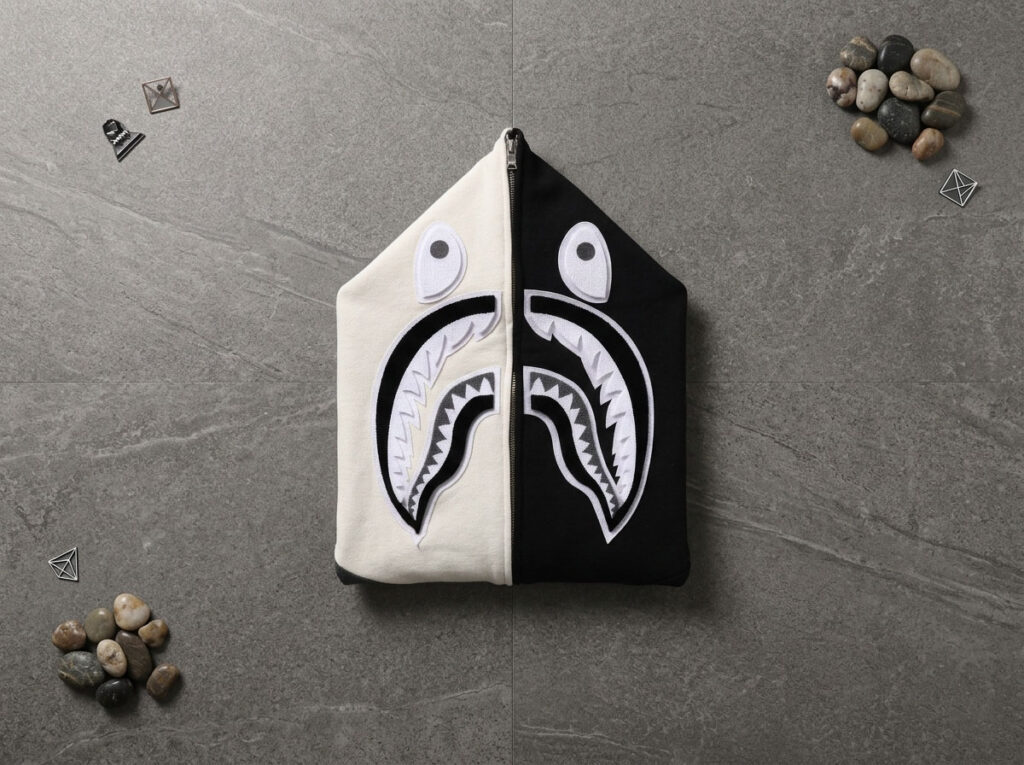
The Shark Hoodie is the most recognizable BAPE piece. It features a full-zip design that zips all the way up into the hood, transforming the wearer into a shark-like figure with exaggerated teeth, eyes, and facial structure.
This “transformative design” gives the hoodie a dramatic, almost character-like presence. Some versions also include chenille varsity-style patches with the words “WGM” (World Gone Mad) and the signature Ape Head logo, blending streetwear, sportswear, and brand identity into a single design.
Another core visual signature of BAPE is the ABC Camo pattern. Unlike traditional military camouflage, it subtly integrates the Ape Head logo into the pattern itself, turning the camo into a branded visual code. This makes the design instantly recognizable—even without a visible logo.
Beyond its core designs, BAPE continuously expands its visual universe through collaborations with cultural icons such as Hello Kitty, KAWS, and Marvel.These collaborations inject pop culture, art, and entertainment into its hoodies, keeping the designs fresh while maintaining a consistent streetwear identity.
The success of BAPE hoodies comes from a stable yet evolving visual system:
BAPE hoodies don’t achieve their premium status through bold graphics alone. Their real value lies in subtle, often overlooked craftsmanship details that shape both perception and durability in streetwear culture.
BAPE hoodies often use high-quality double-way zippers, not just for convenience, but to support the signature Shark Hoodie design.
The smoothness, durability, and how well the hoodie closes when fully zipped all contribute directly to the overall visual and functional experience.
BAPE places strong emphasis on construction accuracy. Seam alignment, panel symmetry, and pattern continuity are carefully controlled—especially in complex designs like ABC Camo.
This ensures that the visual pattern remains consistent across different fabric sections, maintaining a clean and intentional look.
Inside the garment, BAPE reinforces authenticity through a structured branding system:
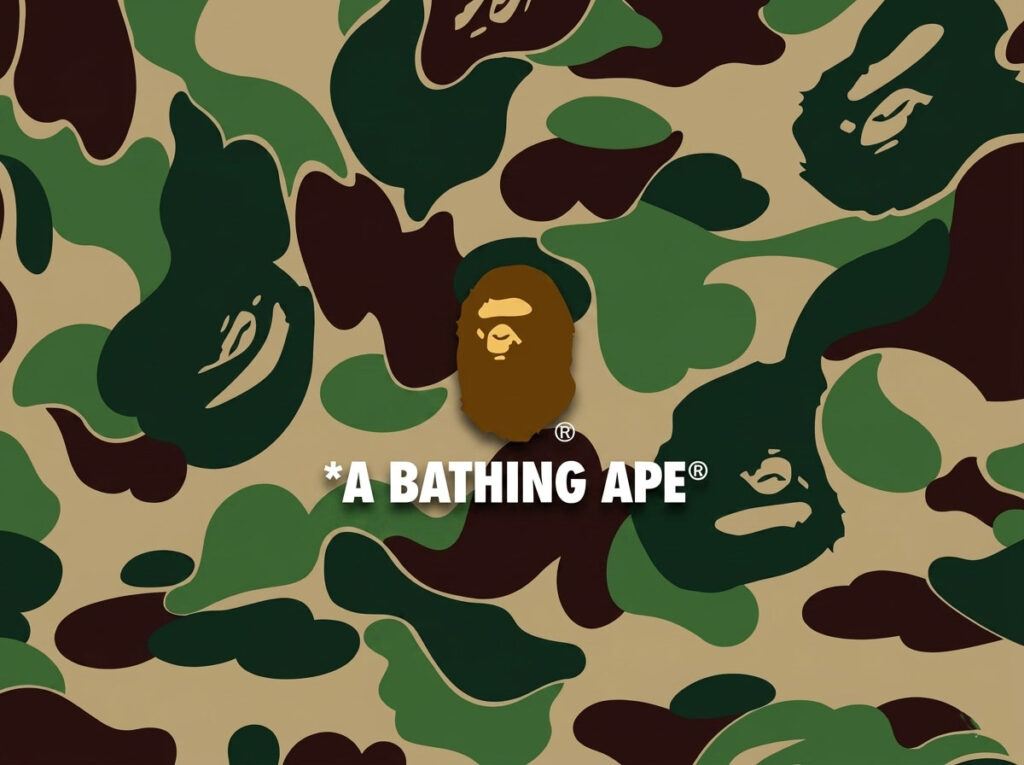
BAPE is known for its fearless approach to color, often releasing limited or high-impact colorways such as:
Together, these small but intentional decisions give BAPE hoodies a dual identity:
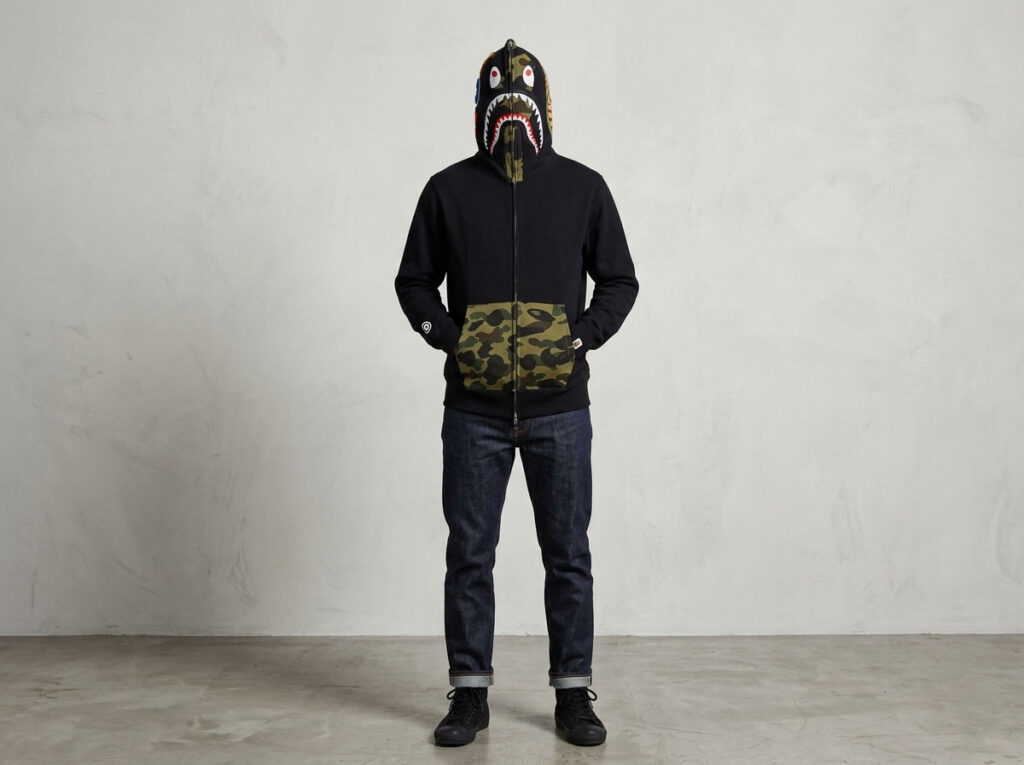
BAPE hoodies are not expensive for a single reason—their high price comes from a combination of brand power, scarcity, craftsmanship, collaborations, and resale culture.
In other words, you’re not just buying a hoodie—you’re buying into an entire streetwear system.
Owning a BAPE hoodie is often seen as being part of a larger streetwear culture.
From hip-hop to global fashion, BAPE has long been connected to influential cultural movements. Its Ape Head logo is instantly recognizable, making the hoodie not just clothing, but a symbol of identity and status.
BAPE uses a controlled supply strategy:
Compared to standard streetwear brands, BAPE invests more in production quality, including:
Complex cuts and construction (especially in Shark Hoodies)
BAPE frequently collaborates with cultural icons such as Hello Kitty and KAWS.
These collaborations involve licensing fees, design partnerships, and marketing expenses, all of which increase the final price.
BAPE has a strong resale culture. Many popular items are quickly resold at higher prices after release.
This creates a feedback loop where:
high demand → resale markup → perceived higher value
Over time, BAPE hoodies are often seen not just as clothing, but as collectible fashion assets.
BAPE is not just a brand built around one iconic hoodie—it is a complete streetwear ecosystem that expands from core items into collaborations, diffusion lines, and collectible releases.
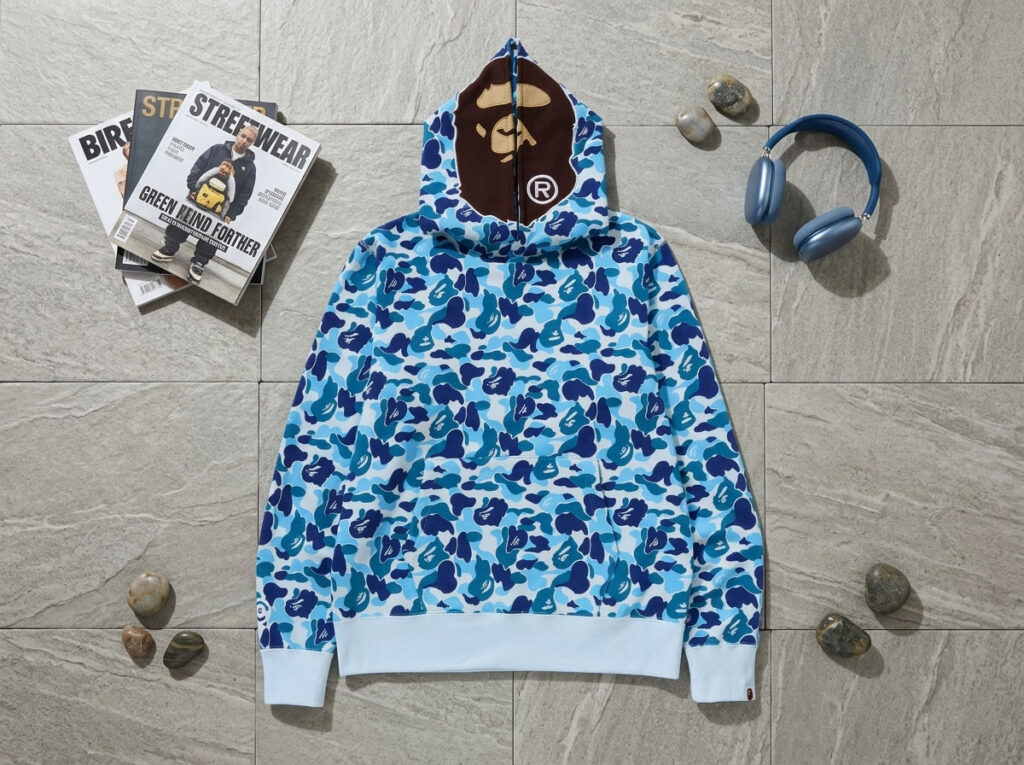
Product / Line | Key Features | Notes |
BAPE Hoodies / Shark Hoodie | Full-zip design, shark graphics, ABC camo, bold prints | ⭐ The brand’s flagship item and ultimate signature piece |
BAPE T-Shirts / Tops | Graphic prints, Ape Head logo, camo elements | 🎯 Entry-level essentials and first touchpoint for many fans |
Bapesta Sneakers | Star logo, bold colorways, streetwear silhouette | 👟 Iconic sneaker line that extends the BAPE identity into footwear |
Hello Kitty / Collaboration Series | Partnerships with Hello Kitty and other IPs | 🎨 Crossovers designed to expand audience reach and cultural appeal |
Jackets / Outerwear | Puffer jackets, windbreakers, varsity jackets | 🧥 Extends BAPE’s visual identity into heavier apparel categories |
AAPE / BAPY Sub-labels | Simplified design, more accessible pricing | 📊 Designed for broader market reach and entry-level consumers |
Limited / Rare Hoodies | Space camo, glow-in-the-dark, purple/red exclusives | 💎 High collectible value and strong resale market demand |
BAPE is not a single-product brand—it is a layered fashion system:
When a hoodie from BAPE sells for hundreds of dollars—or even more on the resale market—counterfeits become a serious concern. The key is not just looking at the logo, but examining construction, structure, and material consistency.
Authentic BAPE items follow strict labeling standards:
The full-zip structure of the Shark Hoodie is one of the easiest ways to detect authenticity.
Check for:
Authentic BAPE hoodies prioritize precise construction:
Irregular stitching, crooked seams, or misaligned patterns are common signs of fakes.
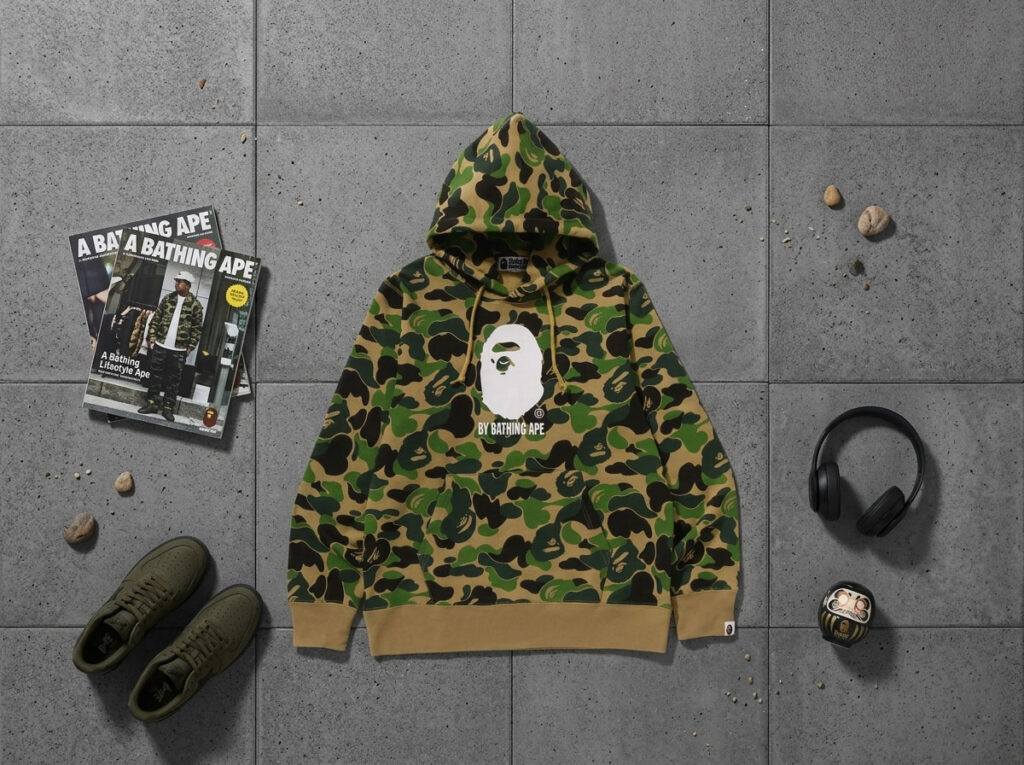
The signature ABC Camo is one of the most important authenticity markers.
Authentic features:
Fake versions often show:
Some authentic BAPE items include:
These systems are part of the brand’s internal verification structure.
Touch and smell can reveal quality differences:
The most reliable method is not inspection—it is sourcing:
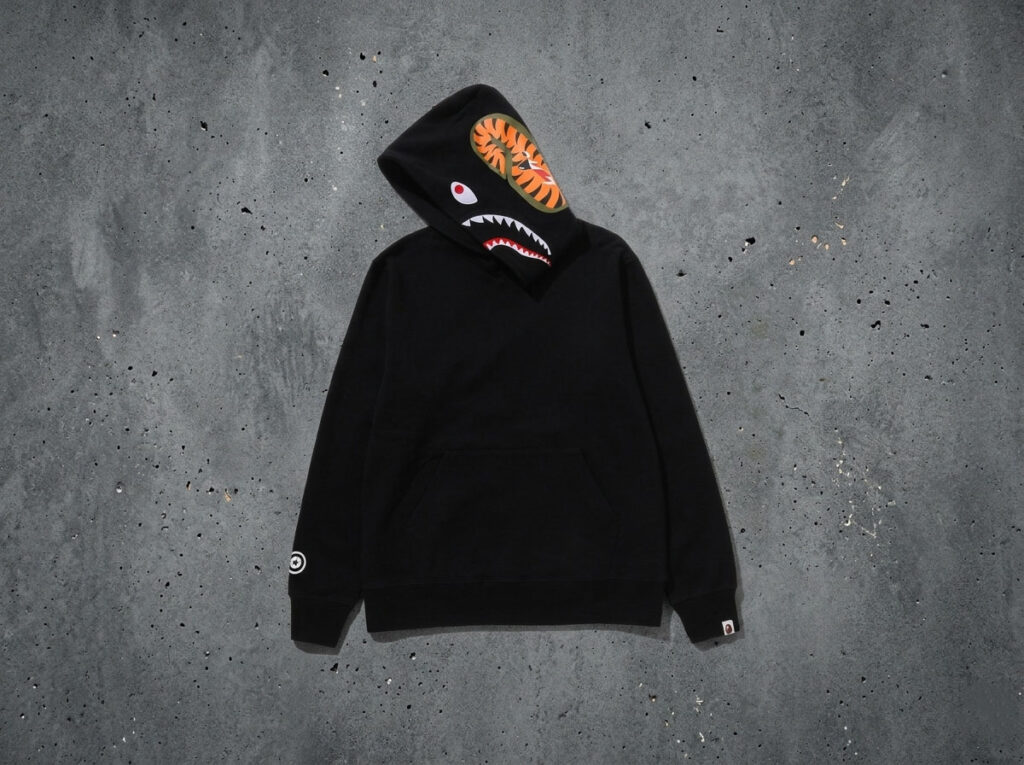
BAPE has already become a mature global streetwear label, but it continues to maintain relevance through limited drops and collaborations.
In 2024, BAPE opened its first U.S. store in Chicago’s Gold Coast, marking a stronger push into the North American market. At the same time, the brand faced legal disputes with Nike over sneaker design issues, which were eventually resolved. This highlights the ongoing challenges around intellectual property in the fashion industry.
Overall, BAPE is balancing four key areas: brand influence, market hype, product craftsmanship, and legal compliance. Despite these challenges, the hoodie remains the core product of BAPE—its most recognizable and talked-about signature piece.
BAPE hoodies are expensive not just because of their materials or craftsmanship, but because they combine historical significance, strong visual identity, scarcity, and cultural influence.In particular, the Shark Hoodie stands out as an iconic streetwear symbol, with its bold shark graphics, full-zip structure, and distinctive camouflage language. Combined with limited releases and decades of cultural relevance in streetwear, each BAPE hoodie goes beyond being just clothing—it becomes a wearable cultural symbol and an emblem of street fashion itself.

Liantao Apparel is more than a hoodie manufacturer—it is a development partner for streetwear brands that want to build products with strong identity and long-term market value.
From fabric sourcing and silhouette development to printing, embroidery, and private labeling, Liantao supports end-to-end OEM & ODM hoodie production, helping brands translate design concepts into fully realized collections.
For brands aiming to create products with positioning similar to BAPE-level streetwear, the focus goes beyond basic construction quality. It includes maintaining consistent visual identity across graphics, camo systems, and signature hoodie structures.
By combining technical expertise with scalable production capacity, Liantao Apparel enables brands to move efficiently from sampling to bulk manufacturing, while preserving the design integrity and brand identity that define premium streetwear hoodies.

If you have any questions or require a quote, please leave
us a message. Our experts will get back to you within 24 hours to help you choose the ideal fashion products tailored to your needs.
Hi, I’m Lucy Cai, the founder of liantaoapparel.com. I’ve been managing a women’s clothing factory in China for over 16 years. With extensive experience in garment production and OEM services, I’m passionate about sharing insights into women’s fashion, apparel manufacturing, and global sourcing.
If you have any questions or need a quote, please contact us.
Please add us WhatsApp:+86 189 4809 3145
Provide us with detailed information about your requirements, supply design drawings or tech packs,
reference images, and share your ideas.
We will customize the best solution based on your needs and drawings, and provide a specific quote within 24 hours.
Once we receive your confirmation and deposit,we will commence mass production and take care of the subsequent shipping arrangements.