🏭 Looking for a Custom Apparel Manufacturer?
We are a leading OEM/ODM clothing factory with 20+ years of export experience. Custom styles, flexible MOQs, and retail-ready quality.
Need custom T-shirts printed quickly but not sure how long the process really takes? The timeline is usually more complicated than simply sending artwork to a printer and waiting for finished shirts.
For a T-shirt manufacturer, the total lead time can include artwork review, fabric sourcing, sample approval, printing, quality control, packing, and shipping. In the original manufacturing workflow, overall turnaround can range from roughly 7 to 30 days, depending on order size, printing method, material, factory location, and how quickly specifications are approved.
For apparel brands, understanding each stage is important because a delay in artwork approval, fabric selection, or production scheduling can move the final delivery date even when the printing itself is fast.
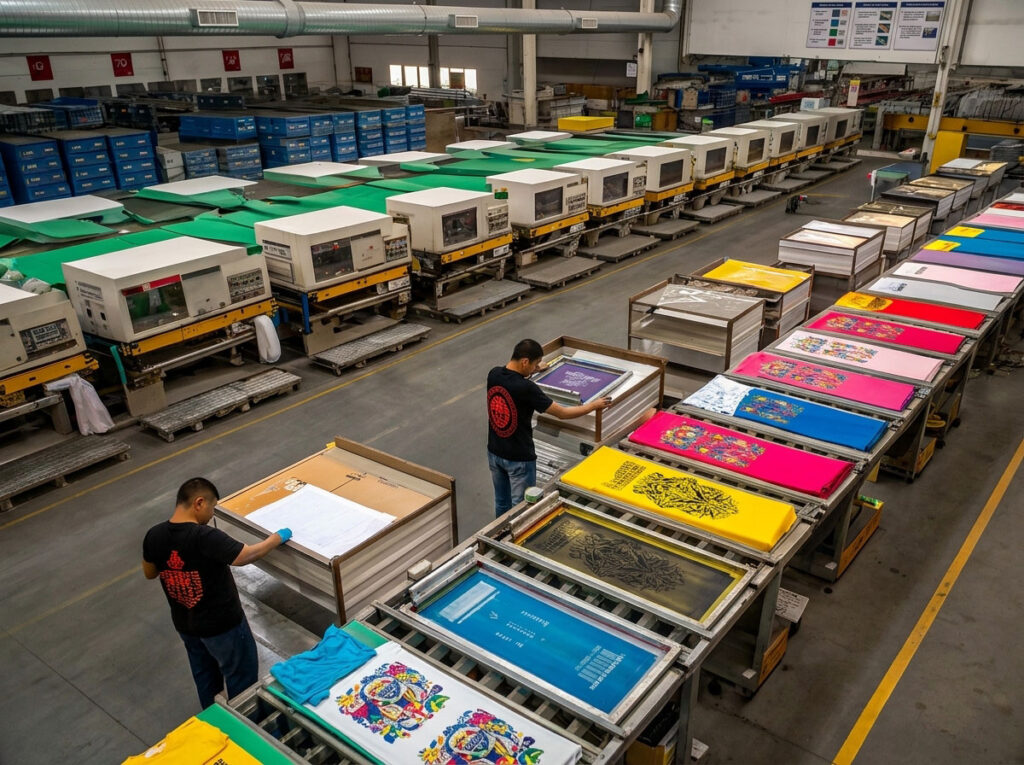
Most T-shirt manufacturers work within a timeline based on order quantity, design complexity, material availability, printing process, and factory capacity.
Small orders can move relatively quickly, while larger production runs often require more preparation, more labor, and more extensive quality control.
Smaller orders are often faster, particularly when digital printing is used and the blank garment or fabric is readily available.
For small batches, the printing and finishing stage may take around 7–10 business days after sample approval, but the complete project timeline can be longer because design review and sample confirmation happen first.
| Day | Task |
|---|---|
| 1 | Submit artwork, tech pack, quantity, and product requirements |
| 2 | Manufacturer reviews the order and confirms production details |
| 3 | Final artwork or mockup is approved |
| 4 | Sample is printed and reviewed |
| 5 | Customer approves the sample |
| 6–9 | Bulk printing, finishing, packing, and labeling |
| 10 | Order is ready for shipment |
The key takeaway is that customer response time can be just as important as factory speed. Every unanswered question or delayed approval can push the production schedule forward.
Bulk orders require more preparation, labor, setup, printing, finishing, and quality control. Larger quantities also need to be scheduled into available production capacity.
For orders above approximately 1,000 pieces, the total production window can extend to several weeks depending on printing complexity and factory scheduling.
Manufacturers often allocate production slots in advance, so late approvals can cause an order to miss its planned production window.
Ask your T-shirt manufacturer whether production is scheduled weekly, monthly, or according to a fixed booking calendar.
This helps you reserve capacity before the order becomes urgent and gives your launch schedule more realistic deadlines.
Printing speed is influenced by much more than the printing machine itself.
The biggest variables are printing method, fabric, artwork complexity, production quantity, factory capacity, approval speed, and shipping requirements.
A reliable manufacturer cannot compensate for missing specifications or repeated last-minute changes. Clear information at the beginning generally produces a faster and more predictable workflow.
Yes. Different printing technologies require different setup, curing, handling, and finishing steps.
DTG can be efficient for small quantities and complex multi-color artwork, while screen printing is often more practical for larger repeatable orders. Embroidery and heat transfer have different preparation and production requirements.
The fastest printing method is not always the best method. Quantity, artwork, fabric, durability requirements, and desired finish should all be evaluated together.
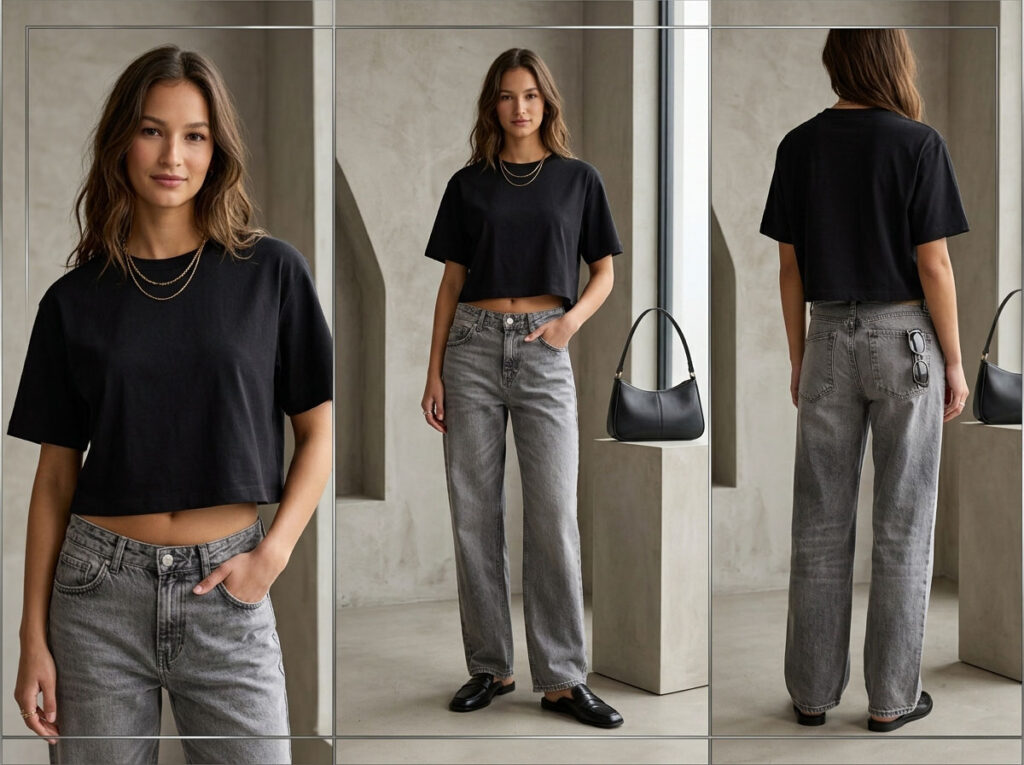
Not every T-shirt fabric behaves the same during printing.
Cotton is commonly used for many printing methods, while polyester and blended fabrics may require different inks, pretreatment, curing, or application techniques. Fabric finishing can also create additional preparation steps.
| Fabric Type | Printing Speed Impact | Key Consideration |
|---|---|---|
| 100% Cotton | Fast to Moderate | Commonly compatible with DTG and screen printing |
| Cotton/Polyester Blend | Moderate | May require different pretreatment or print testing |
| 100% Polyester | Moderate to Slower | Often associated with sublimation or specialized processes |
| Bamboo, Modal & Other Specialty Fibers | Variable | Testing is recommended before bulk production |
Factory location can significantly affect the total lead time because manufacturing and shipping are connected.
Local manufacturers can have an advantage in delivery speed because finished goods travel a shorter distance. Overseas manufacturers may offer broader sourcing options or different cost structures, but transportation and customs add additional variables.
The biggest advantage is proximity.
When production takes place near the final market, international freight is eliminated and communication can be more direct. This can be useful for product launches, urgent replenishment, or short market tests.
Local production is particularly useful when speed is more important than minimizing unit cost.

Overseas production adds transportation, customs, and last-mile delivery to the manufacturing timeline.
For example, an order produced in China and shipped to North America may require additional days or weeks depending on whether air or sea freight is used. Weather, customs inspections, port congestion, and carrier schedules can also introduce delays.
These are planning examples rather than guaranteed transit times. For overseas production, brands should build a buffer into the launch schedule instead of planning around the shortest possible delivery estimate.
Sometimes a brand needs T-shirts for an event, campaign, product launch, team activity, or short-notice collaboration.
Many manufacturers and printers offer rush production, but faster service usually requires more flexible materials, limited design choices, additional fees, or priority scheduling.
For very small local orders, same-day or next-day DTG printing may be available when artwork is simple and blank garments are already in stock.
This is most realistic for urgent orders with limited quantities rather than large-scale private-label manufacturing.
Rush printing usually comes with constraints such as:
Rush pricing varies by supplier, order quantity, artwork complexity, printing method, blank inventory, and requested delivery speed. The original article notes that rush charges can range substantially above standard pricing.
| Quantity | Standard Example | 3-Day Rush Example | 24-Hour Express Example |
|---|---|---|---|
| 100 pcs | $3.00/shirt | $4.50/shirt | $6.00+ |
| 500 pcs | $2.40/shirt | $3.60/shirt | Not available |
These figures are illustrative examples from the original article, not fixed market prices. Actual quotations should be requested from the selected manufacturer based on the complete project specification.
Speed is not only controlled by the manufacturer. The buyer also controls a large part of the timeline through preparation, approvals, communication, and decision-making.
A clean workflow can remove unnecessary revision cycles and help the factory move directly from sampling to production.
Avoid unclear mockups, incomplete artwork, missing dimensions, or multiple versions of the same file.
Production-ready files help the manufacturer confirm the print size, placement, colors, and technical requirements without unnecessary back-and-forth.
The more clearly the factory can understand the final artwork, the fewer clarification cycles are likely to occur.
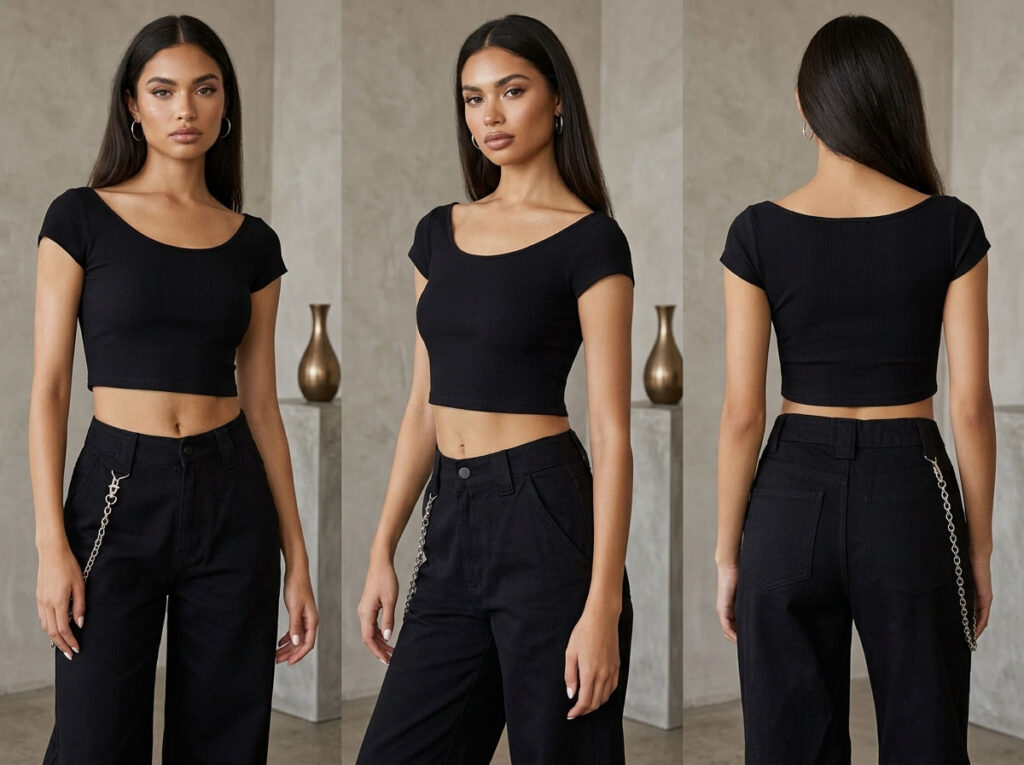
Clear instructions reduce the number of decisions the factory needs to stop and clarify.
Your manufacturer should ideally receive the style, fabric, color, size range, print method, artwork, placement, quantity, packaging requirements, and target delivery date as early as possible.
The basic rule is simple: the clearer the product specification, the more predictable the manufacturing timeline.
So, how long does it take to get T-shirts printed by a manufacturer?
A realistic planning range can run from about 7 days for a straightforward small order to several weeks for larger or more complex production, while shipping and customs can extend the total calendar further.
The most important variables are:
At Liantao, T-shirt production should be approached as a complete manufacturing timeline rather than simply a printing service. Fabric sourcing, sample development, artwork approval, printing, quality control, packing, and shipment all need to be coordinated.
For brands, the fastest route is usually not simply choosing the factory that promises the shortest number of days. A better strategy is to establish clear specifications, approve samples quickly, reserve production capacity early, and choose the printing method and shipping route that match the actual business deadline.
Whether you need a small printed T-shirt test batch or a large private-label production run, a clear production plan helps control both lead time and total manufacturing risk.
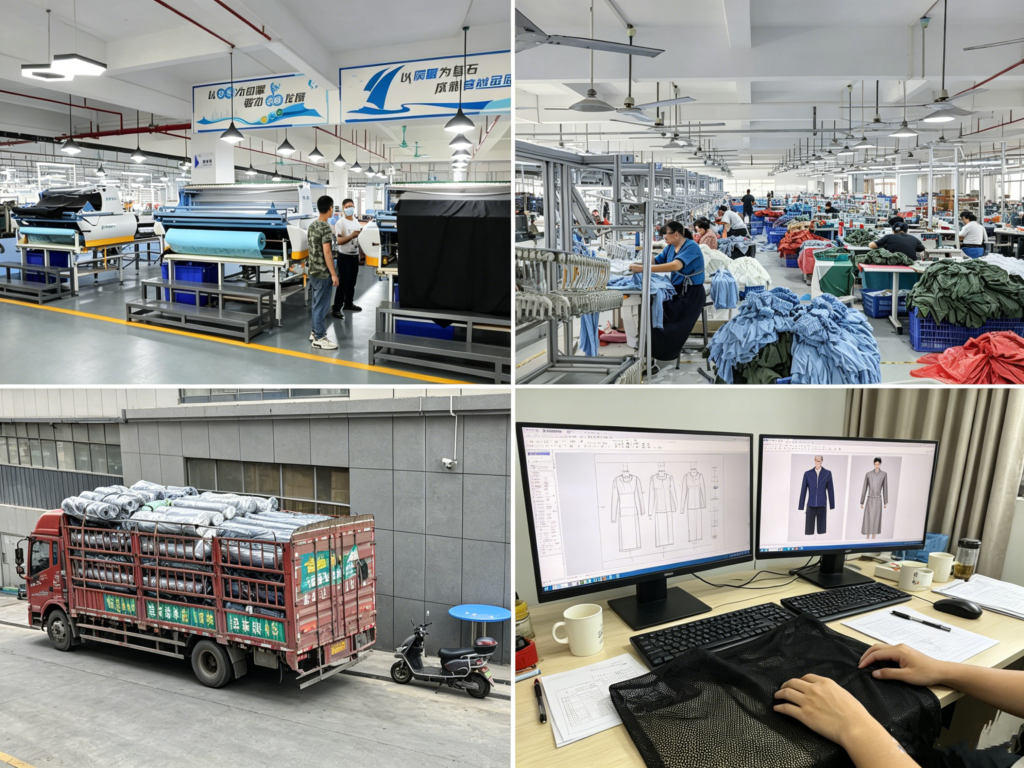
If you have any questions or require a quote, please leave
us a message. Our experts will get back to you within 24 hours to help you choose the ideal fashion products tailored to your needs.
Hi, I’m Lucy Cai, the founder of liantaoapparel.com. I’ve been managing a women’s clothing factory in China for over 16 years. With extensive experience in garment production and OEM services, I’m passionate about sharing insights into women’s fashion, apparel manufacturing, and global sourcing.
If you have any questions or need a quote, please contact us.
Please add us WhatsApp:+86 189 4809 3145
Provide us with detailed information about your requirements, supply design drawings or tech packs,
reference images, and share your ideas.
We will customize the best solution based on your needs and drawings, and provide a specific quote within 24 hours.
Once we receive your confirmation and deposit,we will commence mass production and take care of the subsequent shipping arrangements.