Getting the right pants inseam measurement is essential for achieving a comfortable fit and a polished appearance. Whether you are buying ready-to-wear pants, ordering online, altering trousers, or developing a custom clothing collection, knowing your inseam can make choosing the correct length much easier.
So, how is pants inseam measured? The inseam is measured from the crotch seam down along the inside leg to the bottom hem. You can measure a well-fitting pair of pants on a flat surface or measure your body with assistance. This guide explains the process step by step and covers inseam lengths, pant styles, sizing, common mistakes, and online shopping tips.
What Is a Pants Inseam, and Why Does It Matter for Fit?
The inseam is the measurement along the inside leg of a pair of pants, starting at the crotch and ending at the bottom hem. It is one of the most important measurements for determining the finished length of pants and achieving the intended silhouette.
1. Ensures the Right Pants Length
Prevents pants from being too long — An excessive inseam can cause the hem to drag, bunch, or stack more than intended.
Avoids an overly short fit — A short inseam can expose too much of the ankle and change the intended silhouette.
2. Improves Everyday Comfort
Reduces unnecessary bunching — A properly measured inseam helps the pant leg sit naturally without excessive fabric gathering.
Supports freedom of movement — Accurate inseam specifications are especially important for activewear, joggers, and tailored garments.
3. Defines the Overall Style
Controls the silhouette — Full-length, cropped, ankle-length, and short styles all require different inseam measurements.
Works with the intended fit — Inseam length should be considered together with rise, leg opening, and overall garment proportions.
How Do You Measure a Pants Inseam?
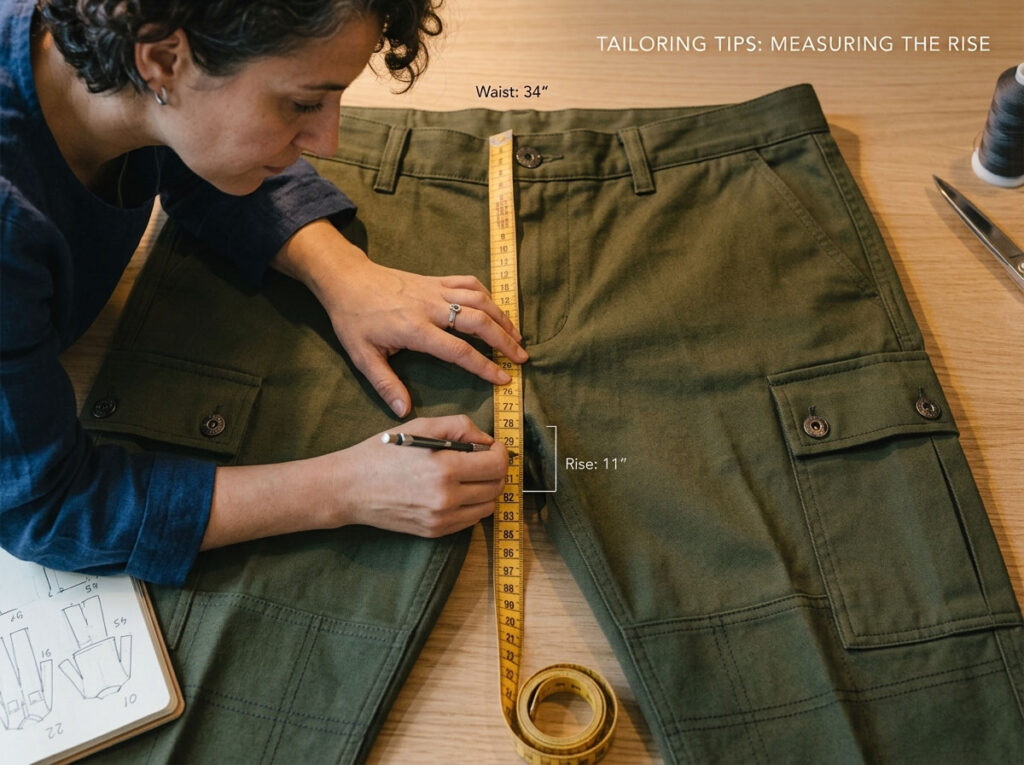
Measuring pants inseam athome is relatively simple. The key is to keep the garment flat, align the seams, and measure from the correct starting point.
Step 1: Gather Your Measuring Tools
Flexible measuring tape — A soft tape can follow the garment seam more accurately than a rigid ruler.
Flat surface — A clean floor or large table helps keep the pants properly aligned during measurement.
Well-fitting pants — Use a pair that already fits well if you want to reproduce a preferred inseam length.
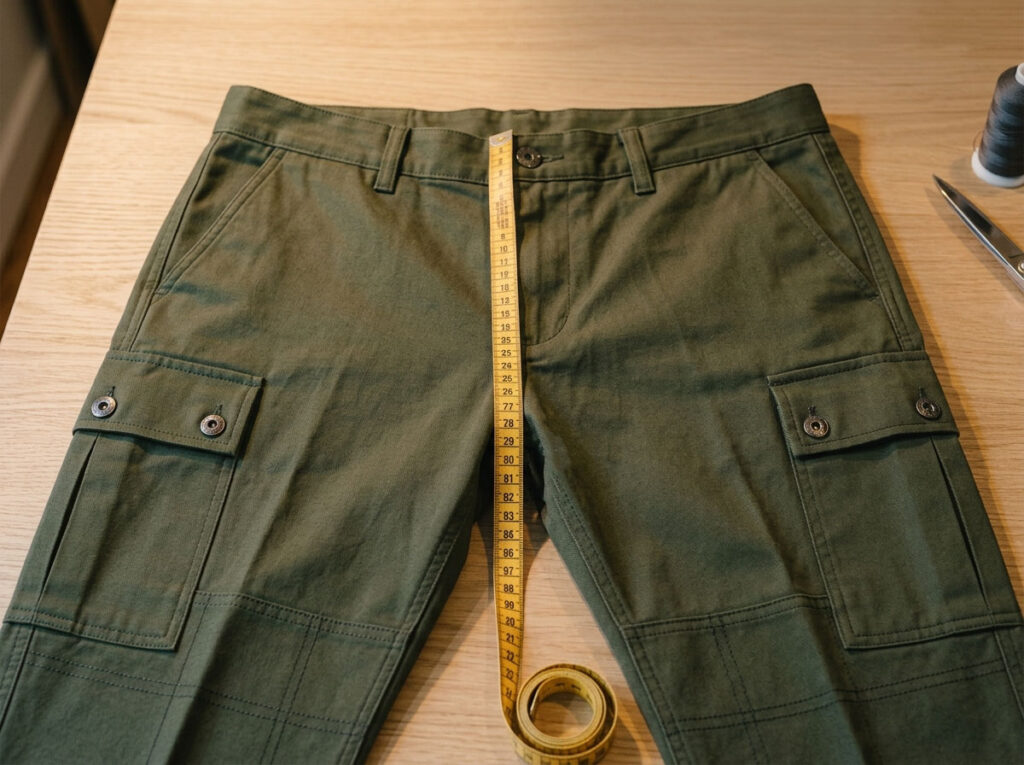
Step 2: Lay the Pants Flat
Place the pants on a clean, flat surface with the legs extended.
Smooth out wrinkles without stretching the fabric.
Align the inseam and leg seams so the measurement is consistent.
Step 3: Measure from the Crotch to the Hem
Locate the crotch seam where the two pant legs meet.
Place the beginning of the measuring tape at the crotch seam.
Follow the inside leg seam all the way to the bottom hem.
Record the measurement in inches or centimeters.
The critical point is to measure along the inside seam, not along the outside leg or waistband.
Step 4: Double-Check the Measurement
Measure twice — Repeating the measurement reduces errors caused by wrinkles or misaligned seams.
Compare both legs if necessary — This is useful when measuring worn, altered, or heavily used garments.
Ask for assistance — A second person can help keep the measuring tape straight when greater precision is required.
Can You Measure Your Inseam While Wearing Pants?
Yes. If you do not have a suitable reference pair of pants, you can estimate your inseam while wearing pants.
How to Measure Your Inseam:
Stand upright against a wall with your legs slightly apart.
Position the measuring tape at the crotch area.
Measure downward to the point where you want the pant hem to finish.
Use a mirror or ask someone to help keep the tape straight.
For the most consistent garment-development measurements, however, measuring a well-fitting pair of pants on a flat surface can be easier to reproduce.
How Does Inseam Length Change for Different Pant Styles?
There is no single inseam length that works for every type of pants. The appropriate measurement depends on the garment category, intended silhouette, wearer, and styling.
1. Full-Length Pants
Measurement approach — Measure to the point where the hem reaches the desired position around the shoe.
Best for — Jeans, formal trousers, chinos, and everyday full-length pants.
2. Cropped Pants
Measurement approach — Measure to the desired point above the ankle rather than extending the inseam to the shoe.
Best for — Contemporary fashion, warm-weather clothing, and tailored cropped silhouettes.
3. Activewear
Measurement approach — Select an inseam that allows comfortable movement without excessive fabric or restriction.
Best for — Joggers, gym pants, leggings, and other performance-focused garments.
4. Shorts
Measurement approach — Measure to the preferred finished position, such as mid-thigh or above the knee.
Best for — Casual shorts, running shorts, training shorts, and athletic styles.
What Are the Standard Pants Inseam Lengths?
Inseam lengths vary by brand, garment category, body proportions, and intended fit. The following ranges provide a general starting point rather than a universal sizing standard.
Inseam Category
General Inseam Length
Typical Use
Short
28–30 in
Shorter or petite proportions
Regular
31–34 in
Common standard-length applications
Tall
35+ in
Taller proportions and extended-length designs
These ranges should always be checked against the specific brand’s size chart because actual garment measurements can differ between manufacturers and styles.
What Are the Best Tips for Getting the Perfect Inseam?
A correct measurement is only the starting point. Fabric behavior, footwear, styling, and future alterations can all affect the final inseam you need.
1. Consider Your Shoes
Measure for the intended footwear — Heels, sneakers, boots, and dress shoes can all change where the hem should fall.
Check the final silhouette — The same inseam can look very different depending on the shoe height and pant width.
2. Account for Fabric Shrinkage
Allow for potential shrinkage — Cotton and other washable fibers may change dimensions after laundering, so fabric composition and finishing should be considered before finalizing specifications.
Follow care instructions — Proper washing and drying can help maintain the intended garment dimensions.
3. Leave Room for Tailoring
Consider a slightly longer inseam — Extra length can provide flexibility when a garment will be hemmed later.
Confirm the finished measurement — For custom production, the desired finished inseam should be clearly specified in the tech pack.
No break — The trouser hem lightly touches or skims the shoe for a clean, contemporary appearance.
Half break — A small fold appears at the front of the hem, creating a balanced classic look.
Full break — A more pronounced fold creates a traditional and relaxed trouser silhouette.
Why Do Professional Tailors Pay So Much Attention to Inseam Length?
Professional tailors focus on inseam accuracy because a few centimeters can noticeably change the fit and silhouette of a pair of pants.
1. Better Customization
Adapts to individual proportions — Tailors can adjust the inseam according to the wearer’s body and preferred finished length.
2. Improves the Silhouette
Balances the entire garment — Correct inseam length helps coordinate the pant leg with the rise, leg opening, and footwear.
3. Increases Comfort
Reduces unnecessary restriction — A suitable inseam allows the wearer to move naturally without excessive pulling or bunching.
For apparel manufacturers, the same principle applies during product development: inseam specifications need to remain consistent across sizes and production batches.
What Are the Most Common Inseam Measurement Mistakes?
Even a simple measurement can become inaccurate if the garment or body position is handled incorrectly.
1. Measuring on an Uneven Surface
Why it matters — A curved or uneven surface can cause the pant legs to shift and produce inconsistent measurements.
2. Ignoring Body Position
Why it matters — Standing unnaturally can change the position of the crotch and affect a body-based inseam measurement.
3. Forgetting Fabric Characteristics
Why it matters — Stretch fabrics can behave differently from rigid woven fabrics, so the finished garment measurement should account for fabric construction and recovery.
4. Measuring the Wrong Seam
Why it matters — Measuring the outside leg instead of the inside seam will produce a different measurement and should not be confused with inseam length.
How Can You Use Your Inseam Measurement When Shopping Online?
Knowing your inseam is especially useful when buying pants online because you cannot try the garment on before purchasing.
Many online retailers provide inseam information in their product descriptions or size charts. Compare your measurement with the garment’s stated inseam rather than relying only on S, M, L, or numeric waist sizing.
How to Use Your Inseam:
Measure your preferred inseam — Use a well-fitting pair of pants or measure your body carefully.
Compare it with the product chart — Look specifically for the garment’s inseam rather than assuming a standard length.
Check the intended fit — Determine whether the product is designed as full-length, cropped, relaxed, or another silhouette.
Read customer feedback — Reviews may reveal whether a particular style tends to fit longer or shorter than expected.
Conclusion
Knowing how to measure pants inseam is one of the simplest ways to improve the fit of jeans, trousers, joggers, activewear, and other bottom garments. The basic process is straightforward: lay the pants flat, locate the crotch seam, follow the inside leg seam to the hem, and record the measurement accurately.
However, the perfect inseam is not determined by a number alone. Pant style, footwear, fabric characteristics, shrinkage, desired break, body proportions, and intended use can all influence the final length.
For apparel brands, accurate inseam specifications are equally important during product development. A consistent inseam measurement helps manufacturers maintain grading accuracy, fit consistency, and the intended silhouette across production runs. For custom pants and private-label collections, combining precise inseam measurements with fabric selection, pattern development, and quality control is essential for achieving reliable fit at scale.
We're Ready to Collaborate with You
If you have any questions or require a quote, please leave us a message. Our experts will get back to you within 24 hours to help you choose the ideal fashion products tailored to your needs.
Hi, I’m Lucy Cai, the founder of liantaoapparel.com. I’ve been managing a women’s clothing factory in China for over 16 years. With extensive experience in garment production and OEM services, I’m passionate about sharing insights into women’s fashion, apparel manufacturing, and global sourcing.