


🏭 Looking for a Custom Apparel Manufacturer?
We are a leading OEM/ODM clothing factory with 20+ years of export experience. Custom styles, flexible MOQs, and retail-ready quality.
Italian sports apparel brands are known for combining functional sportswear with distinctive design. From football kits and team uniforms to cycling clothing and outdoor apparel, Italian companies have developed a strong presence across different areas of the sportswear market.
For sportswear retailers, team buyers, and fashion businesses, understanding these brands can help identify product styles, target markets, and potential sourcing opportunities.
This guide introduces seven Italian sports apparel brands, explains their product focus, and compares branded sportswear with private label manufacturing. It also covers key considerations for businesses planning to develop their own sportswear collections.

Italian sportswear has a recognizable design approach that often combines functionality, attention to detail, and contemporary style.
Several characteristics help explain the appeal of Italian sports apparel brands.
However, not every Italian sportswear brand follows the same business model. Some focus on professional teamwear, while others specialize in individual sports or lifestyle collections.
It is also important to distinguish between an Italian brand and a product manufactured in Italy. A company’s Italian origin does not automatically mean every product in its collection is made in Italy.
The following brands represent different areas of the Italian sportswear market. They are presented as examples rather than a ranking.
Kappa is an Italian sportswear brand recognized for its connection with football, teamwear, and sports-inspired fashion.
Its product range includes sports clothing, tracksuits, training apparel, and casual sportswear. The brand’s recognizable visual identity has also helped it maintain a presence in the lifestyle market.
For businesses researching sportswear trends, Kappa is worth examining for its combination of athletic styling and recognizable branding.
Macron is an Italian sportswear company founded in Bologna in 1971. It began as a sports goods business before developing into a manufacturing company and later launching its own brand.
Today, Macron is particularly associated with teamwear and technical sponsorships across different sports. Its products include match kits, training apparel, and sports accessories.
You can learn more about Macron’s history as an Italian sportswear brand on its official website.
For teamwear buyers, Macron provides an example of how a sportswear company can build its identity through relationships with clubs, federations, and athletes.
Erreà is an Italian sportswear brand focused on technical apparel for different sporting activities.
Its collections cover team sports such as football, volleyball, basketball, and rugby, as well as other athletic categories. The brand offers clothing for different age groups and sports requirements.
Businesses researching teamwear can explore Erreà’s technical sportswear collections to understand its product categories and design direction.
Erreà is particularly relevant when comparing team sports apparel, including uniforms and training clothing.
Sportful is an Italian brand associated with cycling apparel and performance-oriented clothing.
Its product categories include cycling jerseys, bib shorts, jackets, and other garments designed for riding conditions. Cycling apparel requires attention to fit, comfort, fabric performance, and garment construction.
For businesses exploring the cycling market, Sportful provides an example of a brand with a specialized product focus rather than a broad general sportswear approach.
Castelli is another well-known Italian name in cycling apparel.
The brand is associated with cycling clothing designed for road cycling and other riding activities. Its product range includes jerseys, shorts, jackets, and accessories.
Cycling apparel differs from general sportswear because garments often need to accommodate a forward riding position, reduce unnecessary fabric movement, and provide comfort during extended activity.
Castelli is therefore a useful reference when researching specialized cycling garment design.
Karpos focuses on outdoor and mountain sports apparel.
Its collections include clothing designed for activities such as hiking, climbing, and other outdoor pursuits. Product development in this category often considers weather conditions, mobility, layering, and practical storage.
For brands researching outdoor sportswear, Karpos offers a reference for combining technical functionality with an outdoor-oriented design identity.
EA7 Emporio Armani is the sportswear line associated with the Italian fashion house Emporio Armani.
Its collections combine sports-inspired clothing with contemporary fashion styling. Products include tracksuits, T-shirts, jackets, and other active and leisurewear pieces.
Unlike brands focused primarily on technical teamwear, EA7 also appeals to consumers who want sports-inspired clothing for everyday use.
This makes it a useful example of the connection between sportswear, fashion, and lifestyle products.
The right brand depends on the sport, product requirements, and target customer. A company specializing in cycling clothing may not be the most suitable reference for a football teamwear collection.
The following table provides a practical comparison.
| Sports category | Brands to explore | Main product focus |
|---|---|---|
| Football and team sports | Kappa, Macron, Erreà | Jerseys, tracksuits, training apparel |
| Cycling | Sportful, Castelli | Cycling jerseys, shorts, jackets |
| Outdoor and mountain sports | Karpos | Hiking and outdoor clothing |
| Sports-inspired lifestyle | EA7 Emporio Armani, Kappa | Tracksuits, T-shirts, casual sportswear |
When evaluating a brand, consider more than its name or visual identity.
The best reference brand is the one whose product characteristics match the business’s target market.
If you are a retailer, distributor, or sportswear buyer, choosing a brand requires a clear understanding of your business model.
Start by identifying what you want to sell and who will purchase it.
Decide whether your business will focus on football uniforms, cycling apparel, outdoor clothing, gym wear, or general sports-inspired fashion.
A clear product category makes it easier to compare brands and assess their collections.
Consider the age, activities, spending preferences, and purchasing habits of your customers.
For example, a retailer serving amateur football clubs may prioritize team kits and training clothing, while an outdoor retailer may need functional jackets and hiking apparel.
Review fabric composition, stitching, fit, finishing, and garment durability.
For performance clothing, also consider breathability, stretch, moisture management, and comfort. The importance of each property depends on the intended activity.
Before working with a brand, understand its wholesale terms, minimum order requirements, delivery arrangements, and distribution policies.
These conditions can differ between brands and markets, so confirm them directly with the supplier.
For businesses supplying teams or building a retail collection, consistent product availability can be important.
Check whether products are seasonal, whether core styles remain available, and how repeat orders are handled.
Buying established branded sportswear and developing private label products are two different business approaches.
An established brand already has its own identity, product range, and market positioning. Private label manufacturing gives a business more control over product development and branding.
| Comparison | Established sportswear brands | Private label sportswear |
|---|---|---|
| Brand identity | Uses an existing brand | Developed under your own brand |
| Product design | Based on available collections | Can be developed around your requirements |
| Branding | Follows the brand’s identity | Uses your labels and branding |
| Product selection | Limited to the brand’s range | Depends on manufacturing capabilities |
| Market positioning | Linked to the established brand | Defined by your business |
| Product development | Usually follows the brand’s process | Involves direct development with a manufacturer |
Established brands may be suitable if you want to sell recognized sportswear products without developing a new collection from the beginning.
They can also help retailers offer familiar products to customers who already know the brand.
Private label manufacturing may be more suitable if you want to:
The right approach depends on your budget, product strategy, and long-term business goals.
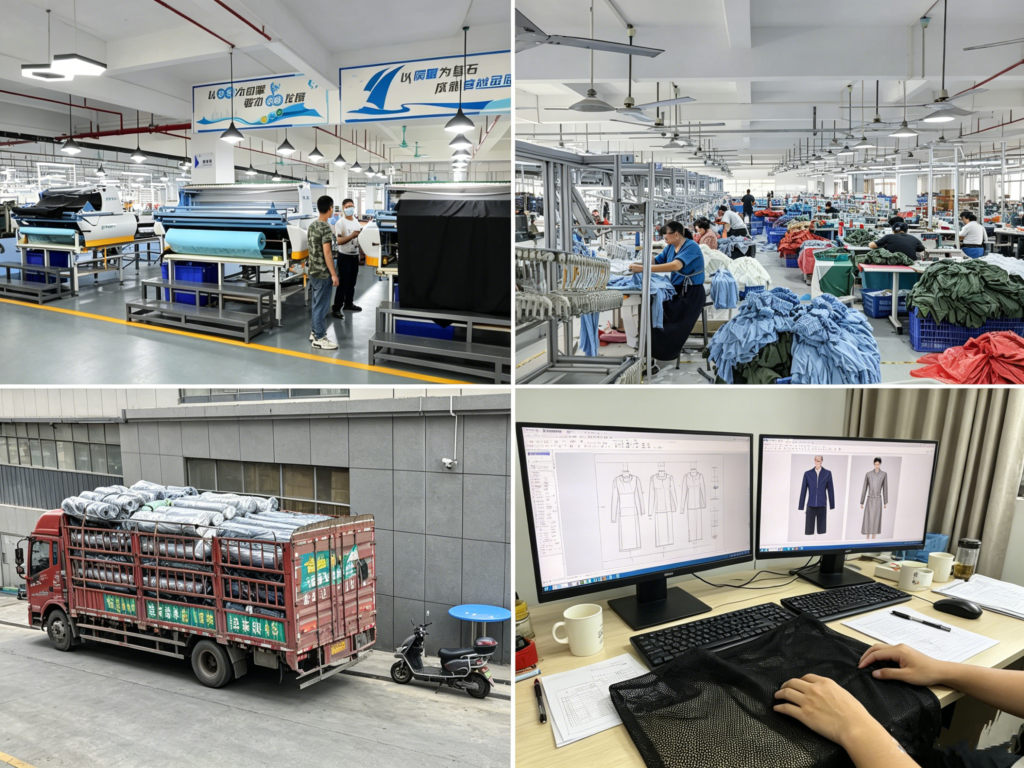
Custom sportswear manufacturing involves several stages, from product planning to bulk production.
Understanding the process helps brands communicate their requirements and reduce development mistakes.
Define the product category, target customer, intended activity, and desired design.
For example, a custom training T-shirt may require different fabric properties and construction details from a casual sports hoodie.
Prepare design drawings, measurements, fabric specifications, color references, trims, and branding requirements.
A clear Tech Pack helps the manufacturer understand the product and follow consistent specifications during development.
Choose materials according to the garment’s intended use.
Common considerations include:
Material selection should be based on the actual product application rather than appearance alone.
A sample allows the brand to evaluate the design, fit, materials, and construction before bulk production.
Review the sample carefully and communicate any required adjustments. Depending on the product, revisions may involve measurements, stitching, fabric, or branding details.
Once the sample and specifications are approved, production can move forward.
Quality checks should follow agreed product requirements. Relevant inspection points may include measurements, stitching, fabric appearance, labels, and finished garment details.
After production and final checks, garments are packed according to the agreed requirements and prepared for shipment.
Clear communication about packaging, labeling, and shipping arrangements helps avoid unnecessary delays.
If you plan to build a sportswear brand rather than distribute established labels, selecting a suitable manufacturer is an important decision.
Not every apparel factory specializes in every type of sportswear. Evaluate the manufacturer’s actual capabilities against your product requirements.
Ask whether the manufacturer has experience with the specific garments you want to develop.
For example, T-shirts, hoodies, activewear, and technical outdoor garments involve different materials and construction requirements.
Do not assume that a factory capable of producing basic apparel can automatically manufacture every type of technical sportswear.
Find out whether the manufacturer can support your required development services, such as:
You can review custom OEM and ODM clothing manufacturing services to understand how these services can support a private label project.
Ask how the factory checks samples and bulk garments.
A clear quality control process should define inspection points, acceptable product standards, and how defects are handled.
For a more detailed checklist, read our guide on how to choose a reliable apparel manufacturer.
Before placing an order, clarify the minimum order quantity, sample costs, production schedule, payment terms, and shipping arrangements.
These details should be confirmed directly with the manufacturer because requirements can vary by product and order.
Prepare a product brief containing your design, target price, fabric preferences, size range, estimated order quantity, and branding requirements.
The more specific your requirements are, the easier it is for a manufacturer to assess the project and provide relevant feedback.
Examples include Kappa, Macron, Erreà, Sportful, Castelli, Karpos, and EA7 Emporio Armani. Each brand has a different product focus, ranging from teamwear and cycling apparel to outdoor clothing and sports-inspired fashion.
No. An Italian brand’s origin does not guarantee that every product is manufactured in Italy. Check the country-of-origin information on the specific product or its official documentation.
Sportswear generally refers to clothing designed for sports and athletic activities, including team uniforms and training apparel. Activewear is a broader category that includes clothing for exercise, fitness, and everyday active lifestyles. The two categories can overlap.
Yes. Businesses can work with an OEM or ODM clothing manufacturer to develop private label sportswear. The process may include product design, fabric selection, sampling, branding, and bulk production. The available product categories depend on the manufacturer’s capabilities.
Italian sports apparel brands offer useful references for businesses researching teamwear, cycling clothing, outdoor apparel, and sports-inspired fashion.
Kappa, Macron, and Erreà are examples to explore for team sports, while Sportful and Castelli are associated with cycling apparel. Karpos focuses on outdoor clothing, and EA7 Emporio Armani connects sportswear with fashion.
For businesses planning to launch their own collection, studying established brands can help clarify product positioning and design direction. However, private label manufacturing offers another route, allowing businesses to develop products around their own customers, branding, and requirements.
The key is to choose a manufacturing partner whose actual capabilities match your product plans, quality expectations, and business goals.
If you have any questions or require a quote, please leave
us a message. Our experts will get back to you within 24 hours to help you choose the ideal fashion products tailored to your needs.
Hi, I’m Lucy Cai, the founder of liantaoapparel.com. I’ve been managing a women’s clothing factory in China for over 20 years. With extensive experience in garment production and OEM services, I’m passionate about sharing insights into women’s fashion, apparel manufacturing, and global sourcing.
If you have any questions or need a quote, please contact us.
Please add us WhatsApp:+86 189 4809 3145
Provide us with detailed information about your requirements, supply design drawings or tech packs,
reference images, and share your ideas.
We will customize the best solution based on your needs and drawings, and provide a specific quote within 24 hours.
Once we receive your confirmation and deposit,we will commence mass production and take care of the subsequent shipping arrangements.


