


🏭 Looking for a Custom Apparel Manufacturer?
We are a leading OEM/ODM clothing factory with 20+ years of export experience. Custom styles, flexible MOQs, and retail-ready quality.
Ramie fabric is a natural plant-based textile made from fibers extracted from the stem of the ramie plant. It is known for its natural luster, strength, moisture absorption, and crisp, linen-like appearance.
But is ramie a good choice for clothing? The answer depends on the garment design, fabric construction, and the wearing experience a brand wants to create.
Compared with cotton and linen, ramie offers a distinctive texture and appearance. However, its limited elasticity and tendency to wrinkle mean that buyers should evaluate the fabric carefully before choosing it for a clothing collection.
For apparel brands, understanding ramie fabric properties, common fiber blends, and sourcing requirements can make material selection more effective. This guide explains how ramie is made, where it is used, how it compares with other natural fibers, and what to check before clothing production.
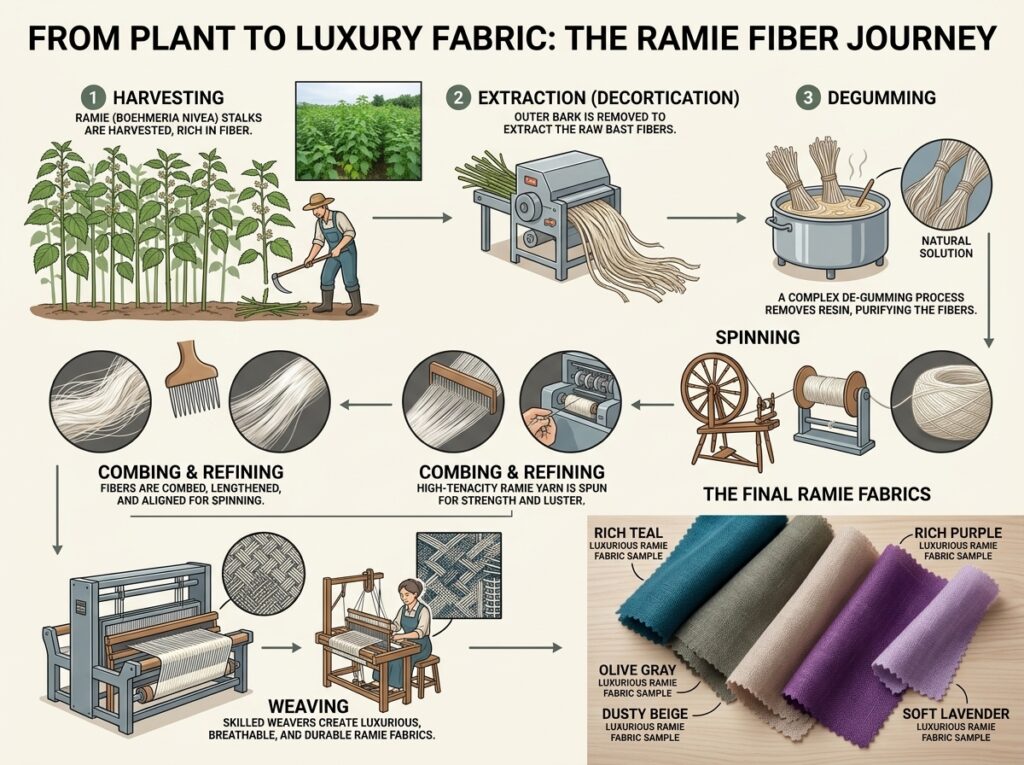
Ramie fabric is a natural textile made from the stem fibers of the ramie plant, scientifically known as Boehmeria nivea. The plant belongs to the nettle family and is also commonly called China grass.
Ramie is classified as a bast fiber because its usable fibers come from the inner bark of the plant stem. Like flax, which is used to make linen, ramie requires processing to separate and prepare the fibers before they can be spun into yarn.
The production of ramie fabric involves several main stages:
Degumming is particularly important because the natural substances surrounding raw ramie fibers can affect softness, spinning performance, and final fabric quality.
For more background on ramie’s history, production, and textile applications, see the FAO overview of ramie.
Ramie fabric is recognized for its natural luster, strength, and ability to absorb moisture. Its performance, however, depends on fiber quality, yarn construction, fabric structure, and finishing.
Understanding these properties helps apparel brands determine whether ramie is suitable for a particular garment.
1. Natural strength
Ramie is considered one of the stronger natural plant fibers. Its strength makes it useful in textiles that need a durable fiber component. Actual fabric durability still depends on yarn quality, construction, and garment use.
2. Moisture absorption
Ramie can absorb moisture and release it into the surrounding environment. This characteristic contributes to its use in warm-weather clothing and lightweight textiles.
3. Natural luster
Ramie fibers have a naturally bright appearance with a silky sheen. This gives ramie fabric a distinctive look that can work well in refined casualwear and summer collections.
4. Low elasticity
Unlike elastane-containing fabrics, pure ramie has limited stretch and recovery. Garments made from it may feel less flexible, particularly in fitted designs.
5. Wrinkle tendency
Ramie has relatively low resilience, so it can crease during wear and after washing. This is an important consideration for brands developing garments that need to maintain a smooth appearance.
6. Crisp hand feel
Depending on its processing and construction, ramie fabric can have a crisp or slightly firm texture. Poorly processed fibers may feel coarse, while finer yarns and suitable finishing can improve the fabric’s hand feel.
The Discover Natural Fibres Initiative’s ramie profile provides further information about the fiber’s strength, luster, absorbency, and physical characteristics.
| Property | General characteristic | Clothing consideration |
|---|---|---|
| Strength | High natural fiber strength | Useful for durable textile constructions |
| Moisture absorption | Absorbs and releases moisture | Suitable for warm-weather garments |
| Luster | Naturally bright appearance | Creates a linen-like, slightly silky look |
| Elasticity | Relatively low | Less suitable for close-fitting stretch garments |
| Wrinkle resistance | Low | May require careful finishing and garment care |
| Hand feel | Can be crisp or firm | Fiber and yarn quality affect comfort |
These are general fiber characteristics, not guaranteed performance specifications for every ramie fabric. Always evaluate the actual fabric sample before approving bulk production.
Ramie fabric is made from processed plant fibers. It can be produced as 100% ramie or combined with other fibers to achieve different textures, comfort levels, and performance characteristics.
Blending is particularly useful because pure ramie has limited elasticity and can wrinkle easily. Combining it with other fibers may help balance its natural characteristics with the requirements of a finished garment.
| Fabric blend | General characteristics | Potential applications |
|---|---|---|
| 100% ramie | Natural luster, crisp hand feel, and low elasticity | Lightweight shirts, dresses, and summer garments |
| Ramie cotton blend | Combines ramie’s crisp texture with cotton’s familiar softness | Casual shirts, tops, and knitwear |
| Ramie linen blend | Creates a textured natural-fiber appearance | Summer shirts, trousers, and dresses |
| Ramie silk blend | Combines ramie’s structure with silk’s smooth appearance | Lightweight fashion garments |
| Ramie viscose blend | Can offer a softer feel and fluid drape, depending on construction | Blouses, dresses, and relaxed apparel |
A ramie cotton blend fabric is worth considering when a brand wants some of ramie’s natural appearance without relying entirely on pure ramie.
Cotton can contribute a softer hand feel, while ramie adds luster and structure. The final result depends on the fiber ratio, yarn construction, and finishing process.
There is no single ideal blending ratio for every garment. A lightweight shirt, for example, may require a different balance from a structured dress or knit top.
When sourcing a blend, check the actual fiber composition rather than relying only on descriptions such as “linen-like” or “natural texture.”
Ramie fabric is used in clothing that benefits from a natural appearance, a lightweight structure, and a crisp texture. It is particularly relevant to warm-weather collections and garments inspired by linen.
Its suitability depends on the fabric construction and the expected wearing experience.
1. Summer shirts
Ramie can be used for lightweight shirts with a natural texture and slightly crisp appearance. It works particularly well in relaxed silhouettes and casual collections.
2. Dresses
Ramie fabric can create dresses with a structured, breathable-looking finish. Lightweight constructions may be suitable for casual summer dresses, while heavier fabrics can provide more shape.
3. Blouses and tops
Its natural luster makes ramie an option for blouses and tops that need a refined texture. Blends may be preferable when a softer hand feel is required.
4. Trousers and relaxed pants
Ramie and ramie-blend fabrics can be considered for loose-fitting summer trousers. The fabric weight and construction should be evaluated to ensure suitable opacity, drape, and comfort.
5. Knitwear
Ramie can also be incorporated into knitted fabrics, often in blends with other fibers. The blend and knit structure should be assessed for softness, stretch, and shape retention.
Ramie can be suitable for summer clothing because it absorbs moisture, has a natural texture, and can be made into lightweight fabrics.
However, fabric weight, weave density, yarn quality, and garment design all influence comfort. A tightly constructed or heavier ramie fabric may feel different from a lightweight open-weave version.
For brands developing summer collections, the best approach is to evaluate the actual fabric sample under the intended garment design rather than selecting ramie based on fiber name alone.
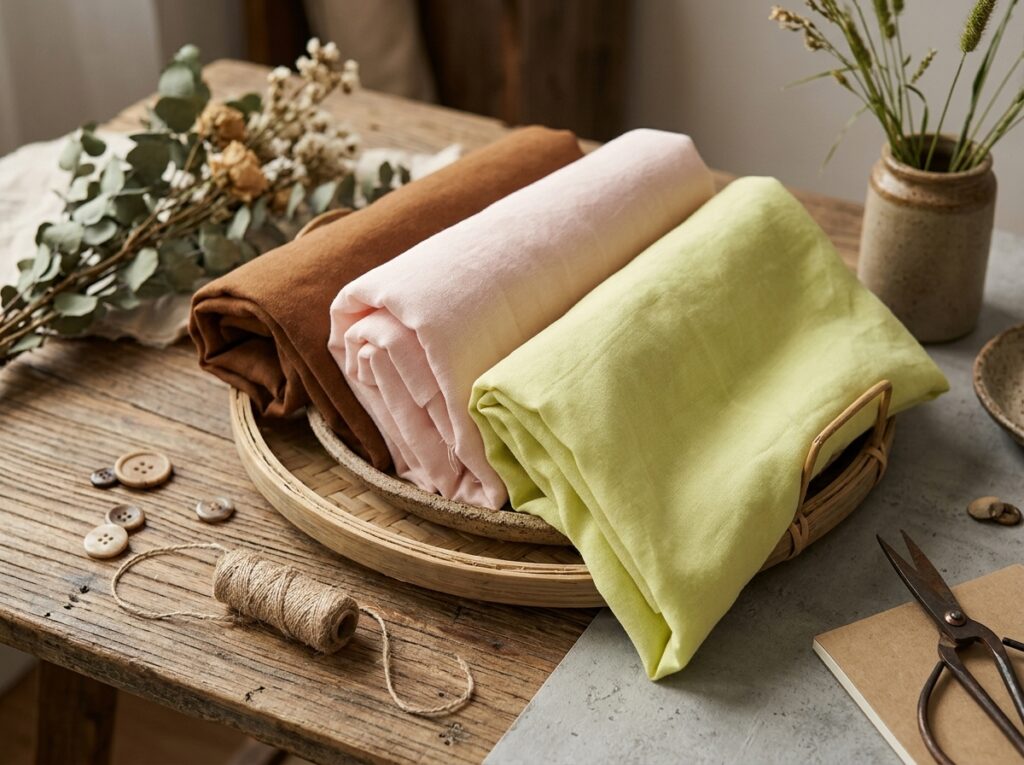
Ramie, linen, and cotton are all natural plant-based fibers, but they come from different plants and have different textile characteristics.
Ramie comes from the stem bark of the ramie plant. Linen is made from flax fibers, while cotton comes from the seed hairs of the cotton plant.
Although ramie and linen can have a similar appearance, they are not the same material. Their differences matter when selecting fabric for a clothing collection.
| Feature | Ramie | Linen | Cotton |
|---|---|---|---|
| Plant source | Ramie plant | Flax plant | Cotton plant |
| Fiber category | Bast fiber | Bast fiber | Seed fiber |
| Appearance | Naturally lustrous | Textured, natural appearance | Usually less lustrous |
| Hand feel | Can be crisp or firm | Often crisp and textured | Varies from soft to firm |
| Strength | High natural fiber strength | Strong natural fiber | Depends on fiber and yarn quality |
| Moisture absorption | Good | Good | Good |
| Elasticity | Low | Low | Generally limited in pure form |
| Wrinkle tendency | High | High | Varies by construction and finish |
| Common clothing uses | Shirts, dresses, summer garments | Shirts, dresses, trousers | T-shirts, shirts, dresses, and casualwear |
There is no universal winner. The right choice depends on the garment’s design, target customer, price positioning, and performance requirements.
For a clothing brand, fabric selection should also consider availability, consistency between production batches, finishing options, and the intended care instructions.
Ramie offers several useful characteristics for apparel development, but it also has limitations that should be considered before placing a production order.
No. Ramie is most useful when its natural texture and appearance support the product concept.
For example, a brand developing relaxed summer shirts may find ramie worth testing. A brand producing tight-fitting activewear would generally need fabrics with more stretch and recovery.
The decision should be based on the garment’s intended function rather than the popularity of a particular natural fiber.
Choosing ramie fabric for clothing production requires more than checking the fiber composition. Brands should evaluate the fabric’s physical characteristics, appearance, and suitability for the intended garment.
A well-selected fabric can support a more consistent production process and reduce the risk of unexpected issues during sampling or bulk manufacturing.
Check whether the fabric is 100% ramie or a blend. For blended fabrics, request the exact fiber percentages.
This is important because ramie cotton, ramie linen, and ramie viscose fabrics can have different hand feels and performance characteristics.
Fabric weight affects drape, opacity, and garment structure.
Consider the following:
These are selection guidelines rather than fixed weight specifications. The suitable GSM depends on the garment design and fabric construction.
Inspect the fabric for unevenness, excessive hairiness, rough areas, and visible defects.
Touch the fabric to assess whether it feels comfortable against the skin. If the garment is designed for direct skin contact, comfort testing is particularly important.
A fabric may look attractive when laid flat but behave differently when made into a garment.
Test how it hangs, folds, and creases. Pay attention to areas that experience repeated movement, such as elbows, knees, and waistlines.
Check whether the color is even and whether the finish matches the intended product.
For dyed fabrics, evaluate the appearance under consistent lighting. If colorfastness or other performance requirements are important, request appropriate test reports or arrange testing before bulk approval.
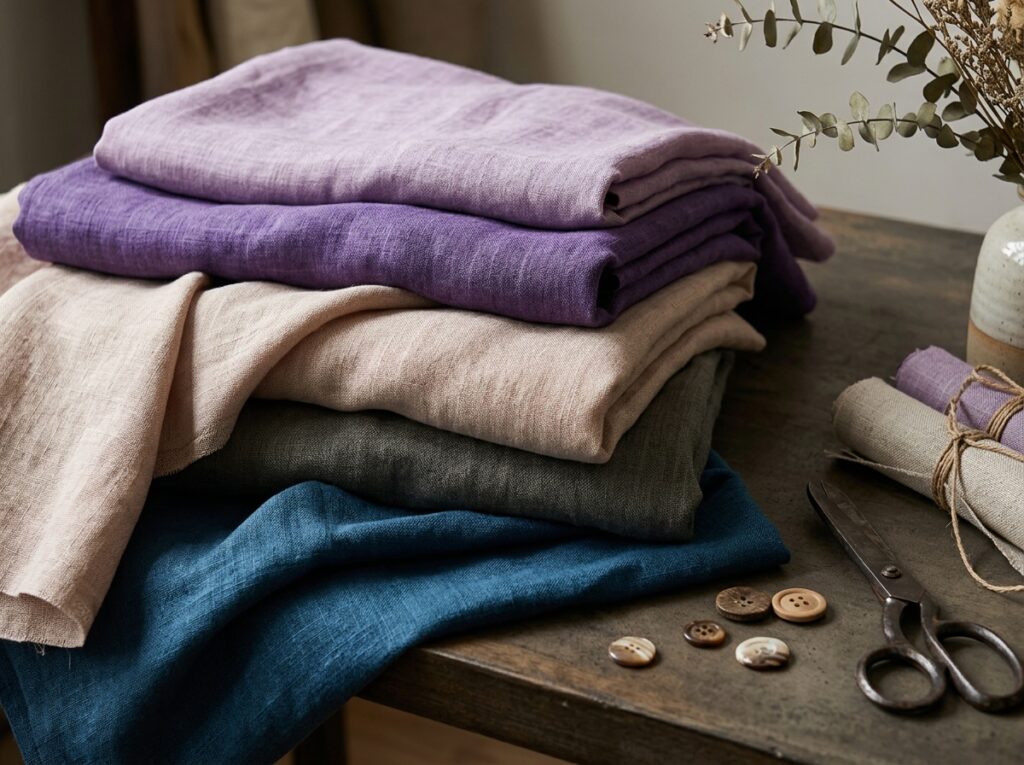
A fabric sample should be evaluated before it is approved for mass production.
Depending on the garment, useful checks may include:
The exact testing requirements should be determined by the product specification and the brand’s quality standards.
When choosing a supplier, this guide on how to select a reliable apparel manufacturer can help you understand important production and quality-control considerations.
Sourcing ramie fabric for a clothing collection involves coordinating fabric selection, product development, sampling, and production requirements.
For brands working with an apparel manufacturer, clear communication at the beginning of the project helps reduce misunderstandings about materials and finished garment expectations.
Start with the garment you want to develop.
Prepare basic information such as:
A clear product brief gives the manufacturing team a better understanding of the project.
Before committing to a material, confirm whether the required ramie fabric or blend can be sourced.
Ask for relevant details, including fiber composition, fabric width, weight, construction, color options, and available sample quantities.
Do not assume that every supplier offering natural-fiber garments can automatically provide every type of ramie fabric.
A sample allows the brand to assess the fabric and garment together.
Review the overall appearance, hand feel, fit, stitching, and finishing. If changes are needed, document them clearly before the next sample or production stage.
Agree on the inspection points before bulk production begins.
Depending on the product, these may include fabric appearance, measurements, stitching, color consistency, labeling, and packaging.
Any specific testing standards should be agreed upon and verified rather than assumed.
Before approving bulk production, clarify the material source, approved sample, production specifications, order quantity, delivery schedule, and quality requirements.
These details should be confirmed with the supplier for each project.
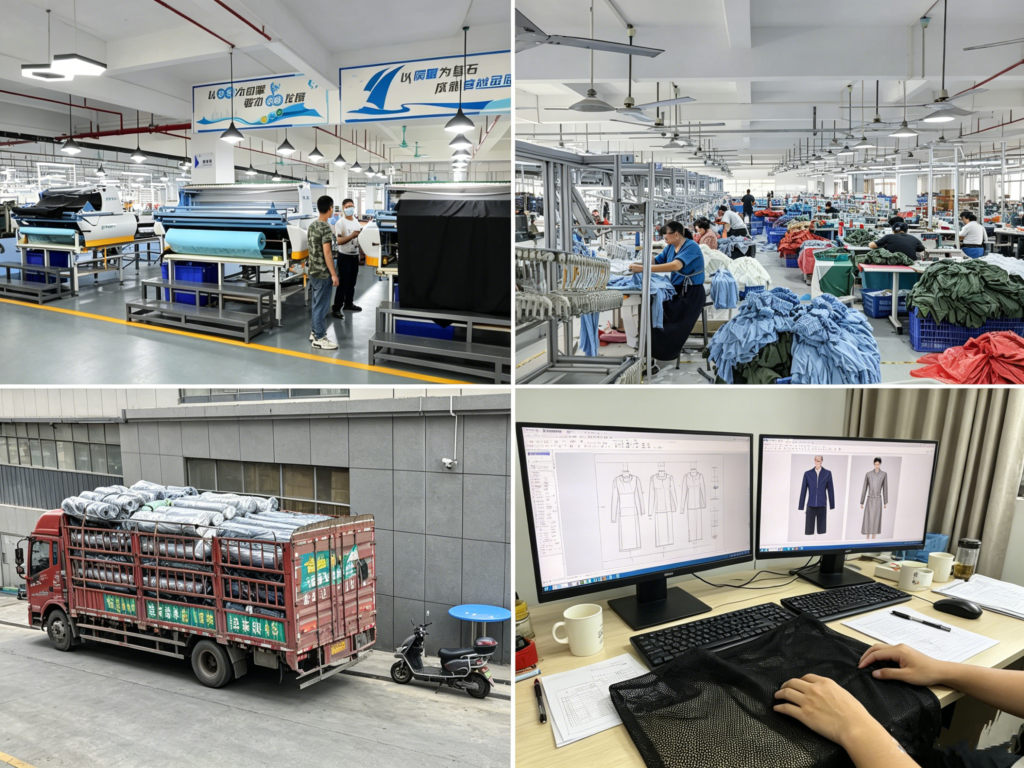
An OEM/ODM clothing manufacturer can support different stages of apparel development, depending on the services and capabilities confirmed for the project.
Liantao Apparel provides general OEM/ODM clothing manufacturing services, including support for product development and customization. If you are developing a private-label clothing line, explore our OEM and ODM clothing manufacturing services to learn more about the available customization options.
For a Ramie-specific project, confirm fabric sourcing, sample development, and bulk production feasibility with the manufacturer before making a commitment.
Yes. Ramie is a natural plant-based bast fiber obtained from the stem of the ramie plant, Boehmeria nivea. It is processed and spun into yarn before being made into fabric.
Not necessarily. Ramie and linen have different characteristics. Ramie is known for its natural luster and strength, while linen is valued for its distinctive flax texture and established use in clothing.
The better option depends on the garment design, desired appearance, comfort requirements, and budget.
Yes. Pure ramie has relatively low elasticity and resilience, so it can wrinkle during wear and after washing. Fabric blends and finishing treatments may change its wrinkle behavior, but the actual material should be tested.
Yes. Ramie can be used for summer shirts, dresses, blouses, and other lightweight garments. Its moisture absorption and natural texture make it an option for warm-weather collections. Fabric weight, construction, and hand feel should still be evaluated before production.
Ramie fabric is a distinctive natural textile with a combination of strength, natural luster, and moisture absorption. Its linen-like appearance makes it worth considering for summer shirts, dresses, blouses, and other casual garments.
However, its low elasticity, wrinkle tendency, and potentially crisp hand feel mean that it is not suitable for every clothing application. Blending ramie with cotton, linen, silk, or other fibers can help create fabrics with different textures and performance characteristics.
For apparel brands, the most reliable approach is to confirm the fiber composition, evaluate fabric samples, and test the material in the intended garment before bulk production. With the right fabric selection and manufacturing planning, ramie can be a useful material option for a distinctive natural-fiber clothing collection.
If you have any questions or require a quote, please leave
us a message. Our experts will get back to you within 24 hours to help you choose the ideal fashion products tailored to your needs.
Hi, I’m Lucy Cai, the founder of liantaoapparel.com. I’ve been managing a women’s clothing factory in China for over 20 years. With extensive experience in garment production and OEM services, I’m passionate about sharing insights into women’s fashion, apparel manufacturing, and global sourcing.
If you have any questions or need a quote, please contact us.
Please add us WhatsApp:+86 189 4809 3145
Provide us with detailed information about your requirements, supply design drawings or tech packs,
reference images, and share your ideas.
We will customize the best solution based on your needs and drawings, and provide a specific quote within 24 hours.
Once we receive your confirmation and deposit,we will commence mass production and take care of the subsequent shipping arrangements.


