🏭 Looking for a Custom Apparel Manufacturer?
We are a leading OEM/ODM clothing factory with 20+ years of export experience. Custom styles, flexible MOQs, and retail-ready quality.
Training bras and sports bras may look similar at first glance, but they are designed for different needs. A training bra is generally intended for comfort, coverage, and early bra-wearing, while a sports bra is specifically designed to provide greater support and control during physical activity.
Understanding the difference between a training bra and a sports bra can help parents, caregivers, teens, and apparel brands make better decisions about fit, materials, support, and intended use. The right choice depends less on appearance and more on the wearer’s development, activity level, comfort, and support requirements.
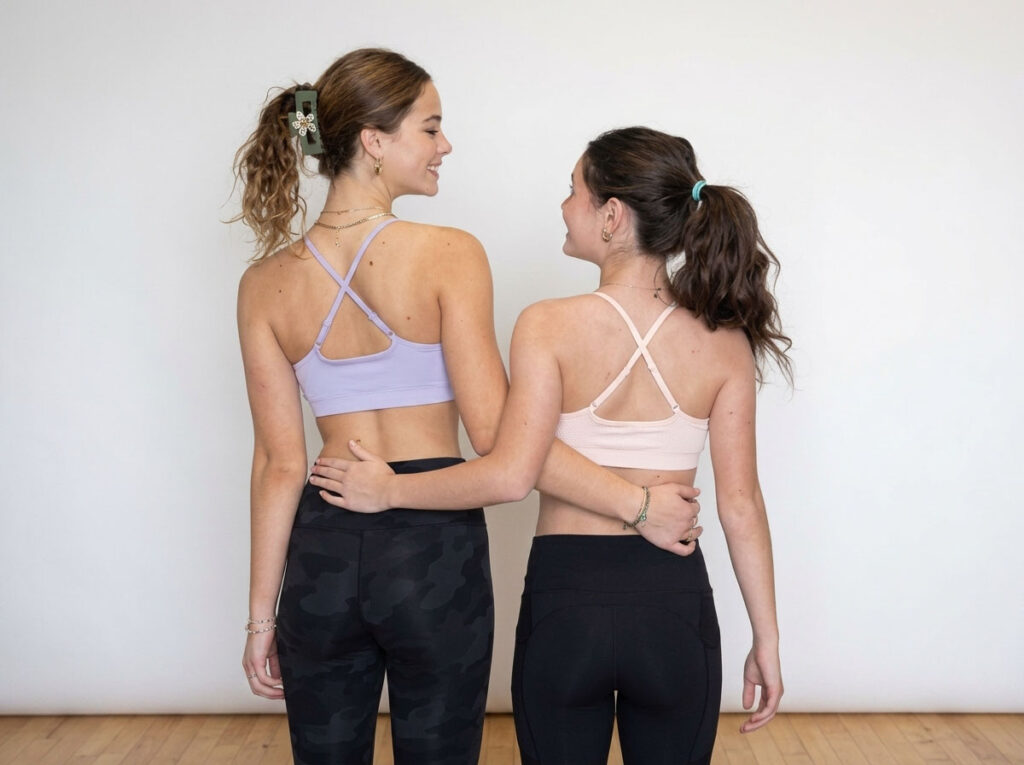
Every bra journey starts somewhere, and training bras are often designed as an introduction to wearing a bra.
Training bras are typically lightweight and comfortable, with simple construction intended to provide coverage without the structure of a more supportive bra. They are commonly used during the early stages of breast development, although individual needs and timing vary considerably.
Several design characteristics commonly distinguish a training bra:
There is no universal age at which someone should start wearing a training bra. Development varies from person to person, so comfort and individual needs are more useful guides than age alone.
A training bra is primarily designed to help a wearer become comfortable with a new type of garment while accommodating changing body proportions.
| Feature | Training Bra | Sports Bra |
|---|---|---|
| Typical User | Early-stage wearers and pre-teens | Teens and adults, including active younger wearers |
| Main Purpose | Comfort, coverage, and everyday wear | Support and movement control |
| Common Materials | Soft cotton blends and light knits | Technical stretch fabrics and performance blends |
| Support Level | Light | Light to high, depending on design |
The term “training bra” therefore describes its role as an introductory garment rather than a medical or developmental requirement.
When physical activity enters the picture, support and stability become much more important.
Sports bras are engineered to reduce breast movement during exercise and help improve comfort while the wearer runs, jumps, stretches, or participates in other activities. The appropriate support level depends on the activity and the individual wearer.
Common sports-bra features include:
Sports bras are not limited to adult users. Active teens may also benefit from age-appropriate sports-bra designs when ordinary or training bras do not provide sufficient support during movement.
Generally, a basic training bra is not a substitute for a sports bra during activities that involve significant running, jumping, or repetitive movement.
The key issue is not simply whether the garment looks sporty. It is whether the construction provides enough support and stability for the intended activity.
Several practical signs may indicate that a more supportive garment is appropriate:
Youth sports bras can bridge the gap between a basic training bra and more structured adult designs. Lightweight compression, soft stretch fabrics, and comfortable bands can provide support without unnecessarily complicated construction.
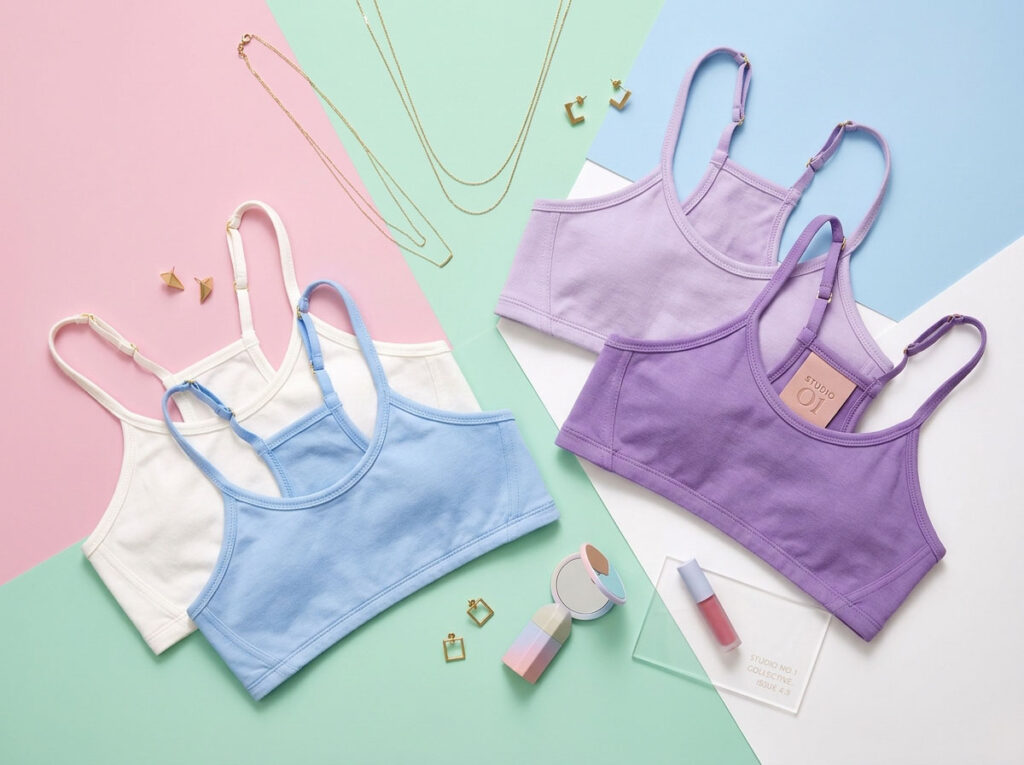
At first glance, some training bras and low-support sports bras can look almost identical. The important differences are usually found in their construction, coverage, straps, and intended function.
Training bras often resemble simple bralettes or lightweight camisole-style garments. Sports bras tend to use wider straps, stronger stretch fabrics, broader underbands, and more secure chest coverage.
A sporty appearance does not automatically mean a bra provides sports-level support. When choosing a product, always check the stated support level and intended activity rather than relying only on color, graphics, or styling.
Sizing is one of the most confusing parts of choosing a first bra, especially because different brands use different measurement systems.
Training bras frequently use general apparel sizes such as XS, S, M, and L. Sports bras may use the same system, but some products use traditional band-and-cup sizing or specialized performance sizing.
Training bras usually have relatively simple construction and may be sized primarily according to chest measurement.
A basic example looks like this:
| Size Label | Approx. Chest Measurement |
|---|---|
| XS | 25–26 in |
| S | 27–28 in |
| M | 29–30 in |
| L | 31–32 in |
These measurements should be treated as a general reference rather than a universal sizing chart. Actual measurements can vary by manufacturer, fabric stretch, pattern, and intended fit.
Sports bras may use either general apparel sizing or more detailed bra sizing.
Common systems include:
Correct sizing is essential because a sports bra that is too tight can cause discomfort, while one that is too loose may not provide adequate support.
The better long-term choice depends on the wearer’s current needs rather than simply choosing the more supportive product.
A training bra can be useful during an early stage when light coverage and comfort are the primary requirements. A sports bra may offer broader utility once regular physical activity and greater support become priorities.
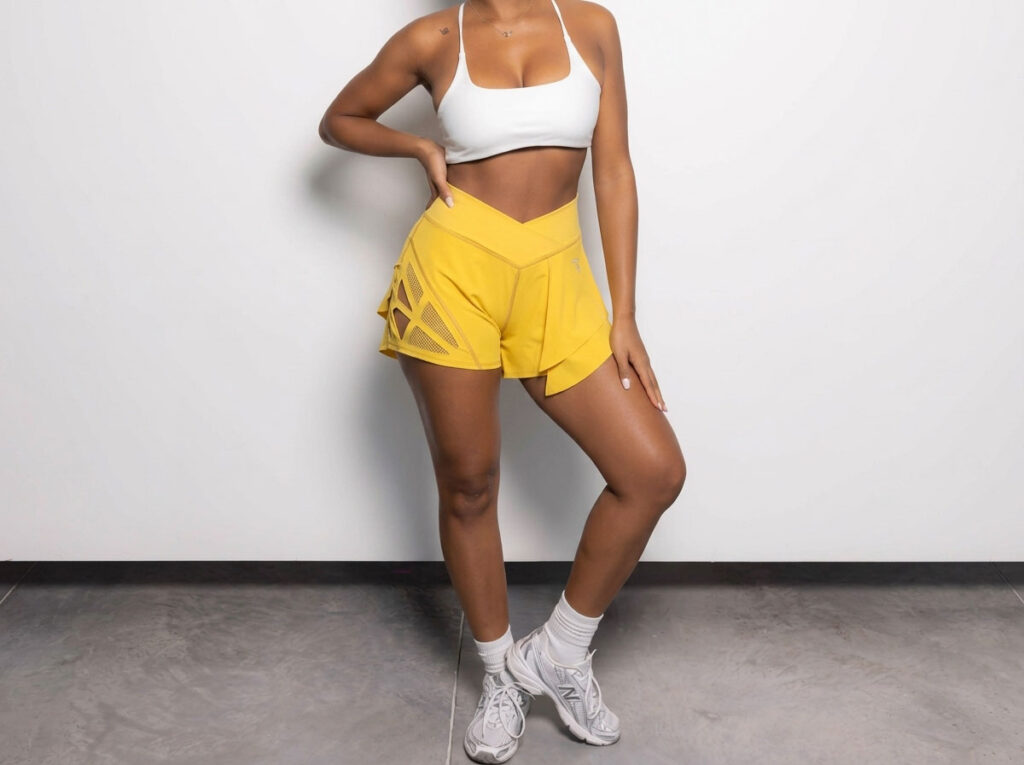
Garment lifespan depends on growth, frequency of use, fabric quality, washing conditions, and construction. Instead of assuming a fixed lifespan, consider how quickly the wearer’s size and support requirements are changing.
To extend the usable life of either type:
For apparel manufacturers, these durability considerations are especially important when selecting elastic, stretch fabrics, stitching methods, and care instructions.
A bra is more than a functional garment, particularly during periods of physical change.
A training bra can help a young wearer become comfortable with a new layer of clothing and changing body proportions. A sports bra can help an active wearer feel more secure and confident during exercise.
The emotional experience can therefore be influenced by several product details:
Parents and caregivers can also treat bra selection as a normal opportunity to discuss body changes, comfort, fit, and personal preferences without creating unnecessary pressure around development.
The main difference between a training bra and a sports bra comes down to purpose, support, construction, and activity level.
Training bras generally prioritize lightweight comfort, coverage, and ease of introduction to bra wearing. Sports bras are designed around movement, with features such as stronger support, stretch performance fabrics, secure bands, and improved motion control.
Neither is automatically “better.” The right choice depends on what the wearer needs at that moment. For everyday comfort and light coverage, a training bra may be appropriate. For running, jumping, PE, or other physical activities, a properly fitted sports bra is generally the more suitable option.
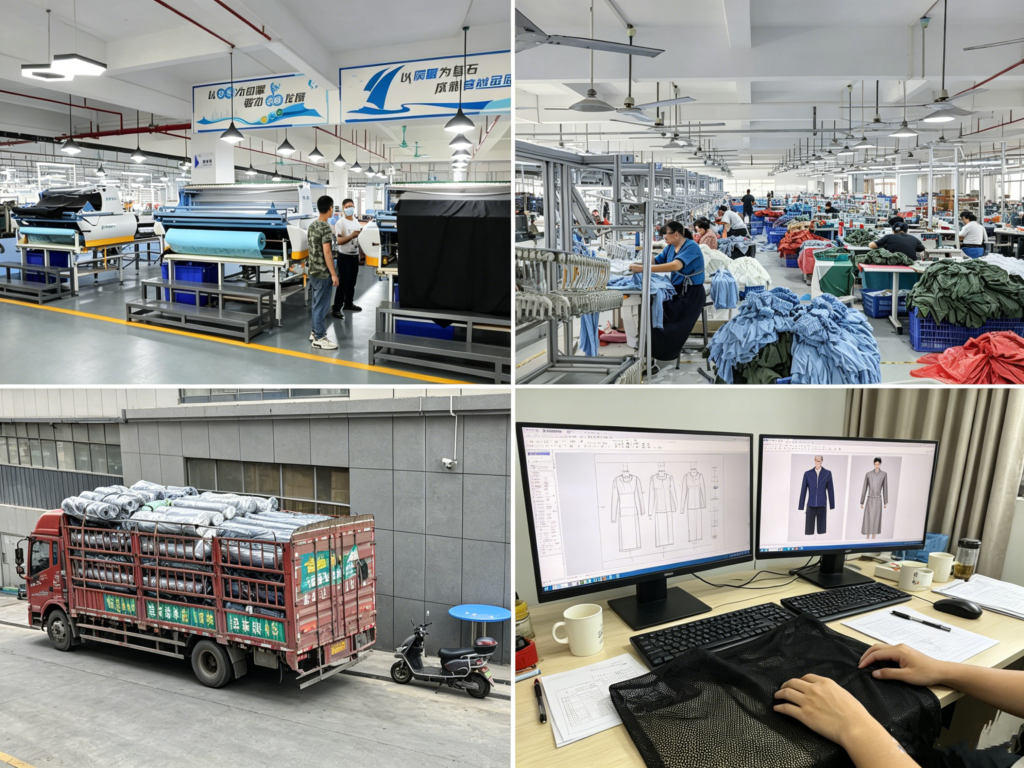
For apparel brands developing training bras or sports bras, the same principles apply at the manufacturing level: fabric selection, elastic recovery, pattern engineering, support level, seam placement, sizing consistency, and wearer comfort all need to work together. A well-designed product should clearly communicate its intended use while delivering the fit and performance promised on the label.
If you have any questions or require a quote, please leave
us a message. Our experts will get back to you within 24 hours to help you choose the ideal fashion products tailored to your needs.
Hi, I’m Lucy Cai, the founder of liantaoapparel.com. I’ve been managing a women’s clothing factory in China for over 16 years. With extensive experience in garment production and OEM services, I’m passionate about sharing insights into women’s fashion, apparel manufacturing, and global sourcing.
If you have any questions or need a quote, please contact us.
Please add us WhatsApp:+86 189 4809 3145
Provide us with detailed information about your requirements, supply design drawings or tech packs,
reference images, and share your ideas.
We will customize the best solution based on your needs and drawings, and provide a specific quote within 24 hours.
Once we receive your confirmation and deposit,we will commence mass production and take care of the subsequent shipping arrangements.