🏭 Looking for a Custom Apparel Manufacturer?
We are a leading OEM/ODM clothing factory with 20+ years of export experience. Custom styles, flexible MOQs, and retail-ready quality.
Athletic shorts are designed to support movement, comfort, breathability, and performance, which is why their fabric composition is different from that of ordinary casual shorts. The most common materials include polyester, nylon, spandex, and mesh, while many performance shorts use blended fabrics to combine stretch, moisture management, durability, and lightweight construction.
For apparel brands, choosing the right athletic shorts material is equally important. Fabric weight, stretch, drying speed, breathability, abrasion resistance, and finishing can all influence the final performance of the garment. In this guide, we’ll explore the most common athletic shorts fabrics, compare their advantages and applications, and explain how to select the right material for different sportswear collections.

Most athletic shorts are made from synthetic performance fabrics or fiber blends designed to handle movement and repeated use.
The most common materials include:
The ideal material depends on the sport, garment construction, target consumer, and desired performance characteristics.
Polyester is one of the most widely used fibers in performance apparel.
It is popular because it offers a strong combination of durability, lightweight construction, color retention, and moisture management.
For brands developing high-volume athletic collections, polyester is often one of the most practical starting points.
Nylon is another popular performance fiber, particularly when durability and a smooth hand feel are priorities.
Nylon athletic shorts can provide:
Nylon is particularly suitable for training, outdoor activities, running, and premium athleisure.
Spandex, also known as elastane, is primarily used to add stretch rather than as the main fiber in most athletic shorts.
It is commonly blended with polyester or nylon.
For performance shorts, even a relatively small percentage of spandex can significantly change the garment’s fit and movement characteristics.
Mesh is valued primarily for ventilation and breathability.
Rather than being defined by a specific fiber, mesh refers to an open or engineered fabric structure that allows more airflow.
Mesh is commonly used in basketball shorts, football shorts, training shorts, running apparel, and teamwear.
Polyester-spandex is one of the most versatile combinations for modern athletic shorts.
Polyester contributes durability, lightweight performance, and moisture management, while spandex contributes stretch and recovery.
This combination is particularly useful for:
For brands seeking an all-purpose performance fabric, polyester-spandex is often a strong option.
Nylon-spandex blends are popular for premium performance apparel because they combine smoothness, strength, stretch, and recovery.
They are often suitable for:
The final performance depends heavily on the ratio of fibers and the specific fabric construction.
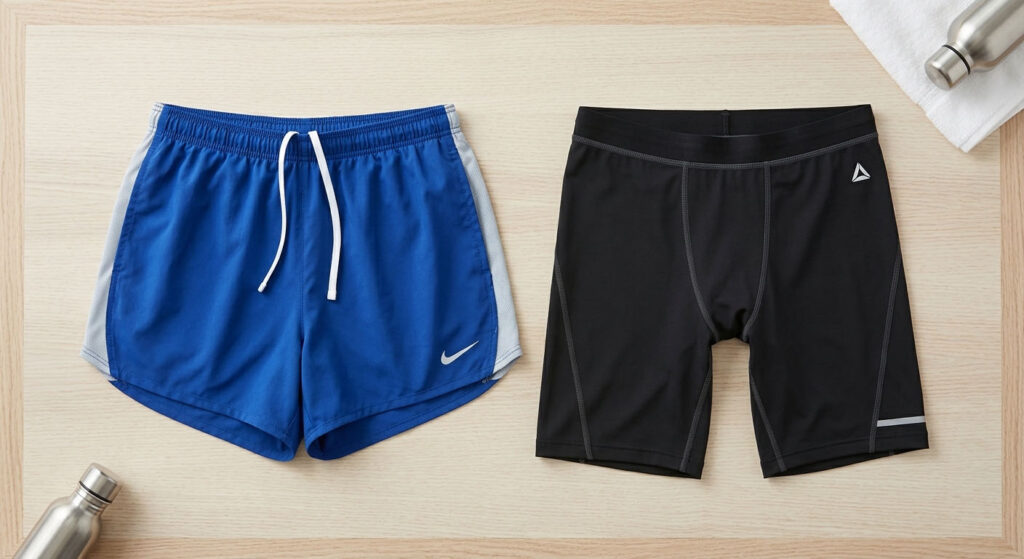
Recycled polyester is increasingly used in sportswear collections that place greater emphasis on material sourcing and sustainability.
It can provide many of the familiar performance characteristics of polyester while allowing brands to develop products with recycled inputs.
Brands should evaluate the complete supply chain and relevant certifications rather than relying on the term “recycled” alone.
| Material | Stretch | Breathability | Durability | Moisture Management | Best Applications |
|---|---|---|---|---|---|
| Polyester | Low-Medium | Medium-High | Excellent | Excellent | Running, training, teamwear |
| Nylon | Medium | Medium-High | Excellent | Very Good | Training, outdoor, athleisure |
| Spandex | Excellent | Medium | Good | Depends on blend | Stretch-focused activewear |
| Mesh | Low-Medium | Excellent | Medium | Very Good | Basketball, running, teamwear |
| Polyester-Spandex | Excellent | High | Very Good | Excellent | Gym, training, running |
| Nylon-Spandex | Excellent | High | Excellent | Very Good | Premium activewear |
| Recycled Polyester | Low-Medium | Medium-High | Excellent | Excellent | Sustainable sportswear |
Important: Fabric performance is affected not only by fiber content but also by knit or weave structure, GSM, yarn characteristics, finishing, and garment construction.
Polyester is widely used because it provides a practical combination of performance, durability, cost efficiency, and manufacturing versatility.
Compared with many natural fibers, polyester can be engineered for:
For mass-market sportswear and teamwear, these characteristics make polyester highly practical.
Some athletic shorts are made with cotton or cotton blends, but pure cotton is less common for high-performance applications where quick drying and moisture management are major priorities.
Cotton provides:
However, cotton absorbs moisture and can take longer to dry. For this reason, cotton blends may be a better choice when a brand wants natural comfort combined with improved performance.
There is no single best fabric for every type of athletic shorts.
The right material depends on the activity.
| Activity | Recommended Fabric | Main Reason |
|---|---|---|
| Running | Polyester-spandex | Lightweight, flexible, moisture-managing |
| Gym Training | Nylon-spandex | Stretch, strength, smooth hand feel |
| Basketball | Polyester mesh | Breathability and lightweight construction |
| Football | Polyester | Durability and teamwear versatility |
| Yoga | Nylon-spandex | Stretch and recovery |
| Hiking | Nylon-spandex | Abrasion resistance and mobility |
| Casual Athleisure | Cotton-polyester blend | Comfort and everyday styling |
| Team Sports | Polyester | Customization and durability |
The goal is not simply to select the most technical material. It is to select the material that matches the actual movement, climate, and performance requirements of the product.
Fabric is important, but garment construction also determines how athletic shorts perform.
Key features include:
These details should be selected according to the sport and intended consumer rather than added simply for appearance.
Fabric weight, commonly measured in GSM (grams per square meter), influences how athletic shorts feel and perform.
Lightweight fabrics are ideal for:
They generally provide a cooler, less restrictive wearing experience.
Midweight fabrics provide a balance between:
They are suitable for general gym, training, and athleisure products.
Heavier fabrics can provide:
They are more commonly used in lifestyle and streetwear-oriented athletic shorts than in high-intensity performance products.
When developing athletic shorts, brands should consider several factors rather than choosing a fabric based only on fiber name.
Determine whether the shorts are intended for running, gym training, basketball, football, yoga, hiking, or everyday athleisure. Different activities require different performance characteristics.
Warm-weather products generally benefit from lightweight and breathable constructions, while cooler-weather collections can use denser fabrics.
High-mobility activities may require stretch fabrics, while loose team shorts can rely more heavily on lightweight woven polyester.
For high-intensity sports, moisture-wicking and quick-drying properties can significantly improve comfort.
Premium nylon-spandex fabrics may create a different customer experience and cost structure than standard polyester.
Always evaluate shrinkage, colorfastness, pilling, stretch recovery, abrasion resistance, and wash performance before approving a fabric for bulk production.
For apparel brands, athletic shorts offer extensive customization opportunities.
| Customization Area | Available Options |
|---|---|
| Fabric | Polyester, nylon, spandex, mesh, blends |
| Fabric Weight | Lightweight, midweight, heavyweight |
| Fit | Regular, relaxed, slim, performance |
| Waistband | Elastic, drawcord, wide waistband |
| Pockets | Side, zippered, hidden, cargo |
| Lining | Brief liner, mesh liner, no liner |
| Hem | Straight, split, curved, cuffed |
| Branding | Screen print, sublimation, embroidery, heat transfer |
| Details | Reflective tape, contrast panels, mesh inserts |
| Finishing | Moisture management, quick-dry, anti-odor treatments |
Customization allows brands to create athletic shorts specifically for sports teams, activewear labels, private-label collections, fitness brands, and streetwear markets.
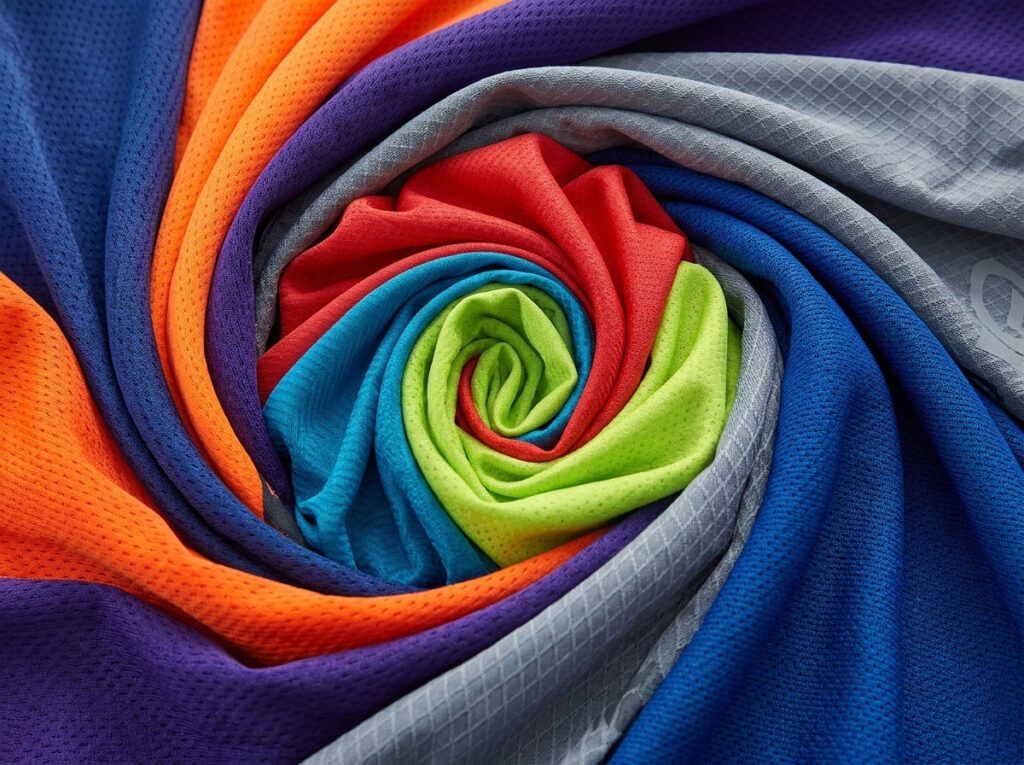
The wrong fabric can negatively affect the entire product experience.
For example, a fabric that is too heavy may make running shorts uncomfortable, while a fabric with insufficient stretch may restrict movement during training.
Fabric selection influences:
For this reason, fabric selection should be treated as a core part of product development rather than a secondary decision.
Most athletic shorts are made from performance-oriented synthetic fibers such as polyester, nylon, spandex, and mesh, either individually or in carefully engineered blends. Polyester is widely used for its durability, lightweight performance, and moisture-management potential, while nylon provides strength and a smooth hand feel. Spandex adds the stretch and recovery required for high-mobility activities, and mesh improves ventilation.
For apparel brands, the best athletic shorts material depends on the sport, climate, target consumer, price point, and desired performance. Running shorts may benefit from lightweight polyester-spandex, training shorts may require durable stretch fabrics, while basketball and teamwear products can benefit from breathable polyester mesh.
Ultimately, successful athletic shorts are created by matching the right fiber, fabric construction, weight, fit, and functional details to the intended use. A carefully selected fabric can improve not only performance and comfort but also the durability, appearance, and commercial value of the finished product.
Most athletic shorts are made from polyester, nylon, spandex, mesh, or blends of these fibers. Polyester is particularly common because it offers durability, lightweight performance, and moisture-management potential.
Yes. Polyester is widely used for athletic shorts because it is durable, lightweight, quick-drying, and suitable for performance finishing and sportswear customization.
Yes. Nylon is commonly used for athletic shorts, particularly when strength, abrasion resistance, smoothness, and stretch are important.
Cotton can be comfortable for low-intensity exercise and casual athleisure, but it absorbs moisture and can dry more slowly than many synthetic performance fabrics.
Lightweight polyester, polyester-spandex, or similar performance blends are commonly suitable for running because they can combine low weight, moisture management, and freedom of movement.
Polyester-spandex and nylon-spandex blends are strong options because they combine durability, stretch, and mobility for dynamic training.
Mesh is used to increase ventilation and airflow. It is particularly useful in areas where heat and moisture can accumulate during intense exercise.
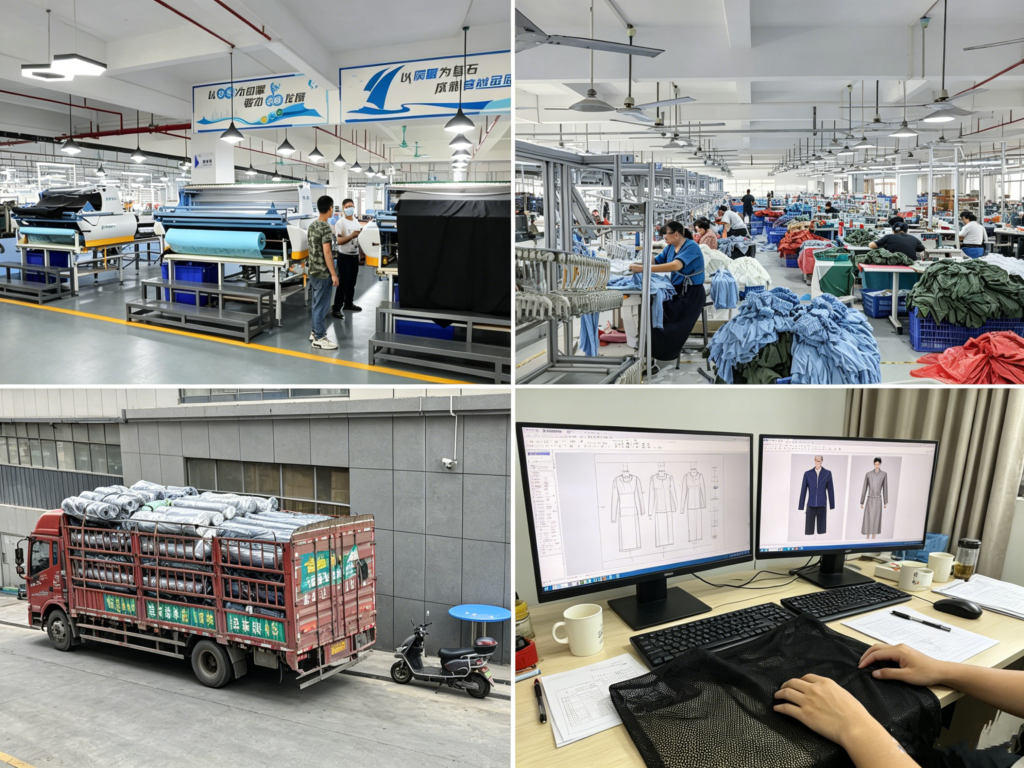
If you have any questions or require a quote, please leave
us a message. Our experts will get back to you within 24 hours to help you choose the ideal fashion products tailored to your needs.
Hi, I’m Lucy Cai, the founder of liantaoapparel.com. I’ve been managing a women’s clothing factory in China for over 16 years. With extensive experience in garment production and OEM services, I’m passionate about sharing insights into women’s fashion, apparel manufacturing, and global sourcing.
If you have any questions or need a quote, please contact us.
Please add us WhatsApp:+86 189 4809 3145
Provide us with detailed information about your requirements, supply design drawings or tech packs,
reference images, and share your ideas.
We will customize the best solution based on your needs and drawings, and provide a specific quote within 24 hours.
Once we receive your confirmation and deposit,we will commence mass production and take care of the subsequent shipping arrangements.