


🏭 Looking for a Custom Apparel Manufacturer?
We are a leading OEM/ODM clothing factory with 20+ years of export experience. Custom styles, flexible MOQs, and retail-ready quality.
A good waterproof dog coat should protect a dog from rain, snow, wind, and wet outdoor conditions without becoming uncomfortable or restricting movement. Choosing the right fabric is one of the most important decisions when developing a functional dog coat.
However, not every fabric that repels water is genuinely waterproof. Waterproof performance depends on the fabric structure, coating or membrane, hydrostatic resistance, seam construction, closures, and overall garment design.
For most dog raincoats and outdoor pet jackets, coated polyester, nylon, TPU-laminated fabrics, and selected softshell materials are practical options. Each offers a different balance of water protection, breathability, durability, flexibility, weight, and cost.
Let’s compare the most useful waterproof and water-resistant fabrics and explain how to select the right material for different types of dog coats.
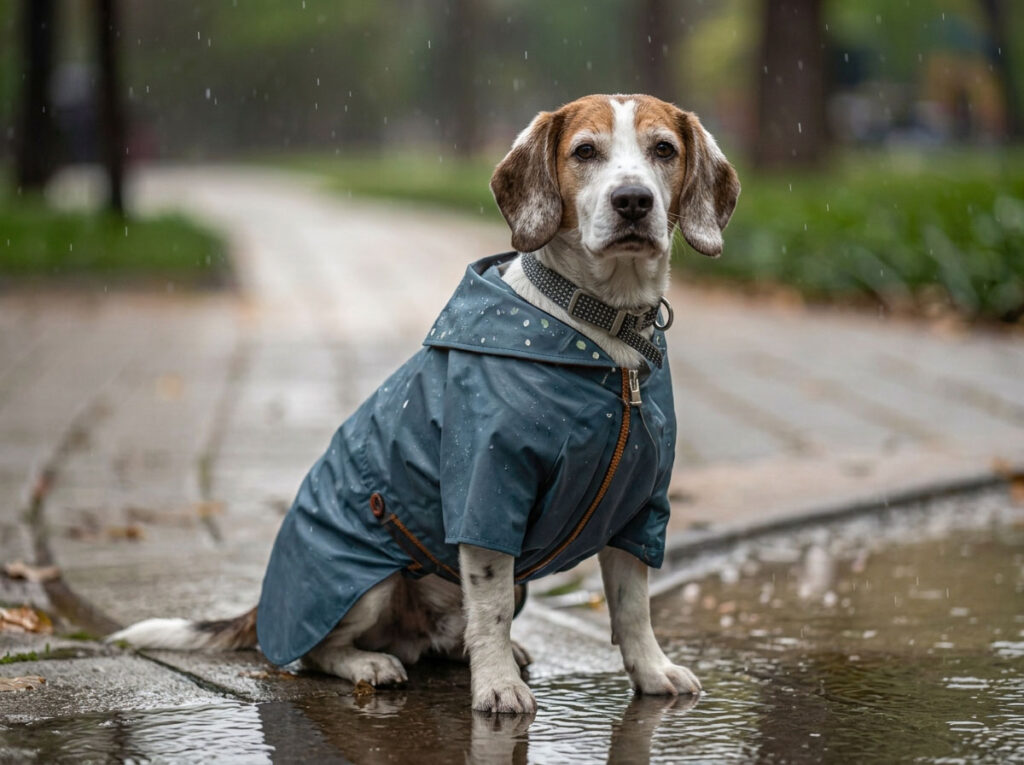
The best fabric depends on the intended weather conditions, activity level, target price, and desired comfort.
For lightweight everyday raincoats, coated polyester can provide a practical balance of cost and protection. Nylon is useful when abrasion resistance and durability are priorities. TPU-laminated fabrics can provide strong waterproof performance while remaining flexible, while softshell is better suited to situations where breathability and comfort are more important than maximum waterproofing.
Polyester is widely used for dog raincoats because it is lightweight, durable, relatively affordable, and easy to manufacture.
A waterproof or water-resistant coating can significantly improve its ability to shed rain.
For commercial production, coated polyester is often attractive because it provides a good balance between material cost, appearance, production efficiency, and weather protection.
Nylon is known for its strength and abrasion resistance, making it a strong choice for active dogs and outdoor applications.
With an appropriate coating or laminate, nylon can provide substantial protection from rain and wind.
Nylon is particularly useful when a dog coat needs to withstand contact with branches, rough surfaces, or frequent outdoor activity.
TPU, or thermoplastic polyurethane, can be used as a flexible waterproof layer laminated to a textile substrate.
The laminate creates a barrier that can offer strong water protection while maintaining flexibility.
When developing TPU-laminated dog coats, manufacturers should evaluate not only the laminate but also fabric weight, flexibility, seam construction, and bonding quality.
Softshell combines a relatively comfortable textile face with weather-resistant construction. It is often chosen for activewear because it balances flexibility, warmth, wind resistance, and breathability.
However, softshell should not automatically be described as fully waterproof. Many softshell fabrics are water-resistant rather than completely waterproof, particularly under prolonged heavy rain.
For a genuinely waterproof dog coat, always check the fabric’s tested waterproof specification rather than relying on the word “softshell” alone.
The terms waterproof and water-resistant are often used interchangeably in marketing, but they describe different levels of protection.
Water-resistant fabric can repel or shed light moisture for a period of time. Waterproof construction is designed to provide a much stronger barrier against water penetration.
The actual performance depends on the fabric, coating or membrane, pressure, duration of exposure, and garment construction.
Waterproof materials are designed to resist water penetration under defined test conditions.
They are generally more appropriate for heavy rain, snow, and prolonged exposure to wet weather.
Water-resistant materials repel moisture but may eventually allow water through under prolonged or heavy exposure.
They can be more comfortable and breathable in mild weather, depending on construction.
| Feature | Waterproof Fabric | Water-Resistant Fabric |
|---|---|---|
| Rain Protection | Designed for stronger water protection | Primarily suitable for light rain |
| Breathability | Depends on membrane/coating and construction | Often easier to engineer for comfort |
| Best For | Heavy rain, snow, prolonged wet conditions | Mild weather, drizzle, short outdoor walks |
| Construction | Coating, membrane, laminate, or waterproof system | DWR or other surface treatment may be sufficient |
| Example Materials | TPU laminate, waterproof-coated polyester | Softshell, treated nylon blends |
A dog coat marketed as waterproof should therefore be evaluated based on tested performance, not simply the fiber name.
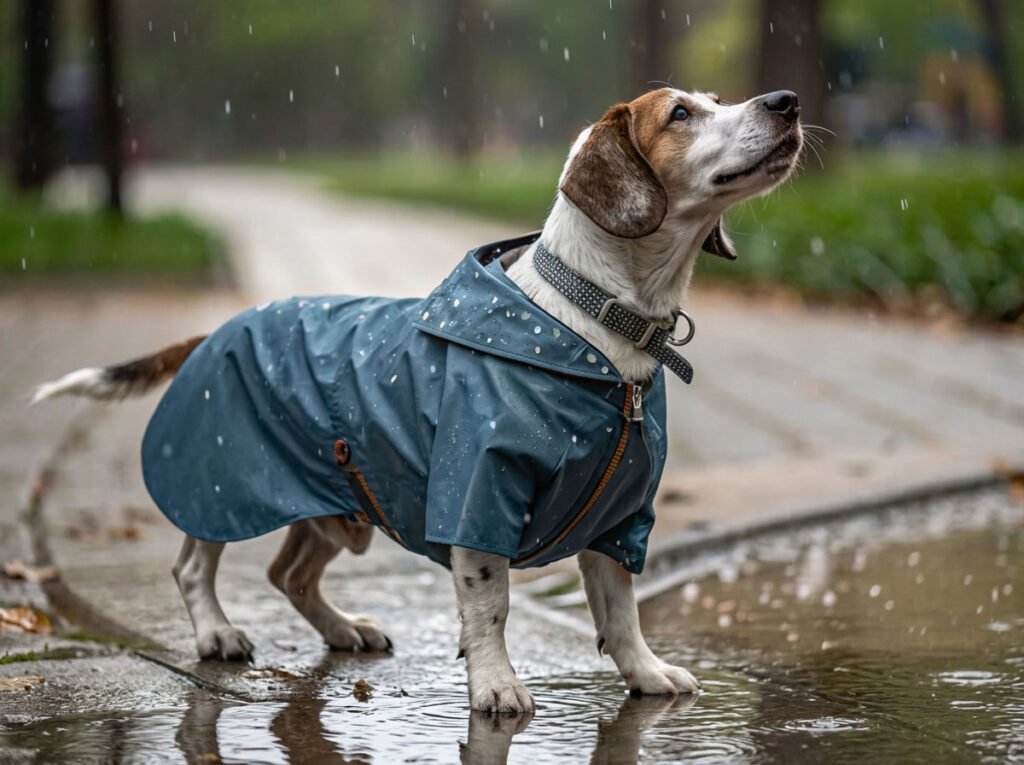
A waterproof fabric alone does not guarantee a waterproof garment.
Water can enter through needle holes, seams, zippers, openings, and poorly protected edges, so the complete garment construction matters.
The original article highlights sealed seams, adjustable closures, and inner linings as important features.
Stitching creates small openings through the fabric. Sealing or taping critical seams can reduce potential water leakage.
This is particularly important around the shoulders, back, chest, leg openings, and other exposed areas.
Velcro, zippers, snaps, elastic, and drawcords can help create a closer fit around the dog’s body.
A well-designed closure system can reduce water entry while also preventing the coat from shifting during movement.
A lining can improve comfort, warmth, and moisture management.
Depending on the season, options may include:
| Feature | Main Benefit |
|---|---|
| Sealed or Taped Seams | Reduces potential water leakage through stitching |
| Adjustable Fit | Helps keep the coat secure during rain and wind |
| Fleece Lining | Adds warmth for cold-weather applications |
| Mesh Lining | Supports lightweight construction and ventilation |
| Reflective Details | Improves visibility during low-light walks |
Neck and chest openings can become major entry points for rain.
For dogs that spend significant time outdoors, designers should consider raised collars, storm flaps, protected zippers, adjustable neck openings, and appropriate chest coverage.
These details can make a substantial difference even when the outer fabric has excellent waterproof performance.
Testing should be performed before selecting a fabric for large-scale dog coat production.
Simple home tests can provide an initial indication, but they should not replace standardized laboratory testing when a product requires a specific waterproof performance claim.
The original article recommends the water bead test and soak test as basic checks.
Place several drops of water on the fabric surface.
However, this test alone does not prove that a fabric is fully waterproof. A durable water-repellent finish can cause water to bead even when water could eventually penetrate under pressure.
Place a dry absorbent material beneath the fabric and expose the outer surface to water for several minutes.
For professional product development, manufacturers should use appropriate waterproof-performance tests and define acceptance criteria before bulk production.
This is especially important for dog coats.
A fabric may perform well by itself while the finished coat leaks around:
Waterproofing should therefore be treated as a garment-level performance requirement.
Different dog coats require different combinations of waterproofing, breathability, flexibility, warmth, and durability.
For an everyday raincoat, coated polyester may be sufficient. For demanding outdoor use, nylon or a technical laminate can offer stronger performance. For active dogs in moderate weather, softshell can provide a more balanced combination of comfort and weather resistance.
| Type of Dog Coat | Recommended Fabric | Why It Works |
|---|---|---|
| Lightweight Raincoat | Waterproof-Coated Polyester | Lightweight, economical, and practical for everyday rain |
| Heavy-Duty Outdoor Jacket | Coated or Laminated Nylon | Strong, abrasion-resistant, and suitable for active use |
| Technical Adventure Coat | TPU-Laminated Fabric | Strong waterproof potential with flexible construction |
| Transitional-Weather Coat | Softshell | Balances comfort, wind resistance, and water resistance |
| Warm Winter Raincoat | Waterproof Outer + Fleece Lining | Combines weather protection with insulation |
The best material depends on the actual product brief rather than simply choosing the most expensive fabric.
For commercial dog apparel, fabric selection should balance performance, cost, appearance, production requirements, and target-market expectations.
A premium outdoor dog brand may justify a more technical laminate, while a mass-market raincoat may benefit from coated polyester.
The original article provides indicative fabric price ranges, but actual prices vary significantly according to GSM, construction, coating, order quantity, supplier, country of origin, certification, and finishing.
| Fabric Type | Relative Cost | Waterproof Potential | Typical Application |
|---|---|---|---|
| Coated Polyester | Lower | Moderate to High | Everyday raincoats |
| Nylon | Medium | High | Outdoor and durable jackets |
| TPU-Laminated Fabric | Higher | Very High | Premium technical coats |
| Softshell | Medium to Higher | Water-Resistant to High* | Active and transitional-weather coats |
Actual performance depends on the specific softshell construction and testing.
Instead of comparing fabric price alone, brands should evaluate cost per finished garment. A more expensive fabric may reduce returns or improve product positioning if its performance better matches the target market.
Different customer groups value different features.
A small dog living in a rainy urban environment may need a very different coat from a large active dog hiking through wet forests.
When selecting fabric, consider:
The correct material is the one that matches the actual use scenario, not necessarily the one with the highest specification.
The pet apparel market is increasingly influenced by the same material trends seen in outdoor and performance apparel.
Future waterproof dog coats are likely to focus on lower-impact materials, lighter constructions, improved breathability, multifunctional fabrics, and better weather protection without unnecessary bulk.
Recycled polyester, recycled nylon, and more environmentally conscious coating systems are becoming increasingly relevant to brands seeking to reduce material impact.
However, sustainability claims should be based on verifiable material information rather than simply using terms such as “eco-friendly.”
Future products may incorporate materials and finishes designed to improve moisture management, temperature regulation, durability, or ease of cleaning.
The objective is to make pet apparel more adaptive without making the garment unnecessarily complicated.
One important development direction is the combination of weather protection and low weight.
For active dogs, a heavy or poorly breathable coat can reduce comfort even when it provides excellent rain protection. Lightweight waterproof membranes, improved coatings, and better ventilation can help address this trade-off.
Brands are also paying greater attention to the chemistry used in durable water-repellent finishes.
For new product development, manufacturers should evaluate available alternatives and verify chemical compliance requirements for the target market rather than treating waterproofing and sustainability as separate issues.
So, what fabric is waterproof to make a dog coat?
There is no single best material for every dog coat. The most useful options include waterproof-coated polyester, nylon, TPU-laminated fabrics, and selected softshell constructions, with each material offering a different balance of water protection, durability, breathability, flexibility, and cost.
For most product developers:
The most important lesson is that waterproof fabric does not automatically create a waterproof dog coat. Seam construction, closures, openings, lining, pattern design, and finished-garment testing all influence real-world performance.
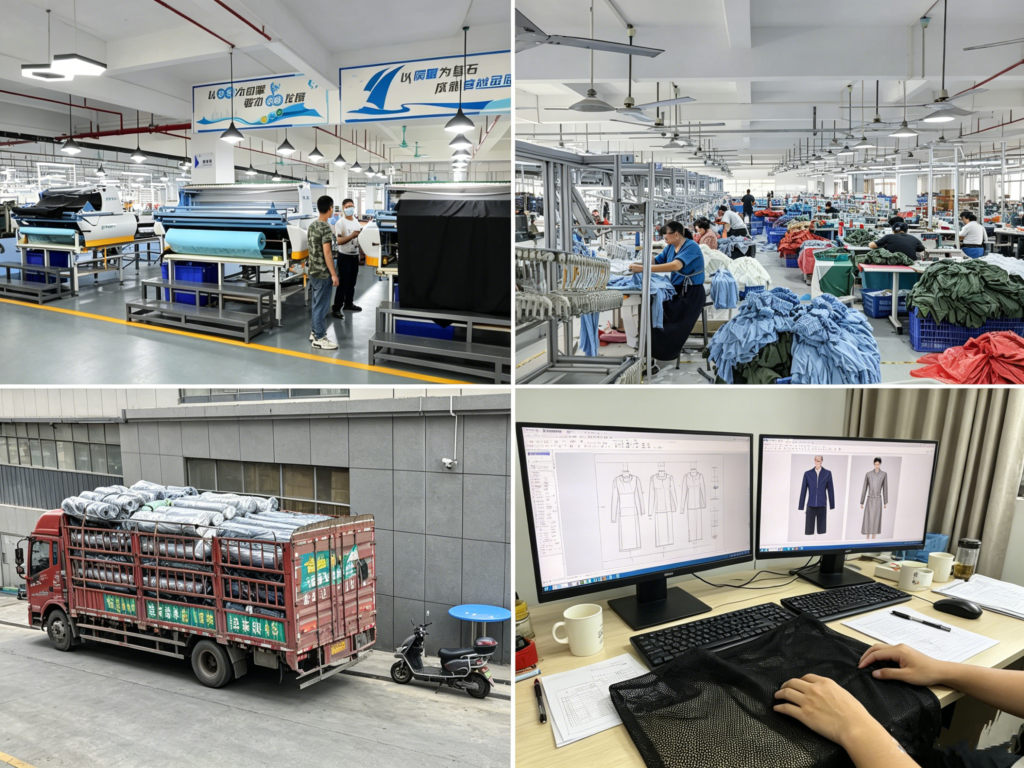
At Liantao, custom dog coats can be developed around the specific requirements of a brand, including fabric sourcing, waterproof material selection, custom patterns, lining, seam construction, trims, sampling, and bulk production.
For a new pet apparel collection, the strongest approach is to define the target weather conditions, dog activity level, price point, fabric performance, and required testing before selecting the final material.
A well-designed dog coat should not simply resist water. It should provide the right combination of weather protection, comfort, mobility, durability, appearance, and manufacturability for the intended market.
If you have any questions or require a quote, please leave
us a message. Our experts will get back to you within 24 hours to help you choose the ideal fashion products tailored to your needs.
Hi, I’m Lucy Cai, the founder of liantaoapparel.com. I’ve been managing a women’s clothing factory in China for over 16 years. With extensive experience in garment production and OEM services, I’m passionate about sharing insights into women’s fashion, apparel manufacturing, and global sourcing.
If you have any questions or need a quote, please contact us.
Please add us WhatsApp:+86 189 4809 3145
Provide us with detailed information about your requirements, supply design drawings or tech packs,
reference images, and share your ideas.
We will customize the best solution based on your needs and drawings, and provide a specific quote within 24 hours.
Once we receive your confirmation and deposit,we will commence mass production and take care of the subsequent shipping arrangements.


