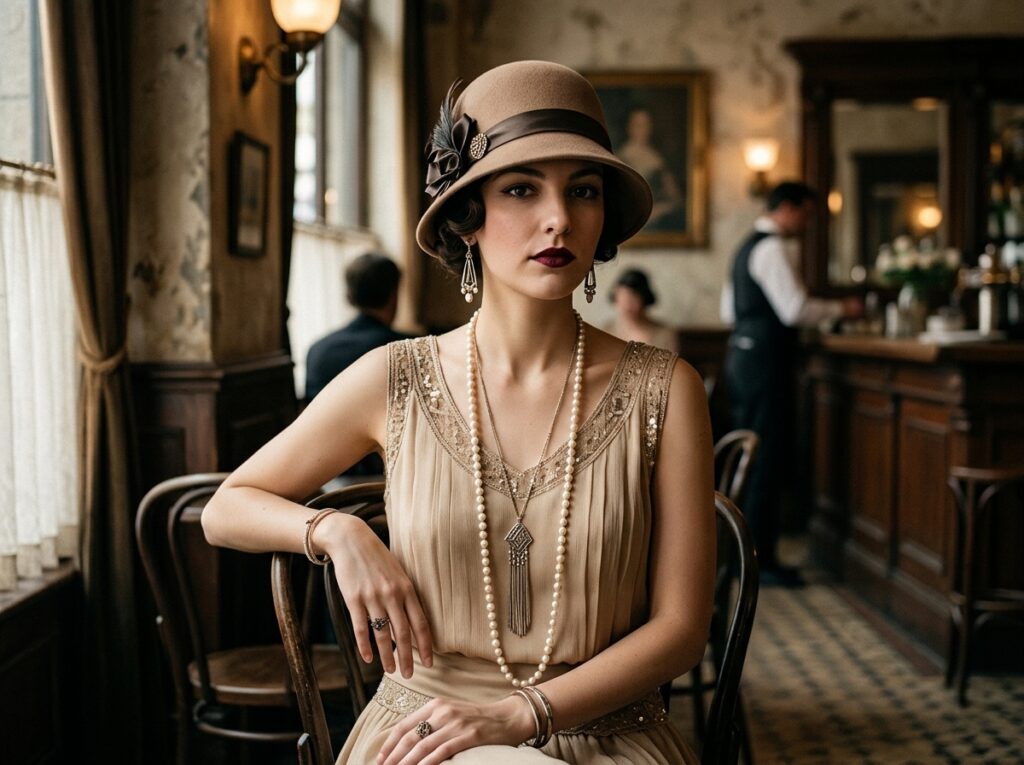
1920s fashion ladies are often associated with flapper dresses, short hairstyles, cloche hats, and glamorous evening parties. However, women’s fashion during the Roaring Twenties was much more diverse than the familiar image of a woman wearing a fringed dress and long pearl necklace.
The 1920s introduced a noticeable shift toward simpler silhouettes, more practical clothing, shorter hemlines, and greater freedom of movement. Women wore everything from relaxed day dresses and tailored coats to embellished evening gowns and sports-inspired outfits.
Fashion also reflected changes in women’s social lives, entertainment, work, and cultural expression. Understanding these differences makes it easier to recognize authentic 1920s styles and adapt them into modern outfits.
This guide explores 1920s women’s fashion history, popular clothing styles, trousers, shoes, accessories, and modern outfit ideas. It also explains how vintage-inspired designs can be developed into contemporary women’s clothing collections.
🏭 Looking for a Custom Apparel Manufacturer?
We are a leading OEM/ODM clothing factory with 20+ years of export experience. Custom styles, flexible MOQs, and retail-ready quality.
Women’s fashion in the 1920s is commonly associated with the Roaring Twenties, the Jazz Age, and the flapper style. However, there was no single name that described every woman’s clothing during this decade.
Three terms help explain the major fashion movements:
Flapper fashion is one of the most recognizable styles of the 1920s. It was associated with younger women who embraced modern entertainment, jazz music, dancing, and changing social expectations.
Typical features included:
However, not every woman dressed like a flapper. The style was particularly visible in popular culture and evening entertainment, rather than representing all women’s everyday wardrobes.
La Garçonne, a French term associated with a boyish or androgynous appearance, describes another important influence on 1920s women’s fashion.
This style emphasized:
Art Deco influenced fashion through geometric shapes, decorative patterns, and luxurious details.
It appeared particularly in eveningwear, jewelry, embroidery, and accessories. Metallic accents, symmetrical designs, and bold decorative elements helped create the glamorous appearance associated with the Jazz Age.
For a more detailed historical overview, explore the 1920s women’s fashion history from the Fashion History Timeline at the Fashion Institute of Technology.
1920s women’s clothing included day dresses, evening gowns, skirts, blouses, sweaters, coats, and sports-inspired outfits. The most suitable style depended on the occasion, season, budget, and lifestyle.
The decade also saw changes in dress proportions. Straight silhouettes became popular, while waistlines and hemlines shifted as fashion evolved.
Dresses were central to women’s wardrobes during the 1920s.
Popular styles included:
Not every dress had a short hemline or loose shape. Some formal designs retained fuller skirts and more traditional proportions.
Everyday clothing was generally more practical than glamorous eveningwear.
Women commonly wore:
Sportswear became increasingly influential in everyday fashion. Tennis-inspired dresses, sweaters, and pleated skirts helped make casual clothing more acceptable outside sporting activities.
Outerwear was an important part of a complete 1920s outfit.
Popular options included tailored wool coats, long coats, loose jackets, and decorative evening coats.
Common design features included:
For 1920s fashion women winter outfits, wool coats, scarves, gloves, and coordinated hats helped create a polished seasonal appearance.
There was no single color palette that defined the entire decade.
Color choices varied according to garment type, occasion, material, and personal preference.
For example:
The overall design and fabric finish often mattered as much as the color itself.
| Feature | Daywear | Eveningwear |
|---|---|---|
| Main purpose | Daily activities and social visits | Parties, dancing, and formal occasions |
| Common garments | Dresses, skirts, blouses, sweaters | Evening dresses and formal gowns |
| Silhouette | Relaxed and practical | Straight, flowing, or decorative |
| Fabrics | Cotton, wool, jersey, and other practical materials | Silk, satin, georgette, and decorative fabrics |
| Details | Simple buttons, collars, and trims | Beading, sequins, embroidery, and fringe |
| Accessories | Hats, gloves, and handbags | Jewelry, evening bags, and decorative headwear |
The distinction was not absolute. Some sports-inspired clothing became acceptable for informal social occasions, while formal dresses could vary considerably in shape and decoration.
For more examples of historical eveningwear and accessories, see the London Museum’s article on women’s fashion in the 1920s.
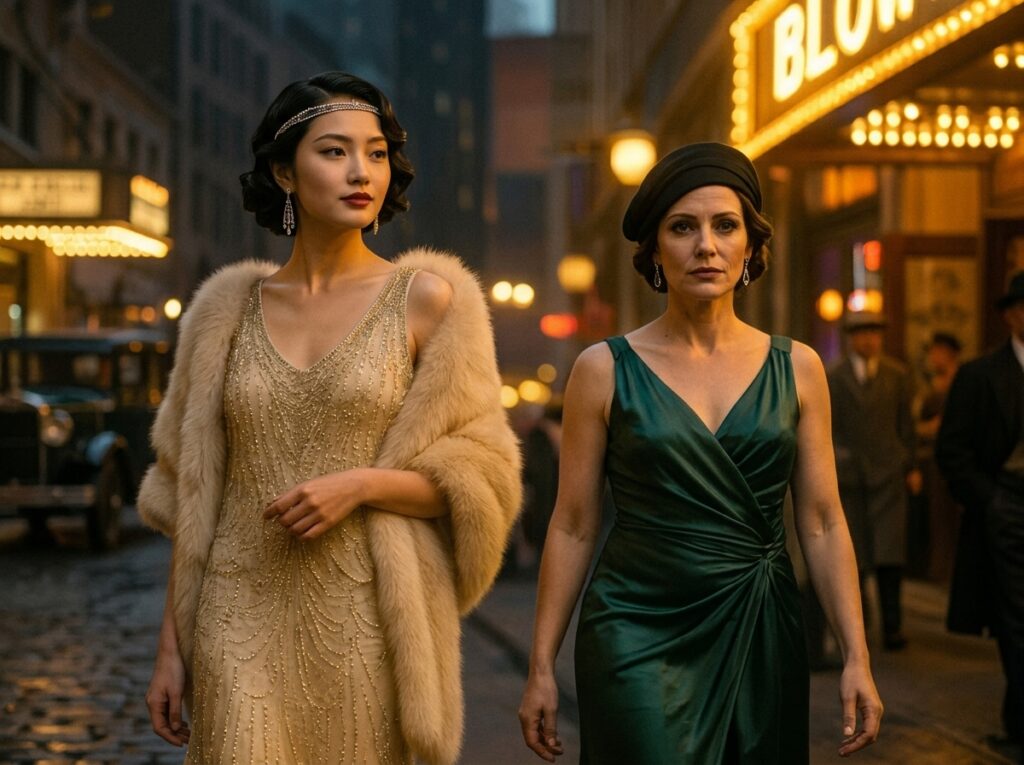
Yes, some women wore trousers during the 1920s, but they were not the standard everyday choice for most women.
Skirts and dresses remained more common in mainstream women’s wardrobes. However, changing attitudes toward sports, leisure, travel, and physical activity created opportunities for women to wear more practical clothing.
Beach pajamas were among the most recognizable examples of women’s trousers during this period.
They generally featured:
Beach pajamas were associated with resort and seaside fashion rather than ordinary formal or workplace clothing.
Women participating in outdoor activities and sports increasingly adopted clothing that allowed greater movement.
Depending on the activity, this could include practical trousers, knicker-style garments, and other sportswear.
These styles helped challenge the idea that women always needed to wear restrictive skirts or dresses.
Modern designers can reinterpret 1920s trousers without reproducing historical clothing exactly.
Useful design elements include:
For clothing brands, these details can inspire contemporary resortwear, wide-leg trousers, and vintage-inspired casual collections.
| Design feature | 1920s skirts and dresses | 1920s-inspired modern trousers |
|---|---|---|
| Common silhouette | Straight, dropped waist, or fuller skirt | Wide-leg or relaxed fit |
| Main styling | Blouses, sweaters, and jackets | Shirts, blouses, and coordinated tops |
| Movement | Depends on skirt shape and construction | Depends on leg width and fabric drape |
| Occasion | Everyday wear, social events, and eveningwear | Casualwear, resortwear, and contemporary fashion |
| Modern interpretation | Drop-waist and vintage-inspired dresses | Wide-leg trousers and matching sets |
The important distinction is that historical trousers were less common than dresses, while modern fashion gives women many more options for everyday styling.
Accessories were essential to completing a 1920s outfit. Shoes, hats, jewelry, hairstyles, and makeup helped distinguish casual clothing from formal eveningwear.
Women’s shoes became an important part of fashion because shorter hemlines made footwear more visible.
Popular styles included:
The best shoe choice depended on the outfit and occasion. Mary Jane and T-strap designs remain popular choices for modern vintage-inspired styling.
The cloche hat is one of the most recognizable accessories of the decade.
Its close-fitting, bell-shaped design framed the face and worked particularly well with short hairstyles.
Other popular hat styles included:
A cloche hat can make a modern outfit look distinctly 1920s without requiring a complete vintage costume.
Accessories varied according to occasion and personal style.
Common choices included:
Long necklaces were particularly effective with simple dress silhouettes because they added decoration without changing the overall shape.
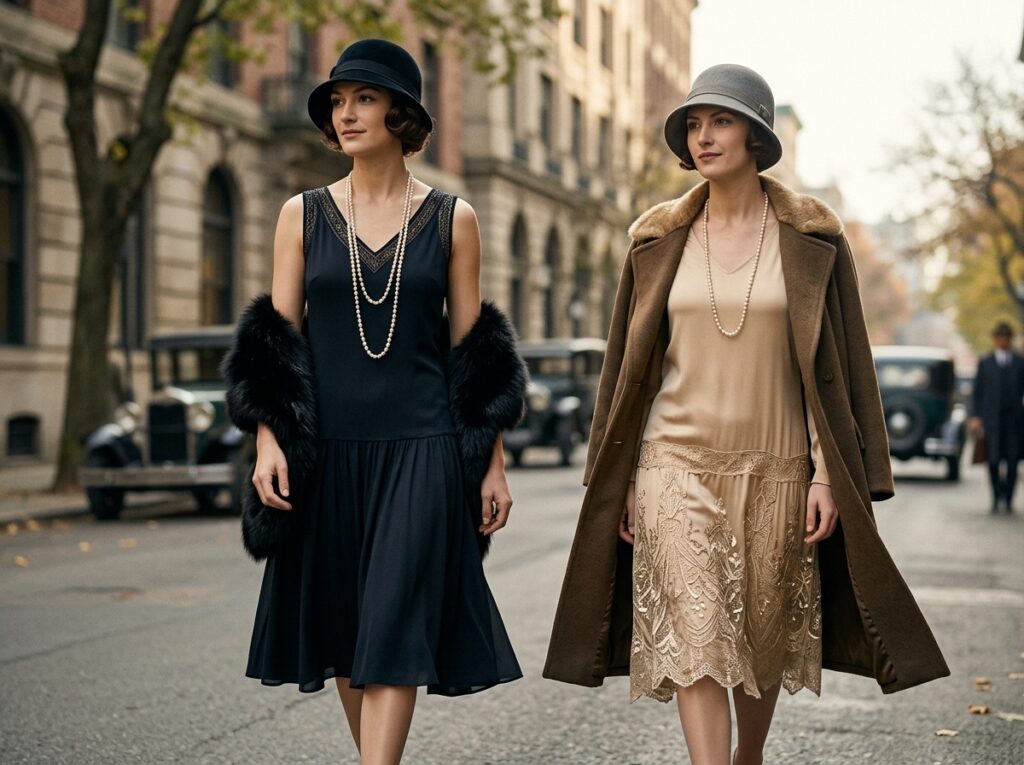
Short hairstyles became strongly associated with the decade.
Popular looks included:
Makeup also became more visible in fashionable beauty culture. Darker eye makeup, defined eyebrows, and strong lip colors were associated with popular evening looks.
These styles were not universal, but they remain important references for recreating the appearance of 1920s fashion ladies.
Women’s fashion during the 1920s was not the same for everyone. Social class, occupation, location, age, and cultural background influenced what women wore and which trends they could access.
Working women needed clothing that suited their daily responsibilities.
Depending on their occupation, their wardrobes could include:
The popular flapper look was only one part of the decade’s fashion. Everyday clothing remained important for women who worked in offices, shops, factories, and other occupations.
Black women’s fashion during the 1920s should be understood within the wider cultural and social context of the period.
The Harlem Renaissance created an important environment for Black artistic expression, music, literature, performance, and style.
Black women participated in this cultural movement in different ways. Their clothing reflected individual identity, social activities, performance, and personal taste.
Important fashion references include:
There was no single style shared by all Black women. Their experiences and clothing choices varied according to location, occupation, income, and individual preferences.
When researching 1920s fashion among women of different cultural backgrounds, it is important to avoid treating the flapper image as the only representation of women’s fashion in the decade.
Younger women were often more visible in popular representations of flapper culture, but women of different ages participated in changing fashion trends.
Older women could adopt contemporary fabrics, shorter or more relaxed silhouettes, updated accessories, and modern hairstyles while retaining their own preferred styles.
Fashion was not a uniform movement in which every woman changed her wardrobe in the same way.
Fashion also varied between countries and cities.
Paris, London, New York, and other major fashion centers influenced international clothing trends. However, local traditions, available materials, social expectations, and economic conditions affected how women adopted those trends.
This explains why photographs from different regions may show very different interpretations of 1920s fashion.
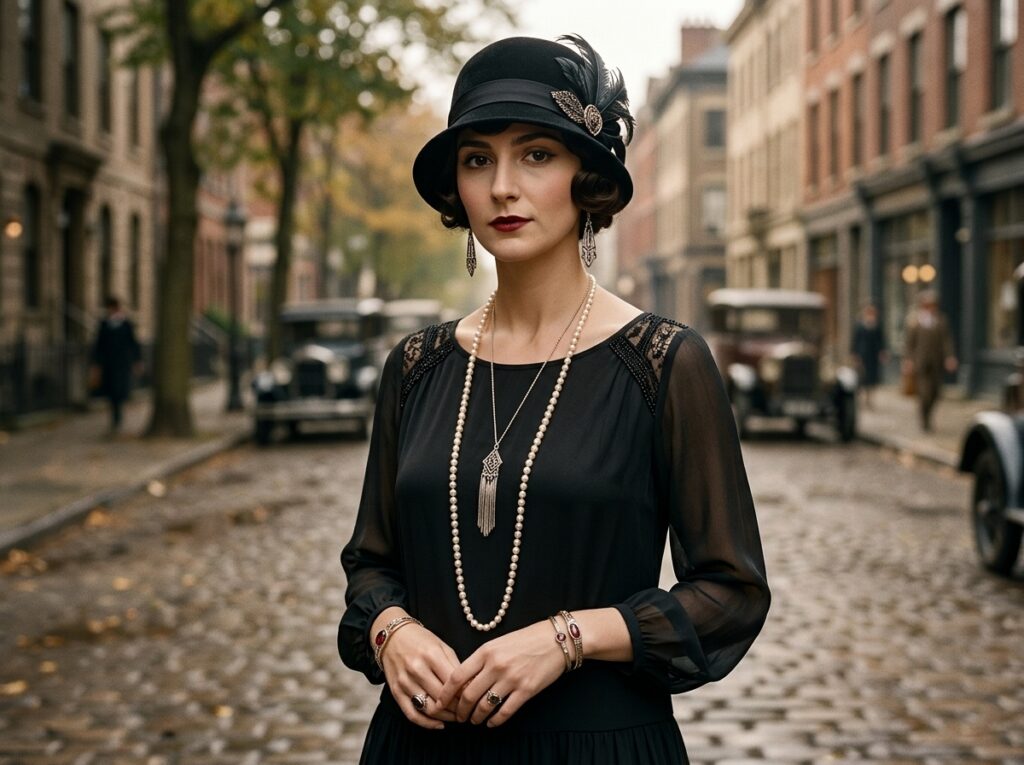
1920s fashion was closely connected to broader social and cultural changes. It reflected new attitudes toward comfort, movement, entertainment, and women’s public lives.
However, clothing alone did not create women’s social progress. Fashion was one visible expression of changes already taking place in society.
Simpler silhouettes and lighter construction made some garments easier to wear during daily activities.
Compared with earlier fashion conventions, many popular 1920s styles used fewer restrictive layers and placed less emphasis on a tightly defined waist.
This helped create a more relaxed appearance.
Sports and leisure activities influenced women’s clothing in important ways.
Tennis-inspired dresses, sweaters, and practical separates helped bring sportswear into everyday wardrobes.
This development also demonstrated that fashionable clothing could combine appearance with comfort and movement.
Bobbed hair became one of the defining visual features of the decade.
For some women, cutting their hair represented a modern personal style. It also changed how hats, headbands, and other accessories were worn.
The relationship between 1920s fashion and feminism is more complicated than simply saying that shorter dresses represented women’s liberation.
Some women used clothing to express independence and modern identity. Others preferred traditional styles.
The decade included important political and social developments, but access to new freedoms remained unequal across different communities and social groups.
Fashion is therefore best understood as one part of a much wider transformation in women’s lives.
You do not need to wear a complete vintage costume to create a modern 1920s-inspired outfit.
The most effective approach is to select a few recognizable design elements and combine them with contemporary clothing.
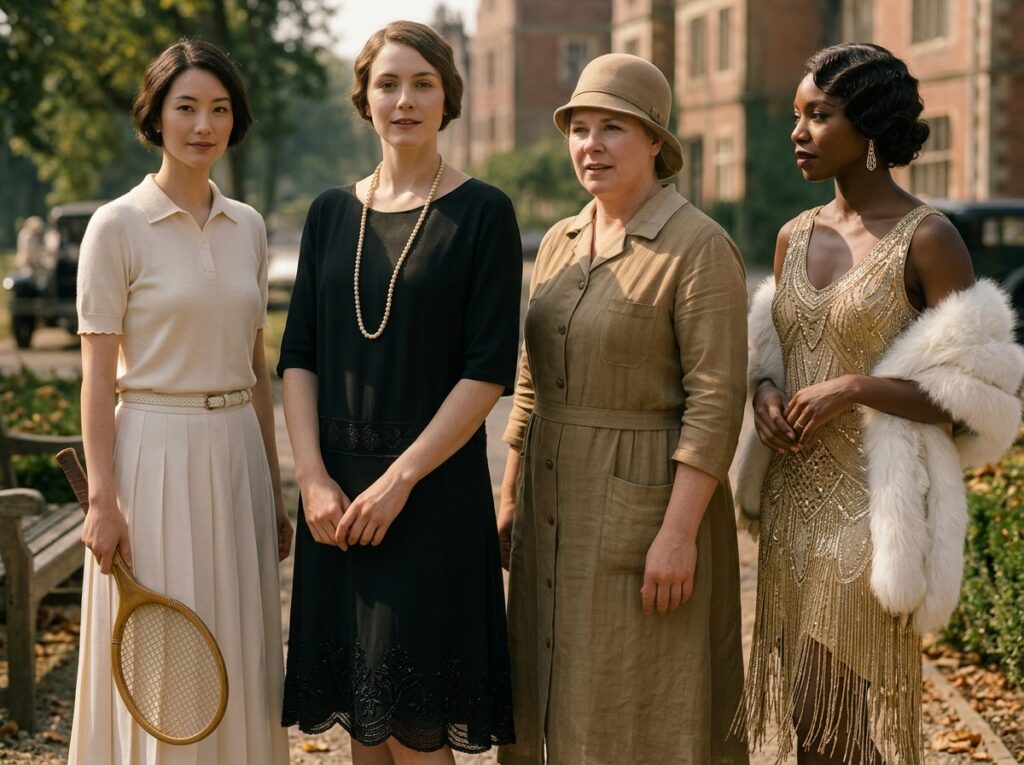
For everyday outfits, focus on relaxed silhouettes and simple vintage-inspired details.
Try combinations such as:
These combinations provide a subtle historical influence without looking like a costume.
Eveningwear offers more opportunities to use recognizable 1920s details.
Consider:
The key is to balance decoration and silhouette. If the dress already has extensive embellishment, keep the accessories relatively simple.
For brands that want to reinterpret 1920s women’s trousers, wide-leg silhouettes and coordinated sets offer practical starting points.
Consider the following design details:
These details can work well in contemporary resortwear, casualwear, and women’s lifestyle collections.
For fashion brands, translating a historical reference into a commercial product requires more than copying an old photograph.
A successful design should consider the target customer, intended occasion, fabric behavior, fit, construction, and retail positioning.
For example, a brand developing a modern 1920s-inspired dress collection may need to decide:
| Development area | Questions to consider |
|---|---|
| Silhouette | Should the dress have a dropped waist, straight shape, or fuller skirt? |
| Fabric | Does the material provide the required drape, weight, and appearance? |
| Decoration | Should the design use embroidery, beads, fringe, or simpler trims? |
| Fit | How will the vintage-inspired shape work across the intended size range? |
| Construction | Are the seams, closures, lining, and finishing suitable for the design? |
| Branding | Will labels, packaging, and other details match the collection’s positioning? |
Brands interested in developing vintage-inspired dresses can explore custom dress manufacturing for product development and garment production information.
You can also explore more women’s outfit ideas for inspiration when planning contemporary clothing combinations.
If you are preparing a new private-label collection, understanding the custom clothing manufacturing process can help you organize design specifications, sampling, material selection, and bulk production requirements.
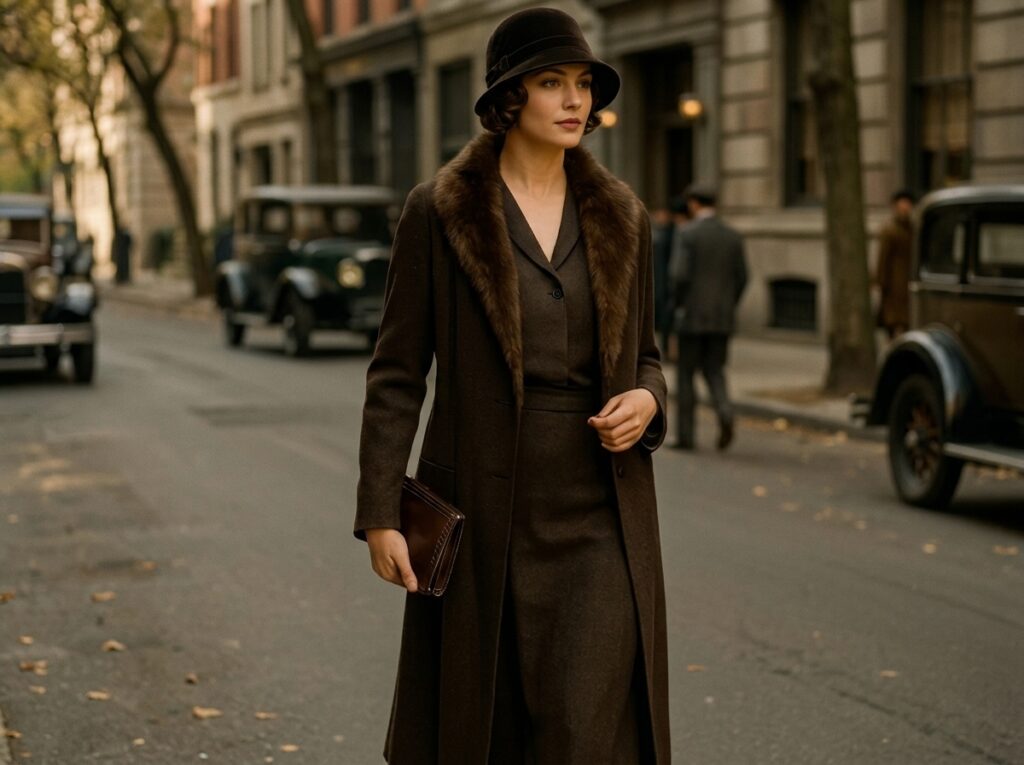
Women wore dresses, skirts, blouses, sweaters, coats, and formal evening gowns. Popular styles included drop-waist dresses, straight silhouettes, beaded eveningwear, and sports-inspired clothing. Their choices depended on lifestyle, occasion, and personal preference.
Flapper fashion became associated with younger women who embraced modern social activities and changing cultural attitudes. The style was known for relaxed dresses, shorter hemlines, decorative eveningwear, and short hairstyles. However, not all women dressed like flappers.
Yes, some women wore trousers, especially for sports, leisure, and resort activities. Beach pajamas were a recognizable example. However, skirts and dresses remained more common in mainstream women’s wardrobes.
Popular styles included Mary Jane shoes, T-strap shoes, low-heeled pumps, and decorative evening footwear. Shorter hemlines made shoes a more visible part of women’s outfits.
Daywear focused on practical dresses, skirts, blouses, sweaters, and coats. Eveningwear was often more decorative, featuring fabrics such as silk and satin, along with beads, sequins, embroidery, and fringe.
1920s fashion for women represents one of the most recognizable periods in modern women’s clothing history. The decade introduced relaxed silhouettes, dropped waistlines, shorter hairstyles, decorative eveningwear, and greater acceptance of sports-inspired clothing.
However, the Roaring Twenties were not defined by flapper dresses alone. Everyday clothing, working women’s wardrobes, regional differences, and the cultural contributions of different communities all formed part of the decade’s fashion history.
Today, designers can reinterpret these historical elements through modern dresses, wide-leg trousers, coordinated sets, and vintage-inspired accessories.
For clothing brands, the most useful approach is to understand the original design details and adapt them to contemporary customers, fabrics, fit requirements, and production needs. This creates collections that reference the 1920s while remaining relevant to today’s fashion market.
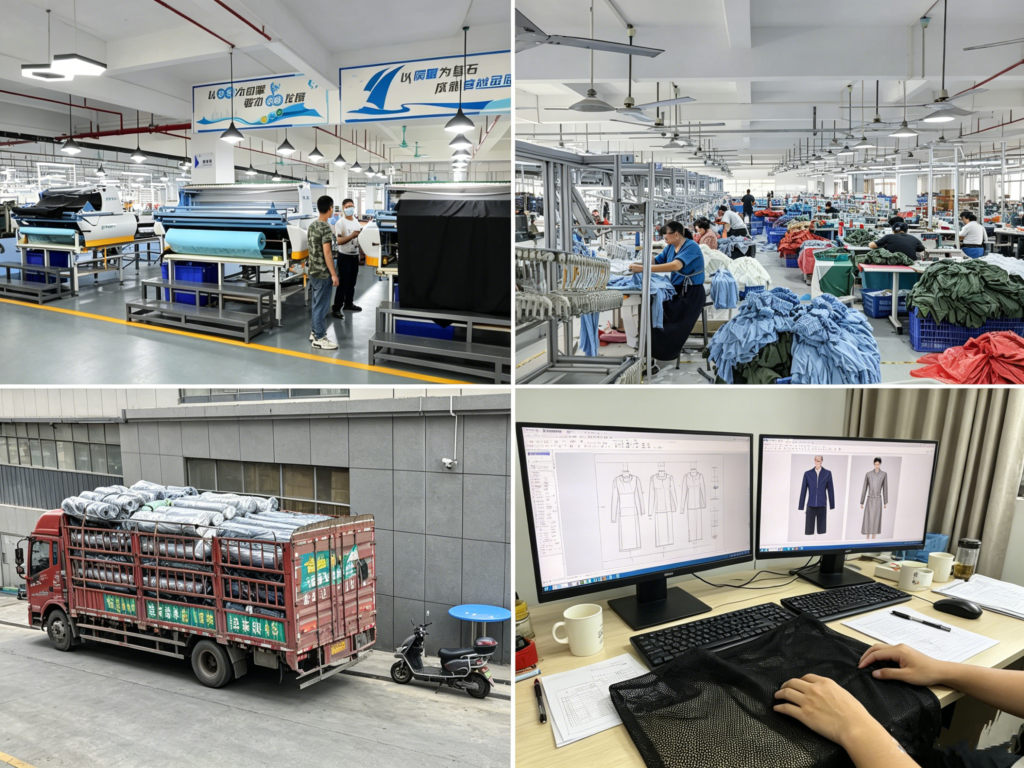
If you have any questions or require a quote, please leave
us a message. Our experts will get back to you within 24 hours to help you choose the ideal fashion products tailored to your needs.
Hi, I’m Lucy Cai, the founder of liantaoapparel.com. I’ve been managing a women’s clothing factory in China for over 20 years. With extensive experience in garment production and OEM services, I’m passionate about sharing insights into women’s fashion, apparel manufacturing, and global sourcing.
If you have any questions or need a quote, please contact us.
Please add us WhatsApp:+86 189 4809 3145
Provide us with detailed information about your requirements, supply design drawings or tech packs,
reference images, and share your ideas.
We will customize the best solution based on your needs and drawings, and provide a specific quote within 24 hours.
Once we receive your confirmation and deposit,we will commence mass production and take care of the subsequent shipping arrangements.