


🏭 Looking for a Custom Apparel Manufacturer?
We are a leading OEM/ODM clothing factory with 20+ years of export experience. Custom styles, flexible MOQs, and retail-ready quality.
A neckline is more than the opening around the neck. It influences a garment’s overall appearance, comfort, fit, and construction. From classic crew necks on T-shirts to elegant sweetheart necklines on dresses, different neckline styles help brands create distinct product identities.
For clothing brands, choosing a neckline involves more than selecting a shape from a design reference. Fabric properties, garment structure, intended use, and finishing methods all affect the final result. A design that looks simple in a sketch may require careful pattern development and sampling to achieve the intended shape.
This guide explains the most common types of necklines, their applications in different clothing categories, and the construction details brands should consider when developing custom garments.
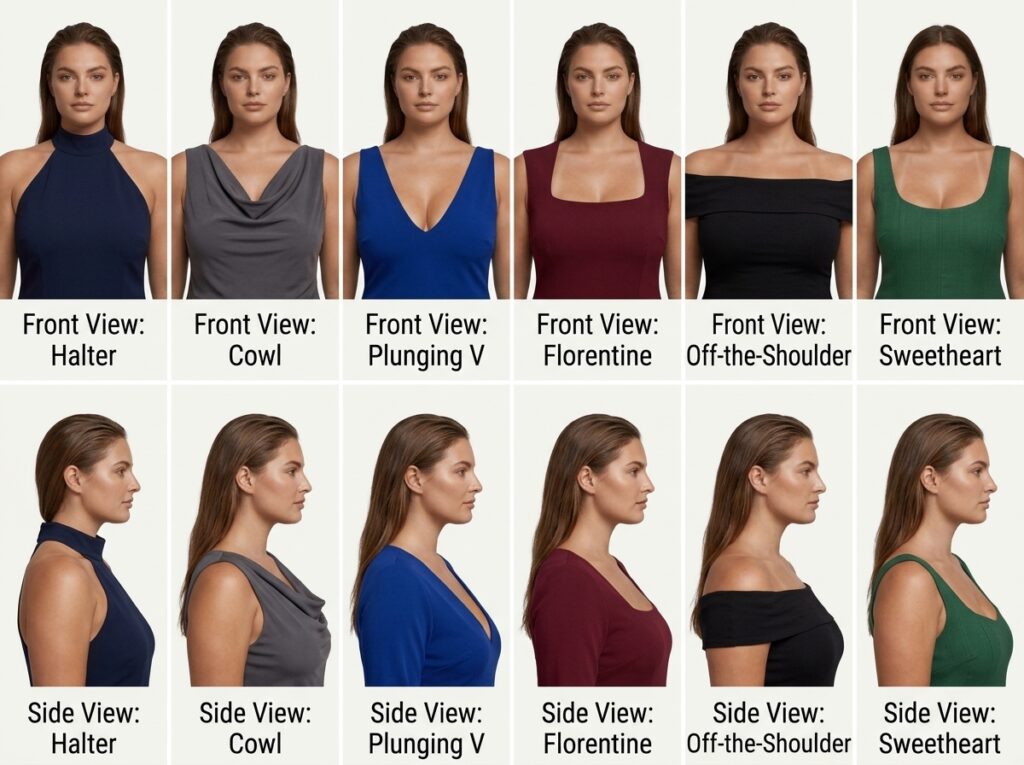
A neckline is the shaped opening at the top of a garment, surrounding the neck, shoulders, and upper chest. It is one of the main design features of tops, dresses, sweaters, and other upper-body clothing.
A neckline determines how much of the neck and upper chest is exposed. It also influences the garment’s silhouette, visual balance, and overall style.
These terms are related but describe different garment features:
For example, a T-shirt usually has a crew neckline without a separate collar. A button-down shirt has a neckline with a collar attached.
For clothing brands, neckline selection should be considered during product development rather than treated as a final decorative decision.
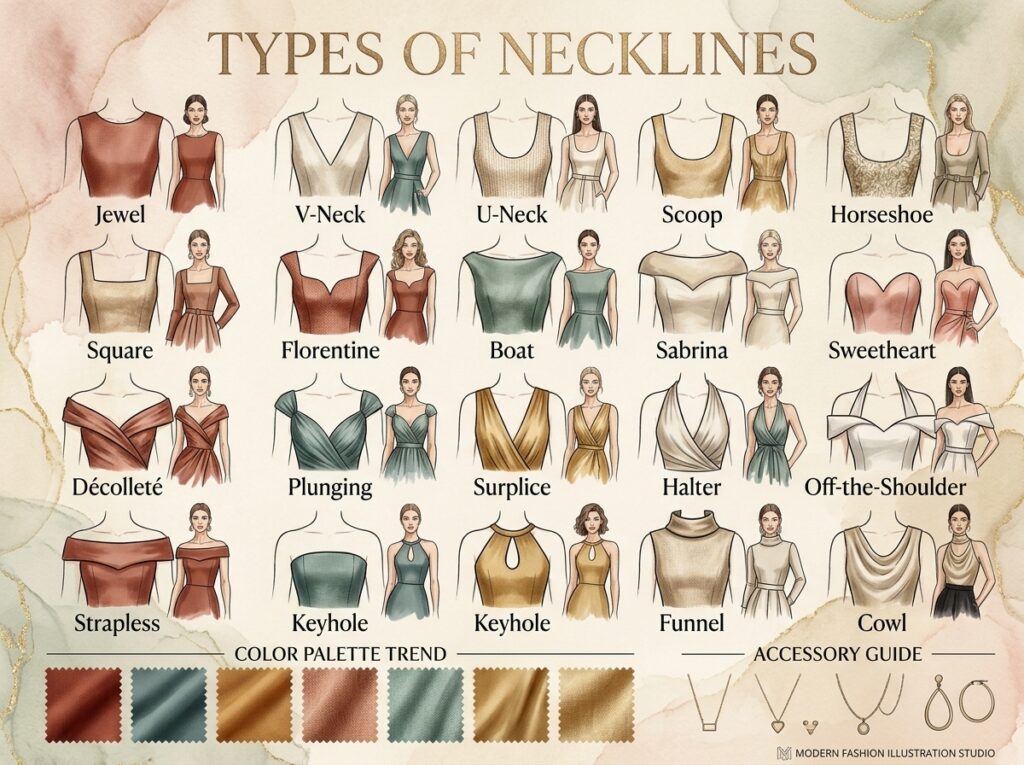
There are many neckline styles used in modern apparel. Some are simple and practical, while others create a distinctive fashion statement.
The following categories cover common neckline shapes that brands can consider when developing tops, dresses, and other garments.
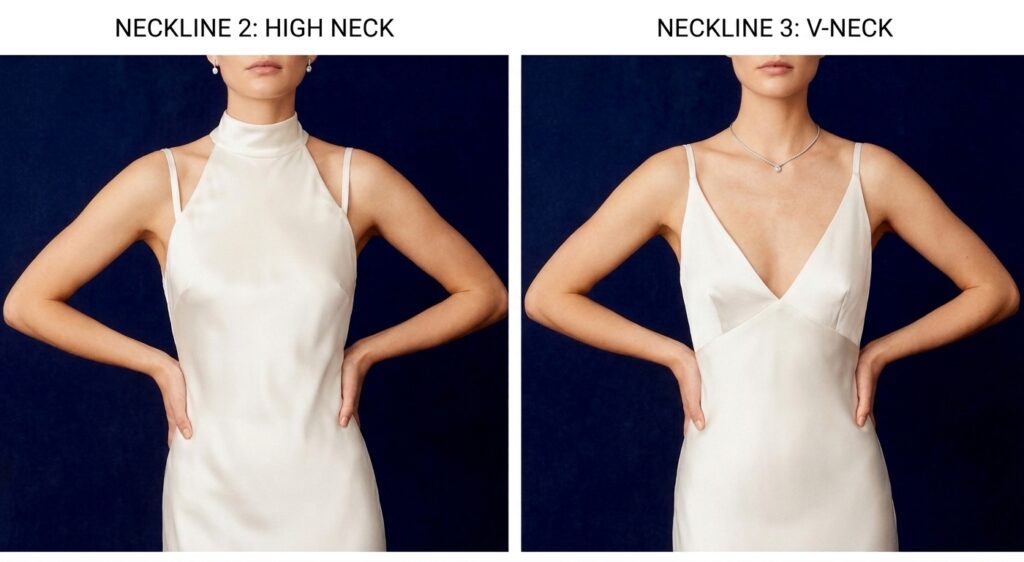
| Neckline style | Main design feature | Common garment applications |
|---|---|---|
| Crew neck | Close-fitting round opening | T-shirts, sweatshirts |
| Scoop neck | Deep, curved opening | Tops, dresses |
| V-neck | V-shaped front opening | T-shirts, blouses, dresses |
| Boat neck | Wide horizontal opening | Tops, dresses |
| Square neck | Straight edges and corners | Dresses, fitted tops |
| Sweetheart | Heart-shaped curved front | Formal dresses, occasionwear |
| Halter | Neck-supported design | Dresses, summer tops |
| Cowl | Soft draped folds | Dresses, fashion tops |
| Turtleneck | High folded neckline | Sweaters, knit tops |
When selecting a style, brands should consider the garment category, fabric behavior, target customer, and intended wearing experience. The same neckline shape may require different construction details depending on the product.
Not every neckline works equally well across all garment categories. A design should complement the product’s function, material, and overall silhouette.
Crew necks are common choices for T-shirts and sweatshirts because they create a simple, versatile appearance. They can also be finished with ribbed fabric or self-fabric binding.
Other options include:
Hoodies usually have a neckline integrated with the hood construction. The hood attachment, front opening, and neckline seam must work together to create a comfortable fit.
For custom hoodie development, brands should specify:
Dresses offer more flexibility in neckline design because their styling ranges from casual to formal.
Common options include:
Activewear necklines should balance appearance, comfort, and movement.
Common choices include:
The neckline should remain comfortable during movement and work with the garment’s intended level of coverage and support.
Choosing a neckline is a product-development decision. Brands should evaluate the design from both an appearance and manufacturing perspective.
Start with the intended customer and product category.
A basic everyday T-shirt may benefit from a crew neck, while a formal dress may require a sweetheart or square neckline. The neckline should support the overall product concept rather than compete with other design details.
Fabric properties influence how a neckline looks and performs.
Consider how the neckline sits around the neck, shoulders, and upper chest.
Check whether the opening allows the wearer to put on and remove the garment comfortably. For activewear and fitted tops, also consider how the neckline behaves during movement.
A simple round neckline and a draped cowl neckline do not require the same pattern development.
Brands should consider the number of pattern pieces, finishing details, seam placement, and whether the design requires additional support or reinforcement.
Before finalizing a design, review these questions:
A clear selection process can reduce unnecessary design changes during sampling and bulk production.
Neckline finishing affects the garment’s appearance, comfort, and shape retention. The right method depends on the neckline design, fabric characteristics, and garment construction.
Common finishing methods include:
Ribbed neckbands are frequently used on T-shirts, sweatshirts, and other knit garments.
They provide a defined edge and can offer stretch and recovery when the rib fabric is appropriately selected and constructed.
Self-fabric binding uses the garment’s main fabric to cover the raw neckline edge.
It is often used when brands want a consistent fabric appearance without introducing a contrasting trim.
Bias binding uses fabric cut diagonally across the grain. It can be useful for finishing curved edges because of its flexibility.
A facing is a separate piece of fabric or an extension of the garment pattern used to finish an opening. It is commonly used in dresses, blouses, and structured woven garments.
Some garments use elastic or drawstrings around the neckline to create an adjustable or gathered effect. These methods may be appropriate for selected casualwear and fashion designs.
| Finishing method | Common application | Key consideration |
|---|---|---|
| Ribbed neckband | T-shirts, sweatshirts | Stretch and recovery |
| Self-fabric binding | Knit tops, casualwear | Fabric compatibility |
| Bias binding | Curved neckline edges | Flexibility and neat application |
| Facing | Dresses, blouses | Flatness and reduced bulk |
| Elastic finish | Selected casual garments | Elastic tension and comfort |
| Drawstring finish | Selected fashion designs | Adjustability and secure construction |
Regardless of the method, a finished neckline should preserve the intended design shape, remain symmetrical, and avoid unnecessary bulk or distortion.
New Mexico State University’s clothing construction standards identify important neckline quality considerations, including smooth facings, reduced bulk, and symmetrical construction. These principles are useful references when reviewing garment samples.
A tech pack communicates the design and construction requirements to a clothing manufacturer. For custom garments, neckline details should be documented clearly to reduce misunderstandings during sampling and production.
A useful neckline specification should include the following information.
Provide front and back technical drawings that clearly show the neckline shape.
If the design includes asymmetrical details, cutouts, decorative trims, or special openings, add close-up illustrations.
Include relevant measurements, such as:
The exact measurement points should be clearly identified in the tech pack.
Specify the main fabric and any materials used for the neckline finish.
For example:
Explain how the neckline should be finished.
Include details such as binding, ribbed neckbands, facings, topstitching, and any special reinforcement requirements.
The first sample should be reviewed against the approved design and specifications.
Check the neckline shape, measurements, symmetry, comfort, and finishing quality before confirming the production version.
Neckline Tech Pack Checklist
| Specification | Information to provide |
|---|---|
| Design reference | Front and back technical drawings |
| Shape | Neckline type and design details |
| Measurements | Neck width and front/back depth |
| Main fabric | Composition, weight, and stretch |
| Finishing | Binding, ribbing, facing, or other method |
| Stitching | Topstitching and seam requirements |
| Sample review | Shape, fit, symmetry, and finish |
For brands developing custom apparel, clear specifications make communication with a manufacturer more efficient. You can also explore our custom clothing manufacturing services to understand the product-development and production support available.
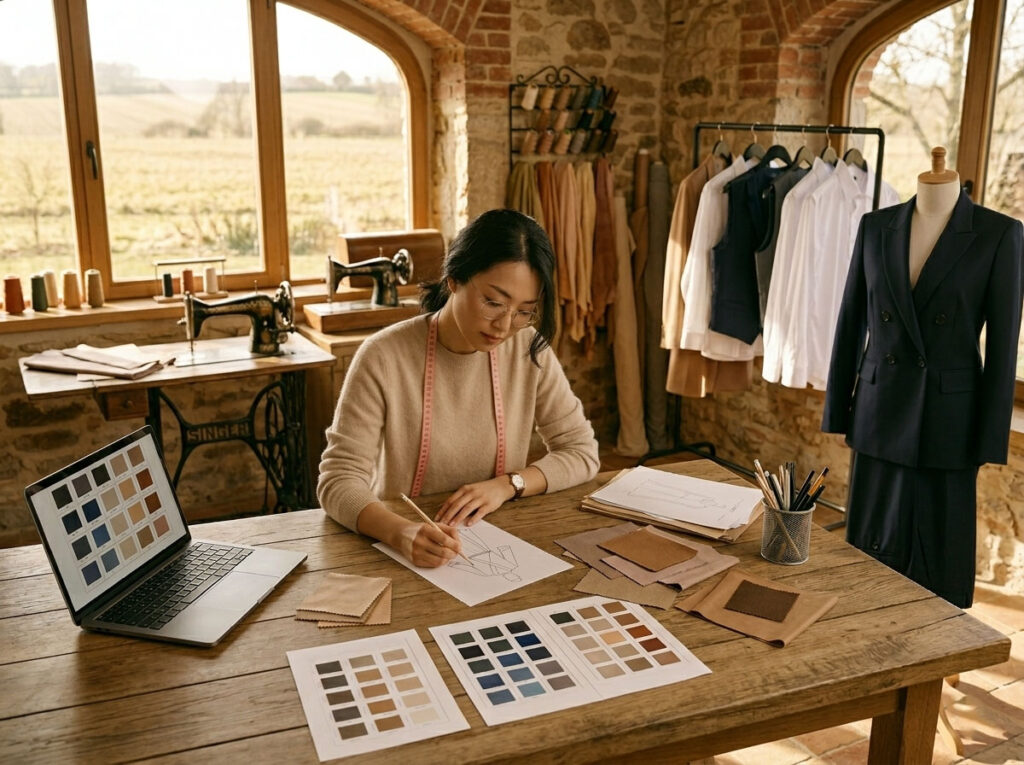
A neckline may look correct in a technical drawing but behave differently when made with the selected fabric. Sample review helps identify potential construction and fit issues before bulk production.
Here are some common problems brands should check.
A neckline may sit away from the body instead of following the intended shape.
Possible factors include pattern proportions, fabric behavior, and the relationship between the neckline and garment fit.
A neckline may become wavy when the fabric edge stretches during handling or sewing, or when the finishing method does not suit the material.
The sample should be checked for smoothness and shape consistency.
The left and right sides of a symmetrical neckline may not match.
Compare both sides of the garment and check the neckline against the approved technical drawing.
Some necklines may lose their intended shape after wear or washing.
Brands should consider fabric recovery, finishing materials, and construction when developing the sample.
A neckline that is too wide, narrow, high, or deep can change the garment’s appearance and fit.
Confirm the measurement points and compare the finished sample with the approved specifications.
During sample approval, brands should pay particular attention to neckline symmetry, bulk, flatness, and the appearance of facings or bindings.
For more guidance on evaluating a clothing supplier and reviewing production quality, read our apparel manufacturer selection and quality control guide.
Common neckline styles include crew neck, scoop neck, V-neck, boat neck, square neck, sweetheart, halter, cowl, keyhole, and turtleneck. Each style creates a different appearance and may suit different garment categories.
A crew neck is usually a higher, rounded neckline that sits relatively close to the base of the neck. A scoop neck has a wider and deeper U-shaped opening, exposing more of the upper chest.
Crew necks are among the most common choices for T-shirts. V-necks and scoop necks are also used, depending on the brand’s design direction and target customers.
Popular dress necklines include sweetheart, square, V-neck, boat, halter, and cowl styles. The best option depends on the dress silhouette, fabric, occasion, and desired coverage.
Yes. Custom clothing development can include different neckline shapes, measurements, and finishing methods. Brands should provide technical drawings, fabric specifications, and construction requirements so the manufacturer can develop and review a sample before bulk production.
If you are unsure how to communicate a neckline design, you can start with a reference image or technical sketch and discuss the required details with your manufacturer.
The right neckline combines visual appeal, comfort, fabric compatibility, and practical construction. Whether you are developing a basic T-shirt, a custom sweatshirt, an activewear collection, or a fashion dress, neckline details should be considered from the early design stage.
Before moving into bulk production, confirm the neckline shape, measurements, finishing method, and sample quality.
Liantao Apparel supports custom clothing development and manufacturing for brands. If you are planning a new collection, share your garment category, neckline reference, fabric requirements, and estimated order quantity to discuss your project.
You can also read our guide on how to find a reliable clothing manufacturer before choosing a production partner.
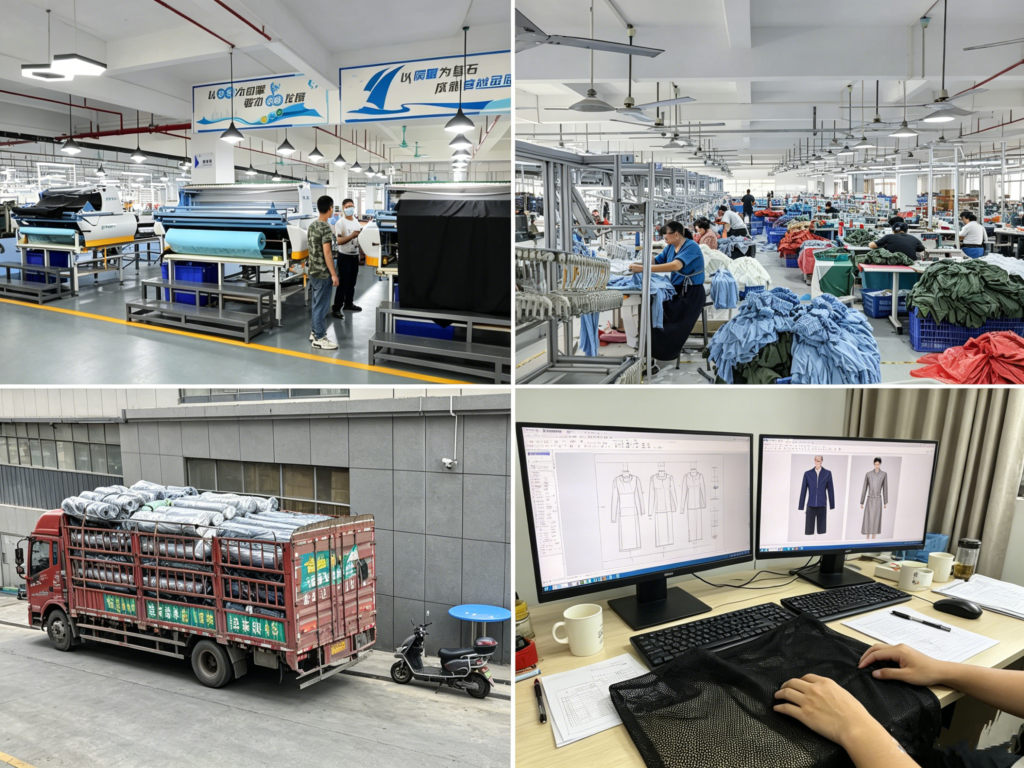
If you have any questions or require a quote, please leave
us a message. Our experts will get back to you within 24 hours to help you choose the ideal fashion products tailored to your needs.
Hi, I’m Lucy Cai, the founder of liantaoapparel.com. I’ve been managing a women’s clothing factory in China for over 20 years. With extensive experience in garment production and OEM services, I’m passionate about sharing insights into women’s fashion, apparel manufacturing, and global sourcing.
If you have any questions or need a quote, please contact us.
Please add us WhatsApp:+86 189 4809 3145
Provide us with detailed information about your requirements, supply design drawings or tech packs,
reference images, and share your ideas.
We will customize the best solution based on your needs and drawings, and provide a specific quote within 24 hours.
Once we receive your confirmation and deposit,we will commence mass production and take care of the subsequent shipping arrangements.


