🏭 Looking for a Custom Apparel Manufacturer?
We are a leading OEM/ODM clothing factory with 20+ years of export experience. Custom styles, flexible MOQs, and retail-ready quality.
Modal fabric is made from cellulose, a natural substance found in plants and trees. In most commercial applications, the cellulose comes from wood pulp, which is chemically processed and regenerated into textile fibers. Beechwood is a common source, although the exact raw material depends on the fiber manufacturer.
Unlike cotton, which is a natural fiber harvested directly from plants, Modal is a manufactured regenerated cellulose fiber. It is valued for its soft texture, smooth surface, moisture absorption, and comfortable feel against the skin.
For clothing brands, understanding what Modal fabric is made of is important when selecting materials for T-shirts, dresses, underwear, loungewear, and other apparel collections. Its fiber composition, fabric construction, and blending options can all influence the final garment.
This guide explains how Modal is made, how it compares with other fabrics, and what apparel buyers should consider before using it in clothing production.
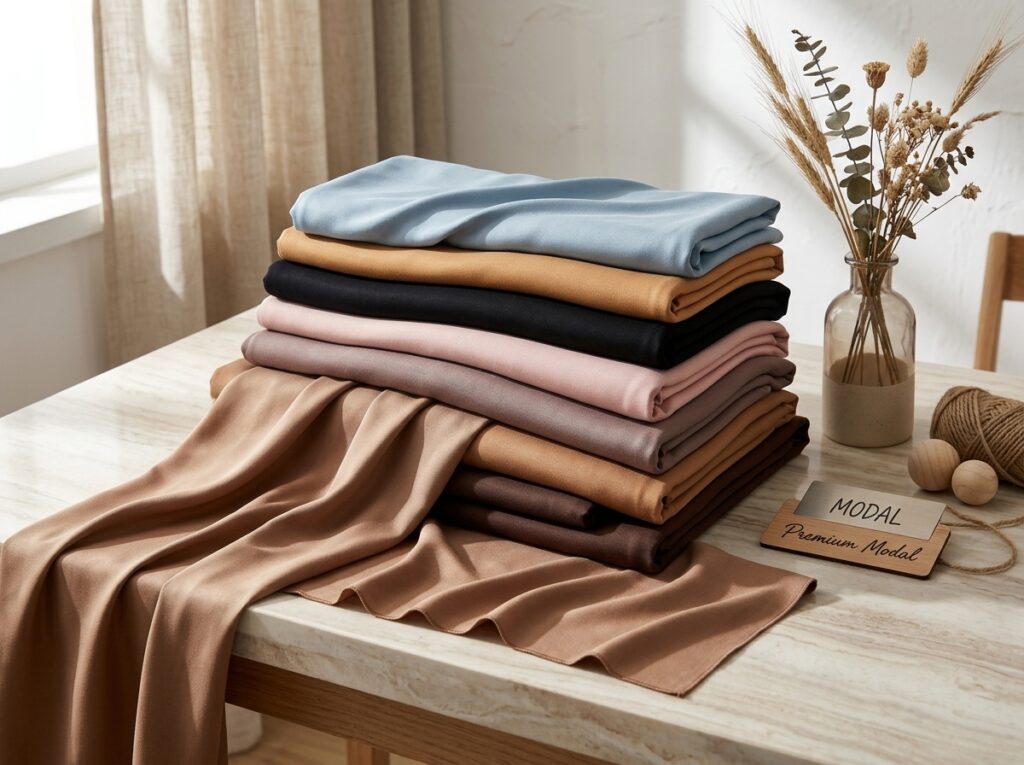
Modal fabric is primarily made from regenerated cellulose extracted from wood pulp. Cellulose is the main structural component of plant cell walls and provides the basic raw material for producing Modal fibers.
Beechwood is a commonly used source of cellulose for commercial Modal production. However, not every Modal product necessarily comes from the same tree species or supplier.
The manufacturing process transforms purified wood pulp into textile fibers through chemical processing and fiber regeneration.
The basic material composition includes:
It is important to distinguish between Modal fiber and Modal fabric. Modal is the fiber type, while the finished fabric can be knitted, woven, or blended with other materials.
Modal is generally classified as a manufactured regenerated cellulose fiber.
Although its raw material comes from natural plant sources, it undergoes chemical processing before becoming a textile fiber.
Therefore, Modal is neither a directly harvested natural fiber like cotton nor a petroleum-based synthetic fiber like conventional polyester.
This distinction matters when brands describe fabric composition and develop product labels.
Modal fabric production involves transforming cellulose from wood pulp into usable textile fibers.
Although the process shares similarities with conventional viscose manufacturing, Modal uses modified production conditions to achieve specific fiber characteristics, particularly higher wet strength and wet modulus.
The general production process includes several stages.
Wood is processed to obtain cellulose-rich pulp. Unwanted components are removed to produce purified cellulose suitable for fiber manufacturing.
The quality and characteristics of the starting pulp influence the subsequent fiber production process.
The purified cellulose undergoes chemical treatment to create a soluble intermediate.
In the modified viscose process, cellulose is treated with sodium hydroxide and carbon disulfide to produce cellulose xanthate, which can then be dissolved into a viscous spinning solution.
The prepared solution passes through small openings called spinnerets.
As the material enters a chemical spinning bath, cellulose regenerates into solid fibers.
The regenerated fibers undergo washing and additional treatments to remove process residues and prepare them for textile manufacturing.
The finished Modal fibers are spun into yarn. These yarns can then be knitted or woven into different fabric constructions.
The resulting fabrics are used in clothing, underwear, loungewear, and other textile products.
For a more detailed technical explanation, see Modal fiber production and regenerated cellulose research.
Modal, Viscose, and Lyocell are all regenerated cellulose fibers. They share a similar plant-based raw material, but their production methods and fiber characteristics are not identical.
For apparel brands, understanding these differences helps when choosing materials for specific clothing collections.
| Comparison | Modal | Viscose | Lyocell |
|---|---|---|---|
| Raw material | Cellulose, commonly from wood pulp | Cellulose, commonly from wood pulp | Cellulose, commonly from wood pulp |
| Fiber category | Regenerated cellulose | Regenerated cellulose | Regenerated cellulose |
| Production process | Modified viscose process | Viscose process | Direct solvent dissolution |
| Hand feel | Often soft and smooth | Soft, depending on construction | Often smooth and soft |
| Wet performance | Higher wet modulus and strength than conventional viscose | Generally lower wet strength than Modal | Depends on fiber specifications |
| Common applications | Underwear, T-shirts, loungewear | Dresses, linings, casualwear | Shirts, dresses, trousers, loungewear |
Modal is closely related to conventional viscose because both use regenerated cellulose and similar production routes.
However, Modal is manufactured under modified process conditions that produce fibers with higher wet modulus and improved wet mechanical performance.
This makes Modal a useful option for clothing that requires a soft feel while maintaining better fiber strength when wet.
Lyocell uses a different manufacturing approach. Cellulose is dissolved directly in a solvent rather than first being chemically converted into cellulose xanthate.
Some Lyocell production systems use solvent recovery processes to reuse the solvent.
Modal and Lyocell can both be used in premium apparel, but neither is automatically better for every garment.
If you are comparing these materials for clothing development, read our guide to Lyocell fabric properties, blends, testing, and production.
Modal is a generic regenerated cellulose fiber category, while TENCEL™ Modal is a branded fiber produced by Lenzing. MicroModal is a term used for a finer type of Modal fiber, but buyers should confirm the exact fiber brand and specifications with their supplier.
These names should not be treated as interchangeable:
Generic Modal: A regenerated cellulose fiber made from cellulose, commonly sourced from wood pulp.
TENCEL™ Modal: A branded Modal fiber from Lenzing. Its sourcing, production, and sustainability claims should be checked against the manufacturer’s official documentation.
MicroModal: A term associated with finer Modal fibers. The exact meaning and specifications should be confirmed with the fiber or fabric supplier.
For clothing brands, the important point is to verify the actual fiber composition and supporting documentation rather than relying on a fabric name alone.
For more information, visit the official TENCEL™ Modal fiber production page.
Modal, cotton, and polyester are used in different types of apparel. Each has different material characteristics, so the best choice depends on the garment design, target customer, and required fabric performance.
| Comparison | Modal | Cotton | Polyester |
|---|---|---|---|
| Fiber category | Regenerated cellulose | Natural plant fiber | Synthetic fiber |
| Main raw material | Cellulose, commonly from wood pulp | Cotton plants | Usually petroleum-based raw materials |
| Hand feel | Often soft and smooth | Depends on cotton type and fabric construction | Depends on yarn and finishing |
| Moisture behavior | Good moisture absorption | Good moisture absorption | Generally low moisture absorption |
| Drape | Often fluid and soft | Varies by construction | Varies by construction |
| Common applications | Underwear, T-shirts, loungewear | T-shirts, shirts, casualwear | Sportswear, outerwear, everyday apparel |
Which one should clothing brands choose?
Choose Modal when softness, smoothness, and fluid drape are important.
Choose cotton when a familiar natural-fiber feel and versatile everyday use are priorities.
Choose polyester when the product requires specific synthetic-fiber characteristics, such as durability or easy-care performance.
For OEM and private label projects, compare the actual fabric samples instead of making a decision based only on fiber names. Fabric construction, weight, finishing, and test results can significantly affect the finished garment.
The final decision should consider fabric weight, construction, finishing, cost, and actual sample performance.
Modal is widely used in apparel because of its combination of softness, moisture absorption, and comfortable drape.
However, the final performance of Modal fabric depends on fiber quality, yarn construction, knitting or weaving methods, finishing, and whether other fibers are blended into the material.
Modal fibers are commonly associated with a soft, smooth hand feel.
This makes Modal suitable for garments worn directly against the skin, including underwear, T-shirts, pajamas, and loungewear.
As a regenerated cellulose fiber, Modal can absorb moisture.
This characteristic contributes to wearing comfort, particularly in lightweight everyday clothing.
However, moisture absorption should not automatically be interpreted as quick-drying or technical moisture-wicking performance.
Modal fabrics often have a fluid drape, making them suitable for garments that require a softer silhouette.
This characteristic can be useful when developing dresses, relaxed tops, and lightweight clothing.
One important characteristic of Modal is its relatively high wet strength compared with conventional viscose.
This helps distinguish Modal from standard viscose fibers.
However, finished garment durability also depends on fabric construction, yarn quality, stitching, and finishing.
Modal is frequently used in products designed for everyday comfort.
Its soft texture and moisture absorption make it an option for clothing collections that prioritize a comfortable wearing experience.
Brands should still evaluate shrinkage, pilling, colorfastness, and dimensional stability through appropriate fabric testing.
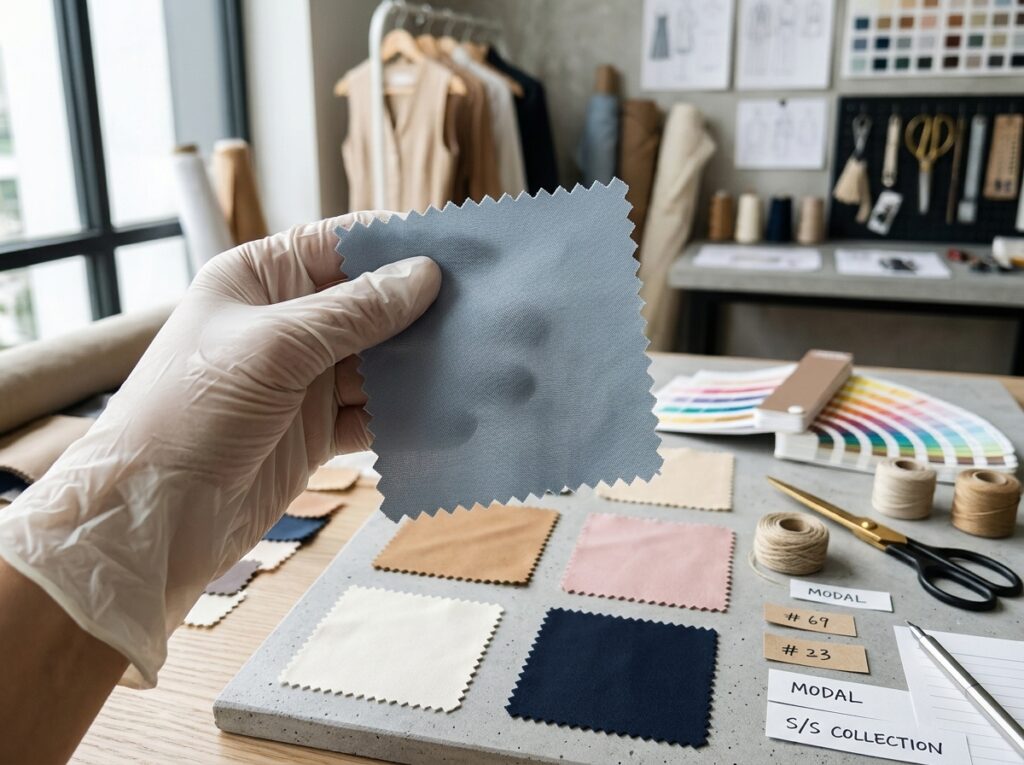
Modal does not refer to one specific fabric construction. It can be used alone or blended with other fibers to create different materials for apparel manufacturing.
The most suitable option depends on the garment’s intended use, required stretch, fabric weight, and target price.
| Modal Fabric Type | Main Characteristics | Suitable Clothing |
|---|---|---|
| 100% Modal | Soft feel and fluid drape | T-shirts, underwear, loungewear |
| Modal Cotton Blend | Combines Modal and cotton characteristics | Everyday T-shirts, casual tops |
| Modal Polyester Blend | Combines cellulose-based fibers with polyester | Casualwear, selected sportswear |
| Modal Spandex Blend | Adds stretch and recovery potential | Fitted tops, leggings, yoga clothing |
| Modal Rib Knit | Ribbed fabric construction with potential stretch | Tank tops, fitted shirts |
100% Modal fabric is made entirely from Modal fibers.
It is often selected for lightweight garments where softness and drape are important.
Typical applications include underwear, sleepwear, and comfortable everyday tops.
Combining Modal with cotton creates a fabric that brings together the characteristics of both fibers.
This option can be considered for T-shirts, casual shirts, and everyday clothing.
The final hand feel and durability depend on the actual blend ratio and fabric construction.
Modal and polyester can be combined to balance different material characteristics.
Modal contributes a soft hand feel, while polyester can influence fabric structure, durability, and dimensional stability.
The actual performance depends on the fiber ratio, yarn structure, and finishing.
Adding spandex introduces stretch potential, making this combination useful for close-fitting clothing.
Common applications include fitted tops, leggings, underwear, and selected yoga apparel.
For these products, stretch recovery and dimensional stability should be evaluated before bulk production.
Modal is suitable for a variety of clothing products, particularly those where softness, comfort, and drape are important.
For apparel brands, the key is matching the fabric construction with the intended garment.
Modal T-shirts are suitable for brands looking to develop soft everyday basics.
When selecting a fabric, consider GSM, opacity, drape, shrinkage, and pilling performance.
The fluid drape of Modal can work well for certain dresses and skirts.
Lightweight knitted or woven constructions can be considered depending on the desired silhouette.
Modal is commonly used in underwear, pajamas, and loungewear because of its soft texture and moisture absorption.
Fabric weight, stretch, seam construction, and washing performance are important development considerations.
Modal can be blended with spandex to develop stretchable apparel.
However, Modal is not automatically a technical performance fabric.
For activewear, brands should evaluate stretch recovery, moisture management, pilling resistance, and durability under repeated movement and washing.
For private label brands, Modal offers different possibilities through fiber blending and fabric construction.
Rather than selecting materials based only on their names, buyers should compare actual fabric samples and confirm whether they meet the intended product specifications.
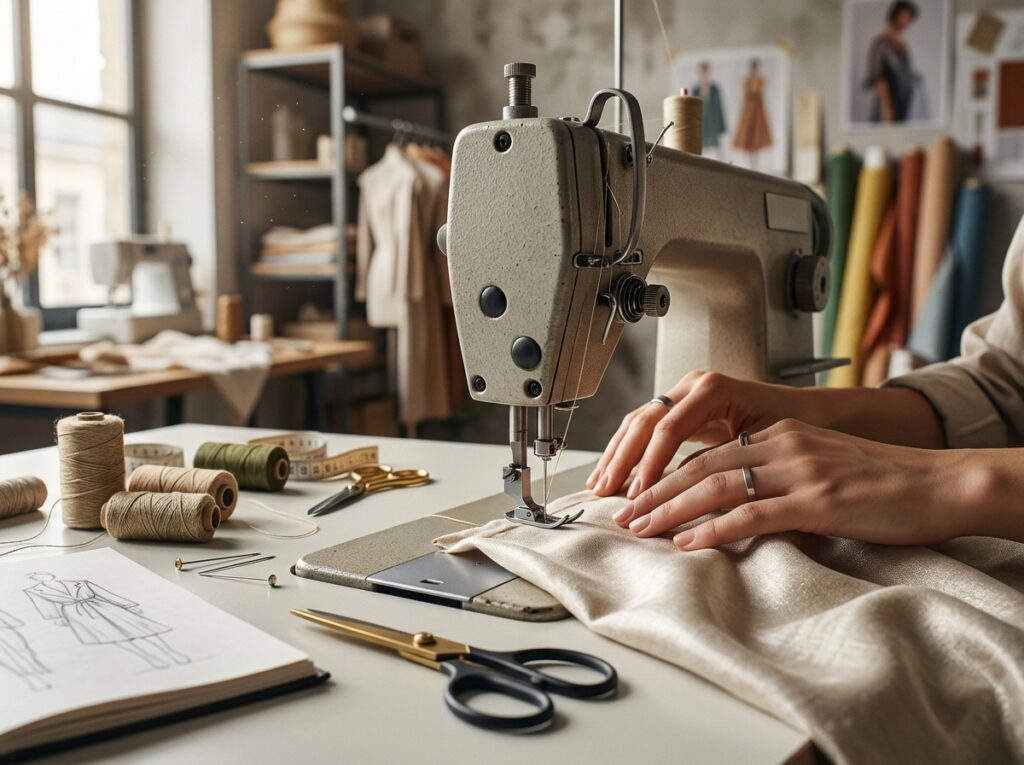
Choosing Modal fabric for a clothing collection involves more than checking whether the material contains Modal fibers.
Brands should evaluate the complete fabric specification and how it performs during garment manufacturing.
Ask the supplier to confirm whether the fabric is 100% Modal or a blend.
For blended materials, request the exact fiber percentages.
If the supplier offers branded fibers such as TENCEL™ Modal, verify the relevant product documentation and branding requirements.
GSM refers to grams per square meter and indicates fabric weight.
Different garments require different fabric weights and structures.
For example, a lightweight Modal T-shirt and a fitted Modal yoga top may require different fabric specifications.
Always evaluate physical samples before confirming a bulk order.
Check:
Before bulk production, consider testing:
The required tests and acceptance criteria should be agreed upon according to the product specifications.
A suitable manufacturing partner should understand your fabric requirements and how they affect the finished garment.
When evaluating an OEM or ODM clothing manufacturer, consider:
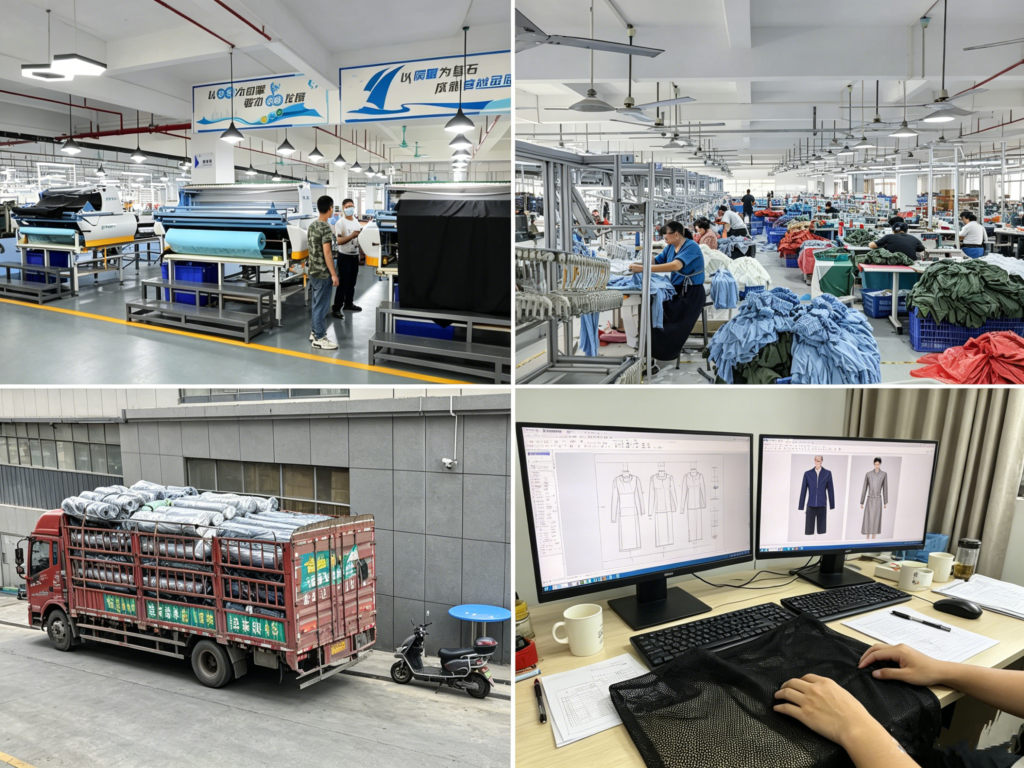
At Liantao Apparel, we provide custom clothing development, sampling, and bulk production services for apparel brands. Our manufacturing process supports brands from design requirements and product development through sample approval and bulk production.
If you are planning a new clothing collection, you can learn more about our custom clothing manufacturing process, MOQ, pricing, and production services.
For Modal-specific projects, fabric availability, composition, and production requirements should be confirmed during the initial development discussion.
Modal starts with cellulose, which is commonly obtained from wood pulp. However, it undergoes chemical processing and regeneration, so it is classified as a manufactured regenerated cellulose fiber rather than a directly harvested natural fiber.
Neither material is universally better. Modal is often selected for its softness and fluid drape, while cotton is valued for its versatility and familiar natural hand feel. The best option depends on the garment and customer requirements.
Modal fabric can experience dimensional changes after washing. The amount depends on fiber quality, fabric construction, finishing, and washing conditions. Always check the care instructions and conduct shrinkage testing before bulk production.
Modal can be used in selected activewear products, particularly when blended with spandex for stretch. However, brands should evaluate moisture management, stretch recovery, pilling, and durability before choosing it for performance-oriented clothing.
Yes. Modal can be used to develop custom T-shirts, dresses, underwear, loungewear, and selected activewear products. Buyers should confirm fabric composition, GSM, construction, and sample performance with their clothing manufacturer before starting bulk production.
Modal fabric is made from regenerated cellulose, commonly sourced from wood pulp. Through a modified viscose manufacturing process, the cellulose is transformed into soft textile fibers with good moisture absorption and improved wet strength compared with conventional viscose.
For clothing brands, Modal offers flexible development possibilities across T-shirts, dresses, underwear, loungewear, and selected activewear.
However, choosing the right Modal fabric requires more than understanding its raw material. Fiber composition, fabric construction, GSM, finishing, and testing all influence the final garment.
If you are developing a new apparel collection, working with an experienced clothing manufacturer can help you evaluate fabric options, develop samples, and prepare for bulk production.
If you have any questions or require a quote, please leave
us a message. Our experts will get back to you within 24 hours to help you choose the ideal fashion products tailored to your needs.
Hi, I’m Lucy Cai, the founder of liantaoapparel.com. I’ve been managing a women’s clothing factory in China for over 20 years. With extensive experience in garment production and OEM services, I’m passionate about sharing insights into women’s fashion, apparel manufacturing, and global sourcing.
If you have any questions or need a quote, please contact us.
Please add us WhatsApp:+86 189 4809 3145
Provide us with detailed information about your requirements, supply design drawings or tech packs,
reference images, and share your ideas.
We will customize the best solution based on your needs and drawings, and provide a specific quote within 24 hours.
Once we receive your confirmation and deposit,we will commence mass production and take care of the subsequent shipping arrangements.