


🏭 Looking for a Custom Apparel Manufacturer?
We are a leading OEM/ODM clothing factory with 20+ years of export experience. Custom styles, flexible MOQs, and retail-ready quality.
When comparing Athleta vs Lululemon quality, fabric is one of the most important factors to examine. Both brands offer performance activewear designed for comfort, stretch, and everyday movement. However, their fabric collections include different constructions, fiber blends, and performance characteristics.
For activewear brands and apparel buyers, the comparison goes beyond choosing which leggings feel softer. It raises more practical questions: What makes a premium activewear fabric? How should stretch recovery, pilling resistance, and dimensional stability be measured? And how can these qualities be translated into specifications for private-label production?
This guide compares publicly available fabric information from Athleta and lululemon, explains the quality tests that matter, and outlines OEM specifications buyers should prepare before working with an activewear manufacturer.
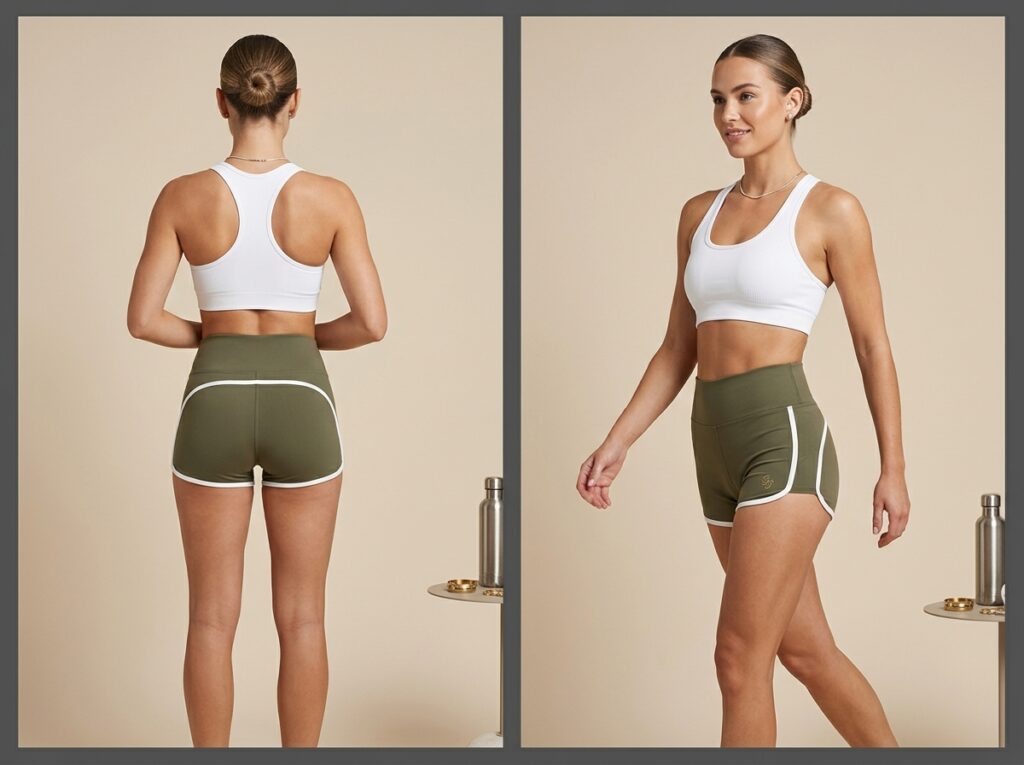
Neither brand can be declared universally better based on fabric names alone. Quality depends on the specific product, intended activity, fabric construction, garment engineering, and manufacturing consistency.
Athleta and lululemon both organize their activewear around different performance needs. A soft yoga legging, for example, has different priorities from a high-compression training legging or a running tight.
A useful comparison should consider the following factors:
| Quality Factor | What to Evaluate | Why It Matters |
|---|---|---|
| Fabric hand feel | Softness, smoothness, surface texture | Influences comfort and perceived product value |
| Stretch | Two-way or four-way stretch | Determines freedom of movement |
| Recovery | Ability to return to original dimensions | Helps garments maintain their fit |
| Opacity | Coverage under the intended stretch condition | Important for leggings and fitted activewear |
| Pilling resistance | Surface fuzzing and fiber-ball formation | Influences long-term appearance |
| Abrasion resistance | Resistance to repeated friction | Matters in high-contact areas |
| Dimensional stability | Shrinkage or growth after washing | Helps maintain garment measurements |
| Colorfastness | Resistance to fading and color transfer | Supports consistent product appearance |
For private-label brands: These factors should become measurable product requirements rather than subjective descriptions such as “premium quality” or “buttery soft.”

Both brands use fabric families designed for different activities. Their product pages and fabric guides provide useful examples of how fabric properties are matched with product functions.
Athleta describes Powervita as a soft, supportive fabric used in selected yoga and activewear products. Its Elation Surface Novelty Legging product page lists different compositions depending on the fabric version:
| Product Fabric Version | Published Composition |
|---|---|
| Solid | 75% Nylon / 25% LYCRA® |
| Shine | 75% Recycled Polyester / 25% LYCRA® |
| Rib | 85% Nylon / 15% Elastane |
These figures refer to the listed product options, not a universal formula for every Athleta garment.
Athleta also describes selected products as breathable, moisture-wicking, and quick-drying. Buyers should still check the exact product specification because performance descriptions and fiber compositions can vary by style.
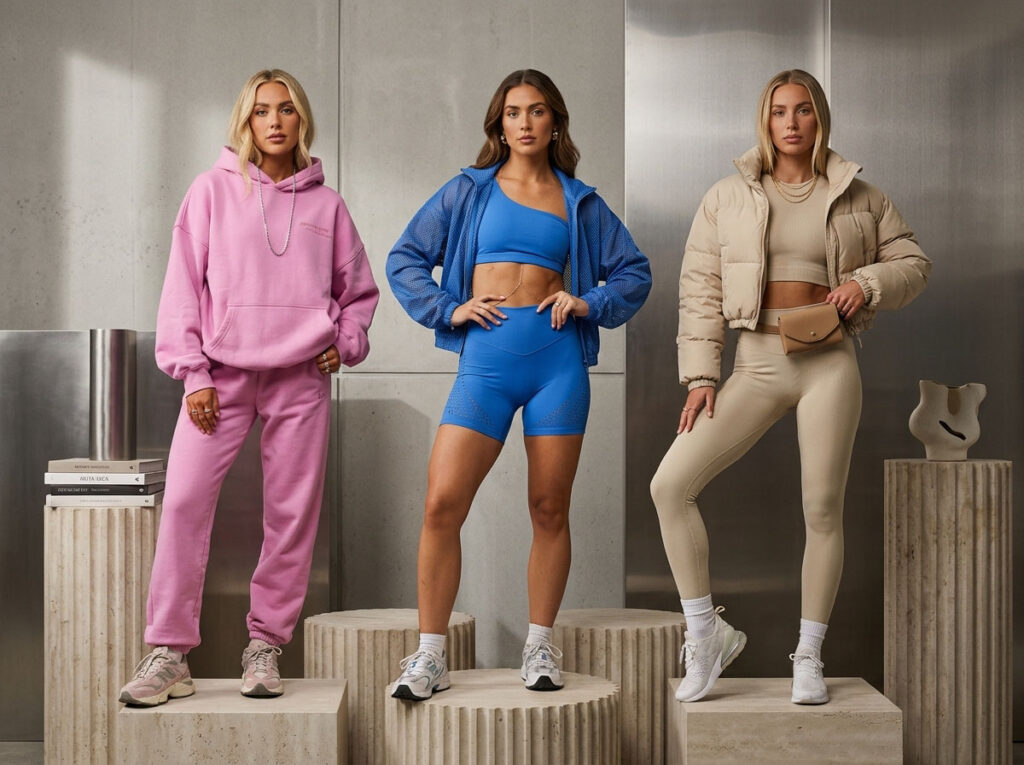
Lululemon uses several named fabric families for different product applications.
| Fabric | Brand-Described Characteristics | Intended Application |
|---|---|---|
| Nulu™ | Lightweight, soft, four-way stretch | Yoga and low-impact activities |
| Luon® | Breathable, cottony-soft, four-way stretch | Yoga and light-impact activities |
| Luxtreme® | Smooth, cool-to-the-touch, sweat-wicking | Running and training |
| Everlux™ | Double-knit construction, designed to manage sweat and dry quickly | High-sweat studio sessions |
| Nulux™ | Lightweight, smooth, sweat-wicking, quick-drying | Running and training |
The key distinction is that these names represent proprietary fabric families and brand positioning. They should not be treated as generic textile categories or exact manufacturing specifications.
A factory developing a similar fabric direction needs to identify the actual fiber blend, yarn characteristics, knit construction, weight, finishing process, and performance targets.
Comparing these fabrics is useful for understanding different activewear design priorities. However, the available public information does not establish a controlled laboratory ranking between them.
| Comparison Point | Athleta Powervita | Lululemon Nulu | Lululemon Luon | Lululemon Everlux |
|---|---|---|---|---|
| Main positioning | Soft support | Lightweight softness | Cottony softness | Technical studio performance |
| Stretch | Product-dependent | Four-way stretch | Four-way stretch | Product-dependent |
| Construction details | Must verify by product | Must verify by product | Must verify by product | Double-knit construction |
| Typical product direction | Yoga and studio wear | Yoga wear | Yoga and light-impact wear | High-sweat studio wear |
| OEM development focus | Softness and support | Lightweight hand feel and stretch | Soft hand feel and functional stretch | Layered knit performance and moisture management |
A branded fabric name is not enough to reproduce a product’s performance.
Instead, translate the target experience into measurable requirements:
Softness: Specify the desired hand feel, surface finish, and acceptable variation between production lots.
Compression: Define the intended support level and the stretch-force range required for the garment.
Coverage: Set an opacity requirement under a defined fabric extension.
Moisture management: Specify the required wicking and drying test methods.
Durability: Establish acceptable pilling, abrasion, and colorfastness results.
This approach gives a manufacturer a practical development brief instead of an open-ended request to copy a branded fabric.
High-quality activewear fabric is a combination of fiber selection, yarn engineering, knitting structure, finishing, and quality control.
A fabric can feel exceptionally soft but still have poor recovery. Another may provide strong compression but feel too restrictive for yoga. The right material depends on the intended garment and consumer experience.
Nylon, polyester, and elastane are common fibers in stretch activewear.
| Fiber | Common Function in Activewear | Development Consideration |
|---|---|---|
| Nylon | Soft hand feel, strength, and abrasion-related performance | Evaluate cost, surface appearance, and durability |
| Polyester | Versatile performance fiber and color application options | Assess moisture management, hand feel, and pilling |
| Elastane / Spandex | Stretch and elastic recovery | Control blend ratio and fabric tension |
| Recycled polyester | Recycled-content option for selected constructions | Verify recycled-content documentation and traceability |
Fiber percentages alone do not determine quality. Yarn type, filament structure, knitting density, and finishing can produce different results even when two fabrics have similar compositions.
The knitting structure affects stretch, thickness, surface appearance, and stability.
Interlock knit: Its double-knit structure can provide a stable, smooth fabric suitable for selected activewear applications.
Single jersey: A common knit structure that can offer a lighter construction, depending on yarn and machine settings.
Rib knit: Its ribbed structure provides pronounced elasticity and is often used in fitted panels or textured activewear.
Specialty double-knit structures: These can be engineered for specific surface and moisture-management characteristics.
The right construction should be selected according to the garment’s movement, compression, coverage, and durability requirements.
GSM means grams per square meter. It is a measurement of fabric mass per unit area, not a direct measure of quality.
A higher GSM does not automatically mean better coverage or durability. Yarn structure, fabric density, color, stretch, and finishing also influence performance.
For OEM development, specify a target GSM and an acceptable tolerance. Confirm the final weight on approved bulk fabric rather than relying only on a sample description.
There is no universal best GSM or fiber blend for all leggings. Yoga leggings, running tights, and compression leggings have different functional requirements.
The following table is a practical specification framework for product development. The values must be finalized through sampling and testing rather than treated as universal industry standards.
| Specification | What Buyers Should Define | Why It Matters |
|---|---|---|
| Fiber composition | Exact percentages by fiber | Establishes material identity |
| Fabric weight | Target GSM and tolerance | Supports consistency between lots |
| Knit construction | Single jersey, interlock, or other specified construction | Influences stretch and surface properties |
| Stretch | Required extension in length and width | Supports movement and fit |
| Recovery | Maximum acceptable residual deformation | Helps prevent bagging and loss of fit |
| Opacity | Required coverage under defined extension | Important for fitted bottoms |
| Pilling | Required test method and acceptance grade | Controls surface appearance |
| Shrinkage | Maximum dimensional change after washing | Helps maintain garment measurements |
| Colorfastness | Required washing and rubbing performance | Supports product durability |
| Finishing | Brushing, heat setting, or other specified treatments | Influences hand feel and stability |
A buyer can provide a specification brief like the following:
| Item | Example Requirement |
|---|---|
| Product | High-waisted yoga leggings |
| Fabric direction | Soft nylon-elastane stretch knit |
| Fiber composition | To be confirmed with selected fabric |
| GSM | To be confirmed after swatch evaluation |
| Stretch | Four-way stretch |
| Hand feel | Smooth, soft, and supportive |
| Coverage | Must meet agreed opacity requirement |
| Pilling | Test result must meet buyer-approved grade |
| Shrinkage | Must remain within agreed tolerance |
| Color | Approved lab dip or physical color standard |
| Sample approval | Fabric swatch, fit sample, and pre-production sample |
This brief gives the manufacturer a clear starting point while leaving technical parameters open for sample development.
A meaningful comparison between activewear fabrics requires controlled testing. Comparing two leggings by touch alone cannot establish which fabric has better recovery, abrasion resistance, or dimensional stability.
For a practical OEM fabric evaluation, use three sample groups:
Sample A – Nylon-elastane knit: A soft stretch fabric intended for yoga leggings.
Sample B – Polyester-elastane knit: A performance-oriented alternative for training or running products.
Sample C – Alternative nylon-elastane construction: A second nylon-based sample with a different knit structure or finishing treatment.
Where possible, match the GSM, color, and intended application. Record differences that cannot be controlled.
| Test | Suggested Method | Data to Record | Sample A | Sample B | Sample C |
|---|---|---|---|---|---|
| GSM | ASTM D3776 | g/m² | Pending | Pending | Pending |
| Dimensional change | ISO 6330 and ISO 5077 | Length and width change (%) | Pending | Pending | Pending |
| Pilling | ISO 12945 series | Pilling grade | Pending | Pending | Pending |
| Abrasion | Applicable abrasion test method | Cycles and appearance | Pending | Pending | Pending |
| Stretch recovery | Defined internal test protocol | Extension and residual deformation | Pending | Pending | Pending |
| Colorfastness | Relevant ISO 105 method | Color change and staining grades | Pending | Pending | Pending |
| Opacity | Controlled extension and light conditions | Transmittance or image assessment | Pending | Pending | Pending |
Important: This is a proposed test plan, not a report of completed laboratory testing. Actual results should be entered only after samples have been tested under documented conditions.
Dimensional change after washing can be calculated using the following formula:
Dimensional Change (%) = [(After-Wash Measurement − Original Measurement) ÷ Original Measurement] × 100
For example, if a fabric panel measures 50 cm before washing and 49 cm afterward:
Dimensional change = [(49 − 50) ÷ 50] × 100 = −2%
A negative result indicates shrinkage, while a positive result indicates growth.
For reliable comparison, measure both length and width, follow the same washing and drying procedure, and test multiple specimens.
Stretch recovery is important because leggings repeatedly extend during squats, lunges, and other movements.
A controlled internal protocol should define:
The original specimen length.
The target extension percentage.
The time held at extension.
The recovery time after releasing the load.
The final specimen length.
The residual deformation can then be calculated from the difference between the original and recovered lengths.
Do not compare recovery results from different protocols as if they were equivalent. Extension percentage, applied force, specimen dimensions, and recovery time must be consistent.
Use a report like this when the fabric tests are completed:
| Test Metric | Sample A | Sample B | Sample C | Buyer Requirement |
|---|---|---|---|---|
| GSM | Enter result | Enter result | Enter result | Approved range |
| Length change | Enter result | Enter result | Enter result | Agreed tolerance |
| Width change | Enter result | Enter result | Enter result | Agreed tolerance |
| Pilling grade | Enter result | Enter result | Enter result | Approved grade |
| Abrasion result | Enter result | Enter result | Enter result | Agreed threshold |
| Stretch recovery | Enter result | Enter result | Enter result | Approved range |
| Colorfastness | Enter result | Enter result | Enter result | Approved grade |
The final report should include the test date, sample ID, supplier, fabric composition, test conditions, equipment, and number of specimens. This makes the data traceable and useful for future production orders.
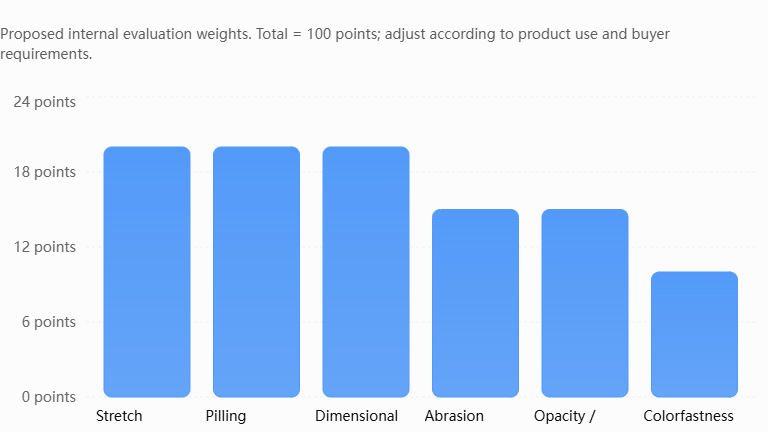
Fabric construction can change the way a garment feels and performs, even when the fiber composition remains the same.
For example, two fabrics made from similar nylon-elastane blends may differ in thickness, surface texture, compression, and recovery because of differences in yarn, knitting density, and finishing.
For OEM development, buyers should evaluate the complete fabric system:
Yarn selection: Filament type and yarn construction influence softness, strength, and surface appearance.
Knitting parameters: Machine gauge, stitch length, and fabric density influence the finished structure.
Dyeing and finishing: Processing conditions can affect shade consistency, hand feel, and dimensional stability.
Heat setting: Controlled heat treatment can help stabilize certain synthetic stretch fabrics.
Garment construction: Seam placement, stitch type, waistband engineering, and panel design influence the final fit and durability.
This is why a fabric swatch should be followed by a garment sample. Fabric performance in isolation does not fully predict garment performance.
Brands looking to develop activewear inspired by the performance and positioning of established labels should focus on product requirements rather than copying a brand name.
A structured OEM development process helps align fabric selection, fit, construction, and quality expectations.
Start with the intended activity and customer profile.
For example, yoga leggings may prioritize softness, stretch, and coverage. Running tights may require more attention to moisture management, secure storage, and abrasion resistance.
Share the target composition, hand feel, GSM range, stretch requirements, and reference samples with the manufacturer.
If the exact fabric is not available, request alternative swatches and compare them against the same evaluation criteria.
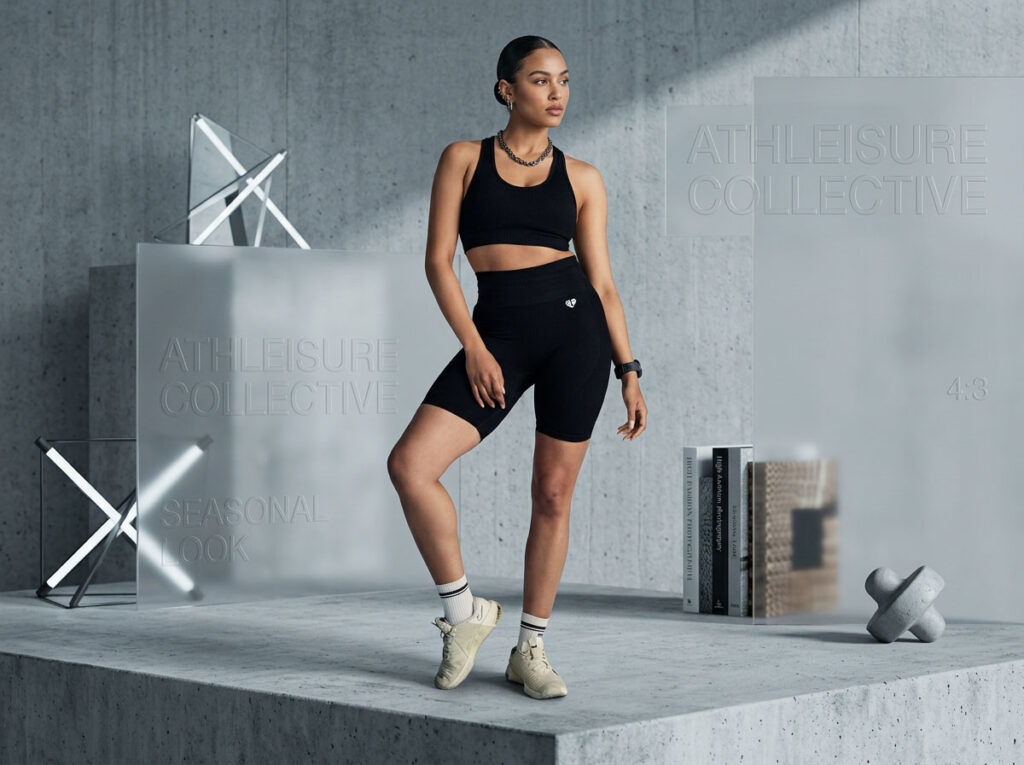
A complete activewear tech pack should include:
Technical sketches: Front, back, and detail views to communicate the garment design.
Measurement specifications: Point-of-measurement diagrams, size chart, and tolerances.
Fabric details: Composition, GSM, construction, color, and finishing requirements.
Trim specifications: Waistband elastic, drawcords, labels, and other components.
Construction details: Seam types, stitch requirements, reinforcement, and panel placement.
Testing requirements: Agreed quality tests and acceptance criteria.
A clear tech pack reduces misunderstandings during sampling and bulk production.
Review fabric swatches, fit samples, and pre-production samples before bulk manufacturing.
Check the fit during movement, not only when the garment is laid flat. Evaluate waistband stability, seam comfort, stretch recovery, opacity, and pocket function where applicable.
Before placing a bulk order, agree on the approved sample, material specifications, inspection process, packaging requirements, and acceptable quality limits.
The same specifications should be used for production inspections so that the approved sample becomes a meaningful quality reference.
Choosing a manufacturer requires more than comparing quoted prices. Buyers should understand how the supplier handles fabric sourcing, product development, quality control, and production communication.
| Question | What a Reliable Answer Should Explain |
|---|---|
| Can you source nylon-elastane and polyester-elastane fabrics? | Available compositions, fabric options, and sourcing limitations |
| Can you provide fabric swatches? | Available colors, weights, and sample approval process |
| Can you develop custom leggings? | Pattern development, construction, and fit sampling |
| How do you control fabric quality? | Incoming inspection and fabric testing procedures |
| Can you conduct shrinkage and pilling tests? | Test methods, facilities, and reporting arrangements |
| How do you control bulk consistency? | Material approval, production checks, and final inspection |
| What are your MOQ and lead times? | Product-specific minimums and confirmed production schedules |
| Can you support private-label branding? | Label, packaging, and customization options |
Ask for evidence when a supplier makes technical claims. A documented test report is more useful than a general statement that a fabric is premium or durable.
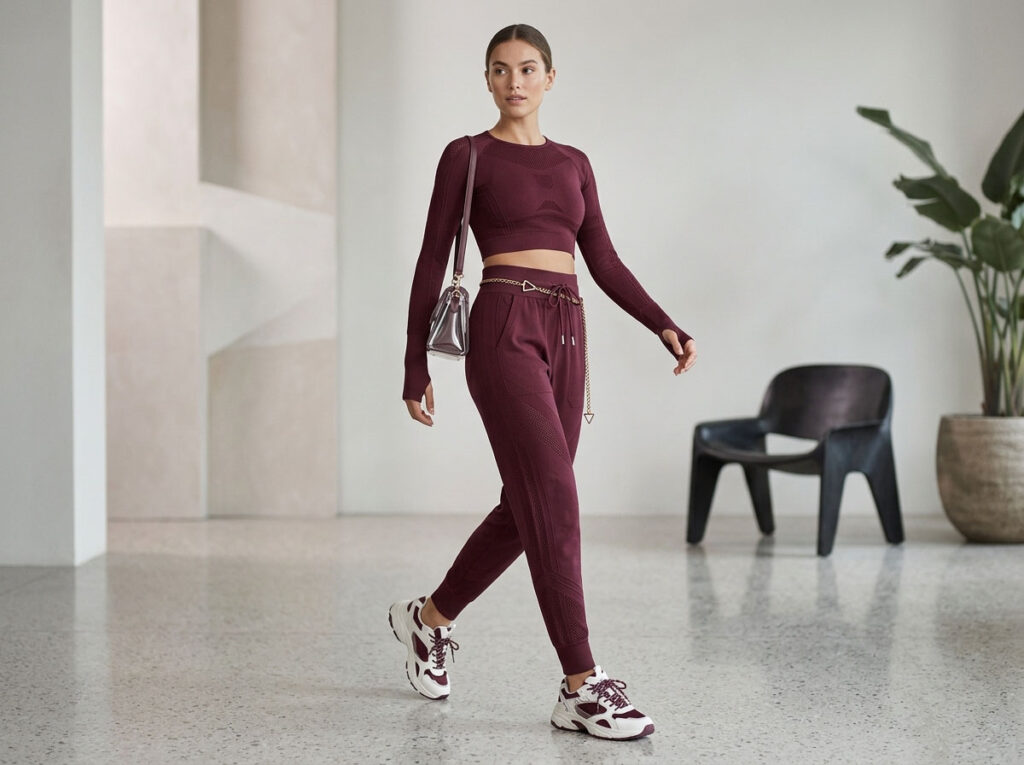
The comparison between Athleta and lululemon shows that premium activewear is built around more than a single fiber blend. Fabric construction, stretch recovery, surface performance, fit engineering, and quality control all contribute to the final product.
For emerging activewear brands, the most useful lesson is to turn product inspiration into measurable manufacturing requirements.
Instead of asking a factory to make leggings “like lululemon” or “similar to Athleta,” define:
The intended fabric composition and construction.
Target GSM and acceptable tolerance.
Stretch and recovery requirements.
Coverage and opacity expectations.
Pilling, abrasion, shrinkage, and colorfastness criteria.
Fit measurements, seam construction, and waistband details.
These specifications create a more reliable foundation for sampling, quotation, and bulk production.
Looking for an activewear OEM/ODM partner?
Liantao Apparel works with apparel buyers and brands developing custom clothing products. If you are planning a private-label activewear collection, prepare your design references, target fabric requirements, and expected order quantity to start a more focused manufacturing discussion.
Contact Liantao Apparel to discuss your custom apparel development requirements.
Neither brand is universally better. Quality varies by product line, fabric construction, garment design, and intended use. Compare specific products and their performance requirements rather than relying only on brand reputation.
Both are positioned around a soft, comfortable activewear experience, but public product descriptions do not establish that they use the same construction or have identical performance. Compare actual fabric samples, compositions, stretch, recovery, and test results.
Lululemon describes Nulu as lightweight and buttery-soft, while Luon is positioned as breathable with a cottony-soft feel and four-way stretch. Their intended applications and fabric characteristics differ.
There is no single best composition. Nylon-elastane and polyester-elastane blends are both used in stretch activewear. The right choice depends on the desired hand feel, compression, coverage, durability, cost, and performance requirements.
GSM depends on the fabric construction, intended activity, and desired coverage. Buyers should evaluate GSM together with opacity, stretch, recovery, and dimensional stability instead of choosing a weight in isolation.
Common evaluation areas include fabric weight, dimensional stability, pilling, abrasion, stretch recovery, and colorfastness. The exact test methods and acceptance criteria should be agreed upon before production.
An OEM manufacturer can develop products using a buyer’s reference samples, target specifications, and approved designs. The development process should focus on original product requirements and measurable performance targets rather than copying proprietary branding or protected designs.
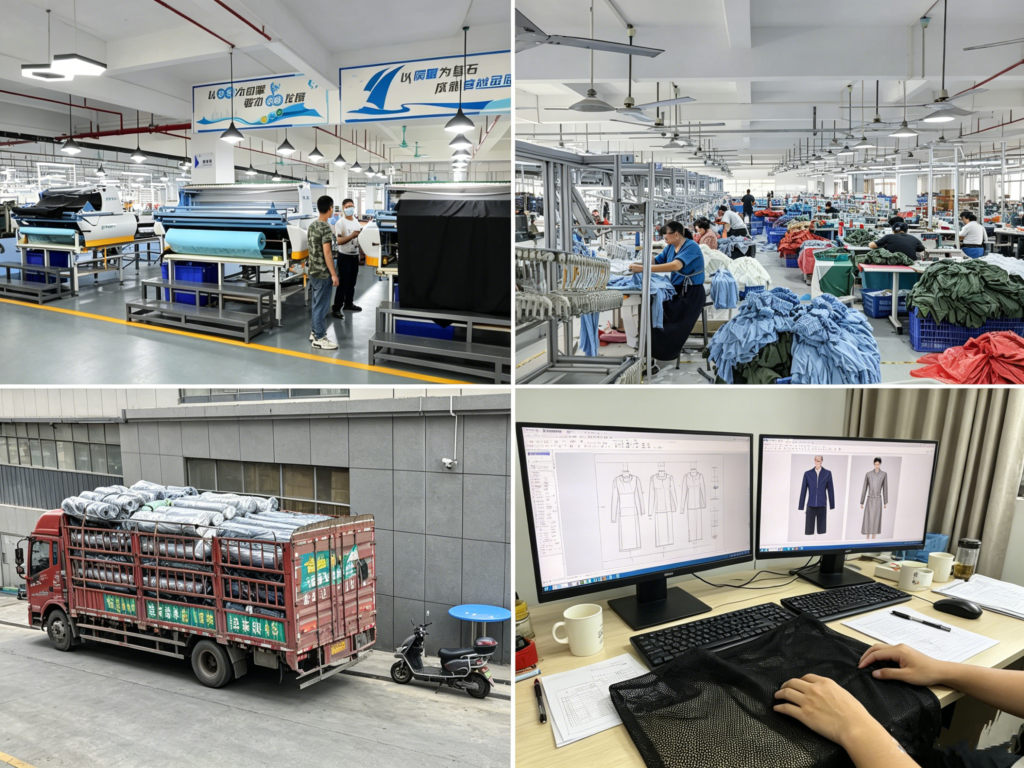
If you have any questions or require a quote, please leave
us a message. Our experts will get back to you within 24 hours to help you choose the ideal fashion products tailored to your needs.
Hi, I’m Lucy Cai, the founder of liantaoapparel.com. I’ve been managing a women’s clothing factory in China for over 16 years. With extensive experience in garment production and OEM services, I’m passionate about sharing insights into women’s fashion, apparel manufacturing, and global sourcing.
If you have any questions or need a quote, please contact us.
Please add us WhatsApp:+86 189 4809 3145
Provide us with detailed information about your requirements, supply design drawings or tech packs,
reference images, and share your ideas.
We will customize the best solution based on your needs and drawings, and provide a specific quote within 24 hours.
Once we receive your confirmation and deposit,we will commence mass production and take care of the subsequent shipping arrangements.


