


🏭 Looking for a Custom Apparel Manufacturer?
We are a leading OEM/ODM clothing factory with 20+ years of export experience. Custom styles, flexible MOQs, and retail-ready quality.
From weight-training sessions to streetwear outfits, sleeveless hoodies combine the recognizable shape of a hoodie with the freedom of a sleeveless top. They appeal to fitness enthusiasts, casualwear consumers, and fashion brands looking for a product that can bridge performance and lifestyle apparel.
But are sleeveless hoodies genuinely practical, or are they mainly a fashion statement?
The answer depends on the design. Armhole dimensions, fabric weight, stretch, hood construction, and overall fit all affect how a sleeveless hoodie performs. A garment designed for lifting may need different features from one created for streetwear or warm-weather layering.
In this guide, we examine popular sleeveless hoodie styles, compare fabric options, and introduce a repeatable testing framework that brands can use before placing a production order.
Testing note: The scorecard and test protocol below are proposed evaluation tools, not completed laboratory results. No physical garments were tested for this article, so no measured performance scores or consumer survey results are presented as facts.
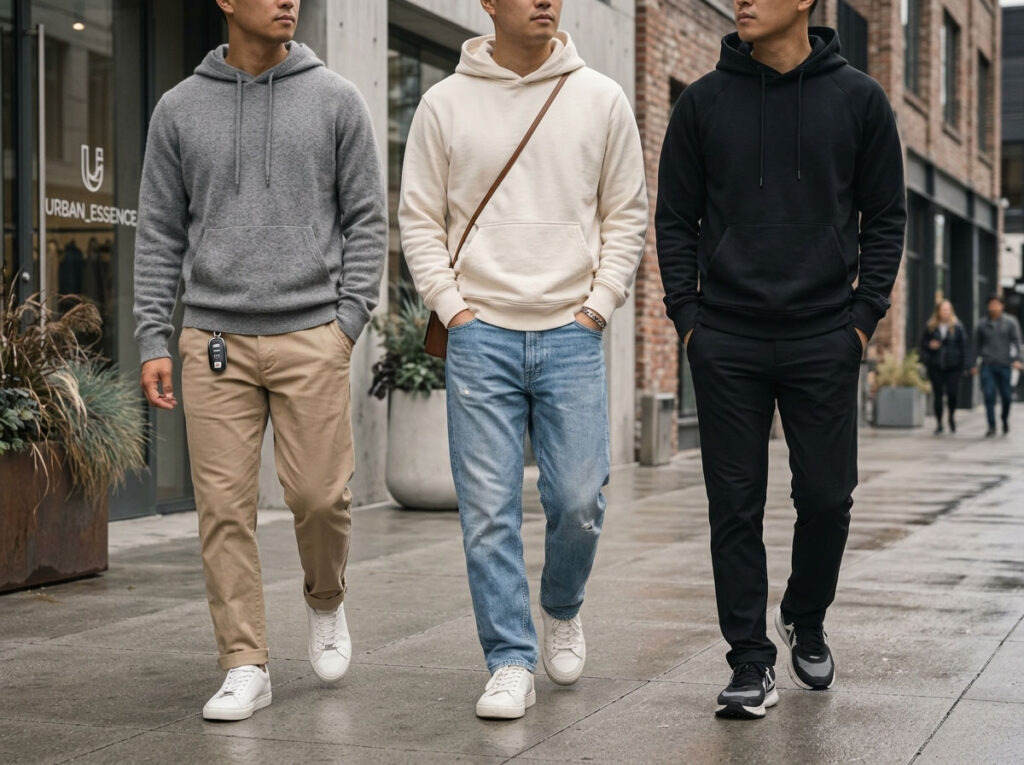
A sleeveless hoodie is a hybrid garment that combines a hood, a sleeveless body, and the general silhouette of a traditional hoodie. It may have a pullover or zip-up design, drawstrings, kangaroo pockets, ribbed hems, or raw-cut armholes.
Its popularity is linked to fitness apparel, bodybuilding culture, streetwear, and the wider adoption of athleisure. The garment offers an alternative to a conventional sweatshirt when wearers want less sleeve coverage or a different visual silhouette.
Sleeveless hoodies are particularly recognizable in gym and streetwear settings, but their appeal comes from several overlapping uses.
The design’s appeal is therefore not just about removing sleeves. It is about balancing movement, coverage, comfort, and a recognizable silhouette.
A repeatable product evaluation is more useful than relying on appearance alone. Before production, brands can compare a sleeveless hoodie against a conventional hoodie or tank top using the same test conditions.
Proposed sample test:
Using multiple samples helps identify inconsistencies that a single garment cannot reveal. For formal performance claims, use appropriate calibrated equipment and a qualified textile-testing laboratory.
Sleeveless hoodies vary in fit, length, closure, and intended use. Some emphasize muscular definition and gym performance, while others prioritize oversized proportions or layering.
The best style depends on the target customer, the intended activity, and the overall collection.
| Style Name | Main Characteristics | Best Use Case |
|---|---|---|
| Muscle-Fit Hoodie | Close fit through the chest, with open armholes | Gymwear and bodybuilding-inspired collections |
| Oversized Cropped | Boxy proportions with a shorter body | Streetwear and fashion-led collections |
| Zip-Up Hoodie Vest | Sleeveless construction with a full or partial front zip | Layering, travel, and lifestyle apparel |
| Elongated Hoodie | Longer body, sometimes with curved hems or side slits | Layered outfits and contemporary casualwear |
Each cut creates a different fit and styling effect. Brands should evaluate the body length, chest ease, armhole depth, and hem width together rather than choosing a silhouette based on a product photograph alone.
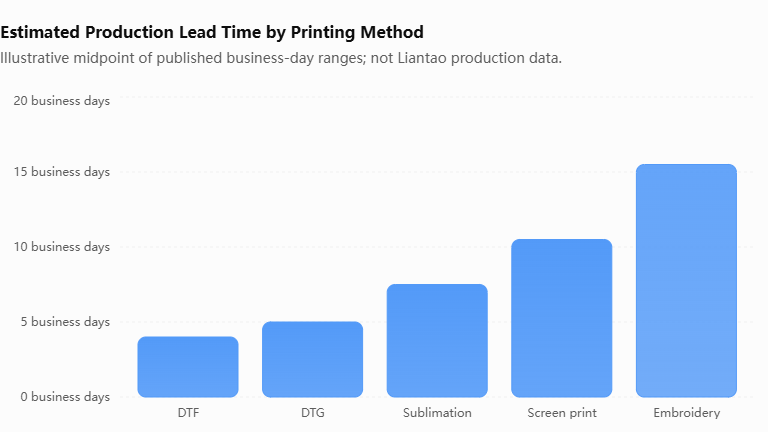
These are design directions to consider, not a quantified ranking of current market demand. Brands should validate color and graphic decisions with their own sales history, customer feedback, and competitor research.
To compare styles consistently, measure each sample against the same criteria rather than relying only on subjective preference.
| Evaluation Item | What to Record | Why It Matters |
|---|---|---|
| Armhole Fit | Depth, width, edge finish, and rubbing during movement | Helps identify restrictive or excessively open cuts |
| Body Fit | Chest width, body length, and hem circumference | Determines whether the garment feels fitted, regular, or oversized |
| Hood Stability | Hood position during walking and bending | Checks whether the hood shifts or feels excessively heavy |
| Layering Compatibility | Fit over a tank top or T-shirt | Shows whether the style works as part of a coordinated outfit |
| Construction | Seam quality, reinforcement, and visible defects | Helps assess consistency before bulk production |
For reliable comparisons, record the size tested and the wearer’s measurements. Fit results from one size or body type should not automatically be generalized to every customer.
Fabric selection determines much of a sleeveless hoodie’s comfort, drape, durability, and suitability for printing or embroidery.
Cotton jersey may suit lightweight casual designs, French terry offers a midweight hoodie structure, and stretch blends can support close-fitting styles. Performance mesh may be useful for ventilation, while brushed blends can provide a softer interior.
| Fabric Type | Typical Characteristics | Ideal Application |
|---|---|---|
| Cotton Jersey | Lightweight, soft, and relatively easy to print | Casual styles and lightweight layering |
| French Terry | Loopback interior with a structured but flexible drape | Midweight lifestyle and streetwear hoodies |
| Cotton-Spandex Blend | Added stretch and recovery, depending on the blend | Fitted silhouettes and movement-focused designs |
| Performance Mesh | Open structure that can support airflow | Selected training and warm-weather products |
| Brushed Polyester-Cotton Blend | Softened interior and a smooth exterior, depending on construction | Casual and entry-level lifestyle collections |
Fabric performance depends on more than fiber content. Yarn, knit structure, finishing, dyeing, and garment construction can all affect the finished product.
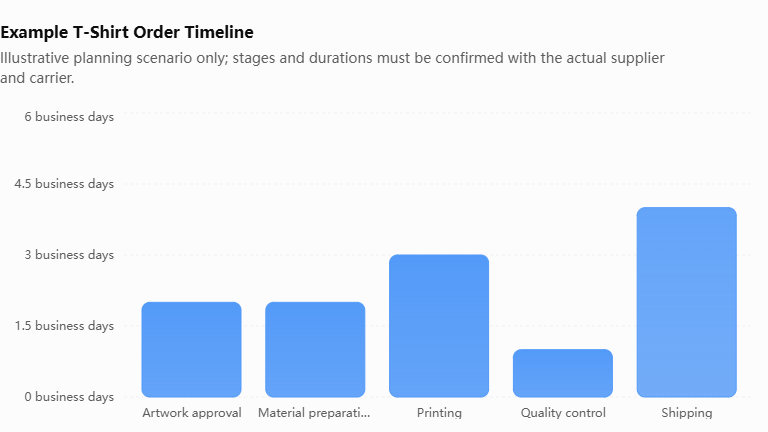
Brands may also consider lower-impact material options when they fit the product’s performance, cost, and sourcing requirements.
A sustainability claim should be supported by supplier documentation and relevant certification rather than inferred from a fiber name alone.
Instead of declaring one fabric the best for every use, compare candidate materials against the same requirements.
Proposed fabric evaluation protocol
| Test | Measurement or Record | What It Helps Determine |
|---|---|---|
| Fabric Weight | GSM from a defined test method | Whether the material matches the intended weight specification |
| Stretch and Recovery | Extension and recovery under a specified load | Suitability for fitted designs and repeated movement |
| Dimensional Stability | Measurements before and after defined wash cycles | Whether the garment or fabric changes size |
| Colorfastness | Results from an appropriate standardized test | Resistance to color change or transfer under specified conditions |
| Pilling Resistance | Result from a specified abrasion or pilling method | Likelihood of visible surface wear under the test conditions |
| Print or Embroidery Compatibility | Sample results, adhesion or appearance checks | Whether the selected decoration method suits the fabric |
For production decisions, use the same test conditions for each candidate fabric. Record the test method, sample size, equipment, wash settings, and acceptance criteria so the comparison can be repeated.
The following chart shows a suggested weighting system for a brand comparing fabrics for a general-purpose sleeveless hoodie. These percentages are planning weights, not measured product scores or industry benchmarks.
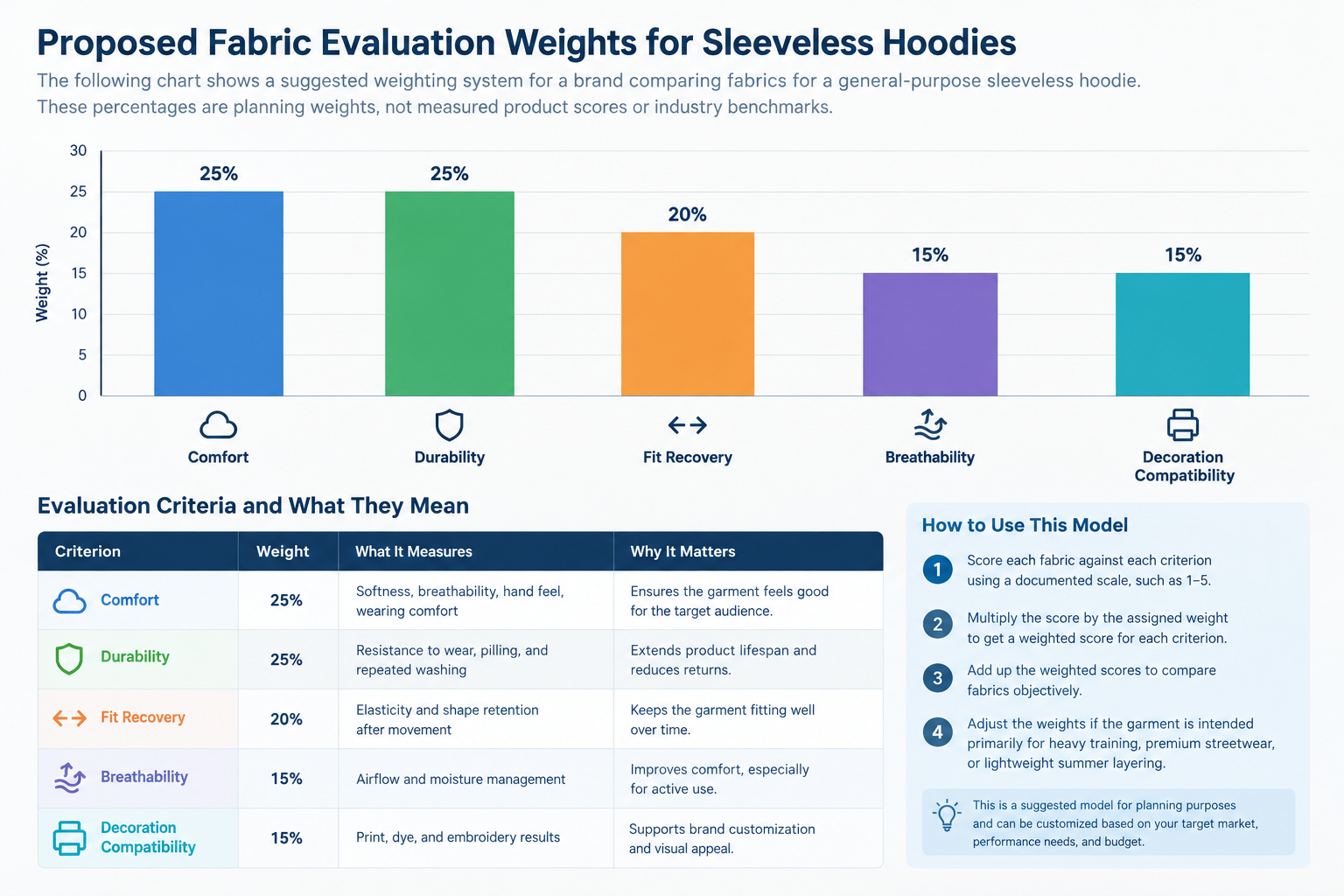
To use this model, score each fabric against each criterion using a documented scale, such as 1–5, and multiply the score by the assigned weight. Change the weights if the garment is intended primarily for heavy training, premium streetwear, or lightweight summer layering.
No. Although sleeveless hoodies are associated with fitness, their design can also suit streetwear, loungewear, festival outfits, and layered casualwear.
The same basic garment can serve different markets through changes in fabric weight, fit, color, graphic placement, pockets, and finishing.
These applications are not interchangeable in every case. A garment designed for intense training may need different fabric and construction specifications from one intended primarily for fashion.
| Audience Type | Potential Appeal | Product Development Priority |
|---|---|---|
| Gen Z and Younger Adult Consumers | Styling flexibility and distinctive silhouettes | Trend-led colors, graphics, and fit options |
| Bodybuilding and Fitness Consumers | Open-arm design and a gym-focused appearance | Armhole fit, movement, and fabric comfort |
| Urban Fashion Consumers | Layering and streetwear styling | Proportions, trims, graphic placement, and drape |
| Athleisure Consumers | Combination of casual styling and practical wear | Versatility, softness, easy care, and fit consistency |
This table is a product-positioning framework, not the result of a consumer survey. Validate audience assumptions through sales data, interviews, product trials, and customer reviews before committing to a large order.
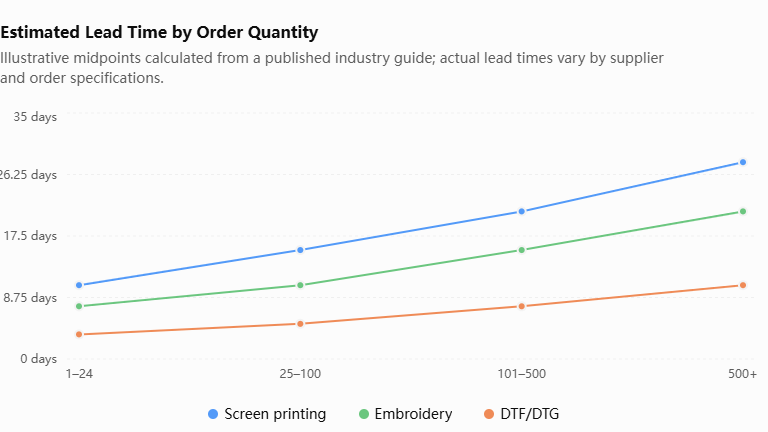
Yes, low-volume customization may be possible, depending on the factory, fabric availability, pattern requirements, decoration method, and order complexity.
A low minimum order quantity (MOQ) can help emerging brands test a new style, run a limited collection, or evaluate customer response before scaling. However, low MOQ does not automatically mean lower unit cost: pattern development, sampling, setup, and custom trims may be spread across fewer garments.
At Liantao, custom sleeveless hoodie projects should be scoped around the product specification and target quantity. Confirm the available MOQ, sampling charges, production lead time, and customization options with the manufacturer before treating them as fixed terms.
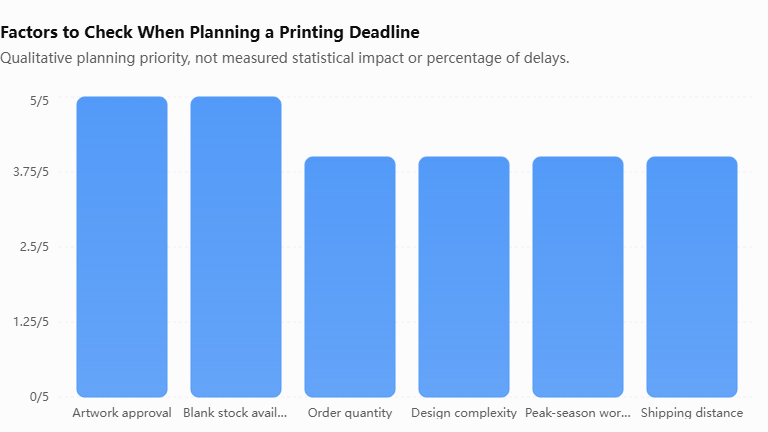
A brand considering a 100-piece test run can begin with one base style, one or two stock fabric options, and a limited number of colorways.
The project brief should identify the garment size range, size ratio, print or embroidery details, packaging, target delivery date, and acceptable quality standards.
This is an example of a planning scenario, not a verified customer case or a quotation. Actual costs and feasibility must be confirmed with the factory.
To assess whether the trial is commercially viable, calculate:
These figures help a brand decide whether to expand the product, revise the design, or run another small test.
Sleeveless hoodies offer many customization options because their silhouette can be changed through fit, length, fabric, graphics, and trims.
The key is to select details that reinforce the product’s purpose. A performance garment may prioritize mobility and wash durability, while a streetwear piece may emphasize silhouette, surface decoration, and distinctive branding.
| Method | Typical Application | Development Check |
|---|---|---|
| Embroidery | Chest logos, small badges, or back branding | Check puckering, stitch density, and comfort against the body |
| Puff Print | Raised graphics on the front or back | Confirm the effect is compatible with the fabric and intended wash care |
| Silicone Patch | Small logos or branded badges | Check attachment strength, placement, and hand feel |
| Sublimation | All-over graphics on suitable polyester-rich materials | Confirm fiber compatibility and color appearance before production |
The decoration method should be chosen after the fabric is selected. Not every printing technique is suitable for every fiber, finish, or garment color.
At Liantao, the development process can begin with a sketch, reference garment, or technical pack. Before bulk production, confirm the approved sample, measurement tolerances, decoration placement, material specifications, and quality requirements.
A useful test is to compare the approved sample with the original specification, rather than judging the garment only by appearance.
For stronger evidence, retain pre-test and post-test measurements, photographs, test settings, and sample identifiers. If the results will support public performance claims, use an appropriate standardized method and report the conditions accurately.
Sleeveless hoodies can be a useful addition to fitness, streetwear, athleisure, and lifestyle collections, but their success depends on more than removing the sleeves from a conventional hoodie.
The most important product decisions include:
The testing framework in this article is a starting point. It becomes genuine product evidence only after the tests are carried out, the results are recorded, and the findings are reported transparently.
At Liantao, brands can approach sleeveless hoodie development as a complete apparel project—from fabric and fit decisions through sampling, customization, production planning, and quality control.
The most effective product is not necessarily the most complicated one. It is the one whose fit, materials, construction, branding, and cost align with the needs of the intended customer, with claims supported by evidence rather than assumptions.
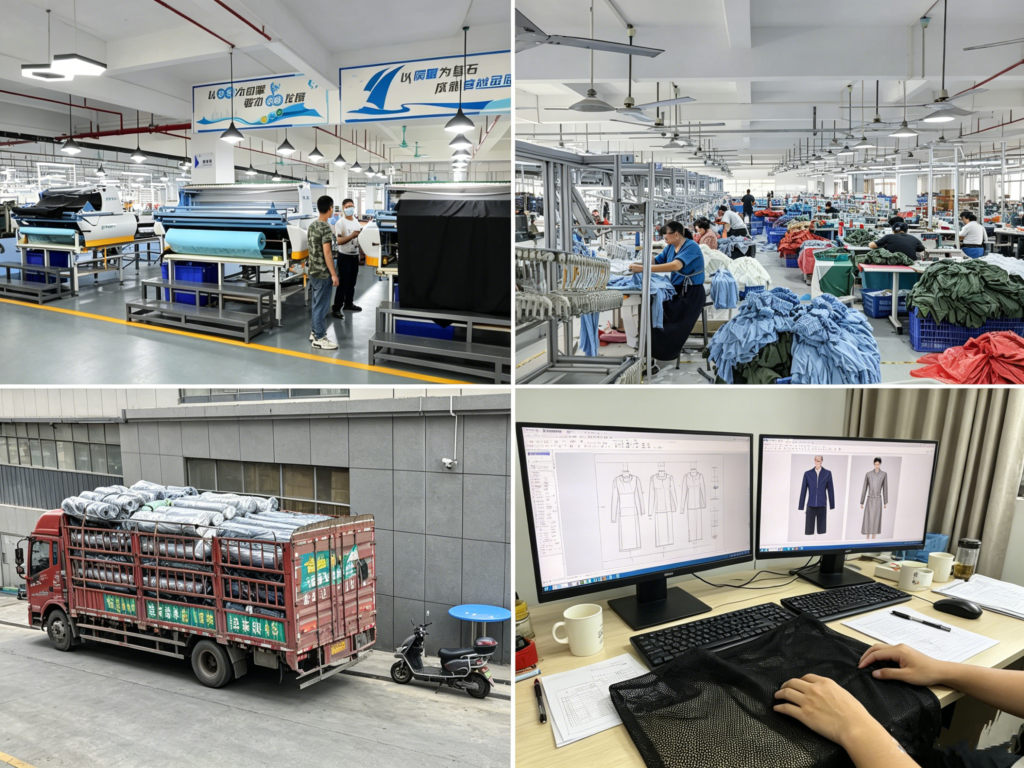
If you have any questions or require a quote, please leave
us a message. Our experts will get back to you within 24 hours to help you choose the ideal fashion products tailored to your needs.
Hi, I’m Lucy Cai, the founder of liantaoapparel.com. I’ve been managing a women’s clothing factory in China for over 16 years. With extensive experience in garment production and OEM services, I’m passionate about sharing insights into women’s fashion, apparel manufacturing, and global sourcing.
If you have any questions or need a quote, please contact us.
Please add us WhatsApp:+86 189 4809 3145
Provide us with detailed information about your requirements, supply design drawings or tech packs,
reference images, and share your ideas.
We will customize the best solution based on your needs and drawings, and provide a specific quote within 24 hours.
Once we receive your confirmation and deposit,we will commence mass production and take care of the subsequent shipping arrangements.


