


🏭 Looking for a Custom Apparel Manufacturer?
We are a leading OEM/ODM clothing factory with 20+ years of export experience. Custom styles, flexible MOQs, and retail-ready quality.
A sweatshirt may look simple, but fabric weight, fit, construction, and decoration can significantly change how it feels, performs, and fits a brand’s positioning. A lightweight French terry sweatshirt serves a different purpose from a heavyweight fleece pullover, while embroidery and graphic printing create different visual effects and production requirements.
In this guide, Liantao explores 17 sweatshirt types, explains how to compare their fabrics and construction, and outlines practical tests brands can use before committing to bulk production.
Rather than relying on trend claims alone, we recommend evaluating sweatshirts against documented criteria such as garment weight, dimensional stability, pilling, fit consistency, and decoration performance. This makes product development more repeatable and helps brands communicate product differences more accurately.
Fabric weight is one of the first specifications to establish when developing a sweatshirt. It influences drape, perceived thickness, warmth, and material consumption. However, GSM alone does not determine quality: fiber composition, knit structure, finishing, and construction also matter.
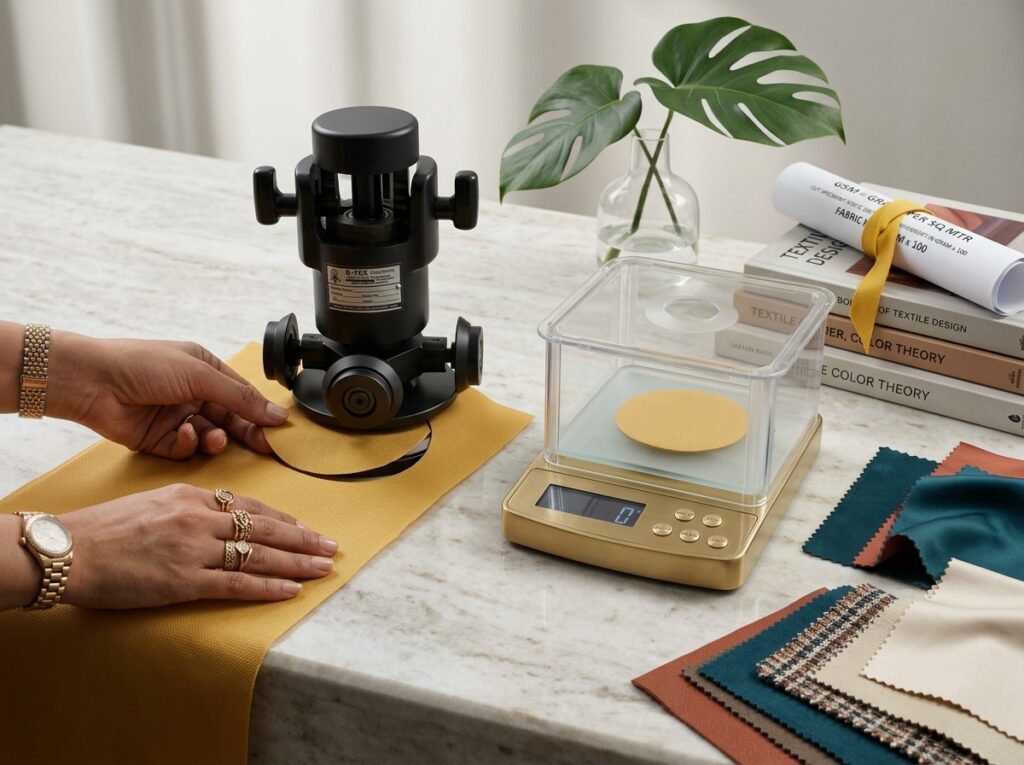
| Weight Class | Approximate GSM | Typical Applications | Key Checks |
|---|---|---|---|
| Lightweight | 180–240 | Layering, mild climates, lightweight athleisure | Opacity, drape, seam stability |
| Midweight | 250–310 | Everyday casualwear, branded apparel | Shape retention, comfort, decoration |
| Heavyweight | 340–450 | Streetwear, structured fits, colder weather | Bulk, shrinkage, seam strength |
These ranges are practical product-development categories, not universal industry standards. Some brands use different cutoffs, so specify GSM and tolerances in the product brief.
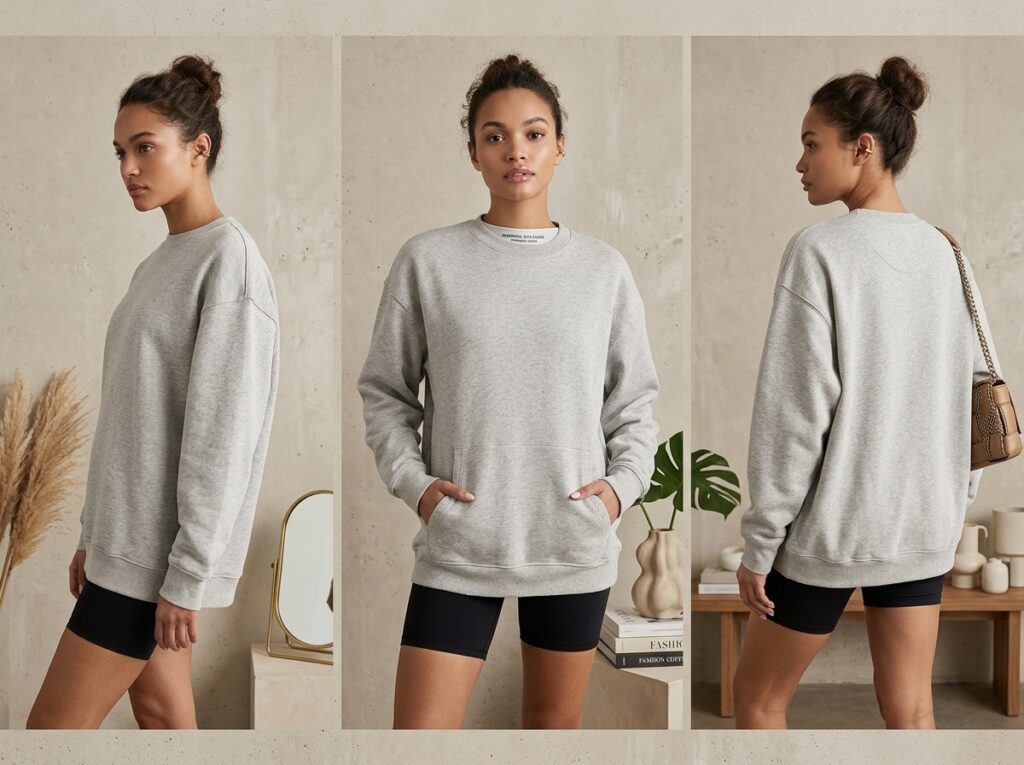
An oversized sweatshirt uses additional room through the body, shoulders, and sleeves to create a relaxed silhouette. It is frequently used in casualwear and streetwear, but the term should be supported by a clear measurement specification rather than relying on the label alone.
Oversized proportions can communicate comfort, informality, and a bold visual identity. Brands can make the look distinctive through shoulder placement, body length, sleeve volume, and graphic scale.
Claims about oversized sweatshirts dominating sales or search trends should be supported by a named dataset, market, date range, and measurement method. Google Trends uses normalized interest values rather than absolute search volumes, so an index should not be presented as the number of searches.
For a brand-specific investigation, compare search interest for “oversized sweatshirt,” “relaxed fit sweatshirt,” and related terms in the target market over the same period. Then compare those results with internal sales, product-page impressions, and conversion data.
Suggested chart: Monthly search-interest index for three sweatshirt-fit terms in the target country. Populate the chart with an exported Google Trends dataset and disclose the country, date range, search category, and comparison terms.
Oversized sweatshirts pair with jeans, cargo trousers, leggings, and layered outfits. The additional surface area also creates room for back prints, large chest graphics, patches, and contrasting panels.
A relaxed silhouette can allow more ease across a range of body measurements, but it does not automatically eliminate sizing complexity. Brands should test shoulder drop, sleeve length, body width, and garment length across the full size range.
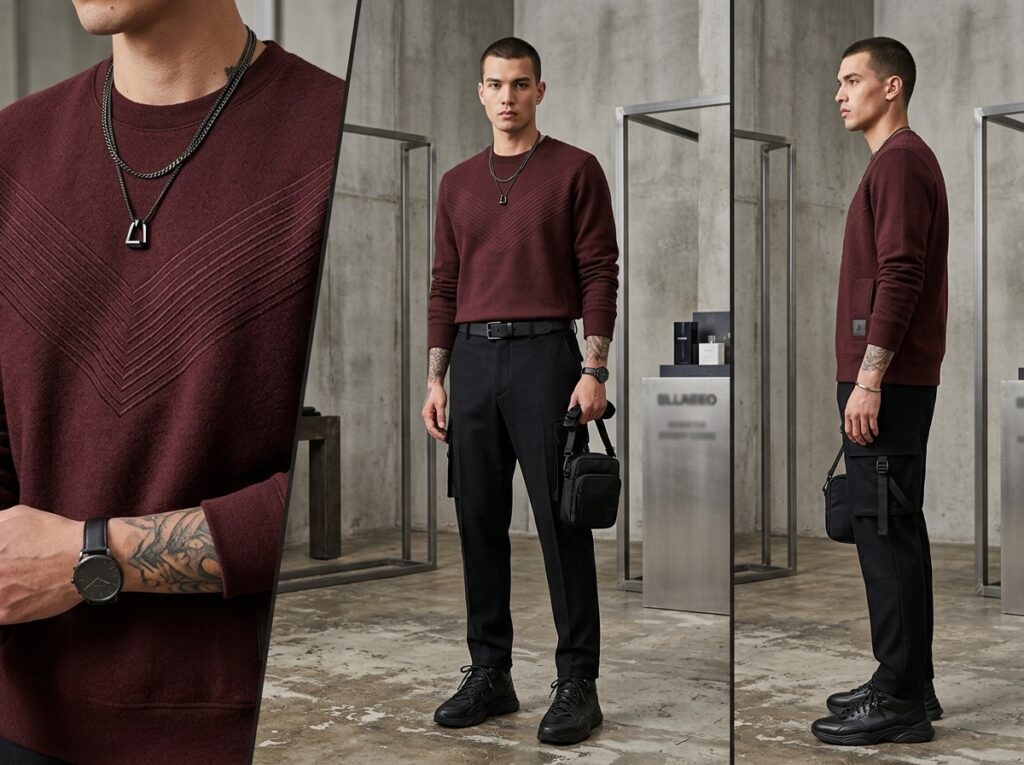
Slim-fit sweatshirts follow the torso more closely than regular-fit designs. They can support a clean, athletic, or minimalist appearance, but require accurate pattern development to avoid restricting movement.
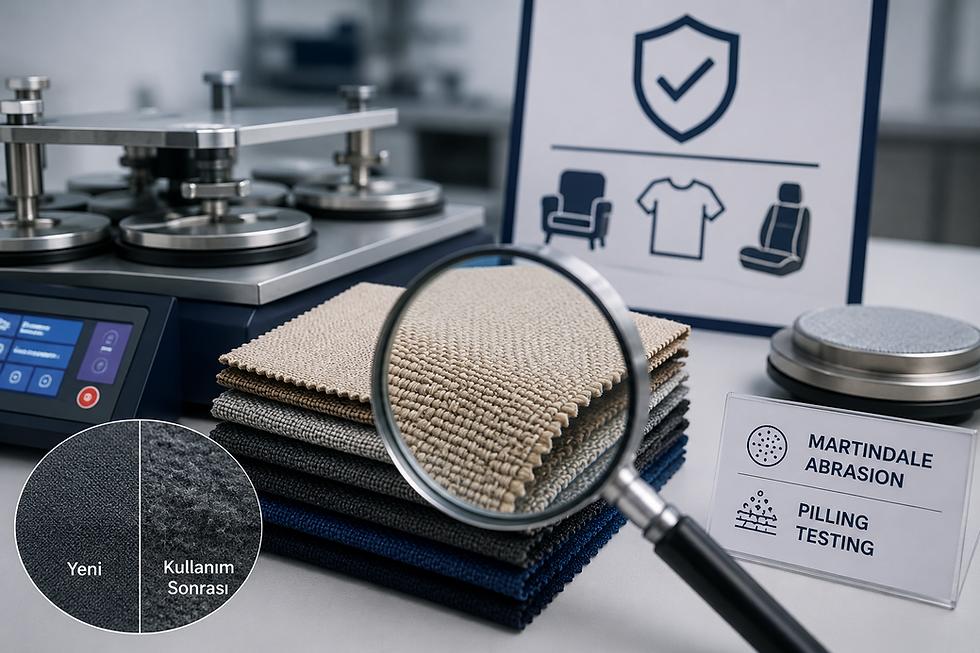
Slim fit is appropriate when a closer silhouette is part of the product concept. Regular fit is a more traditional option for customers who want additional room or plan to layer underneath.
| Feature | Slim Fit | Regular Fit |
|---|---|---|
| Silhouette | Close to the body | Relaxed, balanced shape |
| Shoulder Cut | More fitted | Typically more room |
| Armholes and Sleeves | May be narrower | Usually roomier |
| Layering | Best with light layers | Easier over shirts |
| Development Focus | Fit precision and movement | Proportion and comfort |
Fit communicates a product’s intended use. A closer shape may appeal to shoppers seeking a polished or athletic look, while a regular silhouette may feel more versatile. Validate these assumptions with target-customer feedback rather than treating them as universal preferences.
Slim-fit garments should be assessed during reaching, bending, and other movements relevant to the intended use. Stretch fabric can improve mobility, but pattern geometry and seam placement remain important.
Small measurement deviations can be more noticeable in close-fitting garments. Establish garment measurement tolerances, grading rules, and a sample-approval process before bulk production.
Instead of declaring one fit universally dominant, brands should compare their target customers’ preferences, sales history, and search data. A fit that performs well in one market may not be the best option for another.
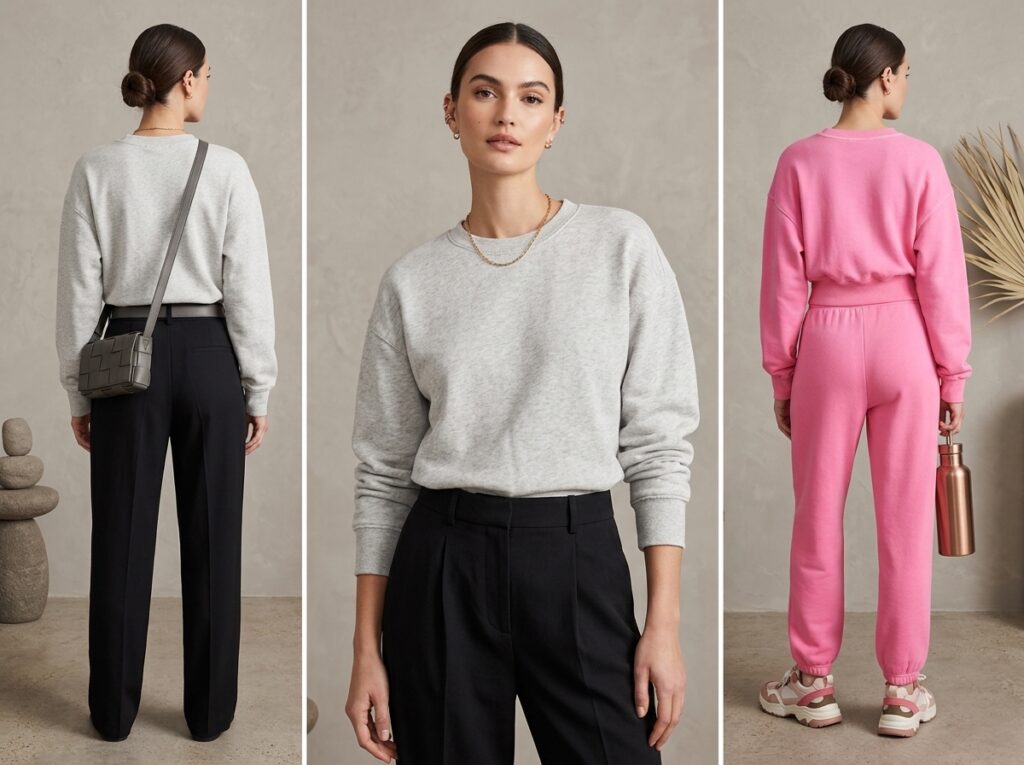
A drop shoulder sweatshirt places the shoulder seam below the wearer’s natural shoulder point. The construction creates a relaxed outline and can increase room around the upper body.
The lowered seam and wider upper body create a casual, boxier appearance. Proportion matters: an excessively wide body combined with long sleeves may make the garment look unbalanced.
| Construction Type | Seam Location | Typical Fit Effect |
|---|---|---|
| Regular Shoulder | Near the natural shoulder edge | More defined shoulder line |
| Drop Shoulder | Lower on the upper arm | Relaxed, wider appearance |
Pattern makers need to account for shoulder extension, sleeve attachment, armhole geometry, and sleeve length. A dropped seam changes the garment’s proportions and should not be treated as a simple extension of a regular-fit pattern.
Drop-shoulder sweatshirts can work in streetwear, casual collections, and gender-inclusive ranges. Use sample fittings to establish whether the proportions work across the intended size range.
The result depends on garment proportions and personal preference. The following design considerations help teams evaluate the silhouette:
| Design Consideration | What to Evaluate |
|---|---|
| Shoulder proportion | Seam drop and overall width |
| Sleeve shape | Length, volume, and cuff position |
| Layering | Comfort under outerwear |
| Movement | Reaching and bending tests |
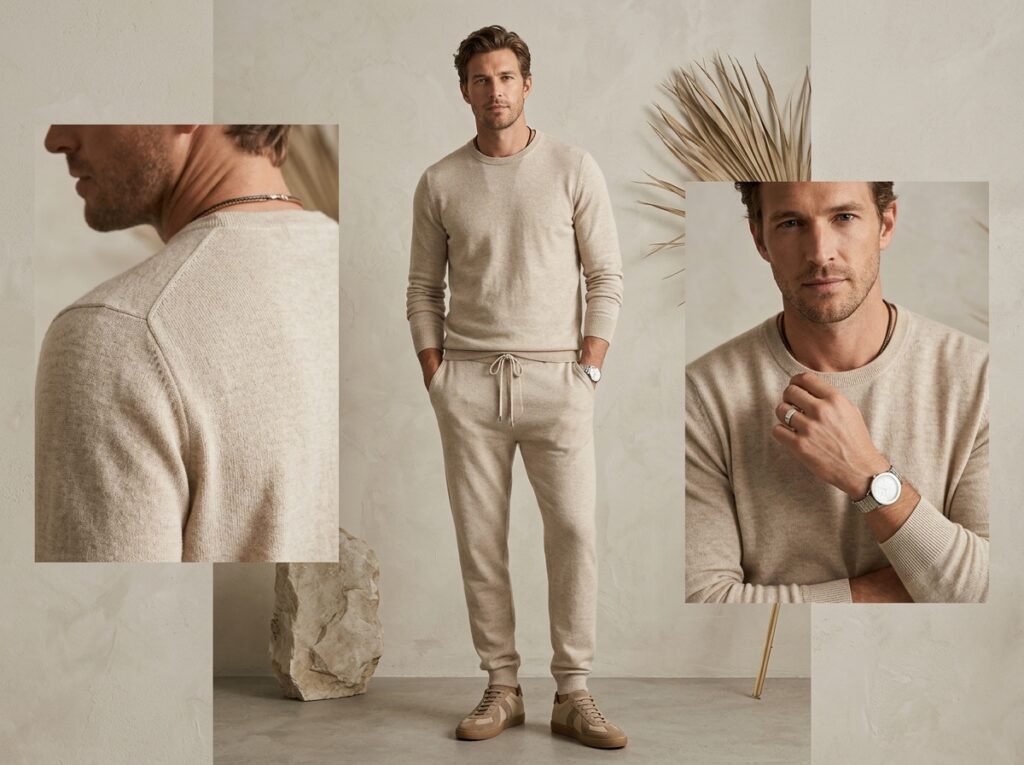
Fleece-lined sweatshirts use a soft inner layer to improve insulation and comfort. The actual warmth depends on fiber content, fabric thickness, surface structure, fit, and airflow—not just the word “fleece.”
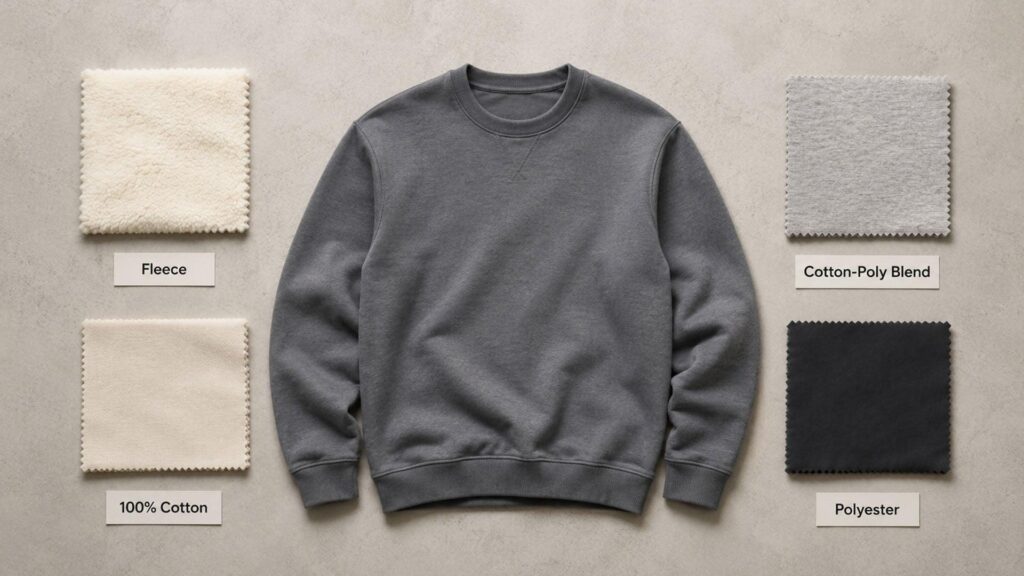
| Feature | Fleece-Lined Sweatshirt | Sherpa-Lined Sweatshirt |
|---|---|---|
| Insulation | Depends on fleece structure and weight | Often designed for greater loft |
| Bulk | Can be relatively compact | Often thicker |
| Texture | Brushed or soft surface | Fluffy, pile-like surface |
| Breathability | Depends on construction | Depends on pile density and backing |
| Typical Positioning | Casualwear and layering | Cozy, cold-weather products |
Fleece-lined styles may suit everyday layering and cool-weather casualwear. Sherpa-lined products may suit customers seeking a plush, substantial interior. Neither construction should be described as universally warmer without comparative testing.
Pile fabrics can require careful cutting, seam handling, and finishing. Check seam bulk, shedding, lining attachment, and the garment’s behavior after laundering.
Fleece is a broad fabric category, while sweatshirt fleece commonly has a smooth knitted face and a brushed interior. Exact construction varies by supplier.
| Type | Outer Surface | Inner Surface | Common Uses |
|---|---|---|---|
| Pile or Double-Sided Fleece | Varies by construction | Pile or fleece surface | Insulating garments and outerwear |
| Sweatshirt Fleece | Smooth knit face | Often brushed | Sweatshirts, hoodies, joggers |
Compare warmth, air permeability, pilling, shrinkage, and moisture behavior using samples with documented specifications. Fabric names alone do not establish performance.
A smooth face can provide a useful base for logos and graphics. Brushed interiors may increase softness, but pilling and surface wear depend on fiber quality, yarn structure, finishing, and care.
Product descriptions should explain whether the interior is looped, brushed, or pile-lined. Clear terminology helps customers understand what they are buying and reduces avoidable expectation gaps.
French terry is a knitted fabric with a generally smooth outer face and looped interior. It is widely used for sweatshirts and casualwear because it can combine a relatively clean appearance with a less bulky interior than some brushed fleece constructions.
The looped back is a defining feature. Depending on yarn, weight, and finishing, French terry can vary considerably in softness, stretch, drape, and moisture absorption.
| Feature | Typical French Terry Characteristics |
|---|---|
| Outer Texture | Relatively smooth knit face |
| Inner Texture | Looped surface |
| Weight | Available in lightweight through heavier constructions |
| Stretch | Depends on knit structure and fiber blend |
| Airflow | Depends on density, yarn, and finishing |
| Seasonality | Often suitable for transitional-season garments |
French terry can be used for casualwear, loungewear, lightweight sweatshirts, and selected athleisure products. Choose the construction based on the required weight, surface appearance, and performance.
Cotton-rich French terry can absorb moisture, but absorption is not the same as rapid sweat-wicking or quick drying. Performance claims should be matched to the fiber composition and supported by appropriate tests.
The smooth face can work with several decoration methods. Test the intended print, embroidery, or transfer on the actual fabric because surface texture, dye, stretch, and finishing can affect the result.
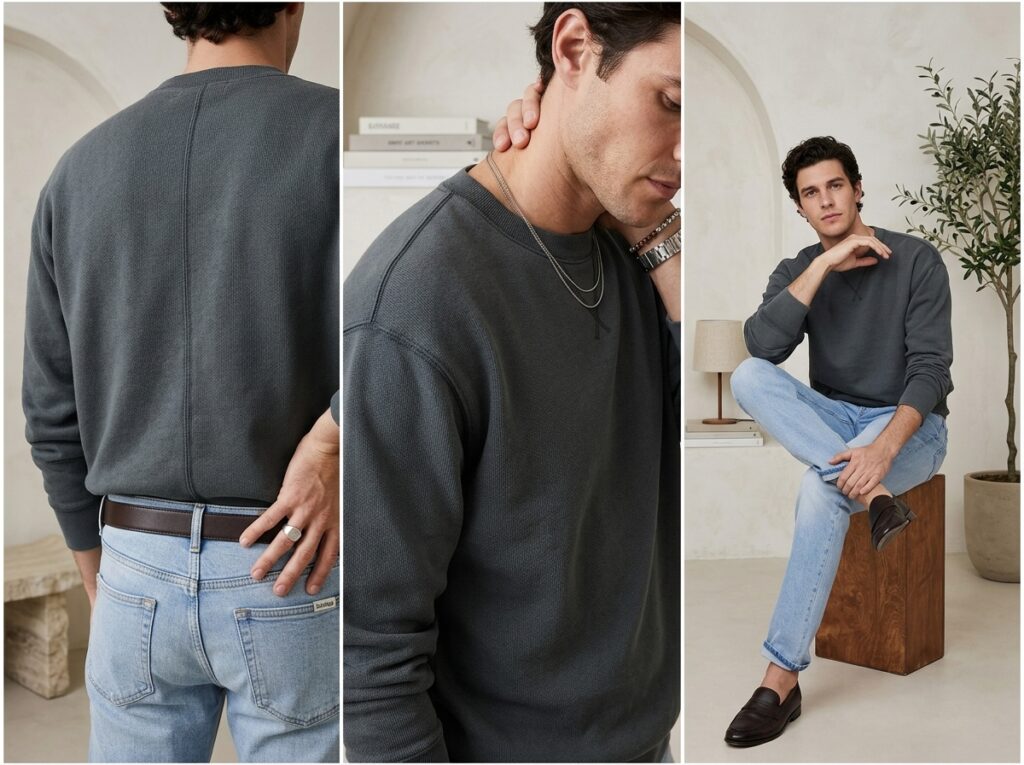
French terry can be a strong option for premium basics and casual collections, but quality cannot be established by fabric name alone.
Assess pilling, seam integrity, dimensional stability, and surface appearance after repeated washing. Do not assume that all French terry shrinks less or pills less than fleece.
French terry is available in different cotton blends and other fiber combinations. Any organic, recycled, or lower-impact material claim should be supported by relevant supplier documentation or certification.
Brands may position French terry as a casual, premium, or transitional-season fabric depending on weight, hand feel, construction, and finishing.
| Quality Metric | How to Evaluate |
|---|---|
| Wear Resistance | Use a documented abrasion or wear test |
| Shrinkage | Measure dimensions before and after washing |
| Pilling | Use a consistent pilling assessment method |
| Print Compatibility | Inspect adhesion, cracking, and appearance |
| Softness | Use a documented rating scale and sample protocol |
French terry can support relaxed, regular, and some closer-fitting silhouettes. Confirm recovery, seam behavior, and drape before finalizing a production pattern.
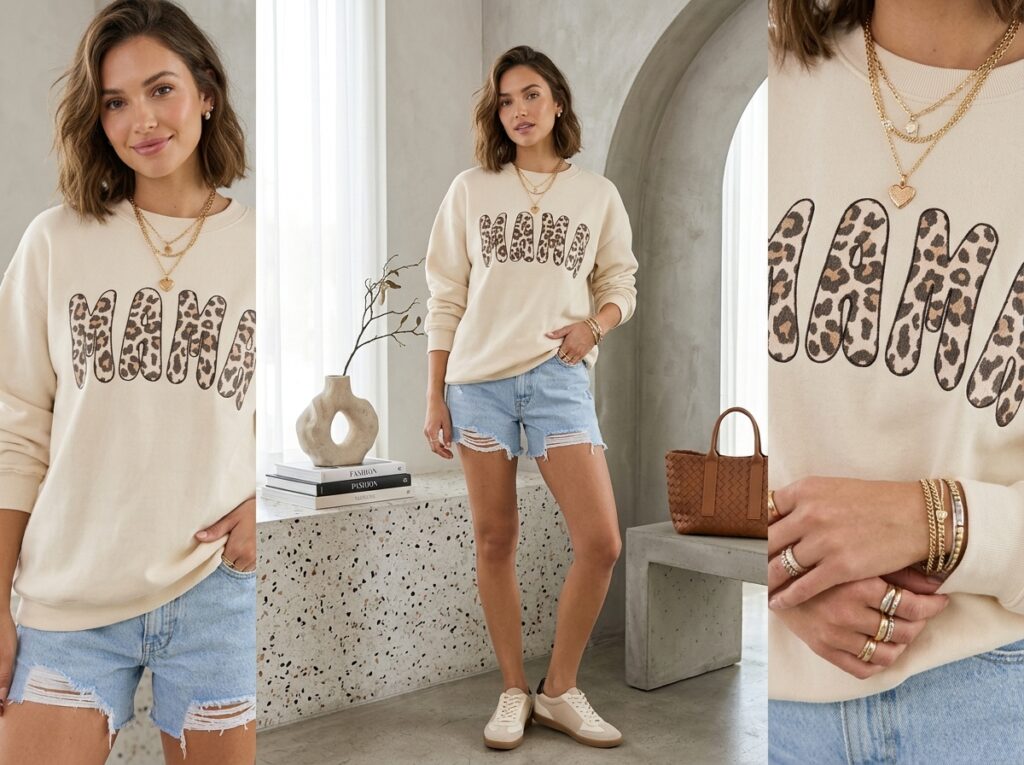
A graphic print sweatshirt uses printed artwork, lettering, or visual motifs to communicate brand identity. The result depends on both the design and the interaction between the decoration method and the garment base.
Graphics can communicate a brand’s aesthetic, community, or seasonal concept. The design should be legible at the intended viewing distance and suited to the garment’s shape.
| Technique | Best-Fit Applications | Advantages | Limitations to Check |
|---|---|---|---|
| Screen Printing | Repeated designs and suitable production runs | Strong colors and repeatability | Setup requirements and color count |
| DTG Printing | Detailed artwork and selected small batches | Fine detail and multiple colors | Fabric compatibility and wash performance |
| Heat Transfer | Names, graphics, and selected custom designs | Flexible artwork and placement | Cracking, peeling, and hand feel |
| Puff Printing | Raised lettering and textured graphics | Tactile, three-dimensional effect | Application consistency and care |
| Embellishment | Premium logos and mixed-media designs | Texture and dimensional detail | Cost and production time |
No method is best for every order. Compare artwork complexity, quantity, fabric, target price, and durability requirements before selecting a technique.
| Fabric Type | What to Check Before Printing |
|---|---|
| Cotton Fleece | Surface smoothness, ink coverage, and wash durability |
| French Terry | Loop structure, ink behavior, and hand feel |
| Polyester Blends | Dye migration and compatibility with the selected ink or transfer |
| Sherpa or Pile Fabrics | Surface distortion and uneven graphic coverage |
Graphic sweatshirts can serve streetwear, music merchandise, promotional apparel, and themed collections. Each use case has different requirements for artwork, production quantity, delivery timing, and retail positioning.
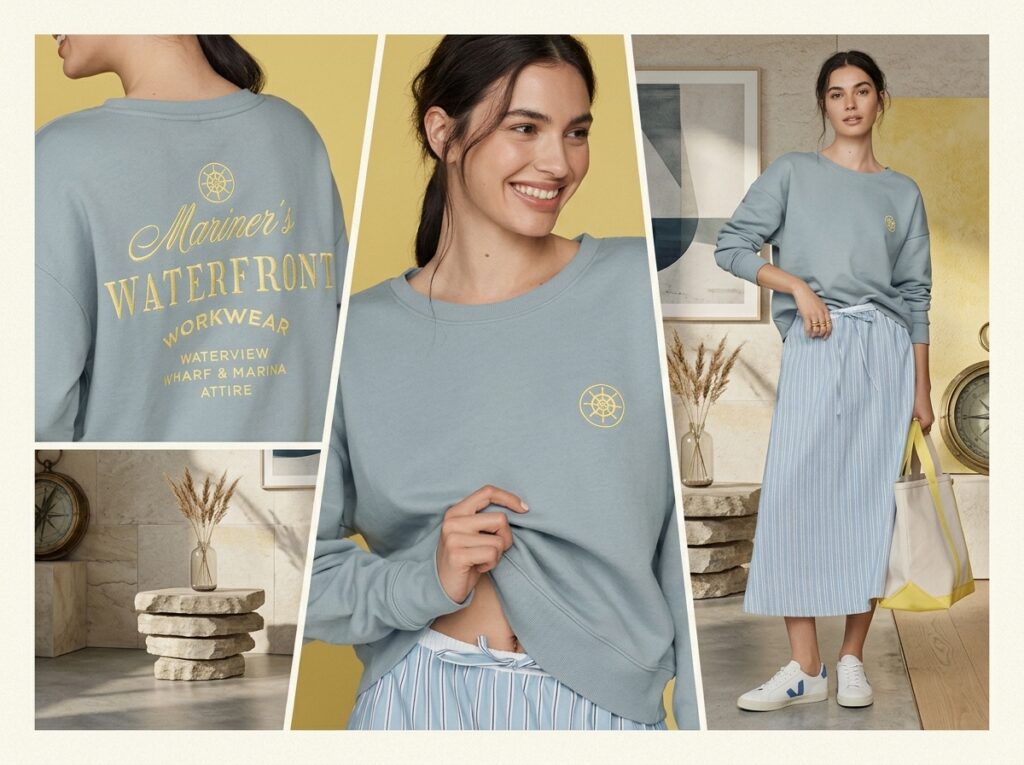
Embroidery uses stitched thread to create logos, lettering, or decorative artwork. It can provide a dimensional appearance, but its cost and suitability depend on stitch count, design size, garment thickness, placement, and production volume.
There is no universal per-piece price. Any cost estimate must state the currency, market, order quantity, design specifications, and whether digitizing and setup are included.
More stitches generally require more machine time. Dense fills and complex artwork may also require additional stabilization or finishing.
| Design Type | Relative Complexity | Main Cost Drivers |
|---|---|---|
| Small Chest Logo | Low to moderate | Stitch count and placement |
| Full-Chest Design | Moderate to high | Coverage, density, and thread changes |
| Sleeve or Back Patch | Varies | Patch construction and attachment |
| Large Artwork | High | Stitch count, density, and production time |
Digitizing converts artwork into machine-readable stitch instructions. Ask whether this is a one-time setup charge, whether revisions are included, and whether the file can be reused for repeat orders.
Additional colors can increase machine stops and setup complexity. The impact depends on the design and equipment, so use a production quote rather than a fixed color-count rule.
Larger orders may distribute setup costs across more garments, but the final unit price depends on the design, production efficiency, and supplier pricing structure.
Thick fleece, seams, pockets, and curved panels can complicate hooping and stabilization. Approve a decorated sample before committing to bulk production.
Printing may be more economical for large graphics, while embroidery can be appropriate for smaller logos and textured branding. The correct comparison must use equivalent garment specifications and include setup, decoration, finishing, and quality-control costs.
| Factor | Embroidery | Printing |
|---|---|---|
| Visual Effect | Raised thread texture | Flat or textured graphic, depending on method |
| Best-Fit Design | Logos, lettering, selected artwork | Large graphics, detailed images, and varied layouts |
| Setup | May require digitizing and machine setup | Depends on printing method |
| Durability | Depends on thread, stitch, and garment construction | Depends on ink, transfer, fabric, and curing |
| Cost Drivers | Stitch count and machine time | Method, colors, coverage, and quantity |
| Garment Compatibility | Requires suitable stabilization and fabric support | Requires method-specific surface compatibility |
Embroidery creates physical texture and can suit understated logos, varsity aesthetics, and heritage-inspired designs.
Both embroidery and printing can perform well when the materials, application, and care instructions are appropriate. Validate wash durability rather than promising that any method will last indefinitely.
Printing can reproduce complex colors and fine visual detail, depending on the method. Embroidery translates artwork into stitches, so very small details and gradients may need simplification.
Choose decoration based on the intended aesthetic, product price, customer expectations, and order specifications—not on the assumption that one technique is always superior.
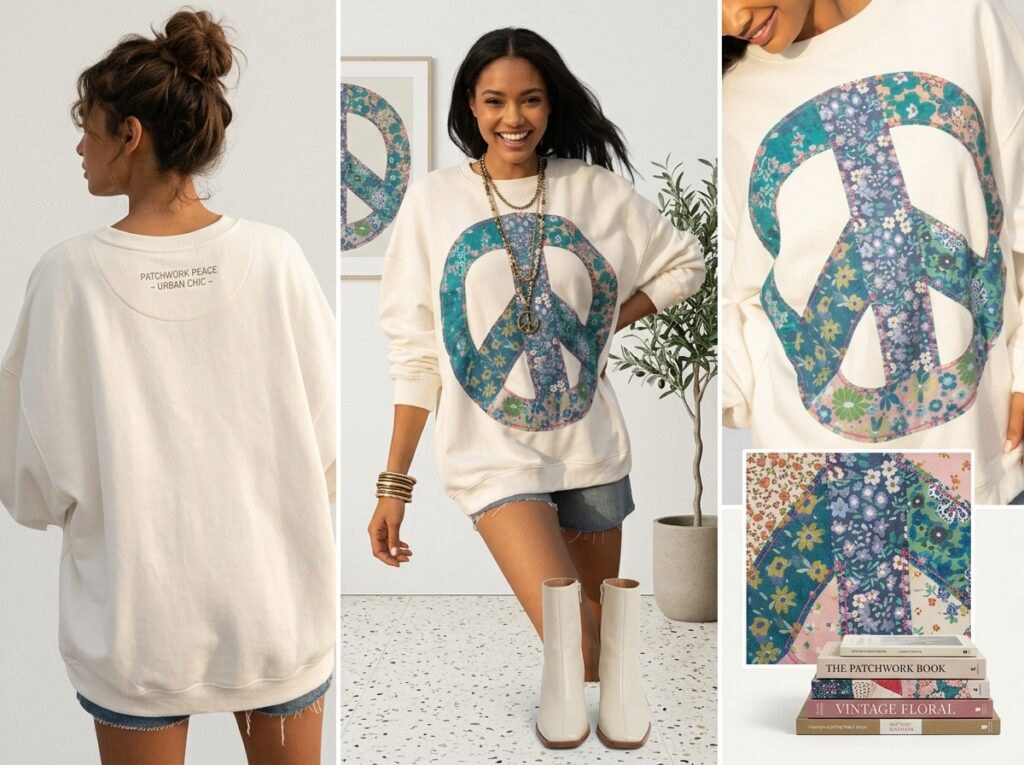
Appliqué adds one fabric shape onto another, usually by stitching around the edges. It creates a layered visual effect and is frequently associated with collegiate lettering, patches, and bold graphic designs.
Appliqué is a construction and decoration technique in which a cut fabric piece is attached to a base fabric. Common materials include felt, twill, denim, mesh, and other fabrics selected for the intended look.
Performance depends on edge treatment, stitch density, backing, attachment quality, and care. Inspect edges and stitching after laundering before making durability claims.
| Feature | Potential Advantage | What to Verify |
|---|---|---|
| Texture | Adds layered depth | Edge consistency and attachment |
| Premium Appearance | Creates a tactile effect | Material and finish quality |
| Design Flexibility | Supports bold shapes and letters | Minimum detail size |
| Color Contrast | Combines multiple materials | Color matching and dye behavior |
| Maintenance | Can be durable when well attached | Wash and abrasion performance |
Appliqué is commonly used in varsity-inspired and heritage-style garments. It can also be adapted to contemporary streetwear through oversized lettering, unusual materials, and contrasting colors.
A production workflow generally includes artwork preparation, cutting, positioning, attachment, stitching, and inspection.
Prepare artwork with clear dimensions, outlines, and stitching requirements. Machine-assisted processes may require digitized files depending on the equipment.
Cut the appliqué pieces using an appropriate method. Material thickness, edge stability, and fraying behavior influence the cutting and finishing process.
Position each piece using suitable temporary fixing methods. Check placement against the approved garment measurements and reference sample.
Trim loose threads, remove unnecessary backing, press when appropriate, and inspect alignment and edge quality.
| Step | Description | Typical Equipment or Materials |
|---|---|---|
| Prepare Artwork | Establish shape, size, and stitch path | Design or embroidery software |
| Cut Appliqué | Create fabric pieces | Cutting equipment or scissors |
| Position | Align pieces on the garment | Placement guides and suitable temporary adhesive |
| Sew | Secure edges | Sewing or embroidery machine |
| Quality Check | Inspect edges, alignment, and finish | Measurement tools and visual inspection |
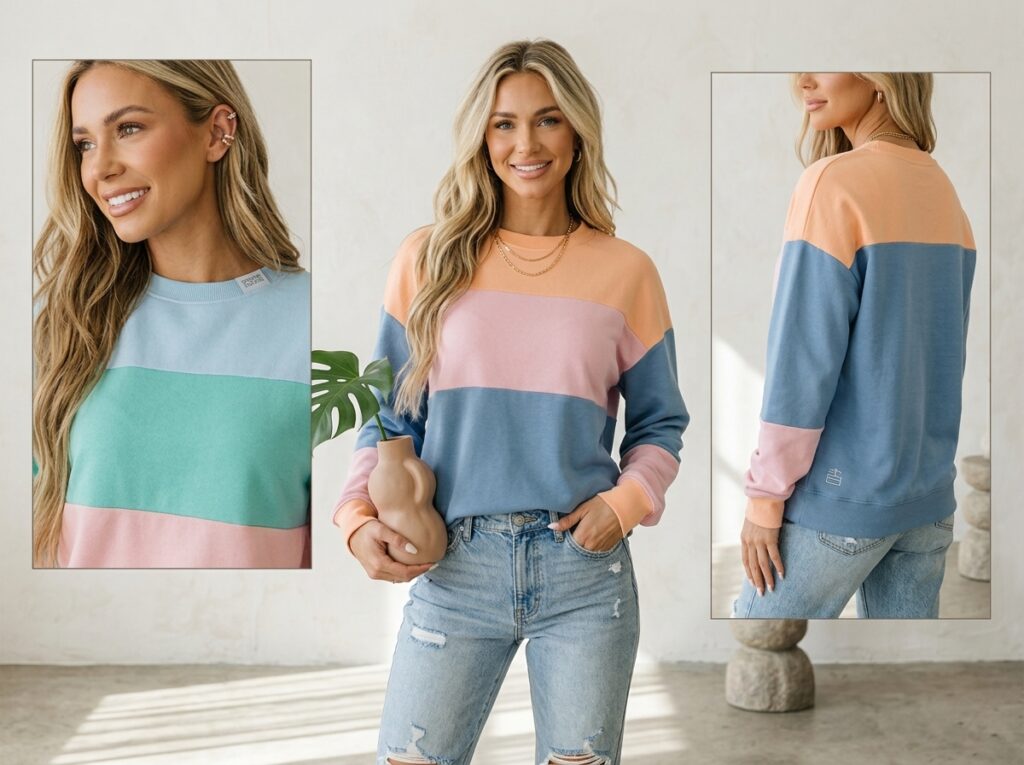
Color blocking uses contrasting colors in separate garment panels or graphic sections. It can create a bold visual identity, but panel design and color placement should be developed alongside the garment pattern.
Color blocking has a long history in modern fashion and graphic design. Contemporary sweatshirt collections use it for athletic, retro, minimalist, and streetwear-inspired looks.
| Color Placement | Possible Visual Effect |
|---|---|
| Dark Side Panels | Creates contrast along the torso |
| Contrasting Sleeves | Draws attention to the arms |
| Vertical Panels | Emphasizes vertical lines |
| Horizontal Chest Band | Creates a strong horizontal focal point |
These are visual design effects, not guaranteed body-shaping outcomes. The result depends on color contrast, panel width, garment fit, and individual perception.
Color blocking can support sporty, retro, and high-contrast designs. Use a consistent palette and confirm that the selected fabrics remain visually compatible under the intended lighting.
Brands can combine signature colors with contrasting panels, embroidered logos, or discreet labels. Approve a production sample to check color matching and seam alignment.
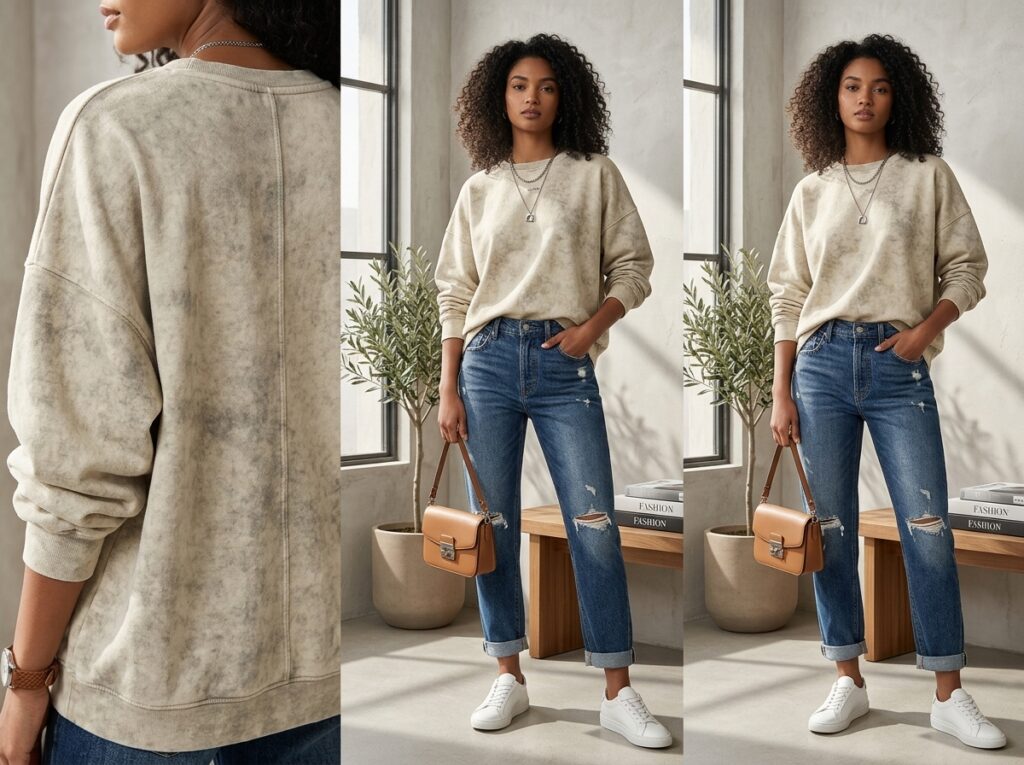
Vintage-washed sweatshirts are finished to create a softened, faded, or worn-in appearance. The effect may be produced through garment washing, dye techniques, pigment treatments, or other finishing processes.
For brands seeking a vintage aesthetic, the key is to define acceptable variation in writing rather than relying on a vague “washed look” description.
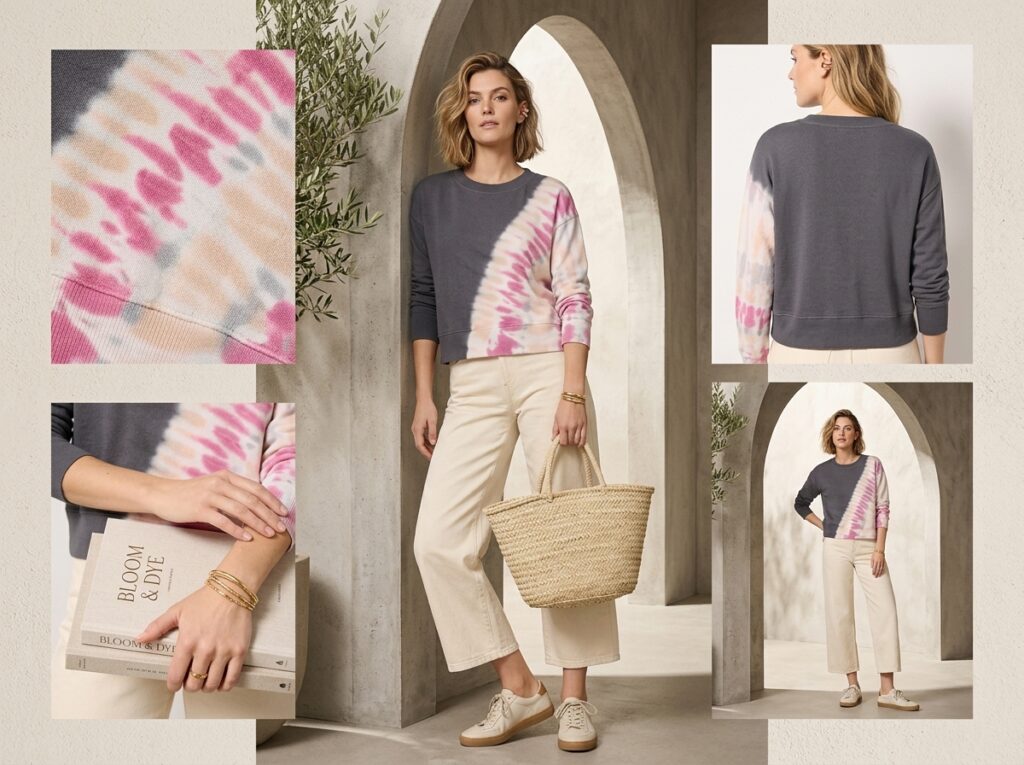
Tie-dye sweatshirts use dye application to create irregular or patterned color effects. The final appearance depends on the base fabric, dye chemistry, application technique, and process controls.
Tie-dye is inherently variable, so the product specification should distinguish intentional variation from unacceptable defects.
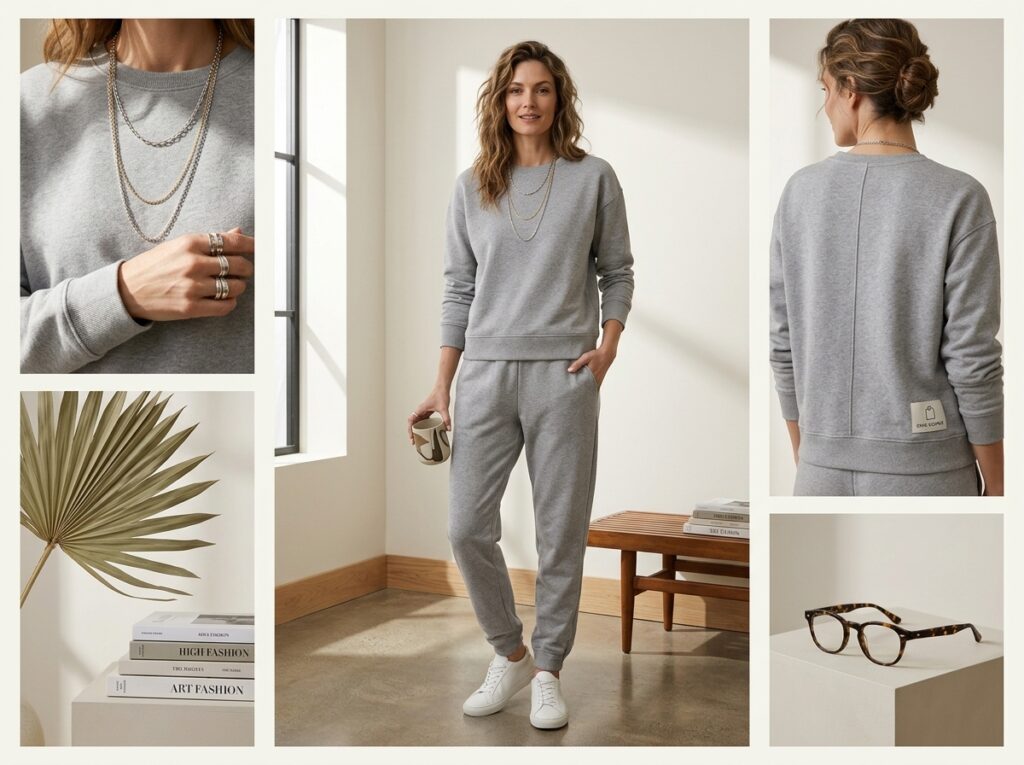
A sustainable sweatshirt is not defined by a single fabric label. Material selection, durability, production processes, packaging, transportation, and end-of-life considerations can all affect environmental performance.
Ask suppliers for fiber-content documentation, relevant certificates, testing reports, and information about the scope of each claim. Avoid broad statements such as “eco-friendly” unless the claim is clearly defined and substantiated.
For Liantao product development, material traceability and accurate product specifications should be treated as part of the sourcing process rather than as marketing language added at the end.
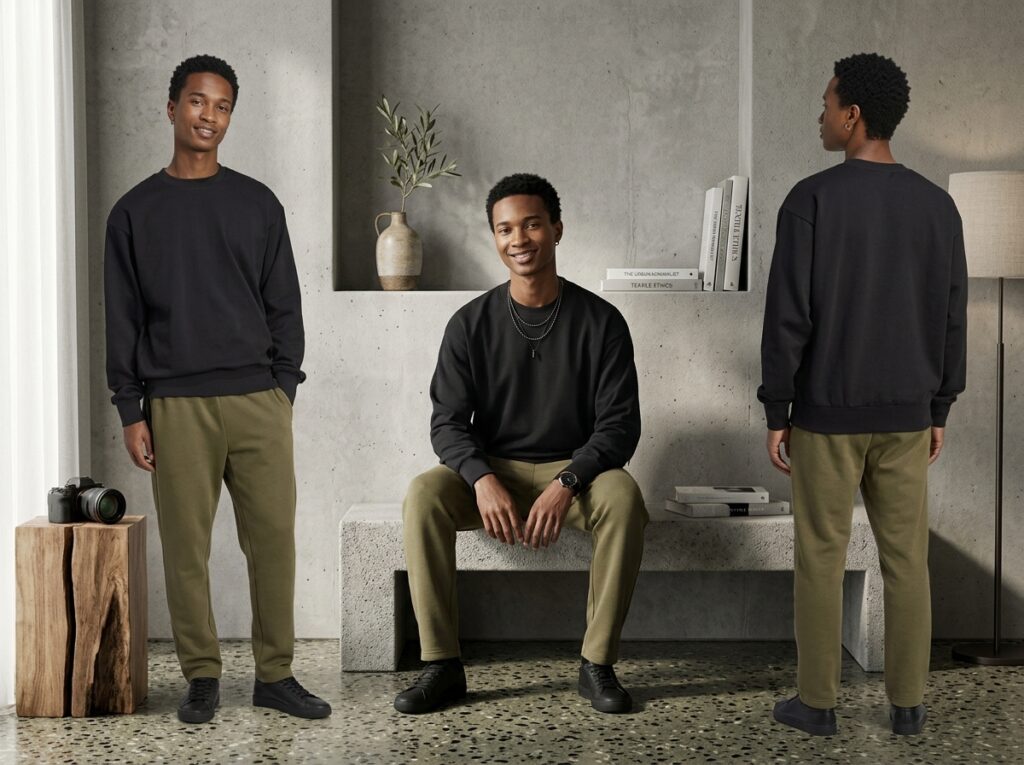
Athletic sweatshirts are designed around movement, comfort, and the needs of a particular activity. Depending on the intended use, priorities may include stretch, moisture management, breathability, warmth, and reduced friction.
Performance-oriented sweatshirts combine suitable fabric selection with construction features that support movement. The right specification depends on whether the garment is intended for warm-ups, outdoor training, casual gym wear, or recovery.
| Material | Potential Benefit | Key Test |
|---|---|---|
| Polyester-Spandex Blend | Stretch and potential moisture management | Stretch recovery and drying behavior |
| Technical Fleece | Insulation with selected lightweight constructions | Warmth, pilling, and dimensional stability |
| Cotton-Modal Blend | Soft hand feel and drape | Recovery, shrinkage, and care performance |
An athletic sweatshirt should allow the movements required by its intended use. Check arm elevation, torso rotation, bending, and layering rather than assessing fit only while standing still.
Athletic designs often move between exercise and casual settings. Brands should decide which performance features are essential and which are primarily aesthetic to avoid unnecessary complexity.
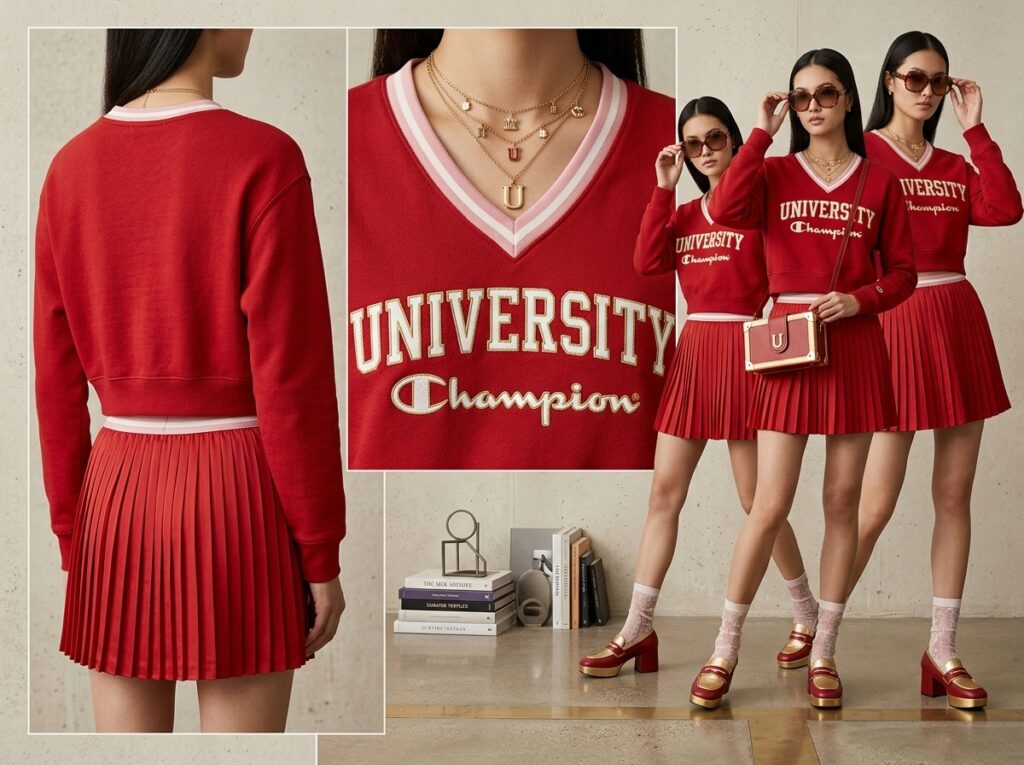
Varsity sweatshirts draw on collegiate and athletic design traditions. Common details include contrast colors, large lettering, appliqué, numbers, and embroidered crests.
Varsity designs often use substantial fabrics, reinforced seams, and ribbed trims. The final specification should balance structure, comfort, decoration weight, and target retail price.
| Key Feature | Why It Matters |
|---|---|
| Appliqué Lettering | Adds depth and a traditional varsity appearance |
| Contrast Panels | Creates visual separation and a sporty look |
| Crewneck Construction | Provides a classic, versatile neckline |
| Ribbed Cuffs and Hem | Helps define the garment shape |
Varsity sweatshirts can be styled with denim, casual trousers, and streetwear pieces. Oversized proportions, tonal embroidery, and unexpected color combinations offer ways to modernize the concept.
The varsity aesthetic draws on themes of identity, belonging, and athletic heritage. Whether it resonates with a particular audience should be tested through product feedback and market performance rather than assumed.
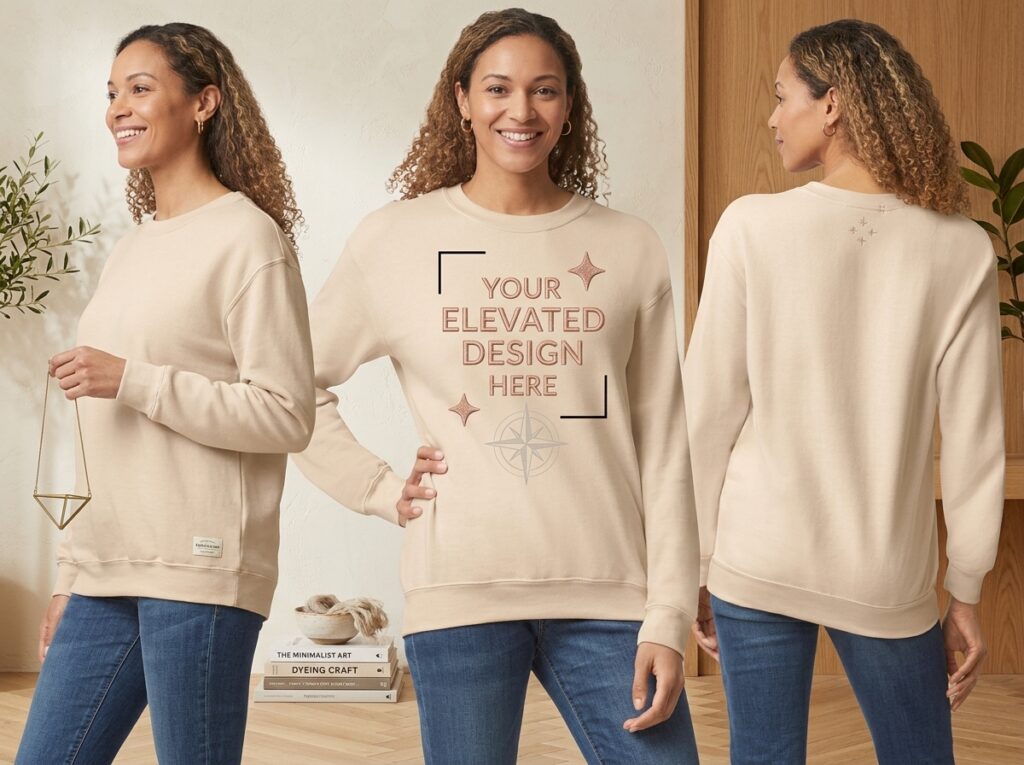
A custom logo sweatshirt combines a selected garment base with branded decoration, labels, colors, and other design details. For brands, the most effective development process starts with the intended customer, target price, and product use—not just the logo file.
| Method | Best-Fit Applications | Advantages | Limitations |
|---|---|---|---|
| Screen Printing | Repeated designs and suitable bulk orders | Strong color and repeatability | Setup requirements and color count |
| DTG Printing | Detailed artwork and selected small runs | Fine detail and multicolor designs | Fabric and pretreatment compatibility |
| Appliqué | Varsity and dimensional logos | Layered texture | Additional sewing and handling |
| Heat Transfer | Selected custom graphics and short runs | Flexible placement and artwork | Adhesion and wash durability |
The garment base influences both the appearance and performance of the final decoration.
Choosing a sweatshirt by appearance alone leaves important questions unanswered. Before approving bulk production, compare fabric and finished-garment samples using the same test conditions.
Objective: Check whether the fabric meets its specification and whether the garment changes size after care.
The dimensional-change formula is:
Dimensional change (%) = (After-wash measurement − Before-wash measurement) ÷ Before-wash measurement × 100
A negative result indicates shrinkage in that measurement direction. Report the number of samples, care procedure, and measurement locations so another team can reproduce the test.
Objective: Compare surface appearance after a defined amount of abrasion or wear.
Do not compare results from different methods or rating scales as if they were directly equivalent.
Objective: Check whether each silhouette supports its intended use.
Objective: Assess how the intended logo or artwork behaves after care.
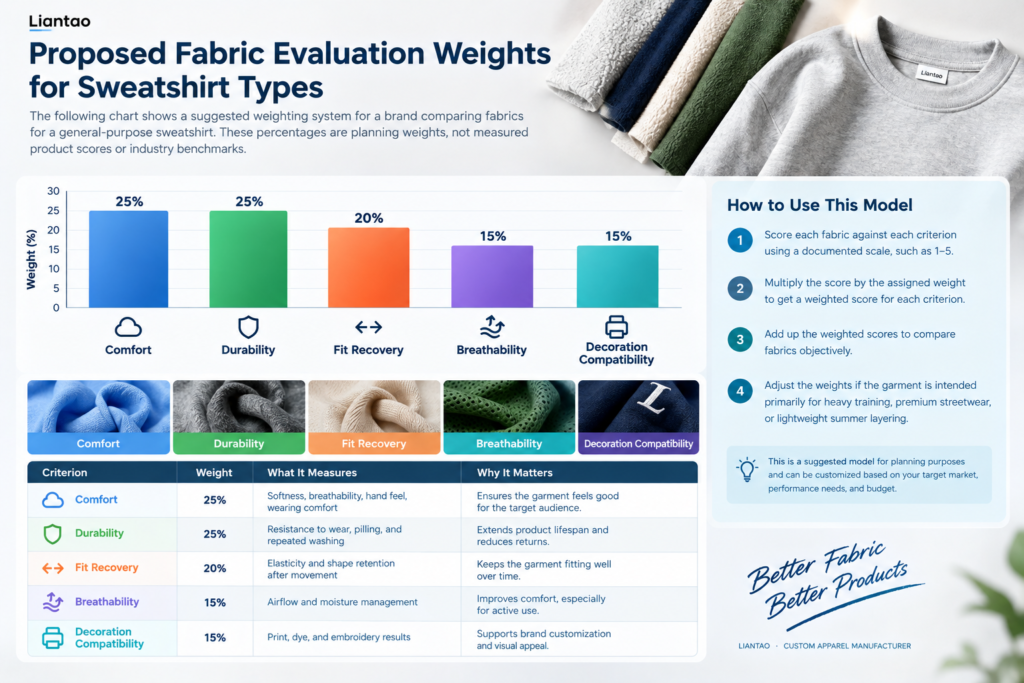
The following model is an illustrative decision framework, not an experimental result. Adjust the weights to match the intended product.
| Criterion | Suggested Weight | What to Measure |
|---|---|---|
| Comfort and Hand Feel | 25% | Softness, perceived comfort, and intended-use suitability |
| Durability | 25% | Pilling, abrasion, seam integrity, and wash performance |
| Fit and Recovery | 20% | Dimensional stability and recovery after movement |
| Breathability | 15% | Airflow or a suitable test for the intended application |
| Decoration Compatibility | 15% | Print or embroidery appearance and durability |
To use the model, rate each sample against each criterion on a documented 1–5 scale. Convert each rating to a weighted score using the chosen formula, then compare the totals.
For example, if a fabric receives a comfort rating of 4 out of 5, its contribution under a 25% weight is 4 ÷ 5 × 25 = 20 percentage points. This is a calculation example, not a measured fabric result.
Suggested chart: Plot the actual weighted scores for each tested fabric after samples have been evaluated. Include the sample count, rating definitions, testing conditions, and any limitations alongside the chart.
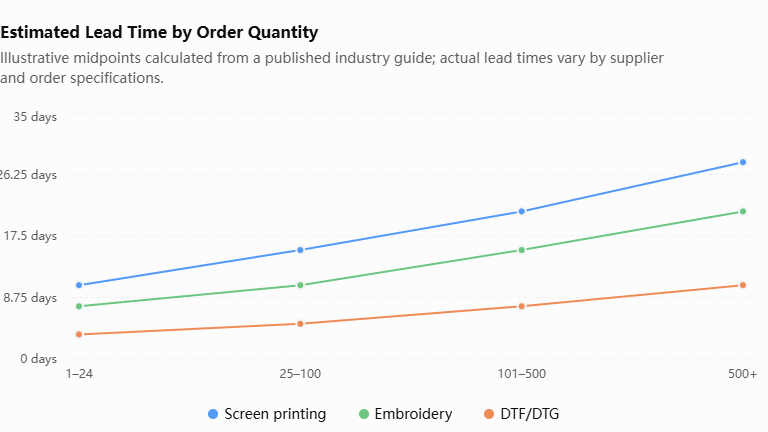
Product testing can support more useful content when it is paired with validated search demand and real customer language.
Following the general workflow described in Semrush’s keyword-research guidance, Liantao can use a repeatable process:
This approach helps prevent a common content problem: publishing impressive-looking statistics that cannot be traced to a dataset or reproduced by another person.
The V-shaped insert found on some crewneck sweatshirts is commonly called a V-insert or V-gusset. It is a heritage construction detail associated with traditional athletic sweatshirts.
Depending on the original construction, the insert may help reinforce the neckline area and provide a distinctive design feature. Modern garments may use the V shape primarily as a visual reference, so the presence of the detail does not automatically prove that a sweatshirt uses a particular vintage construction method.
When developing a sweatshirt with a V-insert, confirm the insert shape, fabric, stitching, and neckline construction in the technical specification. These details influence the finished appearance and consistency between samples and bulk production.
Choosing the right sweatshirt involves more than selecting a silhouette. Fabric weight, knit construction, fit, lining, decoration, and finishing all influence the finished product and the experience it provides.
Lightweight sweatshirts can suit layering, midweight options can offer everyday versatility, and heavyweight designs can support a more substantial silhouette. French terry and fleece serve different construction and comfort goals, while screen printing, embroidery, and appliqué each bring different design and production requirements.
For brands developing custom sweatshirts with Liantao, the practical next step is to define the product brief, approve the fabric and fit, test the intended decoration, and document the quality requirements before bulk production.
A credible product-development process also creates better content. By publishing reproducible test methods, actual sample results, and validated keyword research, brands can turn a general sweatshirt guide into a more useful resource for designers, buyers, and sourcing teams.
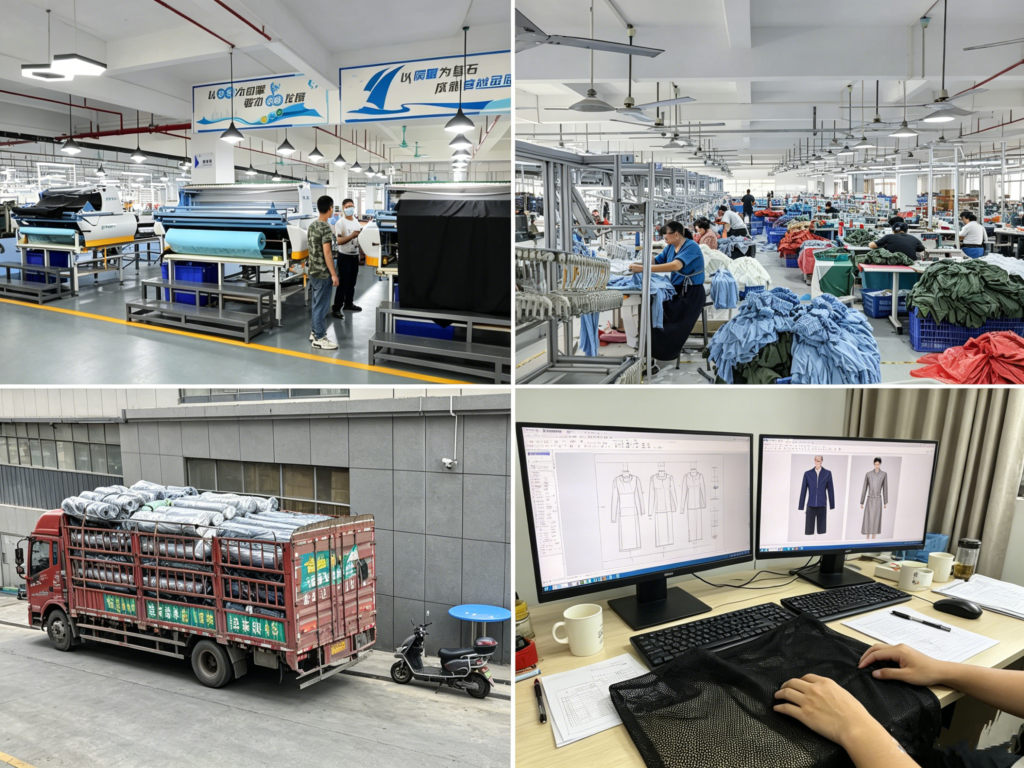
If you have any questions or require a quote, please leave
us a message. Our experts will get back to you within 24 hours to help you choose the ideal fashion products tailored to your needs.
Hi, I’m Lucy Cai, the founder of liantaoapparel.com. I’ve been managing a women’s clothing factory in China for over 16 years. With extensive experience in garment production and OEM services, I’m passionate about sharing insights into women’s fashion, apparel manufacturing, and global sourcing.
If you have any questions or need a quote, please contact us.
Please add us WhatsApp:+86 189 4809 3145
Provide us with detailed information about your requirements, supply design drawings or tech packs,
reference images, and share your ideas.
We will customize the best solution based on your needs and drawings, and provide a specific quote within 24 hours.
Once we receive your confirmation and deposit,we will commence mass production and take care of the subsequent shipping arrangements.


