


🏭 Looking for a Custom Apparel Manufacturer?
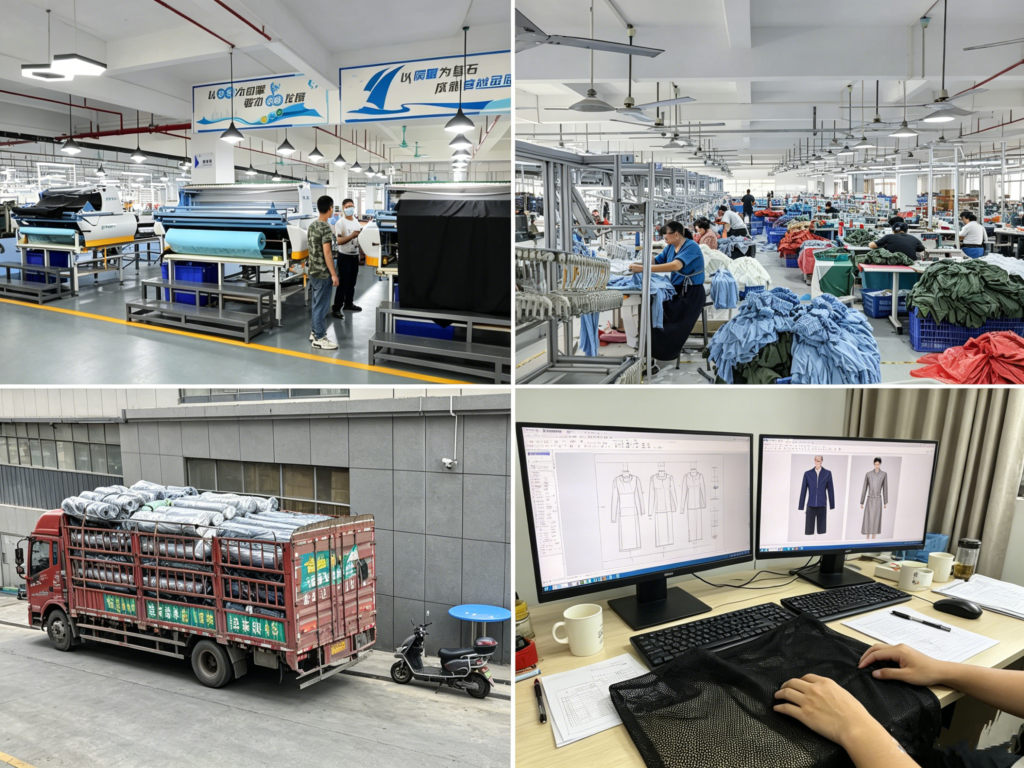
We are a leading OEM/ODM clothing factory with 20+ years of export experience. Custom styles, flexible MOQs, and retail-ready quality.
Finding garment suppliers in China is relatively easy. Finding a manufacturing partner that can consistently meet your quality standards, production schedule, target cost, and product specifications is much harder.
A supplier may offer an attractive quotation but lack experience with your garment category. Another may produce excellent samples but struggle to maintain consistency during bulk production. Some suppliers specialize in ready-made wholesale clothing, while others focus on OEM manufacturing, ODM development, or private-label production.
The right choice depends on what your business actually needs.
At Liantao Apparel, we approach garment sourcing from a manufacturing perspective: product requirements, material selection, sample development, production planning, quality control, and communication should all be evaluated before a buyer commits to a bulk order.
This guide takes a practical, test-based approach to supplier selection. Instead of relying only on supplier rankings or promotional claims, you will learn how to evaluate a potential garment manufacturer using a repeatable scorecard.
By the end, you will be able to:
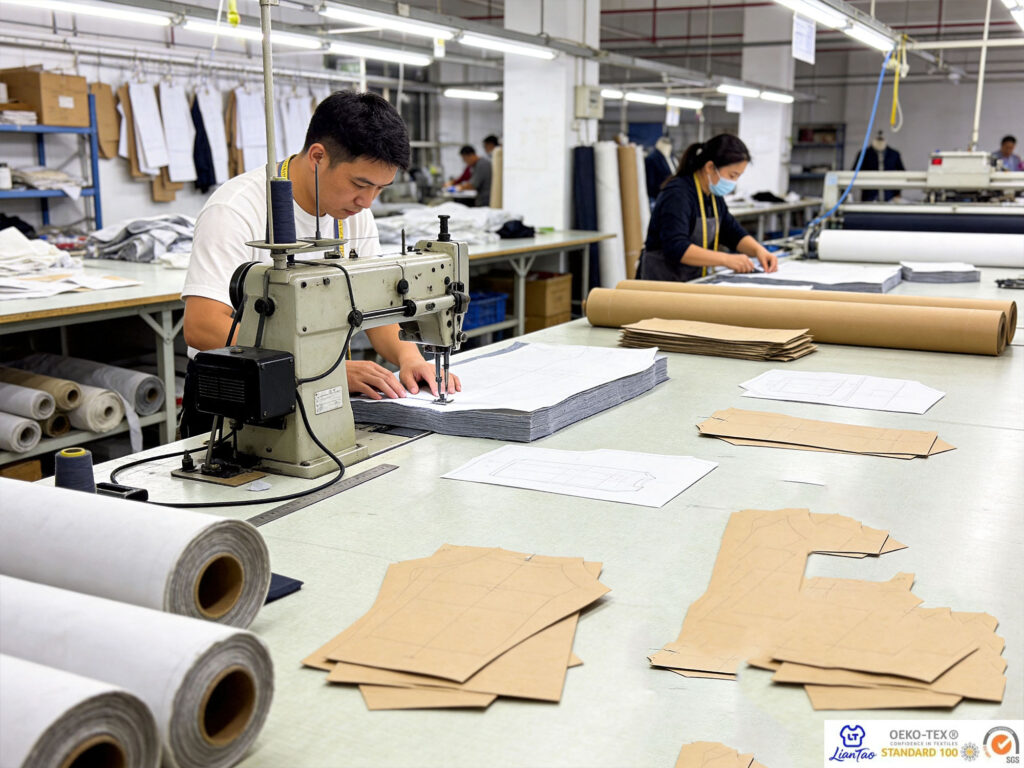
Before contacting suppliers, define the kind of business relationship you need. Different supplier types offer different levels of customization, production control, and sourcing support.
| Supplier Type | Typical Services | Best For | Key Consideration |
|---|---|---|---|
| Direct garment manufacturer | Cutting, sewing, assembly, finishing, and packing, depending on factory capabilities | Brands planning custom or repeat production | Verify which processes are performed in-house and which are subcontracted |
| OEM clothing manufacturer | Produces garments according to the buyer’s specifications, tech packs, materials, and branding requirements | Established brands with defined product designs | Detailed specifications are essential for consistent results |
| ODM apparel manufacturer | May provide existing designs, development support, or adaptable product concepts | Brands that need design and development assistance | Clarify design ownership, customization limits, and tooling or development costs |
| Private-label manufacturer | Produces garments with the buyer’s brand labels, packaging, and agreed specifications | Startups, online brands, and retailers building their own labels | Confirm label, packaging, and product customization requirements |
| Trading company or sourcing agent | Coordinates suppliers, sourcing, communication, and sometimes quality inspections | Buyers needing broader sourcing support or help managing multiple factories | Establish who manufactures the goods and who is responsible for quality issues |
| Wholesale clothing supplier | Sells ready-made garments or existing styles, sometimes with limited customization | Resellers and retailers seeking stock products | Available inventory and customization options may be limited |
Important: These categories can overlap. A manufacturing company may provide OEM and private-label services, while a trading company may manage production through partner factories. Verify the actual business model instead of relying on a supplier’s title.
The goal is not to find the supplier with the broadest list of services. It is to find a partner whose capabilities match your product and order requirements.
How can you compare garment suppliers in China without relying on marketing claims alone?
Use a consistent evaluation framework. The following scorecard is a proposed assessment model, not the result of a completed factory experiment. Its weights are intended to help buyers organize their evaluation and should be adjusted to fit the product category and purchasing priorities.
A sample is an important early indicator of whether a supplier understands your product requirements. However, one good sample does not prove that every unit in a bulk order will meet the same standard.
Evaluate the sample against a written specification.
Check:
For a more reliable evaluation, record each defect and its severity rather than writing only “good quality” or “poor quality.”
A sample inspection sheet can include the specification, measured result, tolerance, pass/fail status, and corrective action required.
Communication quality affects development time, sample revisions, and the risk of production misunderstandings.
Send each shortlisted supplier the same inquiry and evaluate whether the response addresses the actual requirements.
Look for:
A fast reply is useful, but a technically accurate reply is more valuable. Record response time separately from response quality.
The sample stage reveals how well a supplier can translate a design into a manufacturable garment.
Ask the supplier to explain the development process from initial inquiry to sample approval.
Evaluate:
For complex products, distinguish the first prototype from a pre-production sample. A prototype may be used to refine the design, while a pre-production sample should represent the agreed production specification as closely as possible.

A factory that can produce a small sample may not necessarily be suitable for a large or time-sensitive order.
Ask for evidence that its production setup matches your requirements.
Check:
Avoid evaluating capacity solely by the number of machines or the size of the factory. The more relevant question is whether the supplier can deliver your particular product at the required quantity and quality level.
A low quotation can become expensive if late delivery causes missed launches, stockouts, or urgent freight costs.
Ask the supplier to break the schedule into stages instead of providing one broad delivery estimate.
| Production Stage | What to Confirm | Evidence to Record |
|---|---|---|
| Material sourcing | Fabric, trims, and accessories availability | Material confirmation and expected arrival dates |
| Sample development | Sample preparation and revision time | Sample submission and approval dates |
| Pre-production | Specification confirmation and production readiness | Approved pre-production sample and final tech pack |
| Bulk production | Planned start date and estimated completion | Production schedule and progress updates |
| Quality inspection | Inspection timing and defect-resolution process | Inspection report and corrective-action record |
| Packing and shipment | Packing completion and shipping arrangements | Packing list, shipping documents, and agreed dispatch date |
These stages are planning categories, not universal lead-time benchmarks. Actual timing depends on garment complexity, material availability, order quantity, seasonality, and the supplier’s workload.
A useful test is to compare the original schedule with the actual dates recorded during sampling and production. Over time, this creates a more reliable basis for evaluating delivery performance.
The lowest unit price is not always the lowest-cost option. Material minimums, sample fees, customization, packaging, inspection, freight, and payment terms can change the economics of an order.
Request comparable quotations using the same specifications.
| Cost Item | Questions to Ask | Why It Matters |
|---|---|---|
| Minimum order quantity (MOQ) | Is the MOQ calculated per style, color, fabric, or size? | A stated MOQ may not represent the minimum for every SKU combination |
| Unit price | Which fabric, trims, construction, and finishing are included? | Different specifications can make supplier quotations incomparable |
| Sample and development fees | Are prototype, revision, pattern, or development charges separate? | Initial development costs can affect the economics of a small launch |
| Branding and packaging | Are labels, hangtags, printing, embroidery, and retail packaging included? | Customization may add costs that are absent from the headline quotation |
| Payment terms | What deposit, balance, and payment milestones are required? | Payment timing affects working capital and risk exposure |
| Shipping and other charges | Which party pays freight, duties, inspection, and other applicable costs? | The factory price alone does not represent the total landed cost |
How to compare quotations fairly: Send each shortlisted supplier the same tech pack, order quantity, color and size breakdown, packaging requirements, and delivery target. Ask each supplier to identify assumptions and exclusions in writing.
This makes it easier to compare the actual scope of each quotation rather than comparing headline prices alone.
Supplier verification should cover both business identity and the ability to manage the requirements relevant to your product and market.
Before placing a substantial order, consider the following checks:
A certificate or audit report should be checked for scope, validity, issuing organization, and the entity or site it covers. Do not assume that one document proves every aspect of a supplier’s compliance.
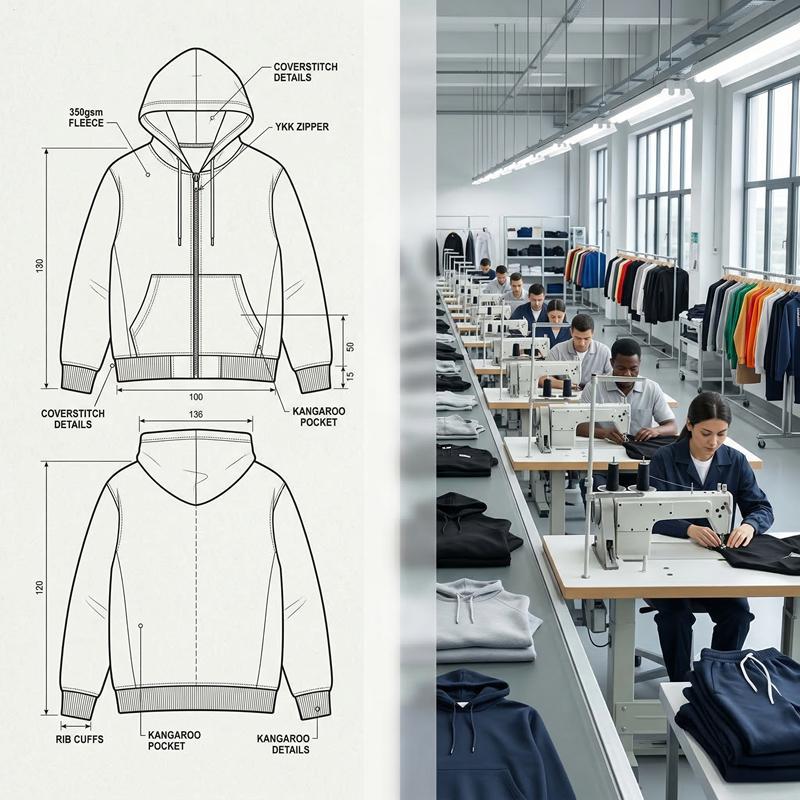
To make supplier comparisons more consistent, use a weighted scorecard.
The weights below are suggested planning weights. They have not been statistically validated and should not be described as findings from a completed supplier test.
| Evaluation Criterion | Suggested Weight | What to Evaluate |
|---|---|---|
| Product quality | 25% | Sample accuracy, workmanship, measurements, and specification compliance |
| Communication | 15% | Technical understanding, response completeness, and written follow-up |
| Sampling and development | 15% | Sample process, revision handling, and approval control |
| Production capacity | 15% | Relevant experience, schedule feasibility, and repeat-order capability |
| Lead-time reliability | 10% | Schedule transparency and evidence of delivery performance |
| MOQ and pricing | 10% | Quotation comparability, cost transparency, and order suitability |
| Compliance and traceability | 10% | Business verification, relevant documentation, and material controls |
| Total | 100% |
Score each criterion from 1 to 5:
Calculate the weighted result using:
Weighted score = Sum of (criterion score ÷ 5 × criterion weight)
For example, if a supplier scores 4 out of 5 for product quality, and product quality carries a weight of 25%, its weighted contribution is 20 points out of 100.
Use the same criteria and evidence requirements for every candidate. If a supplier cannot provide the information needed to score a criterion, record it as “not verified” rather than automatically awarding a high score.
A weighted score supports comparison; it does not replace mandatory requirements. A supplier that fails a critical safety, legal, or contractual requirement should not be selected simply because its overall score is high.
A supplier evaluation becomes more useful when the method is repeatable.
The following procedure can be used for an internal sourcing exercise. It is a proposed protocol, not a claim that Liantao Apparel has already tested a particular number of factories.
Prepare one standardized brief containing:
This reduces the risk of comparing quotations based on different assumptions.
Select three to five candidate suppliers as a practical starting point for an internal comparison. The appropriate sample size depends on the complexity and value of the order.
Record how each supplier was identified and whether it is a direct manufacturer, a trading company, or a sourcing partner.
Use the same product brief and ask each candidate to provide a quotation, MOQ, sample timeline, production estimate, payment terms, and relevant capability evidence.
Save the original responses so that communication quality can be assessed against the same questions.
Where feasible, order samples based on comparable specifications. Use a written checklist to record measurements, workmanship, material characteristics, finishing, and any deviations from the brief.
Do not compare samples made from materially different fabrics or construction methods as though they were equivalent.
Assign scores only after reviewing the relevant evidence. Keep notes explaining the score, such as a measurement deviation, a missing test report, or a clearly documented revision process.
This makes the final ranking easier to audit and repeat.
Before bulk production, confirm the final specifications, approved pre-production sample, material availability, inspection plan, production schedule, and contractual responsibilities.
A strong sample is only one part of supplier qualification. Production controls and documented approvals are also important.
Summarize the results, identify unresolved risks, and record which criteria could not be verified.
If the suppliers were not evaluated under equivalent conditions, disclose that limitation rather than presenting the comparison as a definitive ranking of the market.
Use this table to record actual observations during the sourcing process. Complete the cells with evidence from your own evaluation rather than assumptions or supplier marketing language.
| Test Item | Supplier A | Supplier B | Supplier C |
|---|---|---|---|
| Business identity verified | Record result | Record result | Record result |
| Relevant garment experience | Record evidence | Record evidence | Record evidence |
| Quotation based on identical brief | Yes / No | Yes / No | Yes / No |
| MOQ and price clearly documented | Record result | Record result | Record result |
| Sample measurement inspection | Pass / Fail / Pending | Pass / Fail / Pending | Pass / Fail / Pending |
| Workmanship inspection | Pass / Fail / Pending | Pass / Fail / Pending | Pass / Fail / Pending |
| Sample revision process documented | Record result | Record result | Record result |
| Production schedule documented | Record result | Record result | Record result |
| Relevant compliance evidence reviewed | Record result | Record result | Record result |
| Weighted score | Calculate after evaluation | Calculate after evaluation | Calculate after evaluation |
| Outstanding risks | Record findings | Record findings | Record findings |
Data integrity note: The table is a blank evaluation template. It does not represent test results or imply that any named supplier has passed an inspection.
Even experienced buyers can overlook important details when sourcing under time pressure.
The best sourcing process identifies risks early, while there is still time to revise the specification or select another partner.
When evaluating Liantao Apparel as a potential manufacturing partner, start with the same criteria you would apply to any serious supplier: product fit, specification clarity, sampling, cost transparency, production planning, and quality control.
A useful manufacturer relationship should be built around clearly defined requirements and verifiable production arrangements—not broad promises.
Before starting a project, buyers should discuss:
As a garment manufacturing partner, Liantao Apparel should be evaluated against the requirements of your specific project. The appropriate product range, minimum order quantity, production capabilities, certifications, and lead times should be confirmed directly rather than assumed.
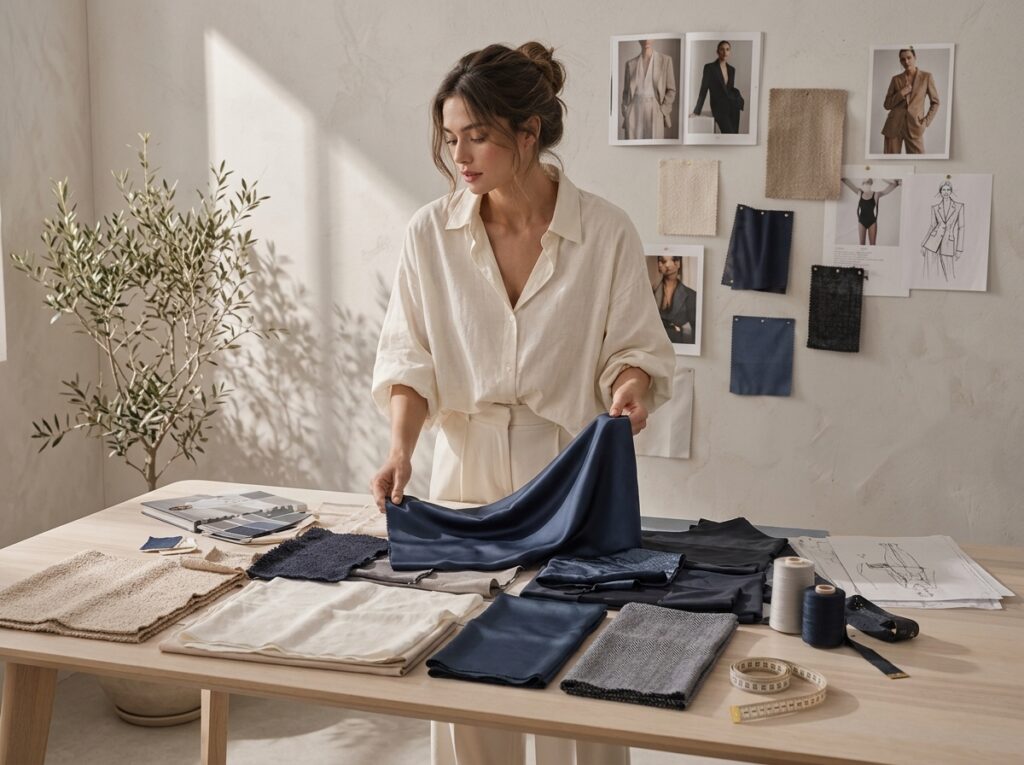
For a more accurate quotation, prepare as much of the following information as possible:
If some specifications are not yet finalized, identify them as open questions. This helps distinguish a preliminary estimate from a quotation based on confirmed production requirements.
Start by defining your product requirements and identifying suppliers with relevant garment experience. Verify the business identity, request comparable quotations, evaluate samples against a written specification, and document the production and inspection process before placing a bulk order.
A garment manufacturer operates or manages production directly, while a trading company typically coordinates orders through its own sourcing network. Some businesses combine both roles. Ask who will produce your garments, which processes are subcontracted, and who is responsible for quality and delivery.
There is no universal MOQ for all Chinese garment manufacturers. Minimums may vary by supplier, garment construction, fabric availability, dye-lot requirements, customization, and the number of styles and colors. Request an MOQ breakdown for your actual product brief.
Some suppliers accommodate smaller orders, but feasibility depends on the product, materials, development requirements, and production setup. Ask whether the minimum applies per style, color, or fabric, and compare development costs as well as unit prices.
Lead time varies according to material sourcing, sampling, revisions, order quantity, factory workload, seasonality, and shipping arrangements. Request separate estimates for sample development, material preparation, bulk production, inspection, and dispatch rather than relying on a single general estimate.
Review a sample against documented measurements, material specifications, workmanship standards, and finishing requirements. For bulk orders, establish inspection criteria and defect-handling procedures before production. Where appropriate, use qualified third-party inspection or testing services.
Not automatically. Compare the full scope of each quotation, including materials, customization, packaging, inspection, shipping responsibilities, and payment terms. A slightly higher unit price may be more suitable if the supplier can better meet your documented quality and delivery requirements.
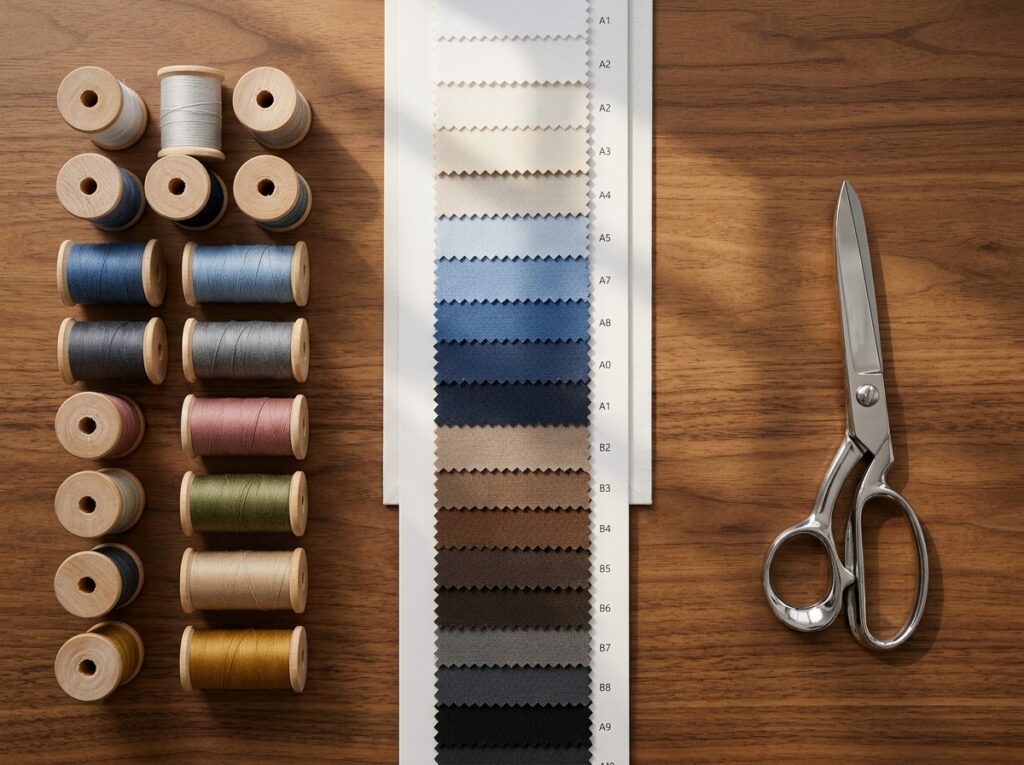
Provide your garment type, design or tech pack, material requirements, quantity, color and size breakdown, branding details, target delivery date, and destination market. The more complete the brief, the easier it is for suppliers to provide comparable quotations.
Finding garment suppliers in China is only the first step. The more important task is determining which supplier can meet your product specifications, commercial requirements, and quality expectations consistently.
A structured evaluation process helps you compare suppliers fairly, identify risks before bulk production, and make decisions based on documented evidence.
Use the seven-point evaluation framework to review product quality, communication, sample development, production capacity, lead-time reliability, pricing, and compliance. Record the evidence behind each score, and treat unverified claims as open questions rather than established facts.
If you are developing a clothing brand or planning a custom apparel order, contact Liantao Apparel with your product details, target quantity, and specifications to discuss whether your project fits our manufacturing capabilities.
A clear product brief is the starting point for a more useful manufacturing discussion—and a more informed supplier decision.
If you have any questions or require a quote, please leave
us a message. Our experts will get back to you within 24 hours to help you choose the ideal fashion products tailored to your needs.
Hi, I’m Lucy Cai, the founder of liantaoapparel.com. I’ve been managing a women’s clothing factory in China for over 16 years. With extensive experience in garment production and OEM services, I’m passionate about sharing insights into women’s fashion, apparel manufacturing, and global sourcing.
If you have any questions or need a quote, please contact us.
Please add us WhatsApp:+86 189 4809 3145
Provide us with detailed information about your requirements, supply design drawings or tech packs,
reference images, and share your ideas.
We will customize the best solution based on your needs and drawings, and provide a specific quote within 24 hours.
Once we receive your confirmation and deposit,we will commence mass production and take care of the subsequent shipping arrangements.


