


🏭 Looking for a Custom Apparel Manufacturer?
We are a leading OEM/ODM clothing factory with 20+ years of export experience. Custom styles, flexible MOQs, and retail-ready quality.
Lyocell fabric has become an increasingly important option for brands looking for a combination of softness, moisture management, durability, and a more responsible fiber story. As a regenerated cellulose fiber made from wood-derived cellulose, Lyocell offers a distinctive alternative to conventional cotton and petroleum-based synthetic fibers.
For apparel brands, understanding Lyocell fabric properties is important before selecting it for shirts, dresses, trousers, loungewear, activewear, underwear, or home textiles. Fabric performance depends not only on the fiber itself, but also on yarn construction, fabric structure, finishing, blend ratio, and supplier quality.
| Fabric Property | Lyocell Fabric Details |
|---|---|
| Fabric Name | Lyocell |
| Also Known As | TENCEL™ Lyocell for qualifying Lenzing-branded fibers |
| Fiber Composition | Regenerated cellulose derived from wood pulp |
| Common Uses | Dresses, shirts, trousers, suits, underwear, loungewear, activewear, bedding, towels and selected technical textiles |
| Breathability | Very good, depending on fabric construction |
| Moisture Management | High moisture absorption |
| Heat Retention | Moderate; influenced by fabric weight and construction |
| Stretchability | Low unless blended with elastane or mechanically engineered for stretch |
| Pilling Tendency | Depends on yarn quality, fabric construction and finishing |
| Fabric Density / Thread Count | Varies according to construction and end use |
| Commercial Development | Developed as a modern regenerated-cellulose fiber in the 20th century |
| Major Production Regions | Europe, China and other textile-producing regions |
| Recommended Care | Follow the garment or fabric care label; cool or cold washing is often appropriate |
Lyocell is sometimes associated with the name TENCEL™, but the two terms should not be treated as exact synonyms. TENCEL™ Lyocell refers to Lenzing-branded Lyocell fibers, while Lyocell is the broader fiber category.
Lyocell fabric is a regenerated cellulose textile made from cellulose obtained from wood and other approved cellulose sources. The fiber combines a soft hand feel with good moisture uptake, strength, and versatility, making it suitable for both apparel and home textiles.
Unlike conventional natural fibers that are directly spun from agricultural fibers, Lyocell is produced by dissolving cellulose and regenerating it into textile fibers. Modern Lyocell production can use a closed-loop solvent recovery system to reduce solvent loss and resource waste.
Lyocell production generally begins with dissolving wood pulp obtained from responsibly managed or controlled sources. Depending on the fiber producer, wood species and sourcing regions can vary.
The cellulose is dissolved in N-methylmorpholine N-oxide, commonly abbreviated as NMMO. The resulting cellulose solution is filtered and extruded through spinnerets to form fibers. The solvent is then recovered and reused as part of the closed-loop process.
This manufacturing approach is one of the major reasons Lyocell is frequently discussed as a more resource-efficient regenerated cellulose fiber.
Lyocell is a relatively modern regenerated cellulose fiber that emerged commercially during the late 20th century. Lenzing later commercialized TENCEL™ Lyocell as a branded fiber platform and helped establish Lyocell as an important material in the sustainable textile market.
Today, Lyocell is used across fashion, home textiles, and selected technical applications. Its combination of softness, moisture management, drape, and strength makes it particularly attractive for garments worn close to the skin.
Modern Lyocell production continues to develop as apparel brands look for alternatives to conventional fibers. Its performance can be adjusted through fiber fineness, yarn selection, fabric construction, finishing, and blending.
For apparel manufacturers, Lyocell can be especially useful when a product needs a soft hand feel, good moisture absorption, fluid drape, and a sustainability-focused material story.
At Liantao, we can incorporate Lyocell into apparel development according to fabric composition, weight, construction, finishing, and garment application. This allows brands to evaluate the material based on actual product requirements rather than using sustainability claims alone.
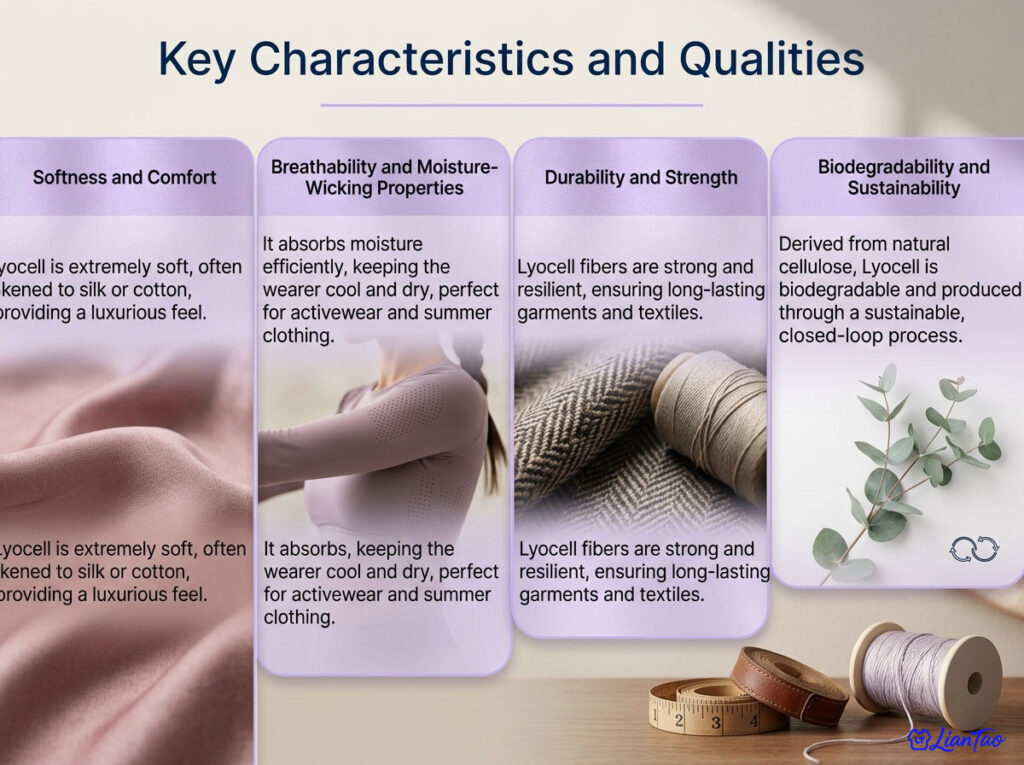
Lyocell fabric stands out because it combines the comfort characteristics associated with regenerated cellulose fibers with a controlled manufacturing process.
Key advantages include:
Lyocell and cotton can both provide comfortable, breathable fabrics, but their fiber structures and manufacturing routes are different.
Lyocell is known for its smooth hand feel and moisture absorption, while cotton is widely valued for familiarity, versatility, durability, and broad availability. Lyocell can also offer a fluid drape that is particularly useful for fashion garments.
From a sustainability perspective, it is better to compare specific fiber systems and production methods rather than automatically labeling one fiber as universally more sustainable than another.
Lyocell and polyester serve different performance requirements.
Polyester is valued for durability, dimensional stability, cost efficiency, and technical performance. Lyocell provides a more cellulosic hand feel, high moisture uptake, and a wood-derived fiber origin.
For brands developing casualwear, loungewear, dresses, shirts, and comfort-focused apparel, Lyocell can offer a different performance profile from polyester. For highly technical sportswear, polyester may still be preferable depending on the required stretch, drying speed, abrasion resistance, and construction.
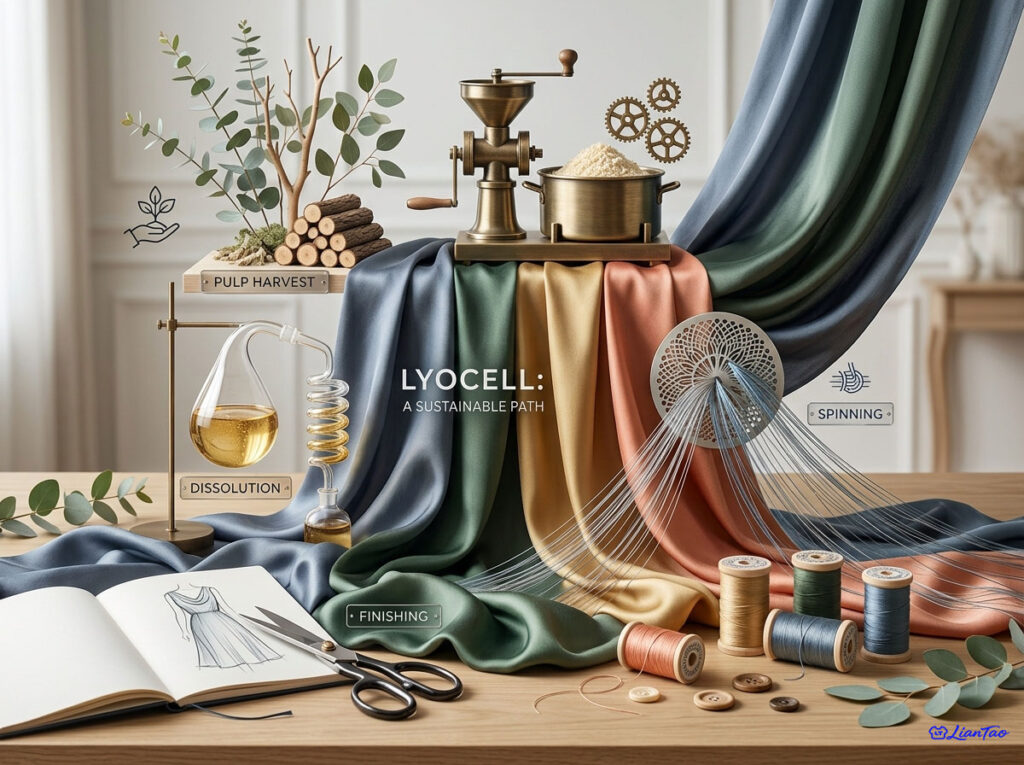
Lyocell fabric is produced through a controlled fiber-regeneration process. The exact manufacturing process varies by producer, but the basic concept involves dissolving cellulose, forming fibers through spinning, and recovering the solvent.
The process begins with cellulose-rich raw material, commonly obtained from wood-based dissolving pulp. Responsible sourcing is important because the sustainability profile of the final fiber begins with its raw-material supply chain.
Wood is processed into pulp so that cellulose can be separated and purified. The resulting dissolving pulp must meet specific requirements for fiber production, including high cellulose purity.
The cellulose pulp is dissolved in N-methylmorpholine N-oxide, or NMMO, to create a spinnable cellulose solution.
This is a key difference between Lyocell and conventional viscose processes because the Lyocell process does not require the same chemical conversion of cellulose used in traditional viscose production.
The cellulose solution is filtered and pushed through fine spinneret openings. This produces continuous filaments that are subsequently washed and processed into the desired fiber form.
The fibers are washed, dried, finished, and cut or processed according to the required specifications. Subsequent textile processes such as spinning, knitting, weaving, dyeing, and finishing determine many of the final fabric characteristics.
Lyocell production and textile manufacturing are distributed across several important textile markets:
These regions contribute differently to the Lyocell supply chain, from fiber technology and raw materials to spinning, fabric production, dyeing, and finished apparel.
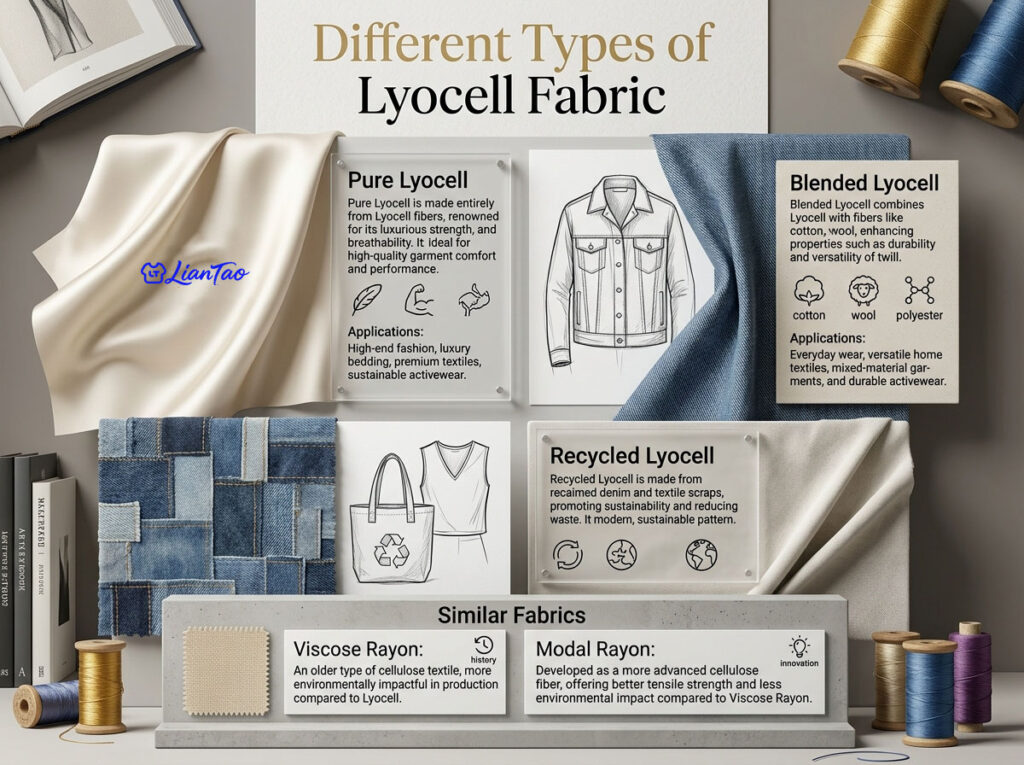
Technically, Lyocell is a fiber category rather than a collection of completely different fiber chemistries. In commercial textile sourcing, however, Lyocell fabrics are often grouped according to composition, processing, blending, and application.
Pure Lyocell fabrics are made primarily or entirely from Lyocell fibers. They are valued for softness, smoothness, moisture management, and a fluid appearance.
Applications: High-quality shirts, dresses, premium loungewear, bedding, underwear, and selected sustainable activewear.
Blended Lyocell combines Lyocell with other fibers such as cotton, polyester, wool, or elastane.
The purpose of blending is usually to balance properties such as softness, stretch, durability, cost, recovery, or dimensional stability.
Applications: Everyday clothing, casualwear, activewear, loungewear, mixed-material garments, and home textiles.
Recycled Lyocell refers to Lyocell fibers or regenerated-cellulose systems incorporating recovered cellulose or recycled textile feedstock. Availability and technical specifications depend heavily on the producer and recycling technology.
Applications: Sustainable apparel, circular textile projects, accessories, and environmentally focused collections.
Lyocell is often compared with other regenerated cellulose fibers because they share a wood- or cellulose-derived origin.
Understanding the production technology behind each fiber is more useful than assuming that every regenerated cellulose fiber has the same sustainability or performance profile.
Lyocell fabric is versatile enough for fashion, home textiles, and selected technical applications. Its softness, moisture management, strength, and drape make it particularly useful for comfort-oriented products.
Lyocell is highly valued in apparel because it can combine comfort with a smooth appearance and fluid drape.
It is used in:
Lyocell is also used in home textile products where softness and moisture management are important.
Beyond consumer apparel, regenerated cellulose fibers can be used in selected technical and nonwoven applications.
The best Lyocell application depends on fiber specification, fabric construction, finishing, weight, and required performance.
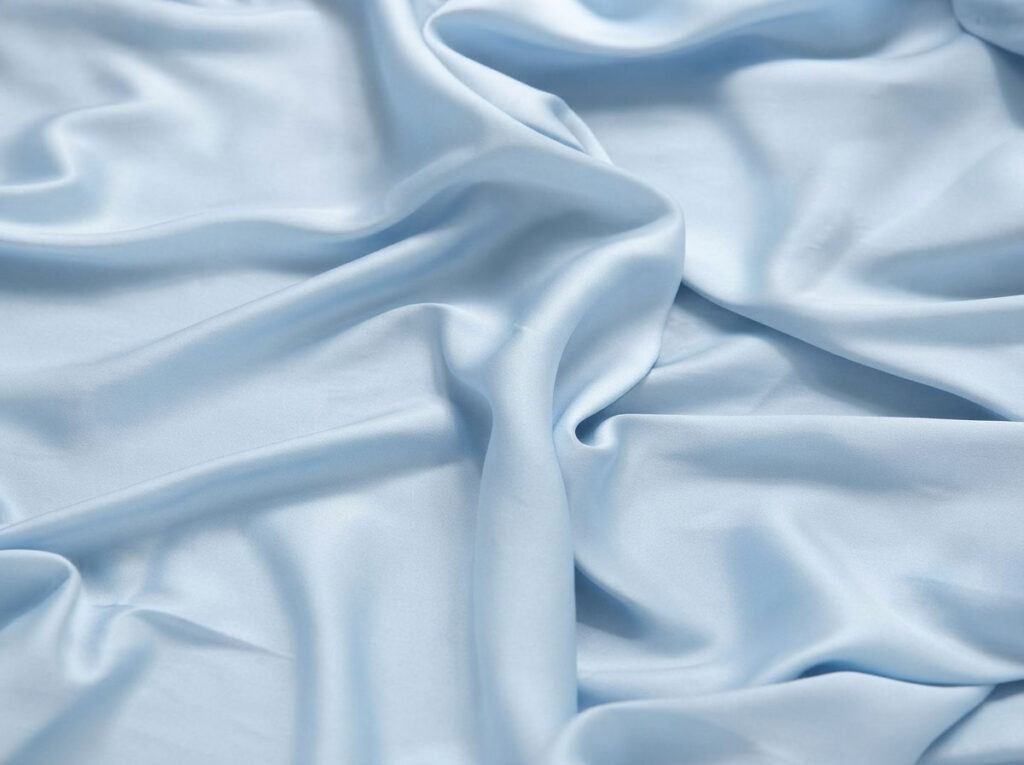
Lyocell fabric pricing varies significantly depending on fiber brand, fiber quality, fabric construction, GSM, yarn count, weave or knit structure, finishing, order volume, origin, and certification requirements.
Indicative market ranges can be useful for early budgeting, but brands should request current supplier quotations before setting a final product cost.
At Liantao, Lyocell sourcing can be evaluated according to the complete garment specification. This helps brands compare not only fabric price, but also fabric quality, production efficiency, MOQ, finishing, and total garment cost.
Compared with conventional cotton or fully synthetic fibers, some Lyocell fabrics can carry a higher material cost because of fiber technology, solvent-recovery systems, premium fiber specifications, or certification requirements.
For this reason, Lyocell should be evaluated on total product value rather than fabric price alone.
Lyocell is frequently selected for sustainable fashion collections because its raw material is cellulose and some production systems use closed-loop solvent recovery. However, Lyocell should not automatically be described as impact-free or universally sustainable.
The environmental profile depends on forestry practices, fiber producer, energy sources, chemical recovery, manufacturing efficiency, dyeing, finishing, transportation, garment lifespan, and disposal.
The closed-loop Lyocell process uses NMMO to dissolve cellulose and recovers the solvent for reuse. Lenzing states that more than 99.8% of the solvent is recovered and returned to the production loop for TENCEL™ Lyocell.
This approach helps reduce solvent loss and contributes to the resource-efficiency advantages associated with modern Lyocell production.
The sustainability of a Lyocell garment does not end when the fiber is produced. Dyeing, washing, finishing, printing, packaging, and transportation can all contribute to the overall environmental footprint.
For this reason, brands should evaluate the complete supply chain and ask suppliers about dyeing processes, wastewater treatment, chemical management, certifications, and finishing methods.
At Liantao, we focus on using material specifications and production processes that align with the requirements of modern apparel brands.
Our approach includes:
By combining fabric expertise with apparel manufacturing capabilities, Liantao can help brands develop Lyocell garments that balance comfort, appearance, performance, production requirements, and sustainability goals.
We invite brands to work with Liantao on custom Lyocell apparel, sustainable clothing collections, private-label garments, and other fabric-development projects.
When purchasing Lyocell fabric, understanding quality indicators and verifying relevant certifications can help brands make more reliable sourcing decisions.
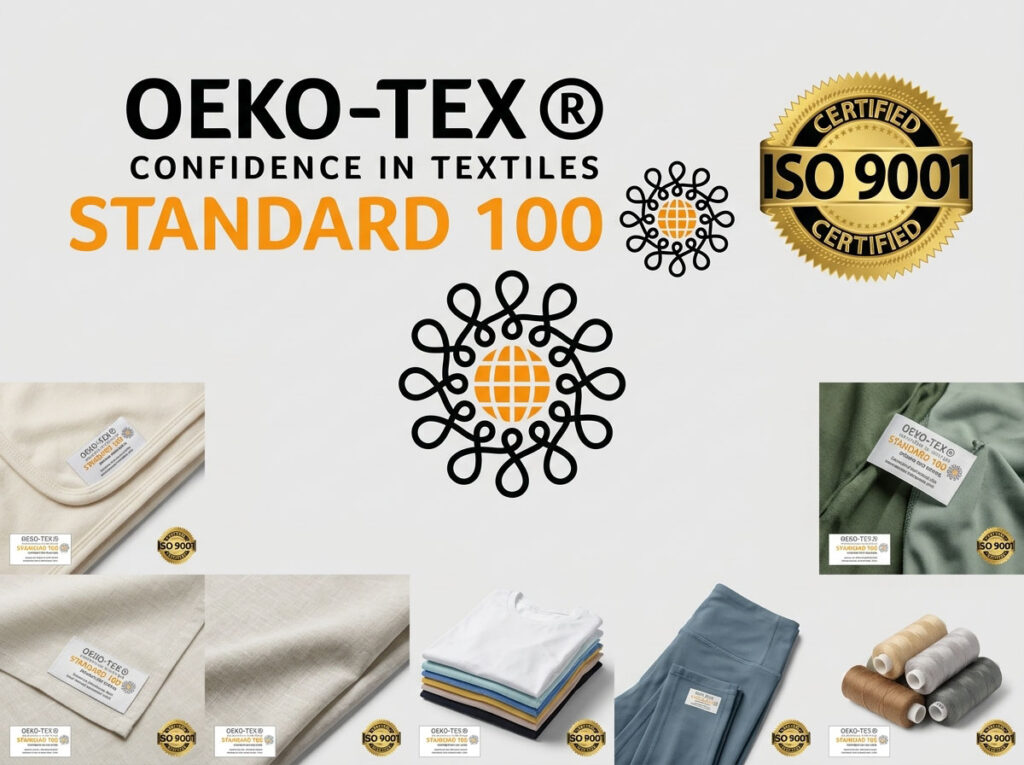
For brands sourcing sustainable Lyocell apparel, certification should be verified against the actual fabric, supplier, and product documentation.
At Liantao, we focus on developing Lyocell apparel with appropriate fabric specifications, quality controls, and responsible sourcing requirements.
We prioritize practical sustainability: selecting suitable materials, controlling manufacturing quality, and helping brands create garments that are comfortable, durable, commercially viable, and aligned with their sustainability objectives.
For more information or to request a Lyocell apparel or fabric sourcing consultation, contact Liantao to discuss your product requirements.
Let’s create something extraordinary together.
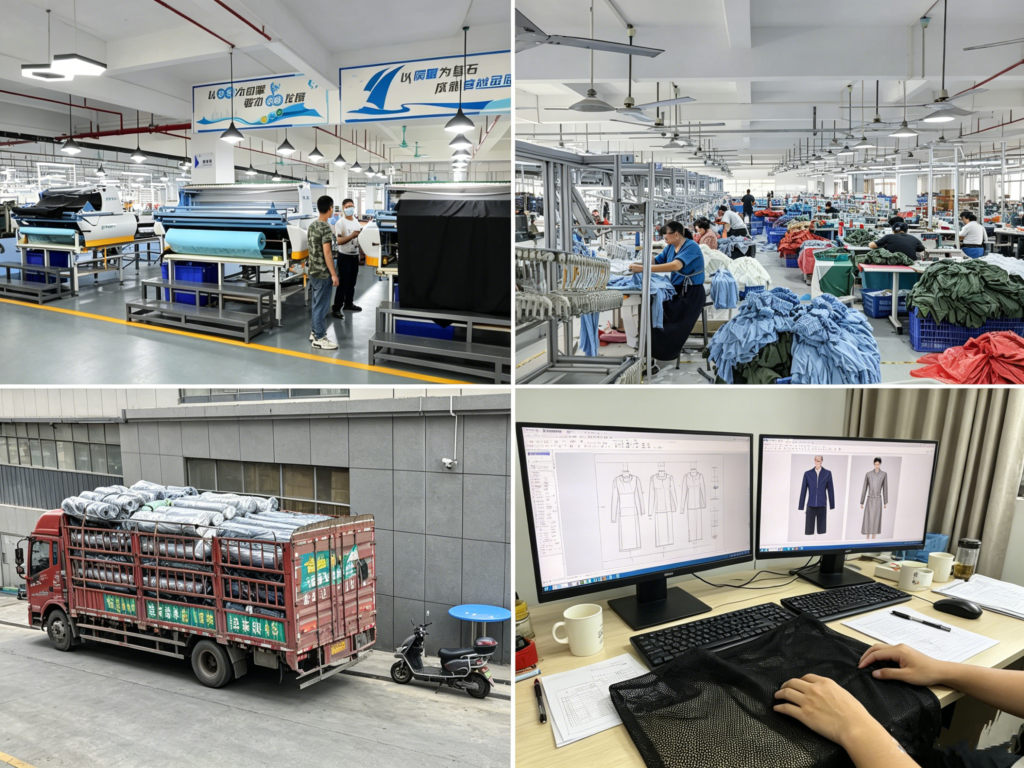
If you have any questions or require a quote, please leave
us a message. Our experts will get back to you within 24 hours to help you choose the ideal fashion products tailored to your needs.
Hi, I’m Lucy Cai, the founder of liantaoapparel.com. I’ve been managing a women’s clothing factory in China for over 16 years. With extensive experience in garment production and OEM services, I’m passionate about sharing insights into women’s fashion, apparel manufacturing, and global sourcing.
If you have any questions or need a quote, please contact us.
Please add us WhatsApp:+86 189 4809 3145
Provide us with detailed information about your requirements, supply design drawings or tech packs,
reference images, and share your ideas.
We will customize the best solution based on your needs and drawings, and provide a specific quote within 24 hours.
Once we receive your confirmation and deposit,we will commence mass production and take care of the subsequent shipping arrangements.


