


🏭 Looking for a Custom Apparel Manufacturer?
We are a leading OEM/ODM clothing factory with 20+ years of export experience. Custom styles, flexible MOQs, and retail-ready quality.
Shirts and T-shirts are essential products in the apparel market, but they differ in construction, fabric, appearance, and intended use. Understanding these differences helps clothing brands, retailers, and buyers select suitable products for their collections.
Whether you are developing a casualwear line, sourcing basic T-shirts, or planning custom apparel production, it is important to understand product types, fabric options, sizing, and manufacturing requirements.
This guide explains the difference between shirts and T-shirts, explores popular styles and materials, and outlines how to develop custom apparel with a reliable clothing manufacturer.
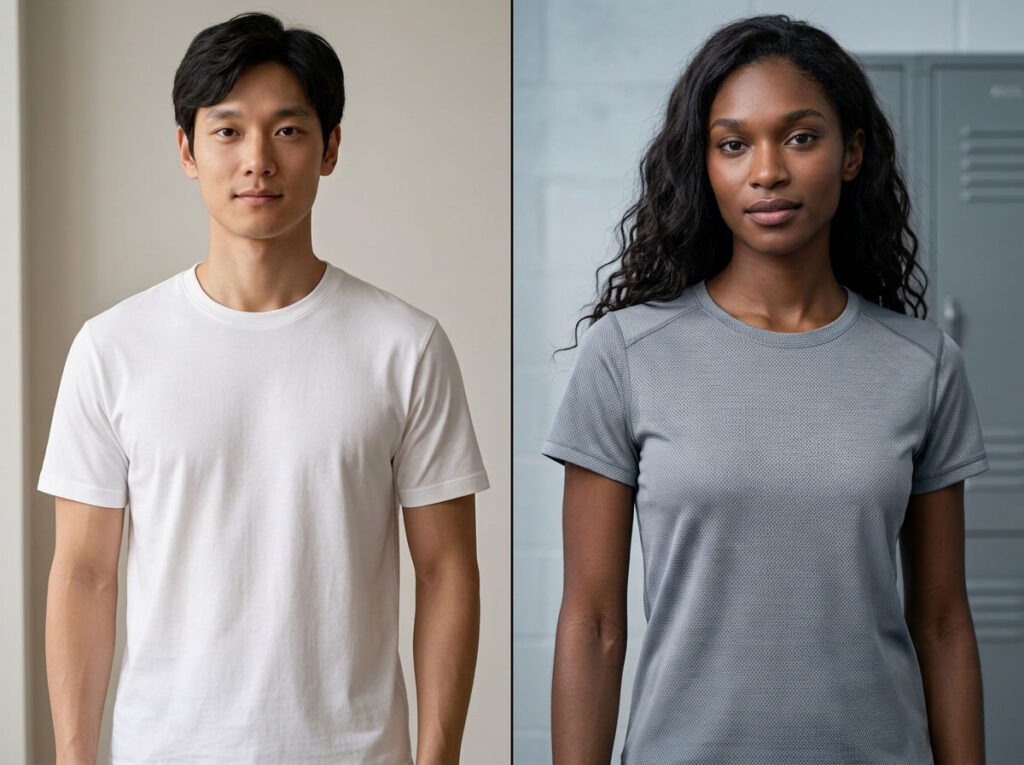
The main difference between a shirt and a T-shirt is their construction and common usage. Shirt is a broad clothing term, while a T-shirt generally refers to a specific type of lightweight upper-body garment.
In everyday fashion terminology, shirts can include dress shirts, casual shirts, and other upper-body styles. T-shirts are usually characterized by a simpler pullover construction, a knitted fabric, and a relatively casual appearance.
For a more precise product definition, the European Commission’s official classification of T-shirts provides useful information about their construction and classification in international trade.
| Feature | Shirt | T-Shirt |
|---|---|---|
| Meaning | Broad category of upper-body clothing | Specific garment style |
| Construction | May include collars, plackets, and cuffs | Usually a simple pullover construction |
| Fabric | Woven or knitted | Usually knitted |
| Neckline | Collar or other neckline designs | Commonly crew neck or V-neck |
| Closure | May have buttons or other fastenings | Usually no front closure |
| Common use | Formal, business, casual, and lifestyle wear | Casual, promotional, and everyday wear |
A traditional button-front shirt often features a collar, front placket, and structured sleeves. A basic T-shirt usually has a simpler silhouette, with a ribbed neckline and fewer construction details.
However, not every garment follows the same design rules. For example, some fashion T-shirts have unusual necklines, decorative openings, or oversized silhouettes.
The key takeaway: A T-shirt is a specific type of shirt in broad everyday usage, but the two terms should not be treated as interchangeable when defining product specifications for manufacturing.
Shirts and T-shirts come in different styles to meet the needs of various customer groups and fashion markets. Understanding these categories helps brands plan their product ranges more effectively.
Brands should select styles according to their target customers, price positioning, and intended retail channels. A basic crew neck T-shirt may suit a promotional collection, while oversized or graphic designs may be more appropriate for a streetwear label.
The right choice depends on the purpose of the garment, the expected appearance, and the comfort requirements of the wearer.
For apparel businesses, product selection should also consider customer preferences, seasonal demand, retail positioning, and production costs.
A clear product concept makes it easier to determine the appropriate fabric, fit, construction, and customization methods before manufacturing begins.
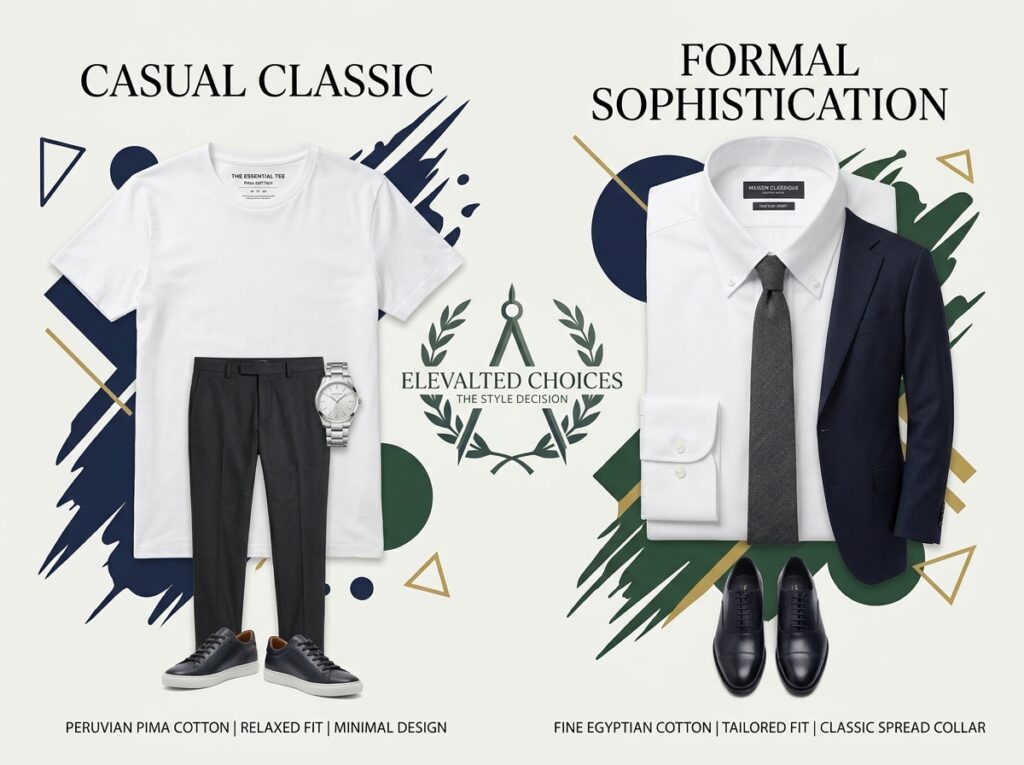
Fabric selection affects the garment’s appearance, comfort, durability, structure, and retail positioning. The most suitable material depends on the product design and its intended use.
When sourcing fabric, buyers should evaluate fiber composition, fabric weight, stretch, surface texture, color consistency, shrinkage, and intended garment construction.
It is also important to confirm the actual fabric composition rather than relying only on general descriptions such as premium cotton or performance fabric.
For brands selling in the United States, the FTC’s guide to textile fiber content labeling explains relevant fiber disclosure requirements.
Fit and design influence how customers perceive a garment. A suitable fit should reflect the product category, target audience, and brand positioning.
Neckline and Collar: T-shirts may feature crew necks, V-necks, or other neckline variations. Traditional shirts require careful consideration of collar shape, collar construction, and placket details.
Size Charts: A clear size chart should specify key garment measurements, including chest, shoulder, body length, sleeve length, and other relevant dimensions.
Pattern Grading: Size grading should maintain the intended proportions across the full size range rather than simply increasing every measurement equally.
Sample Evaluation: Before bulk production, brands should review garment measurements, fit, stitching, fabric behavior, and overall appearance using an approved sample.
For manufacturers and brands, accurate technical specifications reduce misunderstandings and help maintain consistency between the approved design and the finished products.
OEM and ODM services allow apparel brands to develop products that reflect their own designs, specifications, and branding requirements.
| Feature | OEM | ODM |
|---|---|---|
| Design direction | Provided by the brand | Developed with manufacturer support |
| Tech Pack | Usually supplied by the buyer | May be developed with manufacturer assistance |
| Customization | Based on buyer specifications | Based on available designs and development options |
| Brand identity | Buyer’s branding | Buyer’s branding |
| Suitable for | Brands with established product concepts | Businesses seeking product development support |
A typical custom apparel project involves defining the product concept, confirming materials and specifications, developing patterns, reviewing samples, approving the final design, and proceeding with bulk manufacturing and quality inspection.
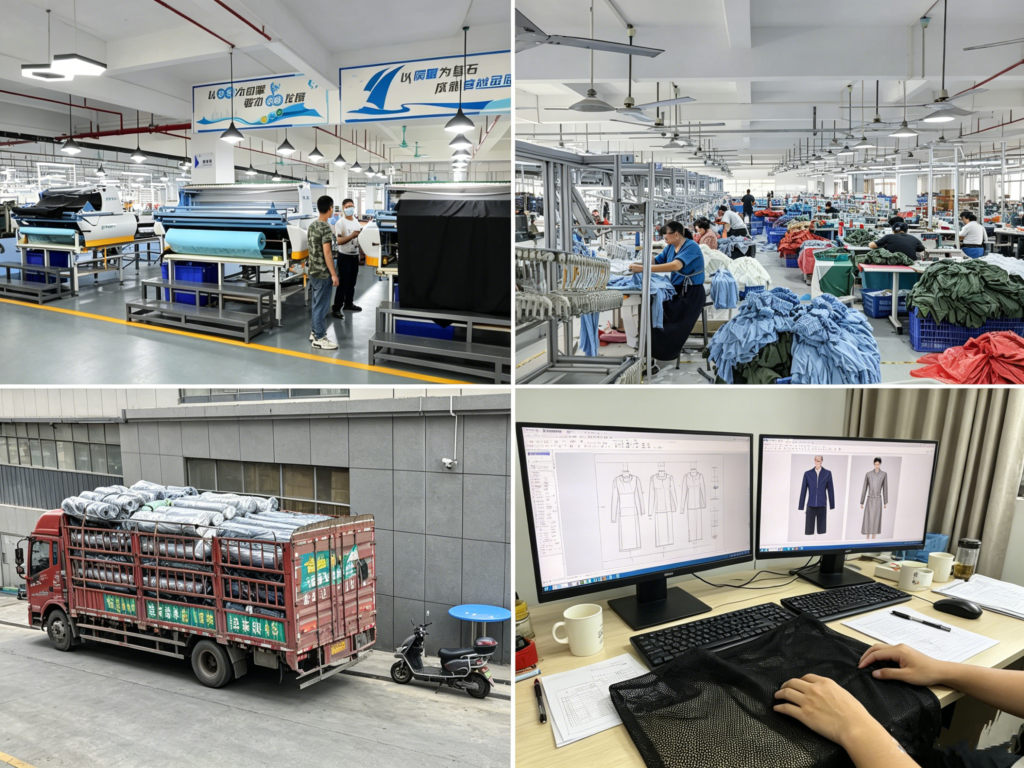
Liantao Apparel provides OEM and ODM services, including pattern making, Tech Pack development, custom fabric options, and branding support. The company has more than 20 years of expertise and a workforce of over 200 skilled workers.
Choosing a suitable manufacturer requires more than comparing quotations. Buyers should evaluate product knowledge, material sourcing, production capabilities, quality management, and communication.
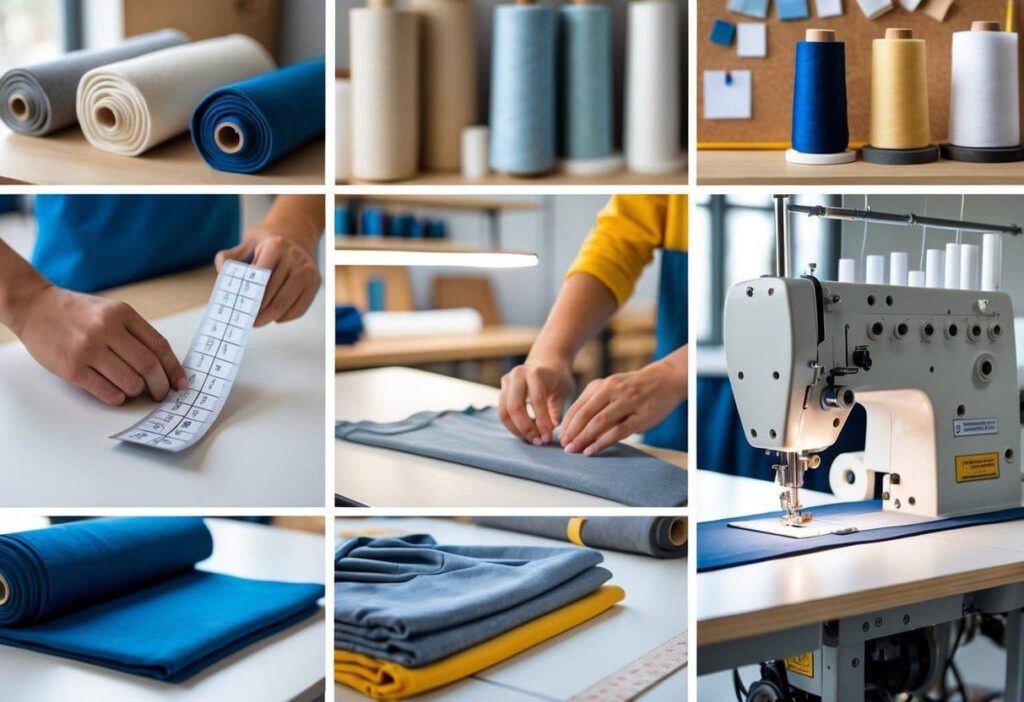
Established in 2000 and based in Dongguan City, Guangdong Province, China, Liantao Apparel provides custom apparel manufacturing services for clothing brands and businesses.
Its confirmed capabilities include:
For a specific shirt or T-shirt project, buyers should confirm the required construction, materials, customization methods, and production specifications directly with the manufacturer before placing an order.
A suitable long-term manufacturing partner should understand the brand’s product requirements and have a clear process for managing specifications, quality, and communication.
Garment quality inspection should cover more than the overall appearance of a finished product. For custom shirts and T-shirts, important inspection points include fabric condition, garment measurements, stitching consistency, neckline and collar construction, printing or embroidery quality, and label placement. Liantao Apparel applies multiple quality inspections and conducts a 100% inspection before bulk shipment to help ensure that finished garments meet the agreed specifications.
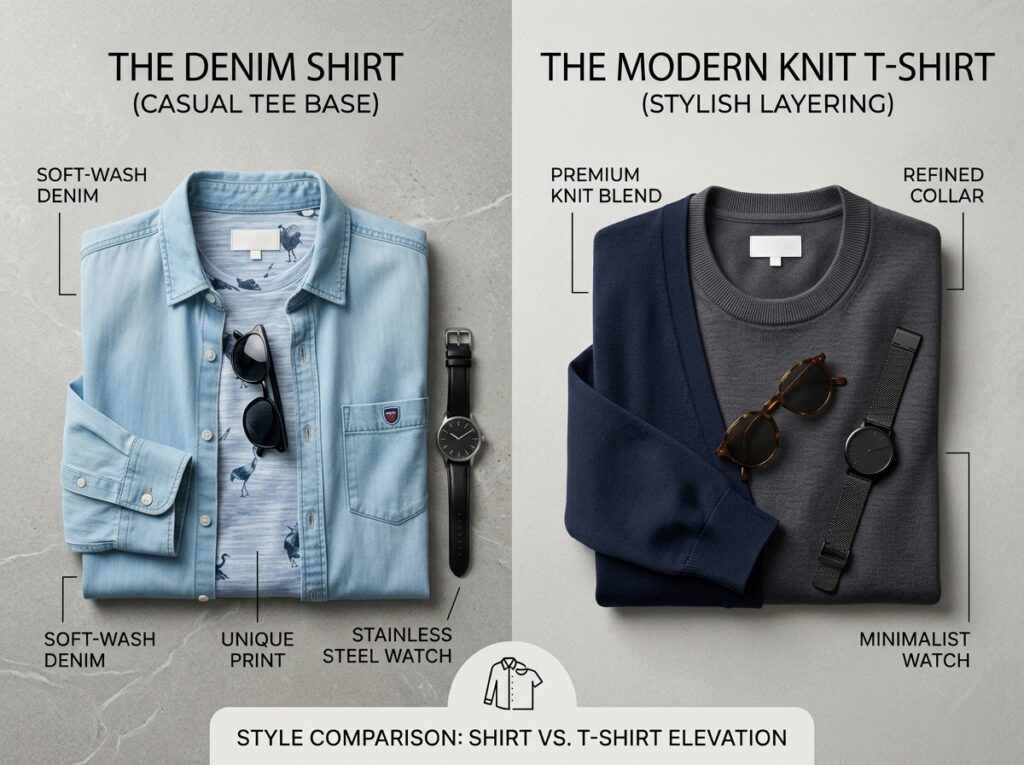
A shirt is a broad category of upper-body clothing, while a T-shirt is a specific style, usually featuring knitted fabric, a simple pullover construction, and a casual design.
Yes. In everyday clothing terminology, a T-shirt is generally considered a type of shirt. However, product specifications and manufacturing categories may distinguish T-shirts from traditional woven shirts.
Cotton and cotton blends are common choices for everyday clothing. Jersey is widely used for T-shirts, while poplin, Oxford, and twill are common woven options for traditional shirts.
Yes. OEM and ODM services can support custom fabrics, colors, garment construction, patterns, labels, hangtags, and packaging, depending on the manufacturer’s capabilities.
Review the approved sample, fabric composition, size specifications, construction details, branding requirements, MOQ, quotation, and quality inspection standards before confirming an order.
Understanding the differences between shirts and T-shirts helps brands make better decisions about product development, fabric selection, fit, and manufacturing.
Whether you are creating basic T-shirts, fashion-focused collections, or custom apparel, clear specifications and a suitable manufacturing partner are essential for achieving consistent product quality.
By evaluating OEM and ODM capabilities, customization options, MOQ, and quality control processes, clothing brands can build a more reliable approach to apparel sourcing and product development.
If you have any questions or require a quote, please leave
us a message. Our experts will get back to you within 24 hours to help you choose the ideal fashion products tailored to your needs.
Hi, I’m Lucy Cai, the founder of liantaoapparel.com. I’ve been managing a women’s clothing factory in China for over 20 years. With extensive experience in garment production and OEM services, I’m passionate about sharing insights into women’s fashion, apparel manufacturing, and global sourcing.
If you have any questions or need a quote, please contact us.
Please add us WhatsApp:+86 189 4809 3145
Provide us with detailed information about your requirements, supply design drawings or tech packs,
reference images, and share your ideas.
We will customize the best solution based on your needs and drawings, and provide a specific quote within 24 hours.
Once we receive your confirmation and deposit,we will commence mass production and take care of the subsequent shipping arrangements.


