


🏭 Looking for a Custom Apparel Manufacturer?
We are a leading OEM/ODM clothing factory with 20+ years of export experience. Custom styles, flexible MOQs, and retail-ready quality.
Organza is a lightweight, sheer fabric known for its crisp texture and ability to hold a structured shape. It is commonly used in dresses, evening gowns, bridalwear, and decorative clothing details where designers want transparency without losing volume or definition.
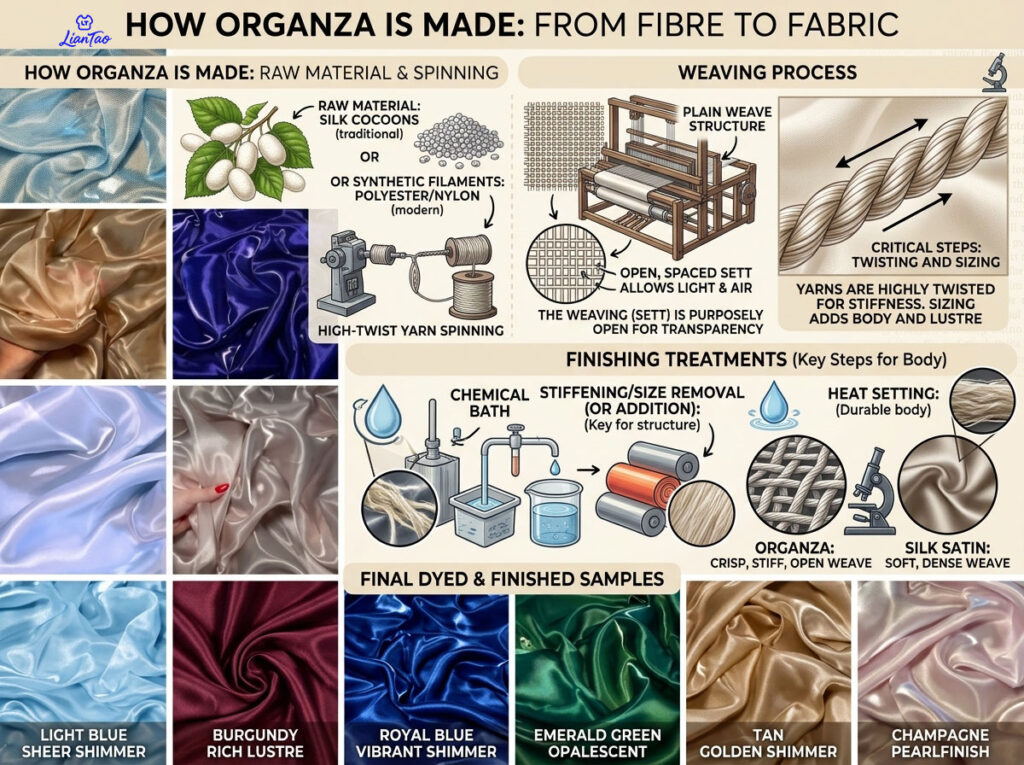
Organza is produced through several key manufacturing steps:
Fiber selection: Choose silk, polyester, or nylon filament yarns according to the desired fabric quality and performance.
Yarn twisting: Twist fine filament yarns tightly to create strength and a crisp texture.
Weaving: Use a plain-weave structure to create organza’s lightweight, sheer, and slightly stiff appearance.
Dyeing: Apply the desired colors to achieve the required shade and appearance.
Finishing: Treat the fabric to achieve the desired stiffness, transparency, and surface feel.
Quality inspection: Check the finished fabric for defects, consistency, and overall quality before it is used for garment production.
According to the Getty Research Institute’s textile terminology, organza is a sheer fabric made with a loose plain weave. It is traditionally associated with silk but can also be manufactured using synthetic fibers.
Common characteristics of organza include:
The exact appearance and performance depend on fiber composition, yarn characteristics, weave construction, and finishing. Therefore, buyers should not assume that every organza fabric has identical transparency, stiffness, or durability.
When sourcing organza for clothing production, brands should evaluate both the fabric specification and the intended garment design rather than selecting material based on appearance alone.
For a professional textile definition, see the Getty Research Institute’s textile definition of organza.
Organza is available in different fiber compositions and decorative finishes. Understanding these variations helps clothing brands choose materials that match their product positioning, design requirements, and target customers.
Common organza options include:
| Organza type | Main characteristics | Potential applications |
|---|---|---|
| Silk organza | Natural silk composition | Premium dresses and bridalwear |
| Polyester organza | Synthetic fiber option | Dresses and decorative layers |
| Nylon organza | Synthetic fiber construction | Lightweight decorative details |
| Embroidered organza | Decorative surface stitching | Occasionwear and formal garments |
| Printed organza | Patterned surface | Fashion dresses and overlays |
These categories are not mutually exclusive. For example, polyester organza may also be printed or embroidered.
For clothing brands, the most appropriate option depends on the desired appearance, material budget, construction requirements, and care expectations. Always confirm the actual fiber content and finish with the fabric supplier before approving a material specification.
Organza is particularly useful in fashion designs that require transparency, volume, and a defined silhouette. Its crisp structure allows designers to create decorative layers without relying entirely on heavier fabrics.
Common clothing applications include:
The Museum of Fine Arts, Boston, includes organza in its CAMEO materials database. Its description identifies organza as a sheer, crisp, plain-weave fabric used in evening dresses, wedding clothing, neckwear, and trims.
However, the suitability of organza depends on the garment’s intended function. A sheer decorative overlay may work well for an evening dress but may not be appropriate for an area that requires opacity, softness, or direct skin comfort.
Designers should also consider how organza interacts with other fabrics. Combining it with satin, lining fabrics, lace, or lightweight woven materials can create different visual and structural effects.
For additional textile information, consult the Museum of Fine Arts, Boston’s organza fabric characteristics and traditional uses.
Choosing organza fabric for dresses requires more than selecting a color or attractive surface. The material must support the intended silhouette, provide suitable coverage, and work with the garment’s construction.
Consider the following factors before choosing fabric:
| Dress type | Main selection priorities | Possible design applications |
|---|---|---|
| Wedding dress | Transparency, structure, layering | Skirt overlays and sleeves |
| Evening gown | Surface appearance, volume | Layered skirts and statement details |
| Casual dress | Comfort, care, design balance | Decorative panels and overlays |
| Stage costume | Visual impact, shape retention | Voluminous sections and trims |
A practical approach is to define the garment’s design requirements before sourcing fabric. Create a specification that identifies fiber content, color, transparency, surface finish, and the intended construction.
The selected material should then be evaluated as part of the garment development process. A fabric that looks attractive on a roll may behave differently after cutting, sewing, gathering, or pressing.
For brands developing a new collection, coordinating fabric selection with garment pattern development can help reduce design mismatches and improve consistency across the finished products.
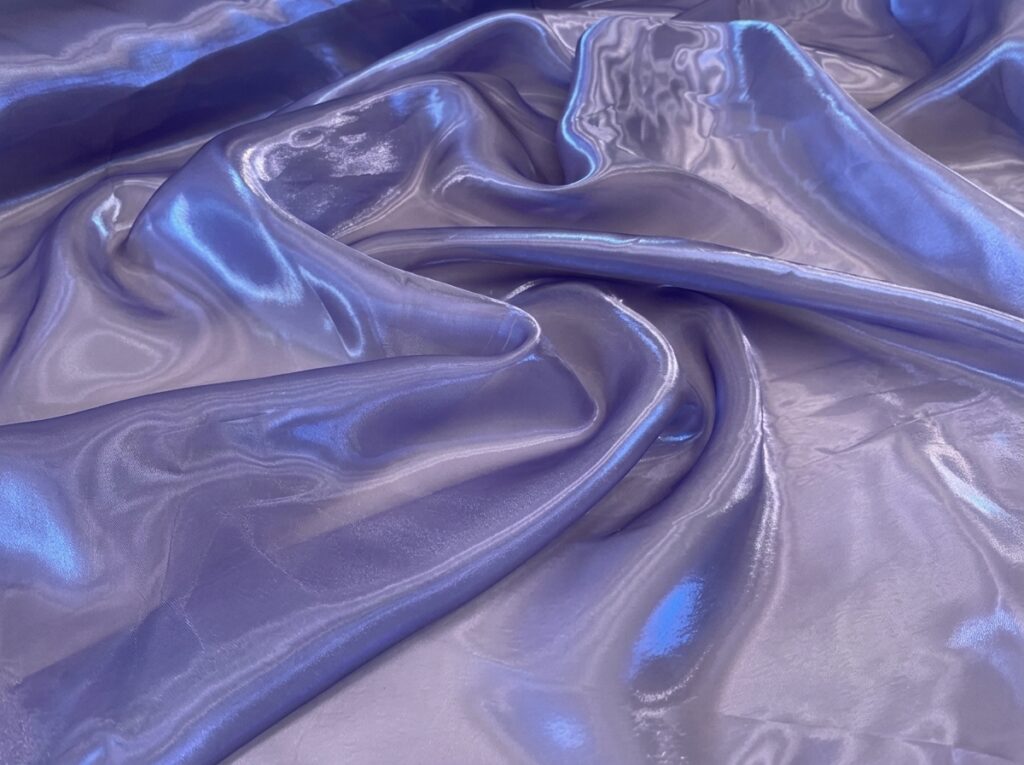
Organza is often compared with chiffon, tulle, voile, and satin because these materials can all appear in formalwear and fashion collections. However, their structures and visual effects are different.
Understanding these differences helps designers avoid choosing a material that does not match the intended silhouette.
The best choice depends on the garment’s design rather than a universal ranking of fabric quality.
For example, a designer creating a flowing blouse may prefer chiffon or voile, while a structured sleeve or layered skirt may benefit from organza. Tulle can be more suitable when an open net structure is part of the design.
It is also important to compare fabrics with similar fiber compositions. A silk organza and a polyester chiffon may differ for several reasons beyond their fabric names, including fiber properties, yarn construction, and finishing.
When comparing materials, evaluate transparency, hand feel, drape, stiffness, surface appearance, and sewing compatibility together.
Organza requires appropriate handling because its lightweight construction and delicate appearance can make it vulnerable to snagging, creasing, and damage from unsuitable care methods.
Care requirements depend on the fiber composition, finishing, and garment construction. Silk organza and synthetic organza should not automatically be treated in the same way.
Important care considerations include:
For clothing manufacturers, care requirements should be considered during product development rather than added as an afterthought.
The fiber composition, decorative treatments, lining, and construction can all influence the appropriate care instructions. A garment containing organza alongside other materials may require care based on its most sensitive component.
Brands should ensure that care labels accurately reflect the actual garment composition and appropriate maintenance requirements. Incorrect or overly general care instructions can create customer dissatisfaction and affect the perceived quality of a clothing collection.
Organza can be incorporated into custom clothing collections through OEM and ODM manufacturing, provided that the selected fabric and garment construction are compatible with the design.
For fashion brands, customization involves more than choosing a material. It requires coordination between fabric sourcing, pattern development, garment construction, branding, and quality requirements.
OEM manufacturing generally means that the brand provides its design concept, technical specifications, or Tech Pack, while the manufacturer produces the garments according to the agreed requirements.
ODM manufacturing involves collaboration with a manufacturer on product development and design solutions. The specific scope depends on the manufacturer’s capabilities and the project agreement.
Important customization considerations include:
For more guidance, read our apparel manufacturer selection and quality control guide and learn how to find a reliable clothing manufacturer.
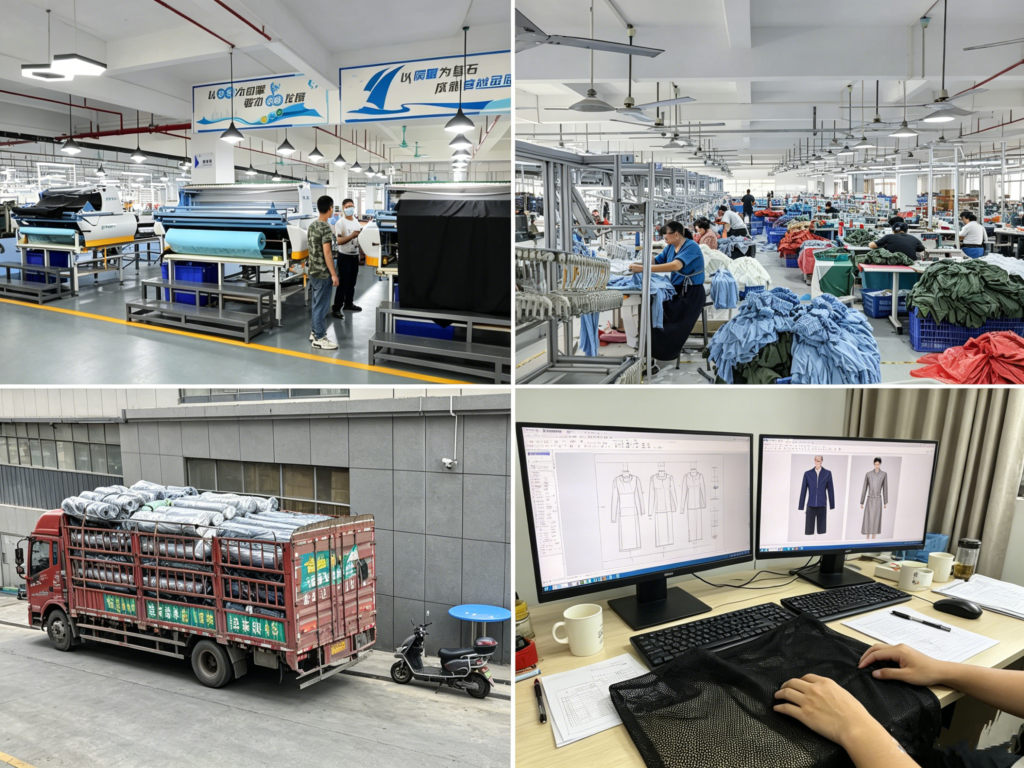
Liantao Apparel is based in Dongguan City, Guangdong Province, China. Established in 2000, the company provides OEM/ODM apparel services, with a focus on product development, custom fabrics, branding, and garment manufacturing.
Its MOQ starts from 80 pieces per design and colorway, depending on product requirements. The company also applies multiple quality inspections and conducts 100% inspection before bulk shipment.
If you are planning an organza clothing collection, share your product category, fabric specifications, design requirements, and estimated order quantity with the manufacturing team. These details can help determine whether the project matches the factory’s available capabilities.
Zoe specializes in custom evening gowns and needed organza fabric that offered an elegant look while remaining suitable for garment production. However, organza can be challenging to work with because it is prone to snagging, pulled threads, and wrinkling, which can affect the finished appearance.
To address these challenges, Liantao Apparel focused on selecting organza with suitable fabric quality, structure, and stability. We also paid close attention to fabric handling, cutting, sewing, and finishing to reduce the risk of snags, fabric damage, and unwanted wrinkles. Through careful material evaluation and quality inspections, we helped Zoe develop custom organza evening gowns that balanced visual elegance with garment quality.
Organza can be made from silk or synthetic fibers such as polyester, nylon, and rayon. The exact composition depends on the fabric supplier and product specification. Buyers should check the fiber content on the material label or technical documentation rather than assuming all organza is silk.
Organza can be a suitable fabric for dresses that require transparency, volume, and a crisp appearance. It is commonly used for wedding dresses, evening gowns, overlays, and decorative sleeves. However, designers should consider lining, comfort, fabric stiffness, and the intended garment structure.
Silk organza is made from natural silk fibers, while polyester organza is made from synthetic fibers. They may differ in surface appearance, hand feel, care requirements, and cost. The actual differences depend on fabric construction and finishing, so brands should compare specific material samples and specifications.
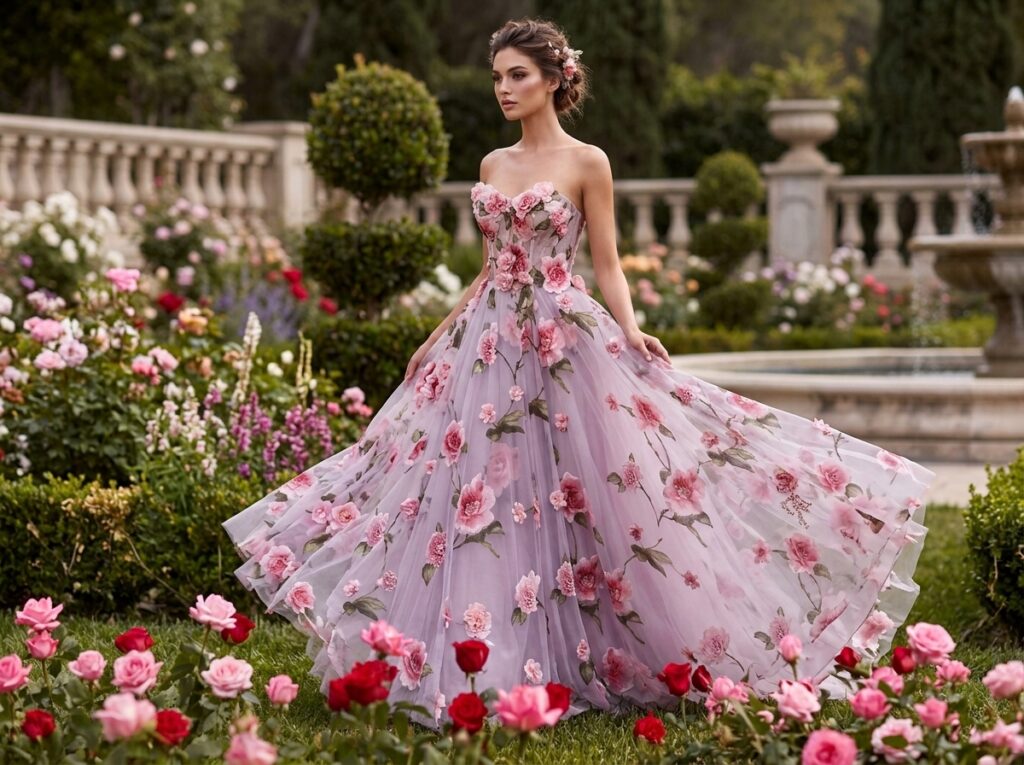
Yes. Organza can be incorporated into custom dresses, eveningwear, bridalwear, blouses, and decorative garment details. Before production, brands should confirm the material composition, transparency, construction requirements, lining needs, and the manufacturer’s ability to source and work with the selected fabric.
Organza is a versatile sheer fabric that can bring transparency, structure, and visual depth to fashion garments. Its different fiber compositions and decorative finishes allow designers to develop a wide range of clothing styles, from bridalwear and evening gowns to contemporary fashion pieces.
The right material depends on the garment’s intended appearance, construction, care requirements, and target market. Brands should evaluate actual fabric specifications and coordinate material selection with pattern development and manufacturing requirements.
For companies planning a custom clothing collection, working with a capable OEM/ODM manufacturer can help connect fabric selection, product development, branding, and quality control. Liantao Apparel welcomes inquiries from brands seeking apparel manufacturing support and custom clothing development.
If you have any questions or require a quote, please leave
us a message. Our experts will get back to you within 24 hours to help you choose the ideal fashion products tailored to your needs.
Hi, I’m Lucy Cai, the founder of liantaoapparel.com. I’ve been managing a women’s clothing factory in China for over 20 years. With extensive experience in garment production and OEM services, I’m passionate about sharing insights into women’s fashion, apparel manufacturing, and global sourcing.
If you have any questions or need a quote, please contact us.
Please add us WhatsApp:+86 189 4809 3145
Provide us with detailed information about your requirements, supply design drawings or tech packs,
reference images, and share your ideas.
We will customize the best solution based on your needs and drawings, and provide a specific quote within 24 hours.
Once we receive your confirmation and deposit,we will commence mass production and take care of the subsequent shipping arrangements.


